
Chalisa
Forty-verse hymns to a deity, among the most widely recited devotional texts in Hindu homes.
Shri Shyam Chalisa (Shyam-Shyam Bhaji Barambara)
The second well-known chalisa of Khatu Shyam, opening "Shyam-shyam bhaji barambara". Where the Khatu Dham chalisa tells Barbarik's story, this one is a chant of the name: it declares Barbarik an avatar of Vishnu, strings together Krishna's names, and ends with Shyam's flute calling everyone to Khatu.
Read more →Shri Balaji Chalisa (Mehandipur)
The chalisa of Mehandipur Balaji, Hanuman in his child form at the famous Rajasthan temple, where he is worshipped with Pretraj Sarkar and Bhairav. Written by a devotee who signs as "Das Snehi Kalyan", it describes the temple's darbar, its arji petitions and its reputation for freeing people from fear and affliction.
Read more →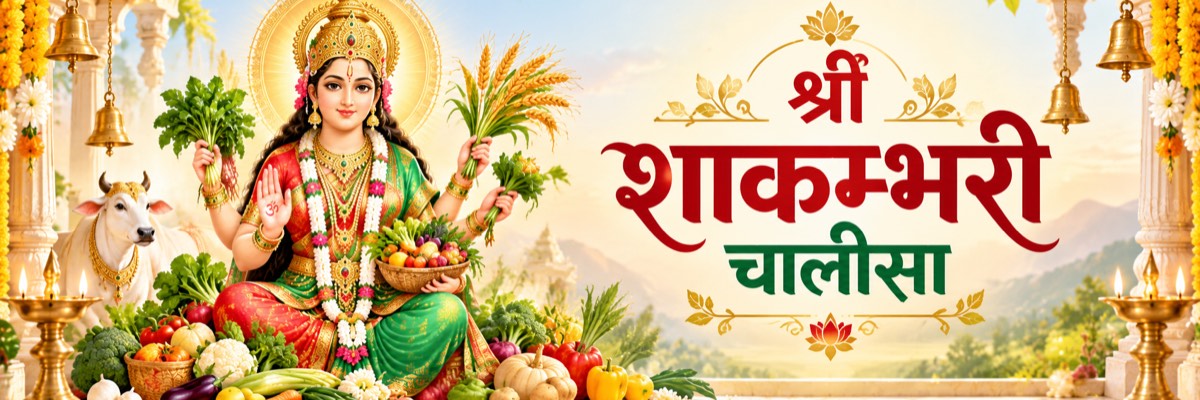
Shri Shakambhari Chalisa – Shakambhari Maa Ati Sukhkari
The chalisa of Shakambhari, the form of Durga who fed the world with vegetables from her own body in a hundred-year drought. Written by Kanta Prasad of Jagadhari, it places her among her sisters Shatakshi, Bhima and Bhramari, with Bhairav, Hanuman and Bhura Dev on guard, and ends with the nine-night lamp of Shakambhari Navratri.
Read more →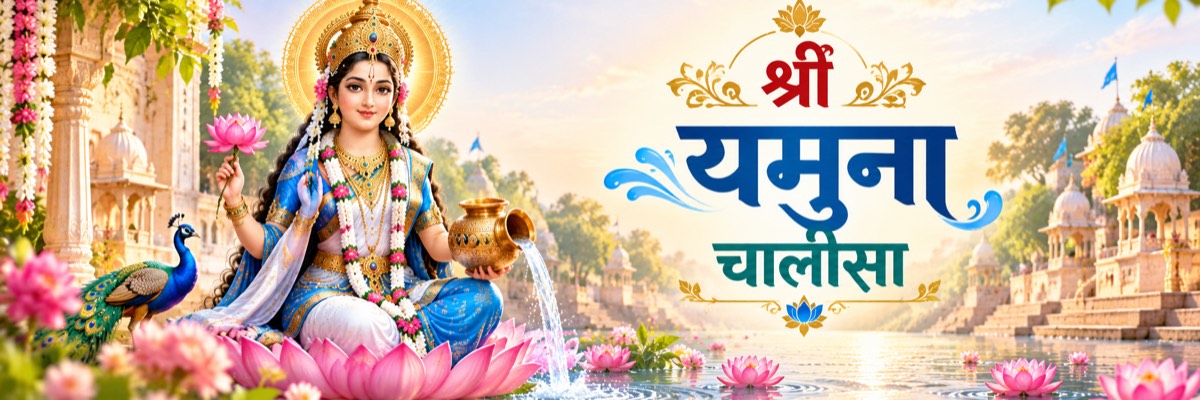
Shri Yamuna Chalisa – Jai Jai Jai Yamuna Maharani
A Braj chalisa to Yamuna as Kalindi, daughter of the Sun and Krishna's queen — how she did penance to win him, the sixteen adornments of her form, the bath and sip of her water that carry a soul across, and the Pushtimarg belief that her grace brings Brahma-sambandh with Krishna.
Read more →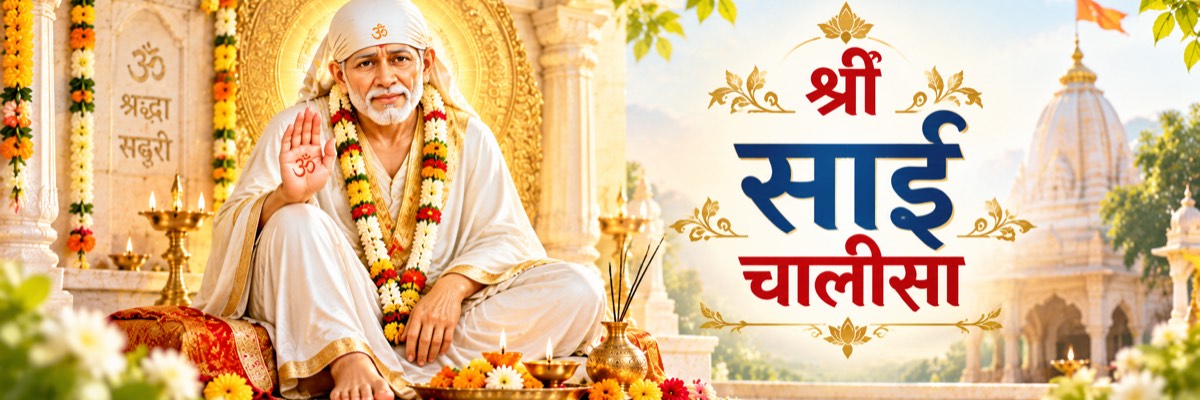
Shri Sai Chalisa – Pahle Sai Ke Charnon Mein
The Hindi Sai Chalisa sung in Sai temples on Thursdays — 102 verses, far more than forty, that tell of the boy who came to Shirdi with a wedding party, the rich devotee blessed with a son, the cloth-seller Kashiram saved from robbers, the fake sadhu driven out of Shirdi, and the udi that took away people's pain.
Read more →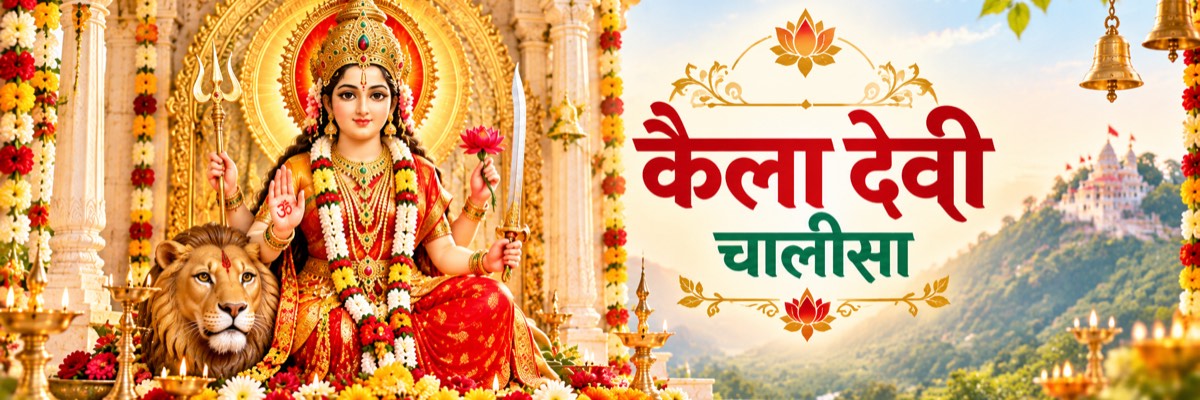
Kaila Devi Chalisa – Jai Jai Jai Kaila Maharani
The chalisa sung at the Kaila Devi temple of Karauli, Rajasthan — forty chaupais that place Kaila Maiya on Trikut hill beside her sister Chamunda, recall her victories at the Kalisil river, and describe the Languriya songs, flags and coconuts of her famous Chaitra fair.
Read more →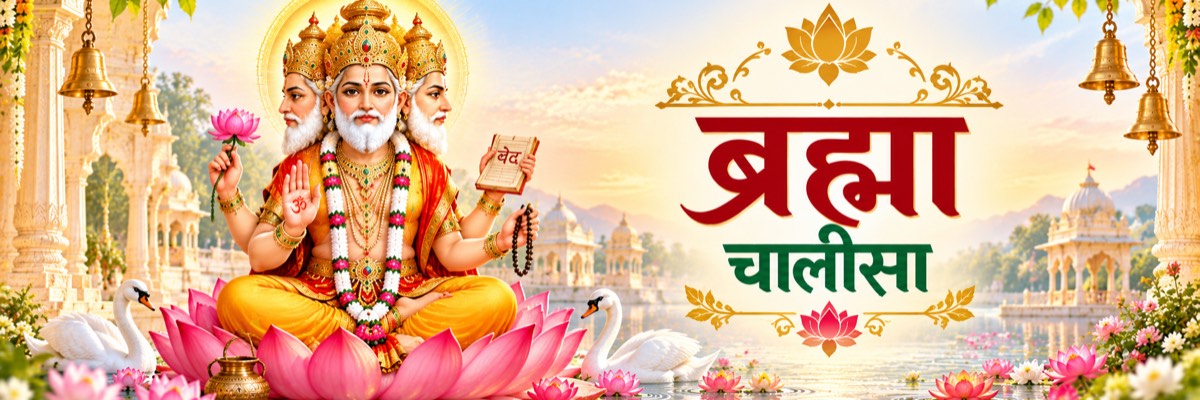
Brahma Chalisa – Jai Brahma Jai Swayambhu
The chalisa of Brahma, the four-faced creator — a rare hymn that tells, in its own verses, how Brahma rose from Vishnu's navel-lotus, grew proud, searched the lotus stalk for its end and was humbled. Full text, the story it tells, and why it is recited at Pushkar.
Read more →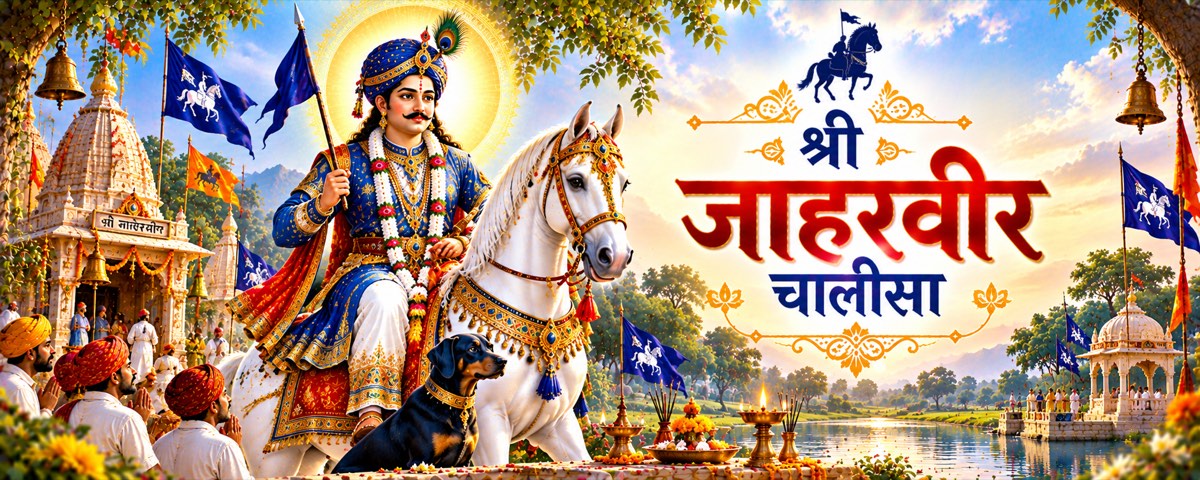
Jaharveer (Goga Ji) Chalisa
The chalisa of Jaharveer Goga, the Chauhan warrior-saint of Bagad worshipped across Rajasthan, Haryana, Punjab and Himachal as a protector from snakes. It tells how Gorakhnath's guggal grain gave Queen Bachhal a son, the trick of her twin Kachhal, and Goga's battle with Arjan and Sarjan. Recited on Goga Navami.
Read more →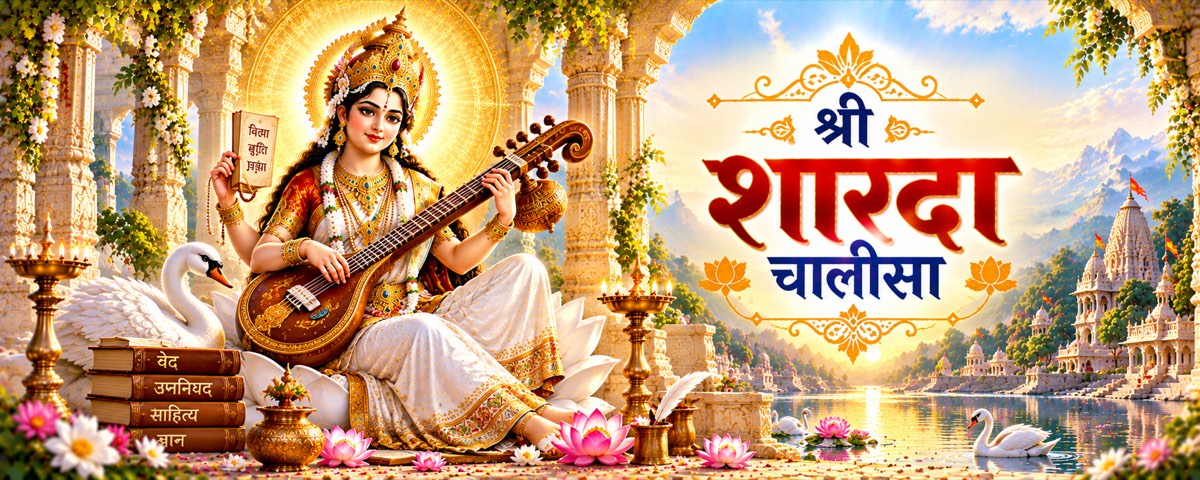
Sharda Chalisa (Maihar)
The chalisa of Maa Sharda of Maihar, the self-manifested goddess on Trikut hill in Madhya Pradesh. It praises her as both Saraswati, giver of learning, and Chandi, slayer of Chand-Mund, Mahishasura and Raktabija, and is sung by pilgrims in Navratri.
Read more →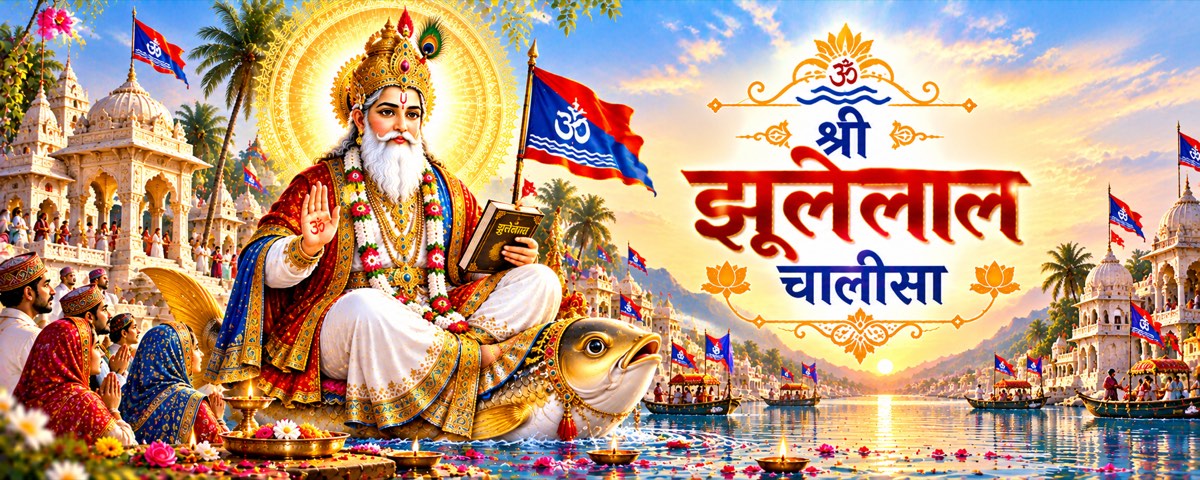
Jhulelal Chalisa
The chalisa of Jhulelal, the Varun avatar and ishta-devta of the Sindhi community. It tells the whole story: the tyrant Mirkhshah of Thatta, forty days of prayer on the Indus, the child born at Nasarpur, and the flood that humbled the king. Recited on Cheti Chand and in Chaliho.
Read more →
Narmada Chalisa (Jai Jai Narmada Bhawani)
The chalisa of Maa Narmada, the river worshipped as a goddess from Amarkantak to the Arabian Sea. It gives her birth on Magh shukla saptami, her crocodile mount and her many names, and repeats the old claim that her darshan alone purifies.
Read more →
Baglamukhi Chalisa
The chalisa of Maa Baglamukhi (Pitambara), the eighth Mahavidya who stuns enemies and stills hostile speech. Unusually, half of it is a puja manual: yellow offerings, havan materials and japa counts, written by Kulpati Mishra of Haridwar in 1995.
Read more →
Baba Ramdev Chalisa
The chalisa of Baba Ramdev (Ramsa Pir), the Tanwar Rajput folk deity of Ramdevra in Rajasthan. It counts out his twenty-four parchas, the miracles told across western India, and is recited at the Bhadrapad mela and on his dooj.
Read more →
Lalita Chalisa
The chalisa of Lalita Tripura Sundari, the goddess of Shri Vidya, recited on Lalita Panchami during Navratri and at her temple in Naimisharanya. It names her as the ten Mahavidyas, the slayer of Bhandasura, and the kundalini rising from muladhara to sahasrara.
Read more →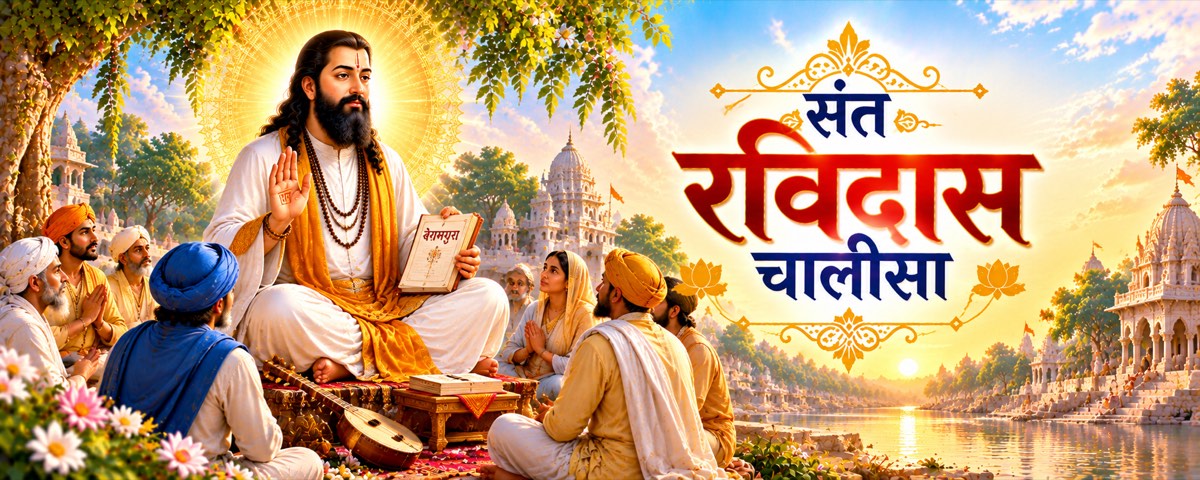
Sant Ravidas Chalisa
The chalisa of Sant Ravidas, the fifteenth-century saint of Kashi, recited on Ravidas Jayanti (Magh Purnima). It retells the stories that made him famous: the bangle from the Ganga, "man changa to kathauti mein Ganga", the floating shaligram, his refusal to Sikandar Lodi, and Mira's discipleship.
Read more →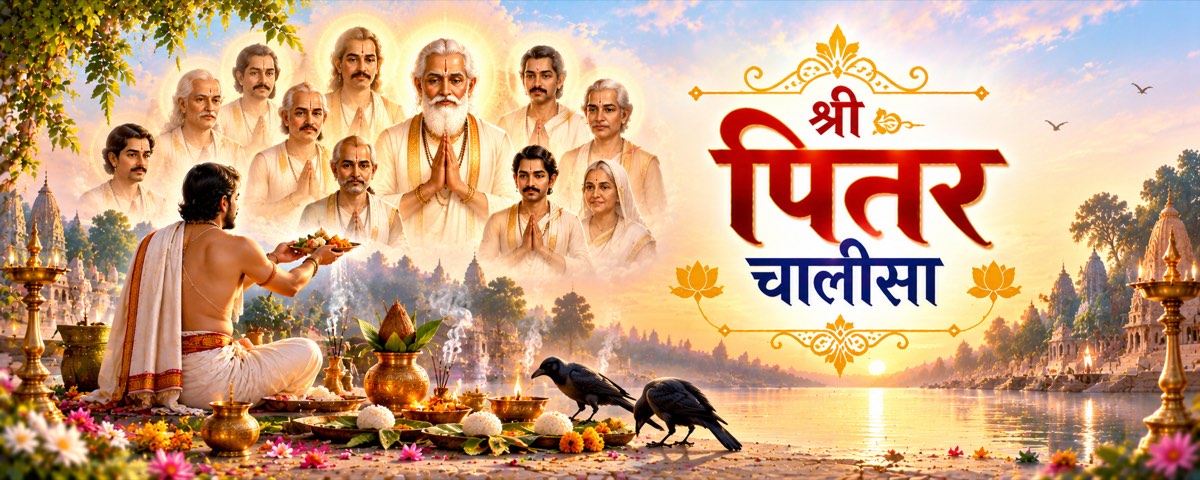
Pitar Chalisa
A Rajasthani chalisa to the Pitars, the family's departed ancestors, recited in Pitru Paksha and on amavasya. It says the ancestors want plain water rather than feasts, places their darbar at Jhunjhunu, and insists every community honours its forebears.
Read more →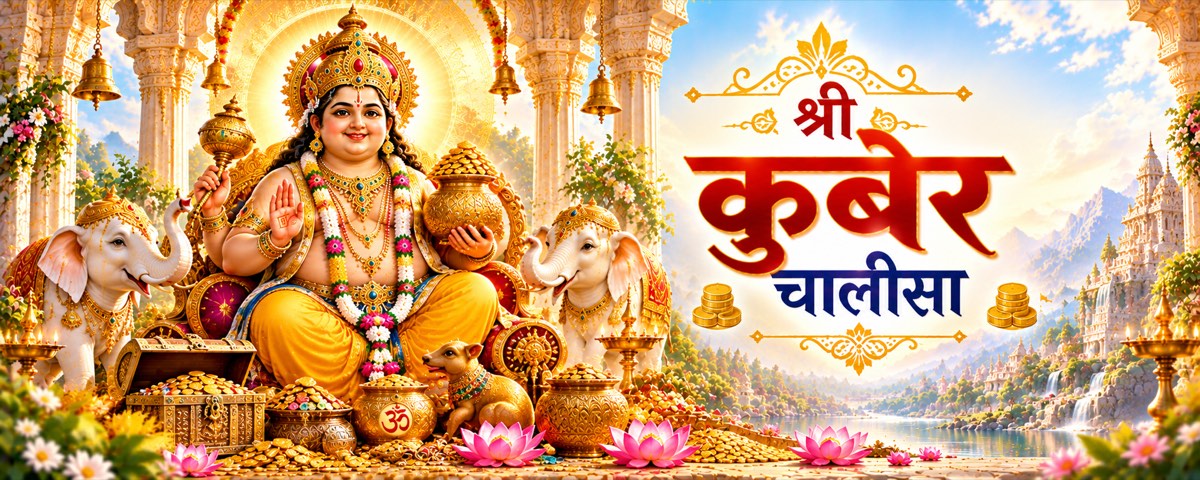
Kuber Chalisa
The chalisa of Kuber, treasurer of the gods and king of the yakshas, recited above all on Dhanteras and Diwali. It gives his family tree, his tapasya to Shiva, his army and his throne, and then a long list of everyday troubles it asks him to fix.
Read more →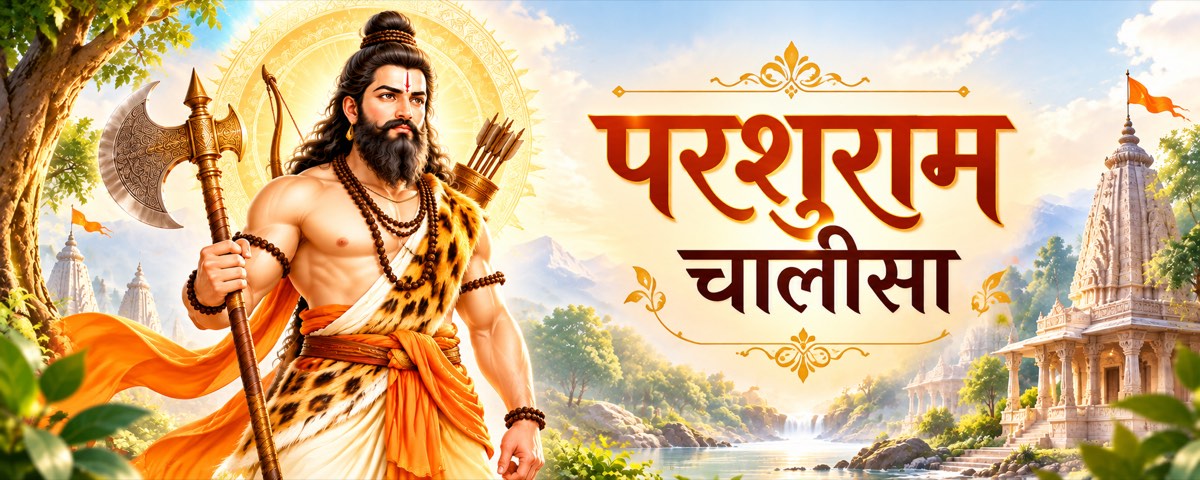
Parshuram Chalisa
The chalisa of Bhagwan Parshuram, Vishnu's sixth avatar — son of Jamadagni and Renuka, born on Akshaya Tritiya. His birth, the broken tusk of Ganesha, Sahasrabahu, the twenty-one campaigns, Rama's bow, and his pupils Bhishma, Drona and Karna.
Read more →
Chitragupt Chalisa
The chalisa of Bhagwan Chitragupta, keeper of the record of every soul's deeds, recited above all on Yama Dwitiya (Bhai Dooj) at the kalam-dawat puja. What the chalisa says about him, his pen and ink, and his place as ancestor of the Kayasthas.
Read more →
Giriraj Chalisa (Govardhan Chalisa)
The chalisa of Giriraj Govardhan, the hill Krishna lifted to shelter Braj. How Govardhan came to Braj, the first Govardhan Puja and Indra's rain, the seven-kos parikrama, and how to recite it on Govardhan Puja.
Read more →
Goraksh Chalisa (Gorakhnath Chalisa)
The chalisa of Guru Gorakhnath as recited at the Gorakhnath Math in Gorakhpur — Alakh Niranjan, the yogi worshipped by the eighty-four siddhas. What it says, the twelve recitations and the offering of rot, and the Nath greeting "Adesh".
Read more →
Sita Chalisa
The Sita Chalisa tells the Ramayana from Sita's side — her birth from the earth, the swayamvar, the exile, Ravana, Hanuman's ring, Valmiki's ashram, Lav and Kush, and her return to the earth. What it says, and when it is recited.
Read more →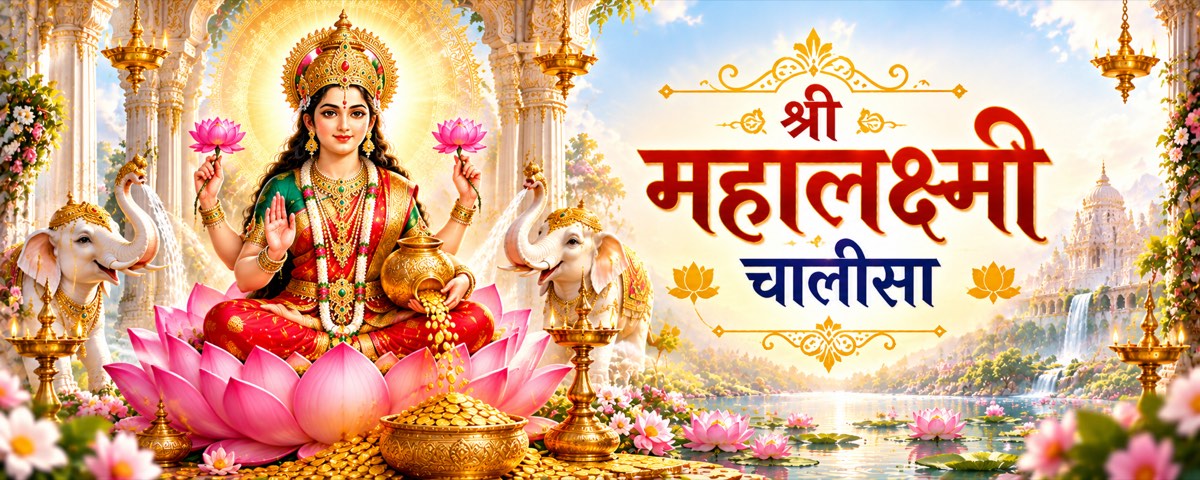
Mahalakshmi Chalisa
The Mahalakshmi Chalisa that begins "Namo Maha Lakshmi jai mata" — a different text from the better-known Lakshmi Chalisa. Its unusual all-white image of the goddess, the bija syllables woven into it, and when to recite it.
Read more →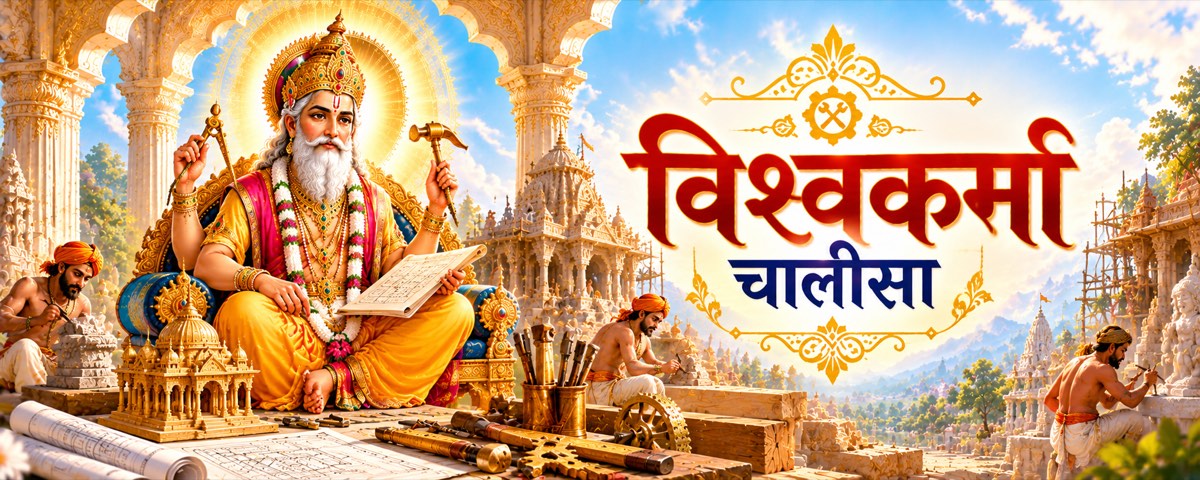
Vishwakarma Chalisa
The chalisa of Bhagwan Vishwakarma, the divine architect and craftsman. The weapons and vehicles it says he made for the gods, his parentage and five sons, and how it is recited on Vishwakarma Puja.
Read more →Why forty verses
A chalisa (from "chalis," forty) is a devotional composition of roughly forty verses praising a specific deity's qualities, deeds and power, typically ending with a phalashruti — a closing statement describing the benefit of reciting it. The most recited example by far is the Hanuman Chalisa, composed by Tulsidas, but chalisas exist for most major deities, including Shiva, Ganesh, Lakshmi, Durga, Saraswati, Vishnu, Krishna, Ram and Surya.
Verified, complete text
Every chalisa on this site is checked against established published sources and given here in full — not summarised or trimmed to the opening lines — because a chalisa is typically recited start to finish as a single unbroken practice, not read in excerpts.
How it's typically recited
Most devotees recite a chalisa once daily, often paired with a fast or a particular day of the week associated with that deity — Hanuman's chalisa on Tuesdays and Saturdays, for instance, as explained in our Tuesday Hanuman Bhakti guide.