
Original text
॥ दोहा ॥ जय जय श्री महालक्ष्मी, करूँ मात तव ध्यान। सिद्ध काज मम किजिये, निज शिशु सेवक जान॥ ॥ चौपाई ॥ नमो महा लक्ष्मी जय माता। तेरो नाम जगत विख्याता॥ आदि शक्ति हो मात भवानी। पूजत सब नर मुनि ज्ञानी॥ जगत पालिनी सब सुख करनी। निज जनहित भण्डारण भरनी॥ श्वेत कमल दल पर तव आसन। मात सुशोभित है पद्मासन॥ श्वेताम्बर अरू श्वेता भूषण। श्वेतही श्वेत सुसज्जित पुष्पन॥ शीश छत्र अति रूप विशाला। गल सोहे मुक्तन की माला॥ सुंदर सोहे कुंचित केशा। विमल नयन अरु अनुपम भेषा॥ कमलनाल समभुज तवचारि। सुरनर मुनिजनहित सुखकारी॥ अद्भूत छटा मात तव बानी। सकलविश्व कीन्हो सुखखानी॥ शांतिस्वभाव मृदुलतव भवानी। सकल विश्वकी हो सुखखानी॥ महालक्ष्मी धन्य हो माई। पंच तत्व में सृष्टि रचाई॥ जीव चराचर तुम उपजाए। पशु पक्षी नर नारी बनाए॥ क्षितितल अगणित वृक्ष जमाए। अमितरंग फल फूल सुहाए॥ छवि विलोक सुरमुनि नरनारी। करे सदा तव जय-जय कारी॥ सुरपति औ नरपत सब ध्यावैं। तेरे सम्मुख शीश नवावैं॥ चारहु वेदन तब यश गाया। महिमा अगम पार नहिं पाये॥ जापर करहु मातु तुम दाया। सोइ जग में धन्य कहाया॥ पल में राजाहि रंक बनाओ। रंक राव कर बिमल न लाओ॥ जिन घर करहु माततुम बासा। उनका यश हो विश्व प्रकाशा॥ जो ध्यावै से बहु सुख पावै। विमुख रहे हो दुख उठावै॥ महालक्ष्मी जन सुख दाई। ध्याऊं तुमको शीश नवाई॥ निज जन जानीमोहीं अपनाओ। सुखसम्पति दे दुख नसाओ॥ ॐ श्री-श्री जयसुखकी खानी। रिद्धिसिद्ध देउ मात जनजानी॥ ॐह्रीं-ॐह्रीं सब व्याधिहटाओ। जनउन विमल दृष्टिदर्शाओ॥ ॐक्लीं-ॐक्लीं शत्रुन क्षयकीजै। जनहित मात अभय वरदीजै॥ ॐ जयजयति जयजननी। सकल काज भक्तन के सरनी॥ ॐ नमो-नमो भवनिधि तारनी। तरणि भंवर से पार उतारनी॥ सुनहु मात यह विनय हमारी। पुरवहु आशन करहु अबारी॥ ऋणी दुखी जो तुमको ध्यावै। सो प्राणी सुख सम्पत्ति पावै॥ रोग ग्रसित जो ध्यावै कोई। ताकी निर्मल काया होई॥ विष्णु प्रिया जय-जय महारानी। महिमा अमित न जाय बखानी॥ पुत्रहीन जो ध्यान लगावै। पाये सुत अतिहि हुलसावै॥ त्राहि त्राहि शरणागत तेरी। करहु मात अब नेक न देरी॥ आवहु मात विलम्ब न कीजै। हृदय निवास भक्त बर दीजै॥ जानूं जप तप का नहिं भेवा। पार करो भवनिध वन खेवा॥ बिनवों बार-बार कर जोरी। पूरण आशा करहु अब मोरी॥ जानि दास मम संकट टारौ। सकल व्याधि से मोहिं उबारौ॥ जो तव सुरति रहै लव लाई। सो जग पावै सुयश बड़ाई॥ छायो यश तेरा संसारा। पावत शेष शम्भु नहिं पारा॥ गोविंद निशदिन शरण तिहारी। करहु पूरण अभिलाष हमारी॥ ॥ दोहा ॥ महालक्ष्मी चालीसा, पढ़ै सुनै चित लाय। ताहि पदारथ मिलै, अब कहै वेद अस गाय॥
Transliteration
Doha: Jai Jai Shri Mahalakshmi, Karun Mat Tav Dhyan Siddha Kaj Mam Kijiye, Nij Shishu Sevak Jan. Chaupai: Namo Maha Lakshmi Jai Mata, Tero Nam Jagat Vikhyata. Adi Shakti Ho Mat Bhavani, Pujat Sab Nar Muni Gyani. Jagat Palini Sab Sukh Karani, Nij Janahit Bhandaran Bharani. Shvet Kamal Dal Par Tav Asan, Mat Sushobhit Hai Padmasan. Shvetambar Aru Shveta Bhushan, Shvetahi Shvet Susajjit Pushpan. Shish Chhatra Ati Rup Vishala, Gal Sohe Muktan Ki Mala. Sundar Sohe Kunchit Kesha, Vimal Nayan Aru Anupam Bhesha. Kamalanal Samabhuj Tavachari, Suranar Munijanahit Sukhakari. Adbhut Chhata Mat Tav Bani, Sakalavishva Kinho Sukhakhani. Shantisvabhav Mridulatav Bhavani, Sakal Vishvaki Ho Sukhakhani. Mahalakshmi Dhanya Ho Mai, Panch Tatva Mein Srishti Rachai. Jiv Charachar Tum Upajae, Pashu Pakshi Nar Nari Banae. Kshitital Aganit Vriksha Jamae, Amitarang Phal Phul Suhae. Chhavi Vilok Suramuni Naranari, Kare Sada Tav Jai-Jai Kari. Surapati Au Narapat Sab Dhyavain, Tere Sammukh Shish Navavain. Charahu Vedan Tab Yash Gaya, Mahima Agam Par Nahin Paye. Japar Karahu Matu Tum Daya, Soi Jag Mein Dhanya Kahaya. Pal Mein Rajahi Rank Banao, Rank Rav Kar Bimal Na Lao. Jin Ghar Karahu Matatum Basa, Unaka Yash Ho Vishva Prakasha. Jo Dhyavai Se Bahu Sukh Pavai, Vimukh Rahe Ho Dukh Uthavai. Mahalakshmi Jan Sukh Dai, Dhyaun Tumako Shish Navai. Nij Jan Janimohin Apanao, Sukhasampati De Dukh Nasao. Om Shri-shri Jayasukhaki Khani, Riddhisiddha Deu Mat Janajani. Omhrin-Omhrin Sab Vyadhihatao, Janaun Vimal Drishtidarshao. Omklin-Omklin Shatrun Kshayakijai, Janahit Mat Abhay Varadijai. Om Jayajayati Jayajanani, Sakal Kaj Bhaktan Ke Sarani. Om Namo-namo Bhavanidhi Tarani, Tarani Bhanvar Se Par Utarani. Sunahu Mat Yah Vinay Hamari, Puravahu Ashan Karahu Abari. Rini Dukhi Jo Tumako Dhyavai, So Prani Sukh Sampatti Pavai. Rog Grasit Jo Dhyavai Koi, Taki Nirmal Kaya Hoi. Vishnu Priya Jai-Jai Maharani, Mahima Amit Na Jay Bakhani. Putrahin Jo Dhyan Lagavai, Paye Sut Atihi Hulasavai. Trahi Trahi Sharanagat Teri, Karahu Mat Ab Nek Na Deri. Avahu Mat Vilamba Na Kijai, Hriday Nivas Bhakta Bar Dijai. Janun Jap Tap Ka Nahin Bheva, Par Karo Bhavanidh Van Kheva. Binavon Bar-bar Kar Jori, Puran Asha Karahu Ab Mori. Jani Das Mam Sankat Tarau, Sakal Vyadhi Se Mohin Ubarau. Jo Tav Surati Rahai Lav Lai, So Jag Pavai Suyash Barai. Chhayo Yash Tera Sansara, Pavat Shesh Shambhu Nahin Para. Govind Nishadin Sharan Tihari, Karahu Puran Abhilash Hamari. Doha: Mahalakshmi Chalisa, Parhai Sunai Chit Lay Tahi Padarath Milai, Ab Kahai Ved As Gay.
Two Lakshmi chalisas
There are two Lakshmi chalisas in common use, and they are easy to confuse. The more familiar one opens "Matu Lakshmi kari kripa, karo hriday mein vaas" — that is our Lakshmi Chalisa. This one opens with the doha "Jai jai Shri Mahalakshmi, karun maat tav dhyan" and the chaupai "Namo Maha Lakshmi jai mata, tero naam jagat vikhyata". If you are looking for a text by its first line, check which one you have.
A goddess dressed in white
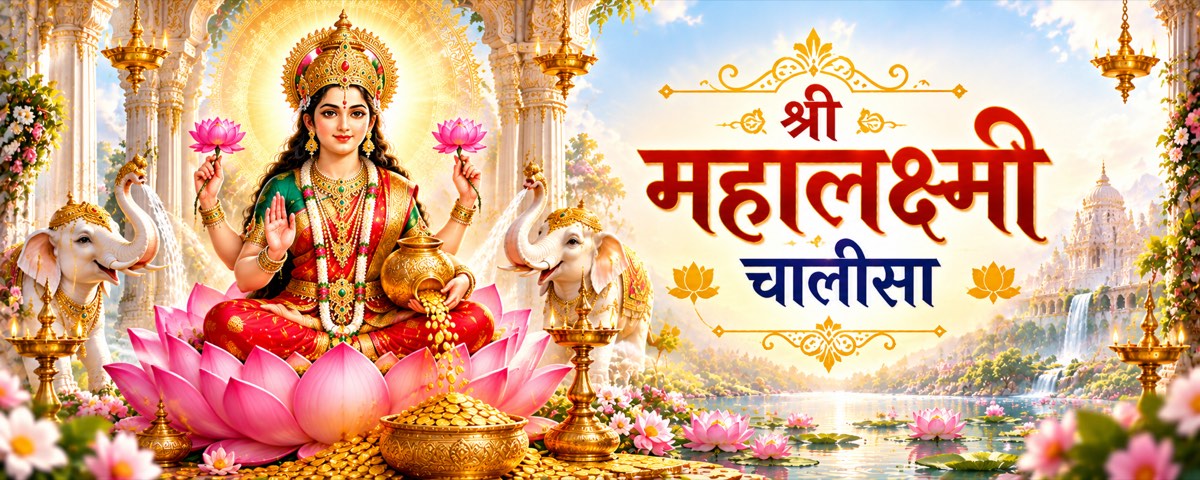
The striking thing about this chalisa is its picture of the goddess. Lakshmi is usually imagined in red or gold, seated on a pink lotus. Here she sits on a white lotus, wears white garments and white ornaments, is decorated with white flowers, and wears a garland of pearls, with a parasol above her head and four arms "like lotus stalks". It is the sattvic Mahalakshmi — the calm, pure form, closer to the Mahalakshmi of the Devi Mahatmya than to the goddess of coins.
The chalisa also calls her Adi Shakti and Bhavani, and says she created the world of the five elements — every creature, bird and person, every tree, fruit and flower. She is the supreme power first, and the giver of wealth second.
The bija lines
Midway through, the chalisa does something rarer: it weaves in seed syllables.
- "Om Shri-Shri, jai sukh ki khani" — asking for riddhi and siddhi;
- "Om Hreem-Om Hreem, sab vyadhi hatao" — remove all illness;
- "Om Kleem-Om Kleem, shatrun kshay keejai" — destroy enemies, give fearlessness.
These are the Lakshmi, Shakti and attraction bijas (shreem, hreem, kleem) familiar from Devi mantras. In the chalisa they work as invocations within a Hindi prayer, not as a formal mantra to be japa'd separately.
What it promises
The phala is plain: one in debt or sorrow who meditates on her gains happiness and wealth; one who is ill gets a healthy body; one without a son is blessed with one. "In a moment you make a king a pauper", and the reverse — the chalisa is clear that her favour, not effort alone, decides fortune. The last chaupai is signed "Govind, day and night, takes refuge in you", and the closing doha says that whoever reads or hears it attentively receives every good thing, "as the Vedas sing".
When to recite it
- Fridays, Lakshmi's day, after the evening lamp.
- Diwali and Dhanteras, Sharad Purnima, and the Mahalakshmi Vrat days in Bhadrapada-Ashwin.
- Many people read it with the Mahalakshmi Ashtakam or Kanakadhara Stotram.
Frequently asked questions
Is the Mahalakshmi Chalisa the same as the Lakshmi Chalisa?
No. This one begins "Namo Maha Lakshmi jai mata"; the Lakshmi Chalisa begins "Matu Lakshmi kari kripa". Both are devotional Hindi chalisas to the same goddess.
Why is Mahalakshmi described in white?
The chalisa describes her sattvic form — white lotus, white clothes, pearls — the pure, peaceful aspect of the goddess rather than her royal red-and-gold image.
Which day is best to recite it?
Friday, and on Diwali, Dhanteras and Sharad Purnima.
Do I need initiation to say the bija syllables in it?
Within the chalisa they are part of a Hindi prayer recited by everyone. Formal japa of bija mantras is a separate practice that some traditions prefer to learn from a teacher.
Who is "Govind" in the last chaupai?
Most likely the poet's signature, as is common in chalisas. Nothing more about the author is given in the text.
Spotted a mistake?
If you find any grammatical, Hindi, English, mantra-text or other mistake on this page, tell us — we will correct it within 24 hours.