
Shri Ram
The seventh avatar of Vishnu and hero of the Ramayana, revered as the ideal king and embodiment of righteousness (dharma).
Who Shri Ram is
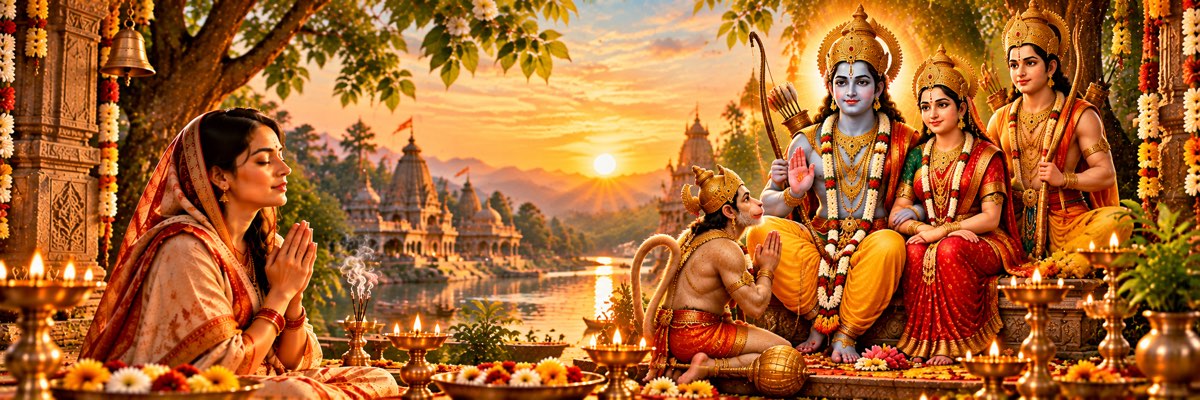
Ram is the seventh avatar of Vishnu and the hero of the Ramayana, born in Ayodhya to King Dasharatha and Queen Kaushalya. He is revered as maryada purushottam, the ideal man who upheld righteousness (dharma) even at great personal cost. That includes fourteen years of exile, which he accepted without complaint to honour his father's word. For millions, his name alone, "Ram", is a complete prayer: people greet each other with "Ram Ram" and "Jai Siya Ram", and it is the name chanted at the very end of life.
Where his story is told
The earliest telling is Valmiki's Sanskrit Ramayana. In the 16th century Goswami Tulsidas retold it in Awadhi as the Ramcharitmanas, which became the most widely read version in North India and the source of the Ramlila tradition. There are many others, from Kamban's Tamil Ramavataram to the Adhyatma Ramayana, as well as versions across Southeast Asia.
The story the Ramayana tells
- Childhood and marriage: Ram and Lakshmana protected the sage Vishwamitra's sacrifices, freed Ahalya from her curse, and at King Janaka's court in Mithila Ram broke Shiva's great bow to win Sita's hand.
- Exile: on the eve of his coronation, Queen Kaikeyi claimed two old boons from Dasharatha: her son Bharata on the throne, and Ram in the forest for fourteen years. Ram left with Sita and Lakshmana. Bharata refused the throne and ruled only as regent, with Ram's sandals (padukas) placed on it.
- In the forest: Ram met sages and devotees, such as Shabari, whose tasted berries he ate with love. Then Ravana, the demon king of Lanka, abducted Sita.
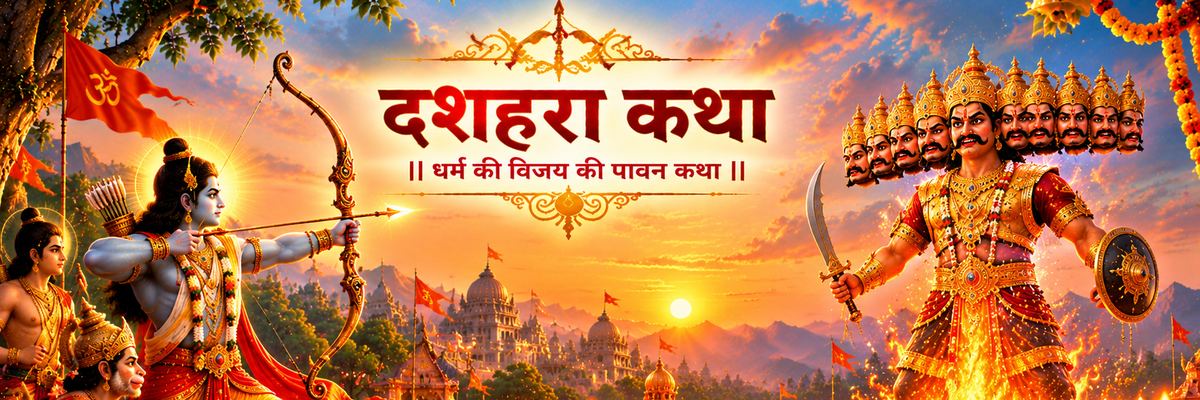
- The search and the war: with Sugriva's vanara army and Hanuman, Ram found Sita, built a bridge (setu) to Lanka, and defeated Ravana. That victory is celebrated on Dussehra.
- The return: Ayodhya lit rows of lamps to welcome him home, the origin of Diwali. His reign, Ram Rajya, is still the byword for just, compassionate rule.
Symbols and family
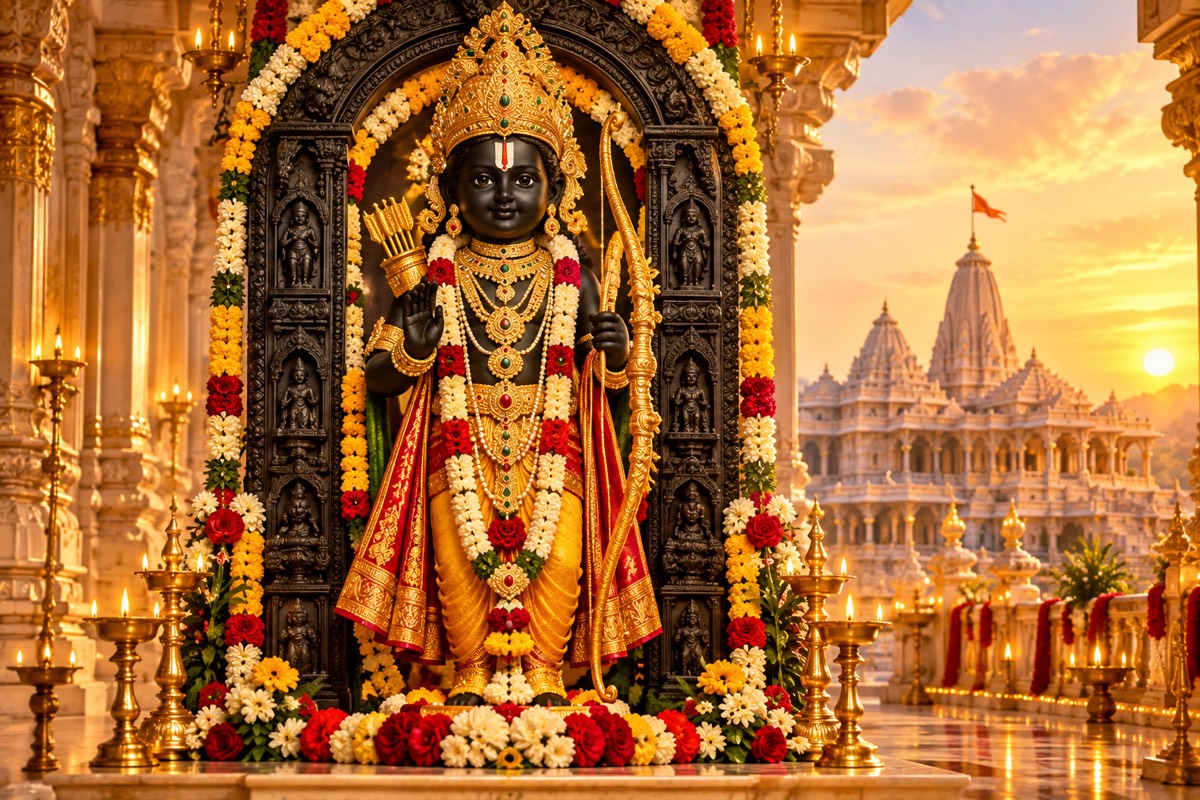
Ram is shown dark-complexioned, holding a bow (the Kodanda) and arrows, usually with Sita, Lakshmana and Hanuman together, a grouping called the Ram Darbar. His brothers Lakshmana, Bharata and Shatrughna are each models of loyalty in their own way, and Hanuman kneeling at his feet is the image of the perfect devotee.
How he is worshipped
Ram's worship is simple: chanting his name. The Shri Ram Mantra and "Shri Ram Jai Ram Jai Jai Ram" are chanted on the mala. Many write "Ram" over and over in notebooks as a practice (Ram naam lekhan). Reading the Ramcharitmanas, especially the Sundarkand, is a common household practice, as is the Ram Chalisa. Because Hanuman is his foremost devotee, Ram and Hanuman are almost always worshipped together (see Shri Hanuman).
Festivals and temples
Ram Navami, on the ninth day of the bright fortnight of Chaitra, marks his birth at noon and closes Chaitra Navratri. Vivah Panchami celebrates his wedding to Sita, Dussehra his victory, and Diwali his homecoming. The foremost temple is the Shri Ram Janmabhoomi Mandir in Ayodhya. Others include the Ram Raja temple at Orchha, where he is worshipped as a reigning king, Kalaram in Nashik, Bhadrachalam in Telangana, and Rameswaram in Tamil Nadu, where tradition says Ram himself worshipped Shiva before crossing to Lanka.
Mantra
Stotra
Aarti
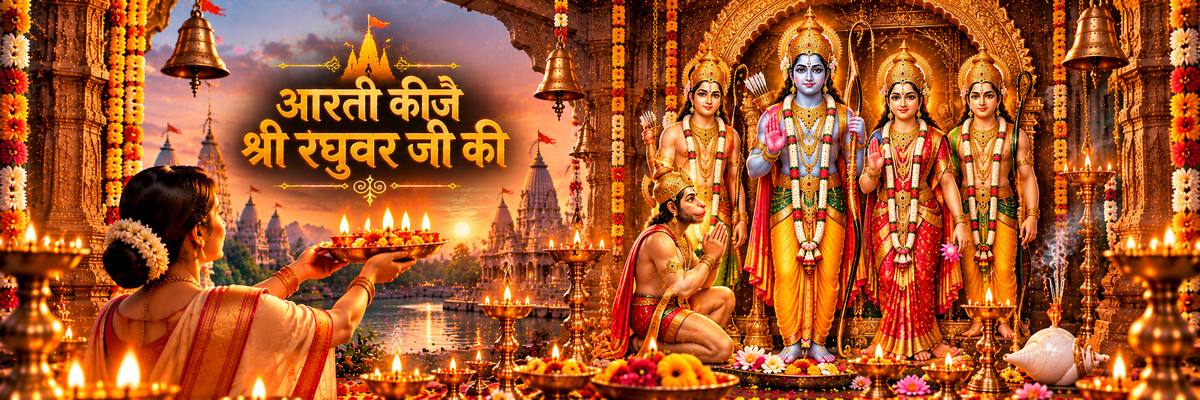
Aarti Kije Shri Raghuvar Ji Ki
A short aarti to Shri Ram as Maryada Purushottam and refuge of all beings. It is sung on Ram Navami and Vijayadashami, and to close a Sundarkand or Ramcharitmanas path.
Read more →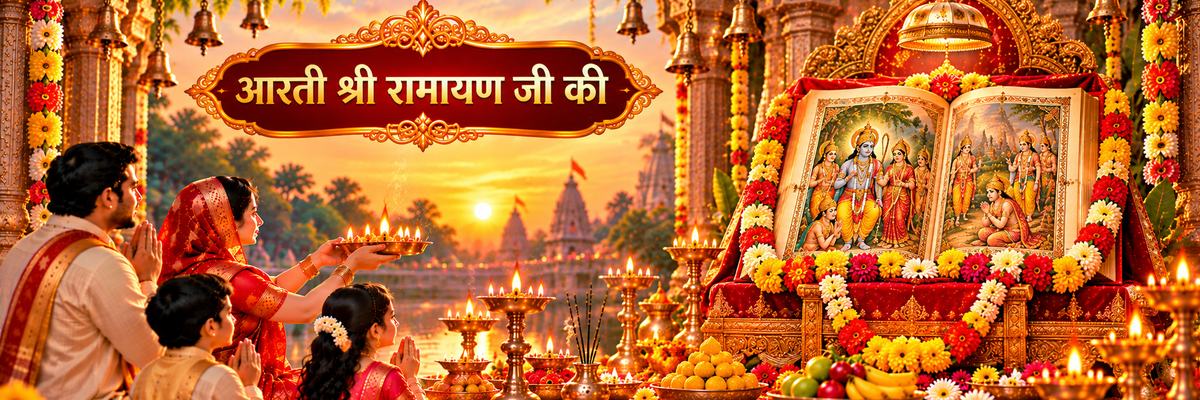
Aarti Shri Ramayan Ji Ki
The aarti offered not to a deity but to a book: the Ramayana, specifically Tulsidas's Ramcharitmanas, sung when a reading of the Manas or Sundarkand is completed. It names the singers of Rama's story, from Shiva and Valmiki to Kakbhushundi, calls the book the essence of all scripture, and ends in Tulsi's own voice calling it father and mother.
Read more →Festival
Bhajan
Shri Ramchandra Kripalu Bhaju Man – Ram Stuti
Tulsidas's Ram Stuti from the Vinay Patrika — 'O mind, worship the compassionate Shri Ramchandra, remover of the dreadful fear of worldly existence' — together with the Ramcharitmanas verses of Gauri's blessing to Sita that are usually sung after it. Full text, word-by-word sense, and why the two are joined.
Read more →BhajanRaghupati Raghav Raja Ram – Ram Dhun
The Ram dhun "Raghupati Raghav Raja Ram, Patit Pavan Sitaram" in its traditional form, attributed to Lakshmanacharya — what its lines mean, and how Gandhi's adapted version became the anthem of the Dandi March.
Read more →BhajanThumak Chalat Ramchandra – Tulsidas Bhajan
Tulsidas's picture of the infant Rama toddling with anklets jingling, falling and being scooped up by Dasharatha's queens — one of the sweetest pads of bal-leela. The text, what each line shows, and how it is sung.
Read more →Puja Vidhi
Story
Temple
Spotted a mistake?
If you find any grammatical, Hindi, English, mantra-text or other mistake on this page, tell us — we will correct it within 24 hours.