
At a glance
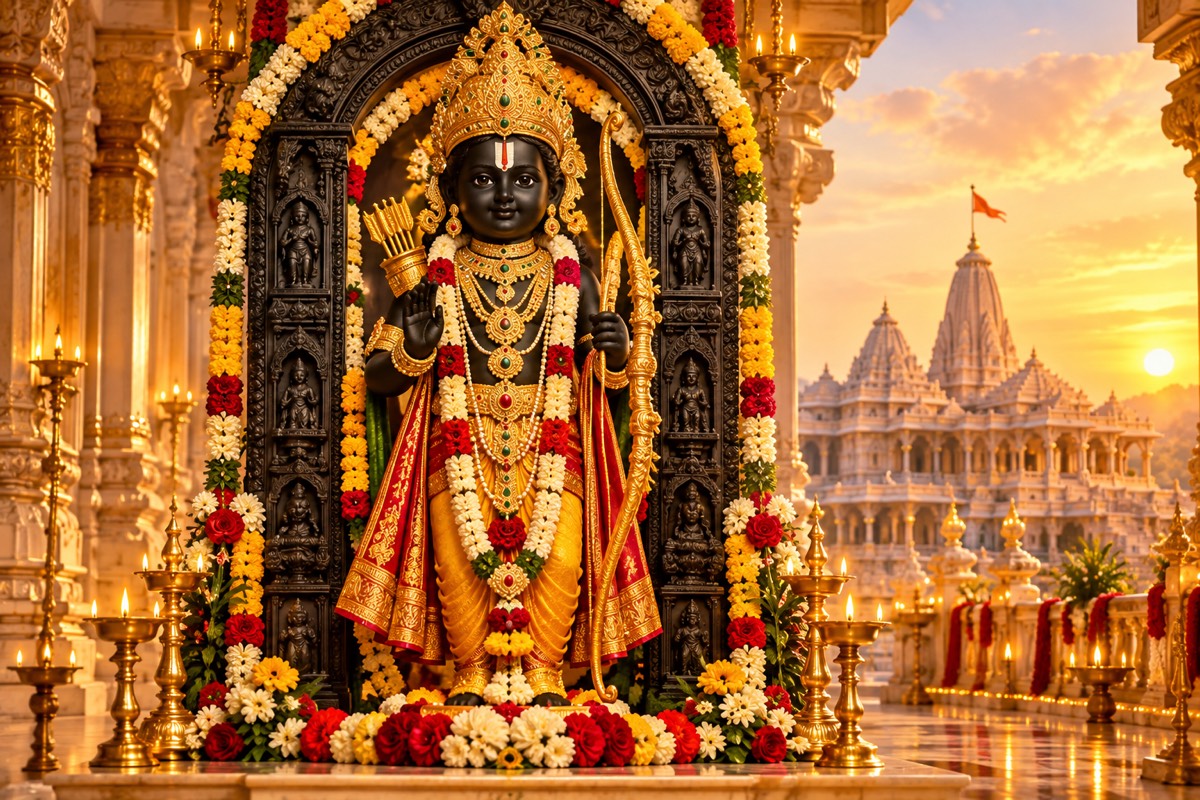
- Deity: Shri Ram in his child form, Ram Lalla (Shri Ram).
- Location: Ram Janmabhoomi, Ayodhya, Ayodhya district, Uttar Pradesh, close to the Saryu river.
- Managed by: Shri Ram Janmabhoomi Teerth Kshetra, the trust set up in 2020 to build and run the temple.
- Consecration: the Pran Pratishtha of Ram Lalla took place on 22 January 2024.
- Entry: darshan is free. General devotees enter from the Janmabhoomi Path.
- Official website: srjbtkshetra.org, for passes, notices and current timings.
Why this place matters
According to the Ramayana, Ayodhya was the capital of Kosala and the city of the Ikshvaku kings, and Shri Ram was born here to King Dasharatha and Queen Kaushalya. Ayodhya is also counted first among the seven sacred cities (Sapta Puri) that are said to grant liberation. For centuries devotees have revered this particular spot as Ram Janmabhoomi, the exact birthplace of Ram. That is why the temple's presiding deity is Ram Lalla, Ram as a five-year-old child, rather than the crowned king of the Ram Darbar.
A long road to the temple
The site was at the centre of one of India's longest-running disputes, over the Babri Masjid, a mosque built there in 1528 and demolished in 1992. In November 2019 the Supreme Court awarded the disputed land for a temple, to be built by a trust set up by the government, and directed that five acres elsewhere in Ayodhya be given for a mosque. The Shri Ram Janmabhoomi Teerth Kshetra trust was formed in February 2020, the bhoomi pujan (foundation ceremony) was held on 5 August 2020, and the new idol of Ram Lalla was consecrated on 22 January 2024. Work on the rest of the temple continued after the consecration, and in 2025 the Ram Darbar (Ram with Sita, his brothers and Hanuman) was consecrated on the first floor.
The temple and the idol
The temple is built in the North Indian Nagara style and was designed by the Sompura family of temple architects from Gujarat. It is built mainly of pink sandstone from Rajasthan, and the trust has said that no iron or steel was used in its structure. It rises three storeys, with a tall main shikhara over the sanctum and many carved pillars and mandapas (pillared halls) around it. The main idol in the sanctum was carved by the Mysuru sculptor Arun Yogiraj from a single piece of dark stone. It shows Ram Lalla standing, with a bow and arrow, surrounded by a carved frame showing the avatars of Vishnu. The old idol of Ram Lalla Virajman, worshipped at the site for decades, is also kept in the sanctum.
Aarti and darshan timings
The trust changes the timings with the season. In October 2025 it moved to the winter schedule below, according to its notice. The earlier (summer) times it replaced are shown for comparison.
| Ritual | Winter schedule (from Oct 2025) | Earlier / summer schedule |
|---|---|---|
| Mangala Aarti (waking of Ram Lalla) | 4:30 am | 4:00 am |
| Shringar Aarti (dressing and adornment) | 6:30 am | 6:00 am |
| General darshan opens | 7:00 am | 7:00 am |
| Rajbhog Aarti (midday food offering) | 12:00 noon | 12:00 noon |
| Doors closed after Rajbhog | 12:30 – 1:00 pm | — |
| Last entry for darshan | 8:30 pm | 9:00 pm |
| Shayan Aarti (Ram Lalla is put to rest) | 9:30 pm | 10:00 pm |
There is also an evening aarti after sunset. On Ram Navami, Diwali and other big days the trust extends or changes darshan hours, sometimes at short notice. Always check the official trust website or its announcements just before you go.
Darshan and aarti passes
- General darshan: free and open to everyone, without a booking. Entry is through the Janmabhoomi Path, with security checks on the way in. Depending on the crowd, the walk and queue can take anywhere from under an hour to several hours.
- Aarti passes: seats for the aartis are limited, and the trust issues free passes for them, booked on its official portal. You need an ID, and the passes run out fast, especially for weekends and festival days.
- Elderly and disabled devotees: wheelchairs are available at the entrance, and the trust has at times run special arrangements for them. Check the current rules on the official site.
- Beware of touts: the trust does not sell "VIP darshan". Use only the official website and counters.
How to reach Ayodhya
- By air: Maharishi Valmiki International Airport, Ayodhya Dham, is a short drive from the temple. Lucknow airport, about 135 km away, has many more flights.
- By train: Ayodhya Dham Junction is the main station and is close to the temple. Ayodhya Cantt (formerly Faizabad Junction) is another option.
- By road: Ayodhya is well connected to Lucknow, Gorakhpur, Prayagraj and Varanasi by highway, with frequent UPSRTC and private buses. E-rickshaws are the easiest way to get around within the city.
What to carry and what to leave behind
Security at the temple is strict. Mobile phones, cameras, smartwatches, bags, leather belts and other electronic items are not allowed inside. Leave them at your hotel or use the locker facility near the entrance, and remove footwear before entering. There is no strict dress code, but traditional clothing is recommended. Keep only a wallet and ID on you, and carry water for the queue in summer.
Places to visit around the temple
- Hanuman Garhi: by tradition, pilgrims pay respects to Hanuman, the guardian of Ayodhya, before going for Ram Lalla's darshan.
- Kanak Bhawan: a temple of Sita and Ram, said by tradition to have been Kaikeyi's wedding gift to Sita.
- Dashrath Mahal: associated with King Dasharatha's palace.
- Saryu ghats: Ram ki Paidi and Naya Ghat for a holy dip and the evening Saryu aarti, and Guptar Ghat, where by tradition Ram ended his life on earth.
Festivals worth planning around
Ram Navami, Ram's birthday in the month of Chaitra, is the temple's biggest day. At noon, a system of mirrors and lenses directs a beam of sunlight onto the forehead of Ram Lalla, the "Surya Tilak". Deepotsav, on the eve of Diwali, fills the Saryu ghats with lakhs of earthen lamps, marking Ram's return to Ayodhya, the story behind Diwali. Vivah Panchami celebrates the wedding of Ram and Sita. All of these bring huge crowds, so book rooms early and expect long waits, or visit on a quiet weekday instead.
Practical tips
- Go early in the morning or on a weekday to avoid the biggest crowds.
- Book rooms well in advance for festivals and long weekends.
- Plan at least a full day to cover the temple, Hanuman Garhi, Kanak Bhawan and the evening aarti at the Saryu.
- Summers in Ayodhya are very hot. Carry water and cover your head in the queue.
- Before your visit, you may like to read the Ram Chalisa or chant the Shri Ram mantra.