
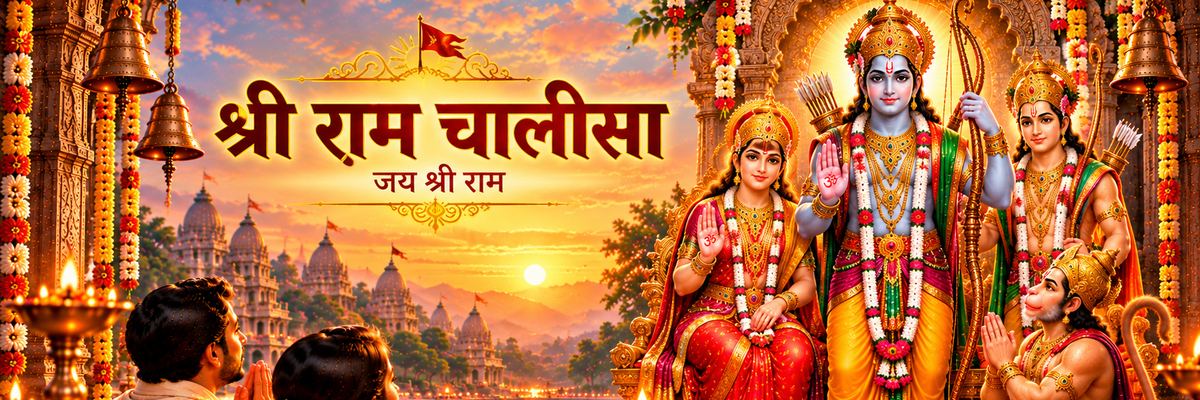
Original text
॥ दोहा ॥ आदौ राम तपोवनादि गमनं हत्वाह् मृगा काञ्चनं वैदेही हरणं जटायु मरणं सुग्रीव संभाषणं बाली निर्दलं समुद्र तरणं लङ्कापुरी दाहनम् पश्चद्रावनं कुम्भकर्णं हननं एतद्धि रामायणं ॥ चौपाई ॥ श्री रघुबीर भक्त हितकारी । सुनि लीजै प्रभु अरज हमारी॥1॥ निशि दिन ध्यान धरै जो कोई । ता सम भक्त और नहिं होई॥2॥ ध्यान धरे शिवजी मन माहीं । ब्रह्मा इन्द्र पार नहिं पाहीं॥3॥ जय जय जय रघुनाथ कृपाला । सदा करो सन्तन प्रतिपाला॥4॥ दूत तुम्हार वीर हनुमाना । जासु प्रभाव तिहूँ पुर जाना॥5॥ तुव भुजदण्ड प्रचण्ड कृपाला । रावण मारि सुरन प्रतिपाला॥6॥ तुम अनाथ के नाथ गोसाईं । दीनन के हो सदा सहाई॥7॥ ब्रह्मादिक तव पार न पावैं । सदा ईश तुम्हरो यश गावैं॥8॥ चारिउ वेद भरत हैं साखी । तुम भक्तन की लज्जा राखी॥9॥ गुण गावत शारद मन माहीं । सुरपति ताको पार न पाहीं॥10॥ नाम तुम्हार लेत जो कोई । ता सम धन्य और नहिं होई॥11॥ राम नाम है अपरम्पारा । चारिहु वेदन जाहि पुकारा॥12॥ गणपति नाम तुम्हारो लीन्हों । तिनको प्रथम पूज्य तुम कीन्हों॥13॥ शेष रटत नित नाम तुम्हारा । महि को भार शीश पर धारा॥14॥ फूल समान रहत सो भारा । पावत कोउ न तुम्हरो पारा॥15॥ भरत नाम तुम्हरो उर धारो । तासों कबहुँ न रण में हारो॥16॥ नाम शत्रुहन हृदय प्रकाशा । सुमिरत होत शत्रु कर नाशा॥17॥ लषन तुम्हारे आज्ञाकारी । सदा करत सन्तन रखवारी॥18॥ ताते रण जीते नहिं कोई । युद्ध जुरे यमहूँ किन होई॥19॥ महा लक्ष्मी धर अवतारा । सब विधि करत पाप को छारा॥20॥ सीता राम पुनीता गायो । भुवनेश्वरी प्रभाव दिखायो॥21॥ घट सों प्रकट भई सो आई । जाको देखत चन्द्र लजाई॥22॥ सो तुमरे नित पांव पलोटत । नवो निद्धि चरणन में लोटत॥23॥ सिद्धि अठारह मंगल कारी । सो तुम पर जावै बलिहारी॥24॥ औरहु जो अनेक प्रभुताई । सो सीतापति तुमहिं बनाई॥25॥ इच्छा ते कोटिन संसारा । रचत न लागत पल की बारा॥26॥ जो तुम्हरे चरनन चित लावै । ताको मुक्ति अवसि हो जावै॥27॥ सुनहु राम तुम तात हमारे । तुमहिं भरत कुल- पूज्य प्रचारे॥28॥ तुमहिं देव कुल देव हमारे । तुम गुरु देव प्राण के प्यारे॥29॥ जो कुछ हो सो तुमहीं राजा । जय जय जय प्रभु राखो लाजा॥30॥ रामा आत्मा पोषण हारे । जय जय जय दशरथ के प्यारे॥31॥ जय जय जय प्रभु ज्योति स्वरूपा । निगुण ब्रह्म अखण्ड अनूपा॥32॥ सत्य सत्य जय सत्य- ब्रत स्वामी । सत्य सनातन अन्तर्यामी॥33॥ सत्य भजन तुम्हरो जो गावै । सो निश्चय चारों फल पावै॥34॥ सत्य शपथ गौरीपति कीन्हीं । तुमने भक्तहिं सब सिद्धि दीन्हीं॥35॥ ज्ञान हृदय दो ज्ञान स्वरूपा । नमो नमो जय जापति भूपा॥36॥ धन्य धन्य तुम धन्य प्रतापा । नाम तुम्हार हरत संतापा॥37॥ सत्य शुद्ध देवन मुख गाया । बजी दुन्दुभी शंख बजाया॥38॥ सत्य सत्य तुम सत्य सनातन । तुमहीं हो हमरे तन मन धन॥39॥ याको पाठ करे जो कोई । ज्ञान प्रकट ताके उर होई॥40॥ आवागमन मिटै तिहि केरा । सत्य वचन माने शिव मेरा॥41॥ और आस मन में जो ल्यावै । तुलसी दल अरु फूल चढ़ावै॥42॥ साग पत्र सो भोग लगावै । सो नर सकल सिद्धता पावै॥43॥ अन्त समय रघुबर पुर जाई । जहाँ जन्म हरि भक्त कहाई॥44॥ श्री हरि दास कहै अरु गावै । सो वैकुण्ठ धाम को पावै॥45॥ ॥ दोहा ॥ सात दिवस जो नेम कर पाठ करे चित लाय । हरिदास हरिकृपा से अवसि भक्ति को पाय ॥ राम चालीसा जो पढ़े रामचरण चित लाय । जो इच्छा मन में करै सकल सिद्ध हो जाय ॥
Transliteration
Doha: Adau Ram Tapovanadi Gamanam Hatvah Mriga Kanchanam, Vaidehi Haranam Jatayu Maranam Sugriv Sambhashanam, Bali Nirdalam Samudra Taranam Lankapuri Dahanam, Pashchadravanam Kumbhakarnam Hananam Etaddhi Ramayanam. Chaupai: 1. Shri Raghubir Bhakta Hitakari, Suni Lijai Prabhu Araj Hamari. 2. Nishi Din Dhyan Dharai Jo Koi, Ta Sam Bhakta Aur Nahin Hoi. 3. Dhyan Dhare Shivaji Man Mahin, Brahma Indra Par Nahin Pahin. 4. Jai Jai Jai Raghunath Kripala, Sada Karo Santan Pratipala. 5. Dut Tumhar Vir Hanumana, Jasu Prabhav Tihun Pur Jana. 6. Tuv Bhujadanda Prachanda Kripala, Ravan Mari Suran Pratipala. 7. Tum Anath Ke Nath Gosain, Dinan Ke Ho Sada Sahai. 8. Brahmadik Tav Par Na Pavain, Sada Ish Tumharo Yash Gavain. 9. Chariu Ved Bharat Hain Sakhi, Tum Bhaktan Ki Lajja Rakhi. 10. Gun Gavat Sharad Man Mahin, Surapati Tako Par Na Pahin. 11. Nam Tumhar Let Jo Koi, Ta Sam Dhanya Aur Nahin Hoi. 12. Ram Nam Hai Aparampara, Charihu Vedan Jahi Pukara. 13. Ganapati Nam Tumharo Linhon, Tinako Pratham Pujya Tum Kinhon. 14. Shesh Ratat Nit Nam Tumhara, Mahi Ko Bhar Shish Par Dhara. 15. Phul Saman Rahat So Bhara, Pavat Kou Na Tumharo Para. 16. Bharat Nam Tumharo Ur Dharo, Tason Kabahun Na Ran Mein Haro. 17. Nam Shatruhan Hriday Prakasha, Sumirat Hot Shatru Kar Nasha. 18. Lashan Tumhare Agyakari, Sada Karat Santan Rakhavari. 19. Tate Ran Jite Nahin Koi, Yuddha Jure Yamahun Kin Hoi. 20. Maha Lakshmi Dhar Avatara, Sab Vidhi Karat Pap Ko Chhara. 21. Sita Ram Punita Gayo, Bhuvaneshvari Prabhav Dikhayo. 22. Ghat Son Prakat Bhai So Ai, Jako Dekhat Chandra Lajai. 23. So Tumare Nit Panv Palotat, Navo Niddhi Charanan Mein Lotat. 24. Siddhi Atharah Mangal Kari, So Tum Par Javai Balihari. 25. Aurahu Jo Anek Prabhutai, So Sitapati Tumahin Banai. 26. Ichchha Te Kotin Sansara, Rachat Na Lagat Pal Ki Bara. 27. Jo Tumhare Charanan Chit Lavai, Tako Mukti Avasi Ho Javai. 28. Sunahu Ram Tum Tat Hamare, Tumahin Bharat Kul- Pujya Prachare. 29. Tumahin Dev Kul Dev Hamare, Tum Guru Dev Pran Ke Pyare. 30. Jo Kuchh Ho So Tumahin Raja, Jai Jai Jai Prabhu Rakho Laja. 31. Rama Atma Poshan Hare, Jai Jai Jai Dasharath Ke Pyare. 32. Jai Jai Jai Prabhu Jyoti Svarupa, Nigun Brahma Akhanda Anupa. 33. Satya Satya Jai Satya- Brat Svami, Satya Sanatan Antaryami. 34. Satya Bhajan Tumharo Jo Gavai, So Nishchay Charon Phal Pavai. 35. Satya Shapath Gauripati Kinhin, Tumane Bhaktahin Sab Siddhi Dinhin. 36. Gyan Hriday Do Gyan Svarupa, Namo Namo Jai Japati Bhupa. 37. Dhanya Dhanya Tum Dhanya Pratapa, Nam Tumhar Harat Santapa. 38. Satya Shuddha Devan Mukh Gaya, Baji Dundubhi Shankh Bajaya. 39. Satya Satya Tum Satya Sanatan, Tumahin Ho Hamare Tan Man Dhan. 40. Yako Path Kare Jo Koi, Gyan Prakat Take Ur Hoi. 41. Avagaman Mitai Tihi Kera, Satya Vachan Mane Shiv Mera. 42. Aur As Man Mein Jo Lyavai, Tulasi Dal Aru Phul Charhavai. 43. Sag Patra So Bhog Lagavai, So Nar Sakal Siddhata Pavai. 44. Anta Samay Raghubar Pur Jai, Jahan Janma Hari Bhakta Kahai. 45. Shri Hari Das Kahai Aru Gavai, So Vaikuntha Dham Ko Pavai. Doha: Sat Divas Jo Nem Kar Path Kare Chit Lay, Haridas Harikripa Se Avasi Bhakti Ko Pay. Ram Chalisa Jo Parhe Ramacharan Chit Lay, Jo Ichchha Man Mein Karai Sakal Siddha Ho Jay.
The whole Ramayana in one verse
This chalisa opens not with a Hindi doha but with a Sanskrit shloka widely known as the Eka Shloki Ramayana — the entire epic compressed into four lines: Ram's going to the forest, the golden deer slain, Vaidehi (Sita) carried off, Jatayu's death, the meeting with Sugriva, Bali's defeat, the crossing of the ocean, the burning of Lanka, and finally the killing of Ravana and Kumbhakarna. "Etaddhi Ramayanam" — this, indeed, is the Ramayana.
A hymn to the name
The chaupais that follow are less a retelling than a meditation on the power of Ram's name. Shiva holds him in meditation; Brahma and Indra cannot find his limit. The chalisa says Ganesh became the first-worshipped (pratham pujya) because he took Ram's name, and that Shesha, by chanting it constantly, carries the weight of the earth as lightly as a flower. Even his brothers' strength is traced to it: Bharat, holding the name in his heart, never loses in battle; Shatrughna's name destroys enemies when remembered; and Lakshman, ever obedient, guards the saints.
Sita and the formless Ram
Around verses 20–25 it turns to Sita as an avatar of Mahalakshmi — emerging from a pot (ghat), so lovely that the moon is shamed — who serves at his feet while the nine nidhis and eighteen siddhis wait on him. The later verses move from the personal to the absolute: Ram is "jyoti swaroop," the formless, undivided, incomparable Brahman, and the word satya (truth) repeats again and again as the hymn builds toward its close.
What it promises, and how simply
The phalashruti is notable for how modest the ritual it asks for is: offer tulsi leaves and flowers, and even a plain offering of greens (saag patra) as bhog, and one attains every siddhi, the end of rebirth, and at the last goes to Raghubar's city. The poet signs as Haridas, and the closing dohas prescribe a seven-day niyam — recite it with attention for seven days and, by Hari's grace, devotion is sure to come.
Author, language and form at a glance
- Who wrote it: a poet who signs as Haridas, in the last chaupai ("Shri Haridas kahai aru gavai") and the first closing doha ("Haridas Hari kripa se"). It is sometimes wrongly credited to Tulsidas. Its own text names Haridas, and no more is known about him.
- Language: two languages. It opens with a Sanskrit shloka, the Eka Shloki Ramayana ("Adau Ram tapovanadi gamanam"), which tells the whole epic in four lines. The chaupais and dohas are in devotional Hindi with Awadhi forms, the language of Ram's own Ayodhya.
- Form: the Sanskrit shloka in place of an opening doha, forty-five chaupais in this version, and two closing dohas. About twelve minutes aloud.
- Its theme: less a story than a hymn to Ram's name and to Ram as the formless, true Brahman. The word satya, truth, rings through its last third.
Why read it
The chalisa's central claim is that Ram's name is the greatest power there is. Shesha carries the earth as lightly as a flower by chanting it. Ganesha became first-worshipped by taking it. Bharata never loses a battle because he holds it in his heart (11–17). "Whoever takes your name, no one is as blessed as they" (11). To read it is to practise that name.
It also asks remarkably little. Its phalashruti says that someone who offers only tulsi and flowers, with a plain offering of greens (saag patra) as bhog, gains every siddhi (42–43). For anyone who thinks they lack the means or knowledge for proper worship, this chalisa says that is enough.
When to read it
- Ram Navami: Chaitra Shukla Navami, Ram's birthday, at the noon hour of his birth and through the nine days of Chaitra Navratri before it.
- A seven-day niyam: the first closing doha prescribes it: "saat divas jo nem kar path kare chit lay", whoever recites it with attention as a rule for seven days surely gains devotion by Hari's grace.
- Daily: morning or evening before the Ram Darbar (Ram, Sita, Lakshman and Hanuman).
- Festivals of Ram: Vivah Panchami (Ram and Sita's wedding, Margashirsha Shukla Panchami), Dussehra and Diwali.
- At the end of life: chaupai 44 promises that at the last moment one goes to Raghubar's city, and many families read it, or the Ram name, beside the dying.
How to read it (path vidhi)
- Bathe and sit before an image of the Ram Darbar, facing east or north.
- Light a ghee lamp. Offer what the chalisa itself asks for: tulsi dal and flowers (42), and a simple bhog, even greens (saag patra), as it says (43).
- Recite the Sanskrit shloka first. If its pronunciation is hard, read it slowly, since it is the whole Ramayana in brief. Then read the chaupais and closing dohas aloud.
- Chant Shri Ram Jai Ram Jai Jai Ram or the Shri Ram Mantra a few times, and finish with "Siyavar Ramchandra ki jai".
- For the seven-day niyam, keep the same time each day and complete all seven.
Benefits the chalisa itself names
- Knowledge awakens in the heart of whoever recites it (40).
- Freedom from rebirth: "aavagaman mitai tihi kera", "Shiva himself vouches for this" (41).
- Every siddhi for one who offers tulsi, flowers and even simple greens with faith (42–43).
- Ram's abode at the end: one goes to Raghubar's city, where one is known as Hari's devotee (44), and attains Vaikuntha (45).
- The four fruits of life: one who sings his true bhajan surely attains all four (34).
- Devotion within seven days: by Hari's grace (first closing doha).
- Every wish fulfilled for one who reads it with their mind on Ram's feet (last doha).
- And earlier: "for one who sets their mind on your feet, liberation is certain" (27).
Frequently asked questions
Who wrote the Ram Chalisa?
A poet named Haridas, who signs in the last chaupai and the first closing doha. It is not by Tulsidas, though it shares his Awadhi idiom and his love of the Ram name.
What is the Sanskrit verse at the beginning?
The Eka Shloki Ramayana, a traditional verse that compresses the whole Ramayana into four lines: the exile, the golden deer, Sita's abduction, Jatayu's death, the alliance with Sugriva, Bali's fall, the crossing of the sea, the burning of Lanka, and the killing of Ravana and Kumbhakarna. Reciting it is held to equal reading the epic.
How long should I read it for?
The chalisa itself prescribes a seven-day niyam. Daily reading is also common, especially during Chaitra Navratri leading up to Ram Navami.
What should I offer while reading it?
Tulsi leaves and flowers, and a simple bhog. The chalisa specifically says even a plain offering of greens is enough when given with faith.
Can it be read along with the Hanuman Chalisa?
Yes. Many read the Ram Chalisa first and the Hanuman Chalisa after, since Hanuman is Ram's servant and messenger, and the Ram Chalisa itself calls him "your messenger, brave Hanuman" (5).
Why does the word "satya" repeat so often?
From chaupai 33 onward the chalisa calls Ram the eternal truth: "true, true, victory to the Lord of the true vow, eternal truth, the indweller". It moves from Ram the prince to Ram as the formless Brahman, and the repetition makes that a chant of its own.
Spotted a mistake?
If you find any grammatical, Hindi, English, mantra-text or other mistake on this page, tell us — we will correct it within 24 hours.