
Shri Vishnu
The preserver within the Hindu trinity, who takes avatar after avatar to restore balance and dharma in the world.
Who Shri Vishnu is
Vishnu is the preserver in the Hindu trinity. Where Brahma creates and Shiva dissolves, Vishnu sustains the world, and whenever dharma (righteous order) is seriously threatened, he comes down to earth in an avatar to restore balance. In the Bhagavad Gita, Krishna puts it plainly: whenever righteousness declines, he takes birth age after age to protect the good. For Vaishnava traditions, which include most Ram and Krishna devotees, he is the Supreme Lord himself, called Narayana, Hari and Bhagavan.
Where he comes from in scripture
In the Rigveda, Vishnu is the god who measured the universe in three great strides. His later mythology is told in the Vishnu Purana, the Shrimad Bhagavatam and the epics. The Vishnu Sahasranama, his thousand names, which Bhishma taught Yudhishthira in the Mahabharata, is one of the most widely recited hymns in Hinduism.
The ten avatars (Dashavatara)
Ten avatars are traditionally counted:
- Matsya (the fish), who saved Manu and the Vedas from the great flood;
- Kurma (the tortoise), who held up Mount Mandara during the churning of the ocean;
- Varaha (the boar), who lifted the earth from the cosmic waters;
- Narasimha (the man-lion), who protected the boy devotee Prahlada;
- Vamana (the dwarf), who asked King Bali for three steps of land and covered all the worlds in them;
- Parashurama, the warrior-sage;
- Ram and Krishna;
- Buddha in many traditions (some lists name Balarama instead);
- Kalki, the avatar yet to come at the end of the current age.
Each avatar answers a particular crisis rather than following a fixed pattern, which is part of why Vishnu is seen as endlessly adaptable in the service of dharma. His grace is not only for battles: the stories of Dhruva and of the elephant Gajendra show him coming to a single devotee who calls on him sincerely.
Iconography
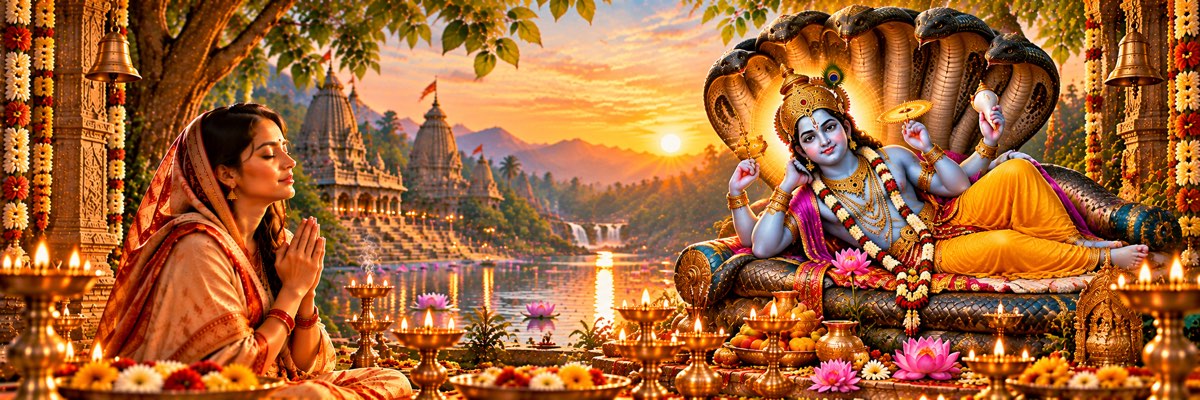
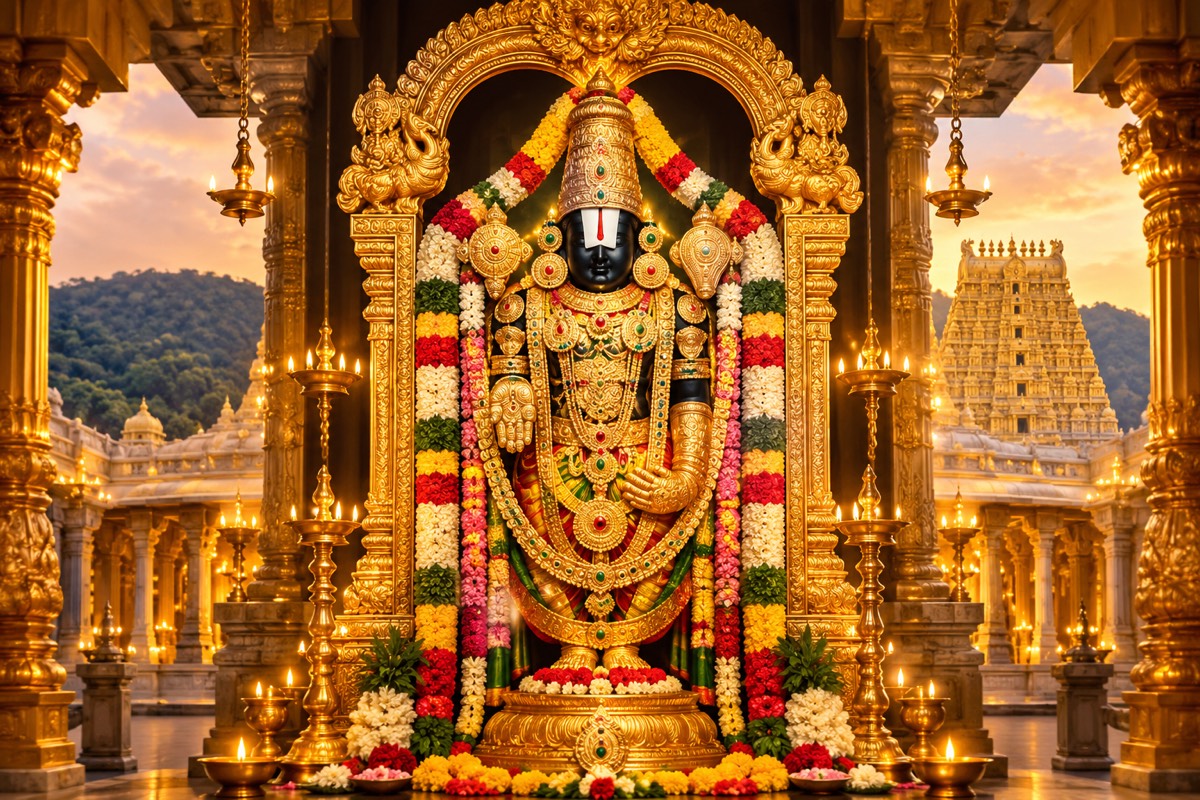
Vishnu is shown dark blue, reclining on the many-headed serpent Shesha on the ocean of milk (Kshirasagar), with Lakshmi at his feet and Brahma seated on a lotus that grows from his navel. Standing, he holds four emblems: the conch Panchajanya, the discus Sudarshan Chakra, the mace Kaumodaki and a lotus. He wears the Kaustubha jewel and the Shrivatsa mark on his chest, and his vehicle is the eagle Garuda.
How he is worshipped
Vishnu is worshipped directly and, very often, through his avatars, so a Ram or Krishna devotee is a Vishnu devotee too. His day is Thursday, when devotees wear yellow and offer yellow sweets and flowers (see Thursday Vishnu Bhakti). Tulsi is indispensable to his worship (see Tulsi Jal Arpan), as is the fast of Ekadashi twice a month. Many homes worship him as the shaligram, a sacred black ammonite stone from the Gandaki river. His core mantras are Om Namo Bhagavate Vasudevaya and "Om Namo Narayanaya", along with the Vishnu Gayatri Mantra, the Vishnu Chalisa and the aarti Om Jai Jagdish Hare, sung in nearly every Hindu household.
Festivals and temples
The four months of Chaturmas, from Devshayani Ekadashi to Prabodhini Ekadashi, are the time of Vishnu's cosmic sleep. His waking is celebrated with Tulsi Vivah. Vaikuntha Ekadashi is the holiest day in South Indian Vishnu temples. His great temples include Tirupati (as Venkateswara), Badrinath in the Himalayas, Jagannath in Puri, Ranganathaswamy at Srirangam and Padmanabhaswamy in Thiruvananthapuram, and the Tamil Alvar saints sang of 108 sacred Vishnu shrines, the Divya Desams.
Jalabhishek
Peepal Tree Water Offering Mantra – Peepal Jal Arpan Vidhi
The mantra to chant while offering water to the Peepal is "Mulato Brahmarupaya Madhyato Vishnurupine, Agratah Shivarupaya Vriksharajaya Te Namah." Pour the water slowly at the root as you chant, then do parikrama and bow. Below: its meaning, the full vidhi, timing, parikrama count and rules.
Read more →JalabhishekTulsi Jal Arpan: How to Offer Water to Tulsi Mata – Mantra, Vidhi & Rules
How and when to offer water to Tulsi Mata, the mantra to recite and its meaning, what to offer (and what not to mix into the water), and the rules — including why water is not offered on Sundays and Ekadashi.
Read more →Mantra
Vishnu Gayatri Mantra
A Gayatri-pattern mantra invoking Vishnu as Narayana, the preserver of the universe.
Read more →MantraOm Namo Bhagavate Vasudevaya
The Dvadashakshari — the twelve-syllable mantra of Lord Vishnu and Shri Krishna, which opens the Shrimad Bhagavatam and which Narada gave the child Dhruva.
Read more →MantraMangalam Bhagwan Vishnu
A short verse of auspiciousness to Vishnu, sung at weddings and at the start of new undertakings: "Auspicious is Lord Vishnu, auspicious the one with Garuda on his banner, auspicious the lotus-eyed; Hari is the very abode of auspiciousness."
Read more →MantraDhanvantari Mantra
The mantra of Lord Dhanvantari, the physician of the gods and form of Vishnu who rose from the churning of the ocean holding the pot of amrit. Chanted for health and healing, and above all on Dhanteras, which is Dhanvantari Jayanti.
Read more →MantraOm Namo Narayanaya – Vishnu Ashtakshara Mantra
The eight-syllable mantra of Narayana — what "Narayana" means, how it differs from Om Namo Bhagavate Vasudevaya, Narada's "Narayan Narayan", and how to chant it on Ekadashi and Thursdays, with the Mangalam Bhagwan Vishnu shloka.
Read more →MantraShantakaram Bhujagashayanam (Vishnu Dhyana Mantra)
The best-known dhyana shloka of Vishnu: a single verse that paints him resting on the serpent Shesha, calm, cloud-dark and lotus-eyed. Its meaning, its place before the Vishnu Sahasranama, and how to use it in daily puja.
Read more →Stotra
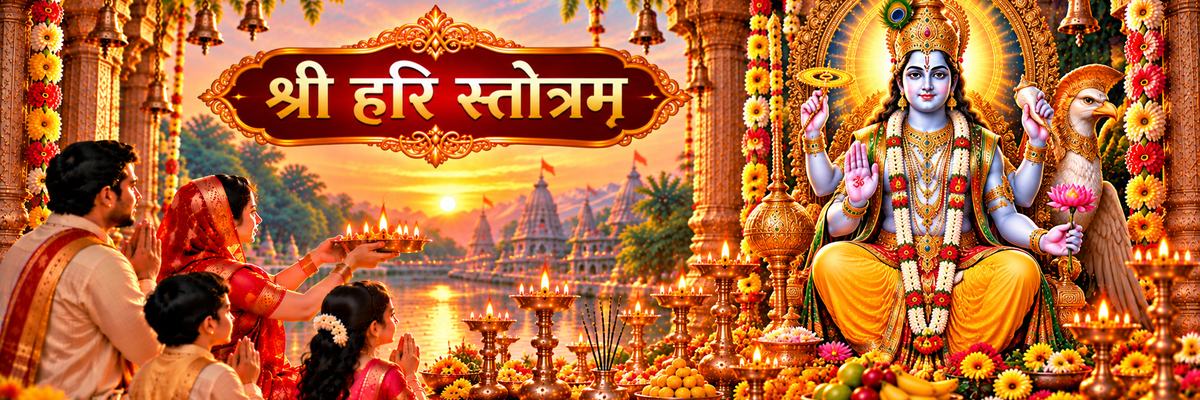
Shri Hari Stotram (Jagajjalapalam)
Eight rhythmic Sanskrit verses to Vishnu by Swami Brahmananda, each a chain of epithets ending in the double refrain "bhaje'ham bhaje'ham", "I worship, I worship". It moves from the guardian of the web of the world and Lakshmi's beloved to the Lord beyond old age and birth, and calls itself a necklace for Murari's throat.
Read more →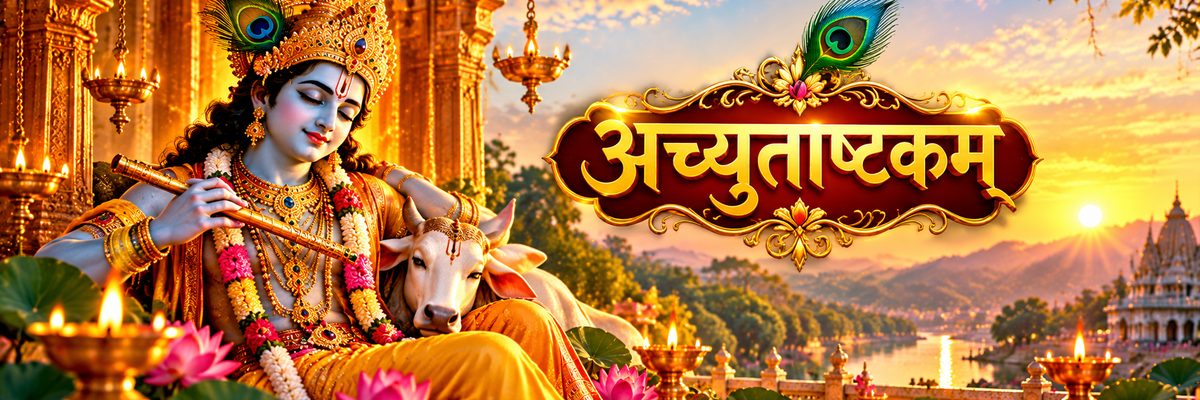
Achyutashtakam (Achyutam Keshavam)
Adi Shankaracharya's hymn to Achyuta, "the one who never falls", whose first verse, "Achyutam Keshavam Rama Narayanam", is among the most-sung bhajans in India. Its verses move freely between Rama and Krishna, naming Sita and Radha, Dandaka forest and the Yamuna, to show that every name and form belongs to one Vishnu.
Read more →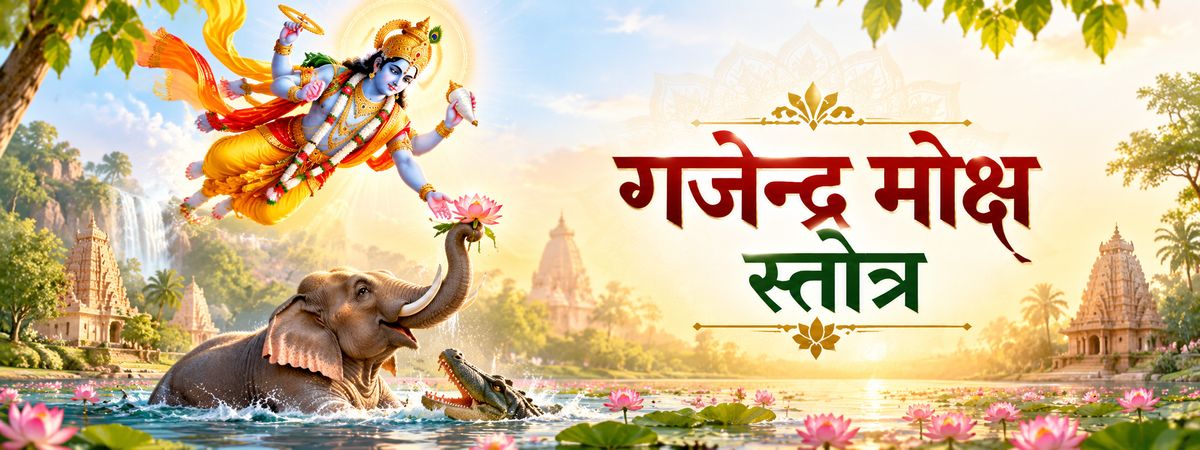
Gajendra Moksha Stotram – Shrimad Bhagavatam 8.3
The prayer of the elephant king Gajendra, caught by a crocodile and abandoned by his herd, from the third chapter of the Bhagavatam's eighth canto. All 33 verses, what Gajendra actually says to the Lord, the story around it, and why it is recited in times of crisis.
Read more →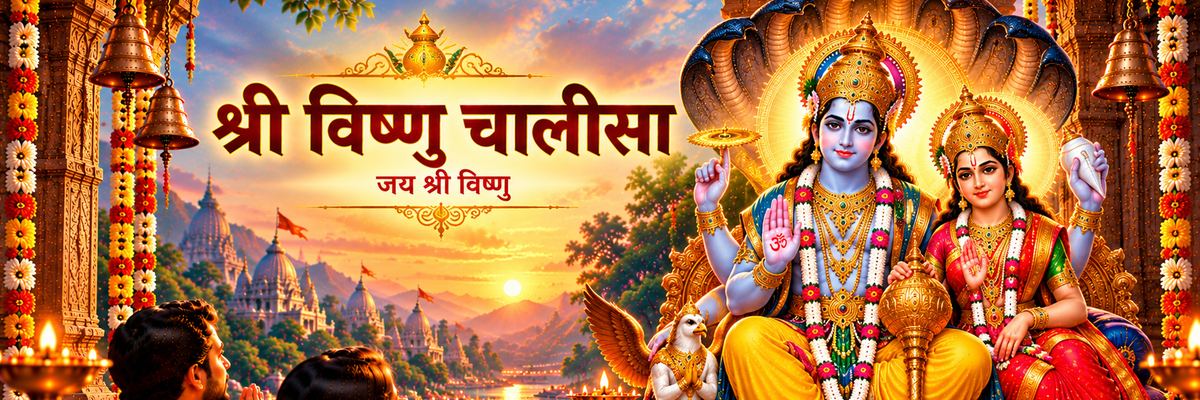
Aarti
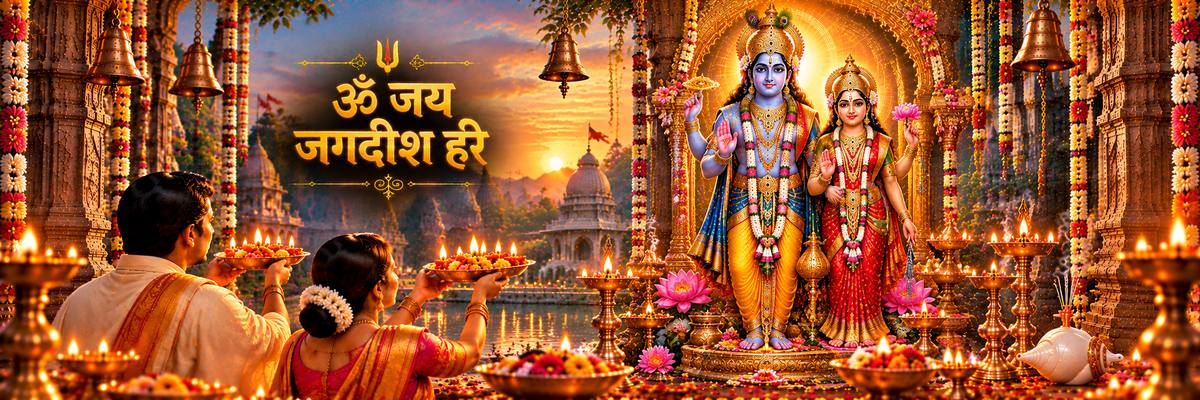
Om Jai Jagdish Hare
One of the most beloved aartis in Hindu worship, offered to Lord Vishnu as the lord of the universe.
Read more →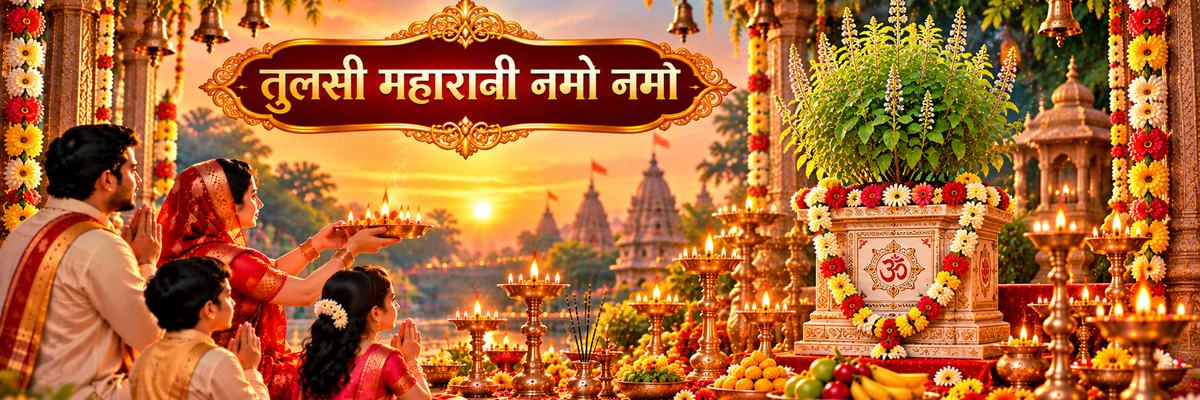
Tulsi Maharani Namo Namo (Tulsi Aarti)
The short aarti sung to the Tulsi plant at dusk, in Kartik and at Tulsi Vivah. It hails Tulsi as Hari's chief queen, who through penance became the bride of the Shaligram, whose leaves cling to Vishnu's feet, and without whom Hari accepts none of the fifty-six offerings.
Read more →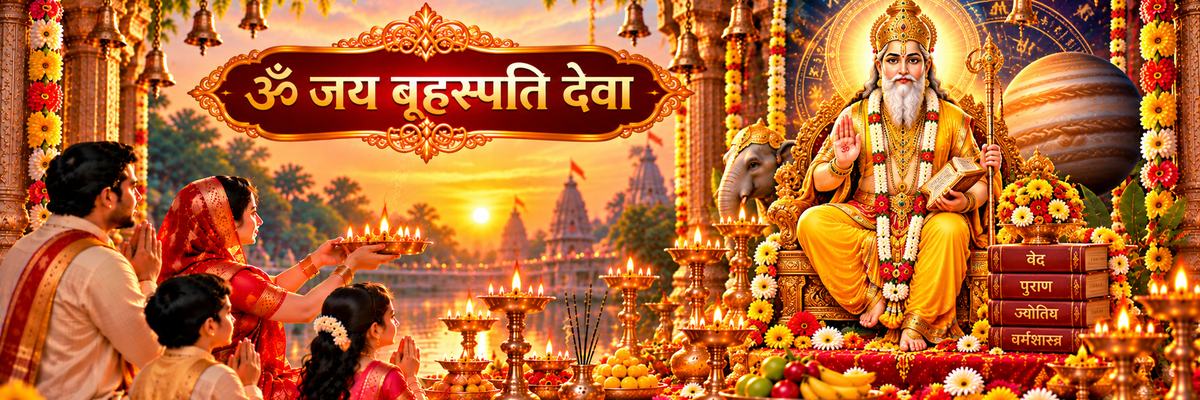
Om Jai Brihaspati Deva (Brihaspati Dev Aarti)
The aarti sung at the end of the Thursday (Brihaspativar) vrat. It offers bananas and dry fruit to Brihaspati, guru of the gods and lord of the planet Jupiter, praises him in words usually reserved for Vishnu, and ends with a cry to both: "Vishnu Bhagwan ki jai, Brihaspatidev Bhagwan ki jai".
Read more →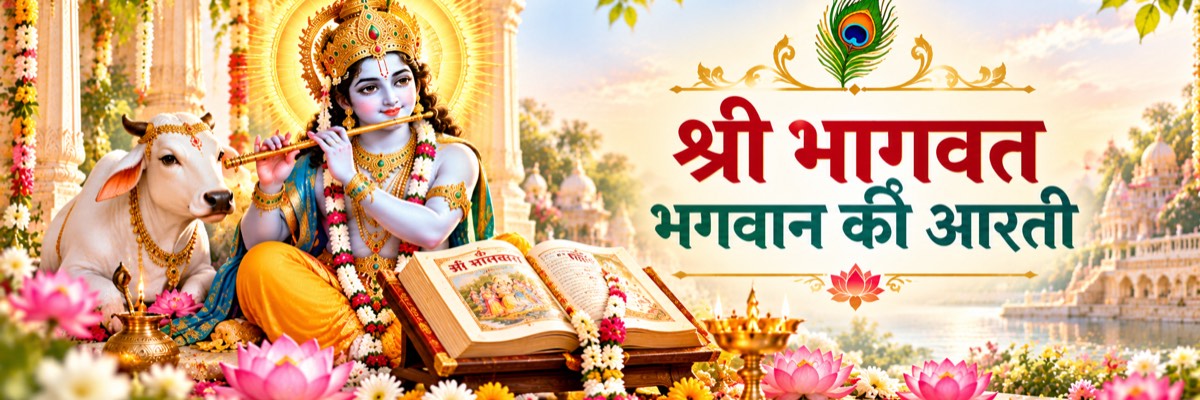
Shri Bhagwat Bhagwan Ki Aarti
The aarti sung to the Shrimad Bhagavatam itself at the close of a Bhagwat katha. It calls the book an immortal scripture, the path to liberation and a unique fifth Veda, and says that Shri Ram and Ghanshyam are both found in it. Its refrain promises that it carries sinners across their sins.
Read more →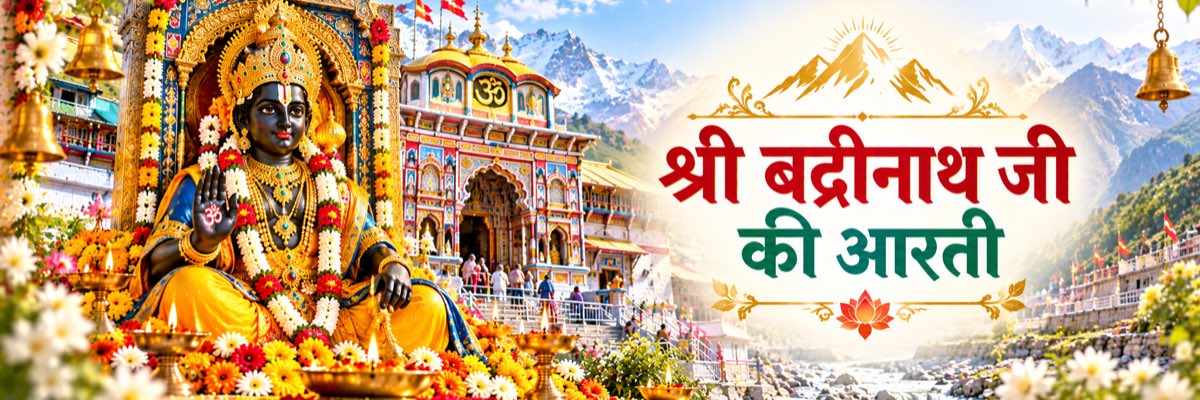
Pavan Mand Sugandh Sheetal – Shri Badrinath Aarti
The aarti of Badrinath Dham in the Himalayas — gentle, fragrant, cool breeze, a golden temple, the clear river flowing close by. Full text, what each stanza pictures, how it is sung at the shrine, and the debate over who wrote it.
Read more →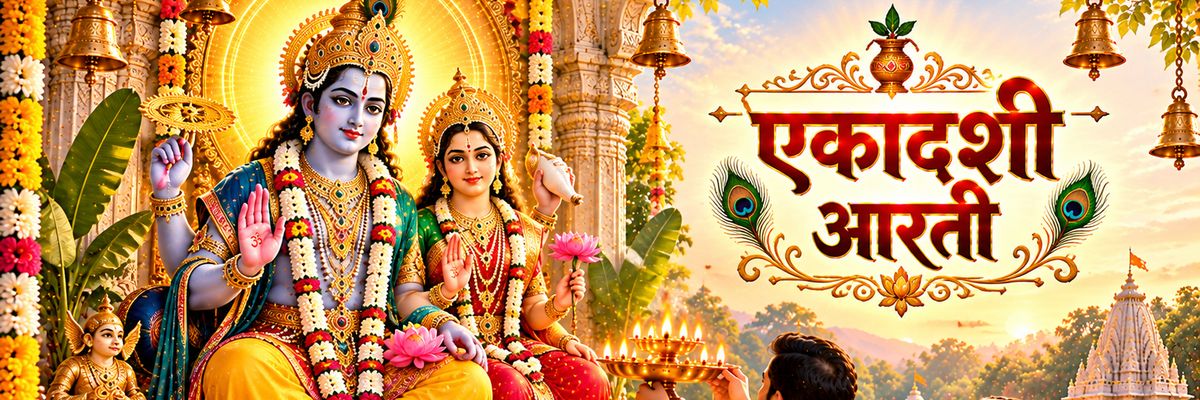
Om Jai Ekadashi Mata (Ekadashi Aarti)
The aarti of Ekadashi Mata, sung at the close of an Ekadashi fast. Unusually, it is also a calendar: its stanzas name all twenty-four Ekadashis month by month, from Utpanna in Margashirsha to Padmini in the extra month.
Read more →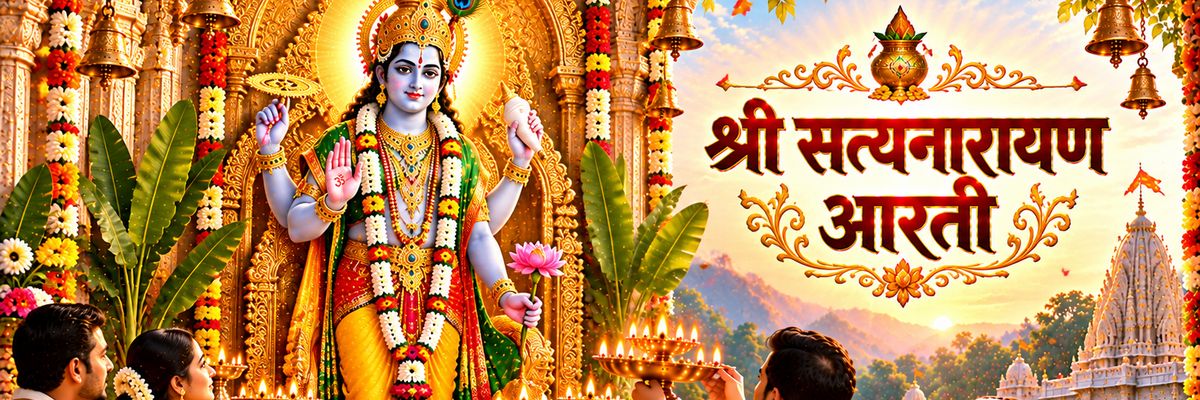
Jai Lakshmi Ramana (Satyanarayan Aarti)
The aarti sung at the end of every Satyanarayan katha, to the refrain "Jai Lakshmi Ramana", victory to Lakshmi's beloved. Its stanzas retell the katha in miniature: the poor brahmin, the woodcutter, the merchant who forgot his vow and the king in the forest.
Read more →Story
The Story of Samudra Manthan: The Churning of the Ocean
Weakened by Durvasa's curse, the gods join hands with the asuras to churn the ocean of milk for amrit, with Mount Mandara as the rod, Vasuki as the rope and Vishnu as the tortoise beneath. The halahal poison Shiva drinks, the treasures that rise, Lakshmi's choice, Mohini and Rahu — told from the Bhagavata, the Vishnu Purana and the Mahabharata, with where they differ.
Read more →The Story of Tulsi Vivah: Vrinda, Jalandhar and the Shaligram
Why is the tulsi plant married to Bhagwan Vishnu as the Shaligram every Kartik? The story of Vrinda, the faithful wife whose virtue made the asura Jalandhar unbeatable, the deception that ended it, and the curse that turned the Lord to stone — told from the Shiva Purana and the Devi Bhagavata, with the popular vrat katha and where the versions differ.
Read more →
The Story of Gajendra Moksha
The king of elephants, seized by a crocodile in a mountain lake, struggles for a thousand years until his herd and his strength desert him — and then calls on the Lord. The Bhagavatam's story of Gajendra, who he and the crocodile were in past lives, and what the story teaches about surrender.
Read more →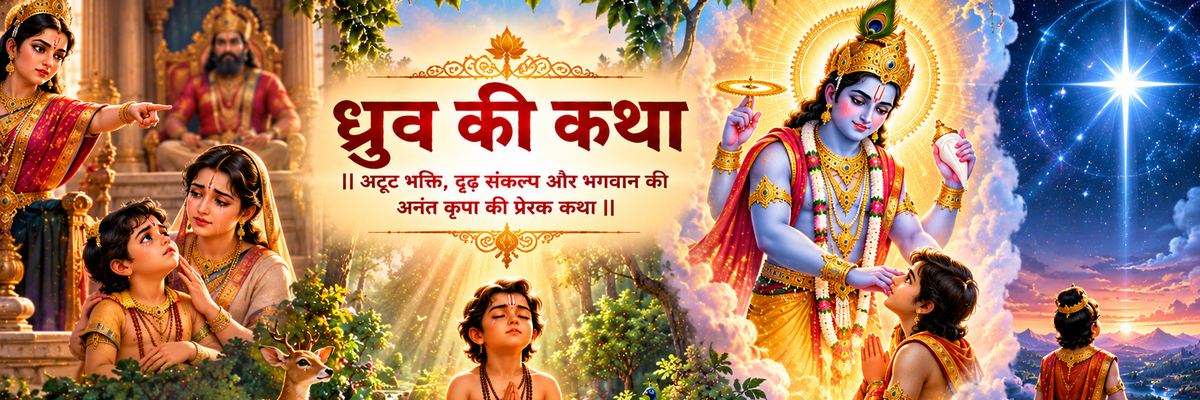
The Story of Dhruva
How a five-year-old prince, turned away from his father's lap, won a vision of Vishnu within six months and became the pole star.
Read more →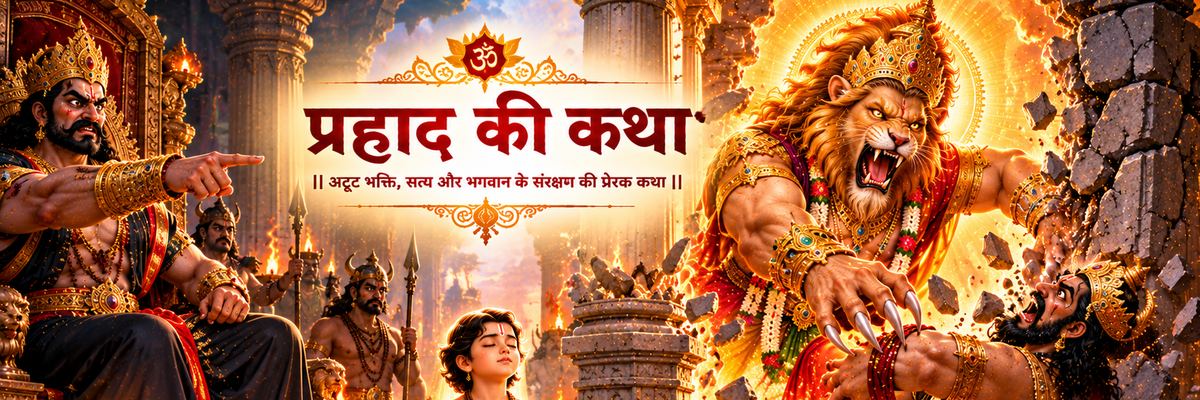
The Story of Prahlada
The story of a young devotee whose unwavering faith in Vishnu protected him from his own father's wrath.
Read more →Article
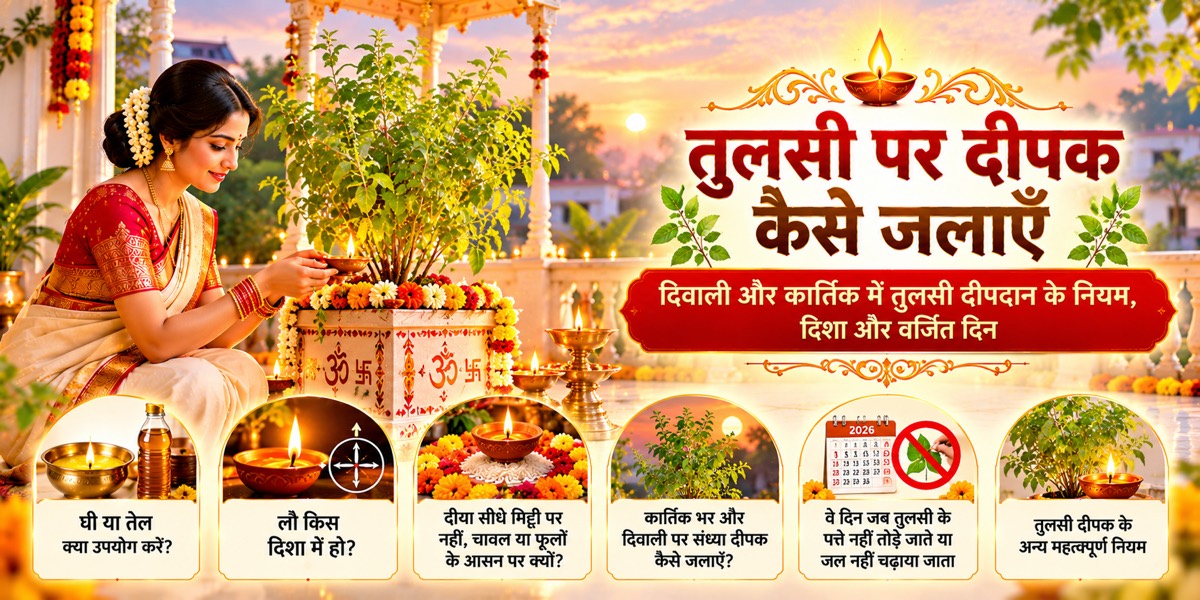
The Tulsi Deepam Protocol: How to Light the Diwali Lamp for Tulsi Mata, and the Days Not to Touch Her
How to light the evening diya at the Tulsi through Kartik and on Diwali: ghee or oil, which way the flame should face, why the lamp sits on a bed of rice or petals and not on the soil, and the 2026 calendar of days when Tulsi leaves are not plucked or the plant not watered: Sundays, Papankusha Ekadashi (22 Oct), Rama Ekadashi (5 Nov) and Diwali Amavasya, which this year falls on a Sunday.
Read more →Published6 min read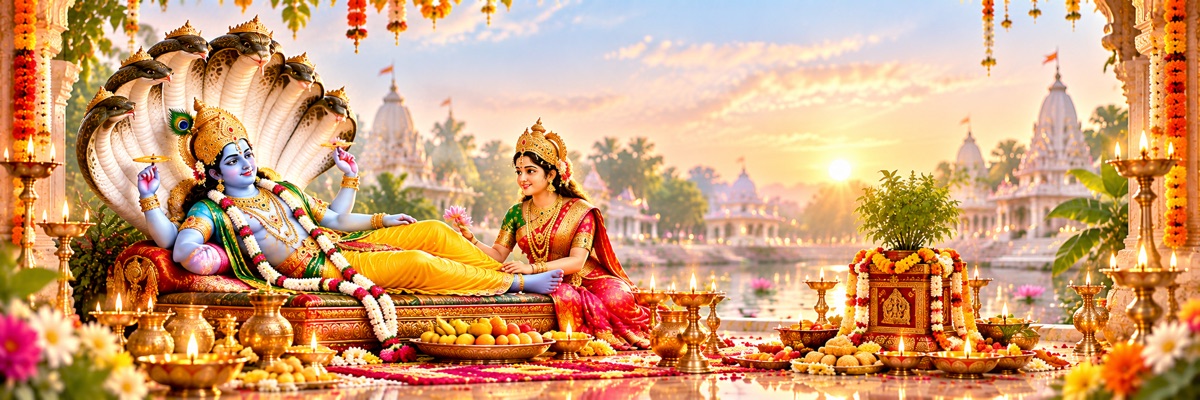
Dev Uthani Ekadashi 2026: When Does Lord Vishnu Wake? Tulsi Vivah Vidhi and the Return of Auspicious Ceremonies
Dev Uthani (Prabodhini) Ekadashi is on Friday, 20 November 2026, and the fast is broken on 21 November between 1:11 and 3:18 pm in Delhi. The mantra and method for waking Lord Vishnu, the sugarcane mandap, a simple Tulsi Vivah at home, the story of Vrinda, and why weddings begin again after this day.
Read more →Published9 min readVrat
Brihaspativar (Guruvar) Vrat: Thursday Fast Vidhi, Katha and Udyapan
The yellow Thursday fast to Brihaspati Dev and Lord Vishnu: when to begin it and how many Thursdays to keep, the banana-tree puja, the one salt-free yellow meal, the folk rules about hair and clothes, the katha, and the udyapan.
Read more →VratSatyanarayan Vrat and Katha: Puja Vidhi
The Satyanarayan puja and katha to Vishnu as "Truth", kept on Purnima and at every happy milestone — a new home, a wedding, a promotion. The five chapters of the katha, the samagri, the step-by-step puja, and the panjiri-and-banana prasad.
Read more →VratEkadashi Vrat
A fasting observance on the eleventh day of each lunar fortnight, dedicated to Lord Vishnu.
Read more →Bhajan
Puja Vidhi
Temple
Spotted a mistake?
If you find any grammatical, Hindi, English, mantra-text or other mistake on this page, tell us — we will correct it within 24 hours.