
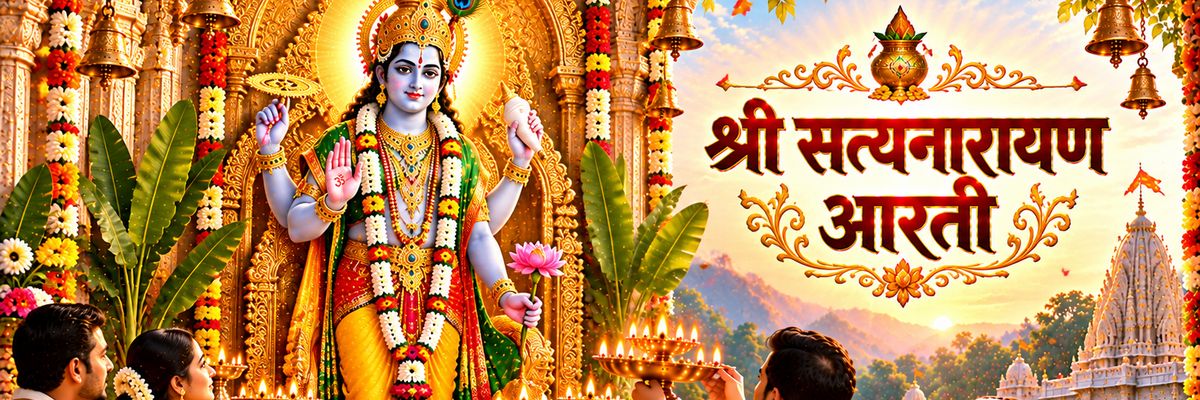
Original text
जय लक्ष्मी रमणा, स्वामी जय लक्ष्मी रमणा । सत्यनारायण स्वामी, जन पातक हरणा ॥ ॐ जय लक्ष्मी रमणा, स्वामी जय लक्ष्मी रमणा । रत्न जडि़त सिंहासन, अद्भुत छवि राजै । नारद करत निराजन, घण्टा ध्वनि बाजै ॥ ॐ जय लक्ष्मी रमणा, स्वामी जय लक्ष्मी रमणा । प्रकट भये कलि कारण, द्विज को दर्श दियो । बूढ़ा ब्राह्मण बनकर, कंचन महल कियो ॥ ॐ जय लक्ष्मी रमणा, स्वामी जय लक्ष्मी रमणा । दुर्बल भील कठारो, जिन पर कृपा करी । चन्द्रचूड़ एक राजा, तिनकी विपत्ति हरी ॥ ॐ जय लक्ष्मी रमणा, स्वामी जय लक्ष्मी रमणा । वैश्य मनोरथ पायो, श्रद्धा तज दीन्ही । सो फल भोग्यो प्रभुजी, फिर-स्तुति कीन्हीं ॥ ॐ जय लक्ष्मी रमणा, स्वामी जय लक्ष्मी रमणा । भाव भक्ति के कारण, छिन-छिन रूप धरयो । श्रद्धा धारण कीन्हीं, तिनको काज सरयो ॥ ॐ जय लक्ष्मी रमणा, स्वामी जय लक्ष्मी रमणा । ग्वाल-बाल संग राजा, वन में भक्ति करी । मनवांछित फल दीन्हों, दीनदयाल हरी ॥ ॐ जय लक्ष्मी रमणा, स्वामी जय लक्ष्मी रमणा । चढ़त प्रसाद सवायो, कदली फल, मेवा । धूप दीप तुलसी से, राजी सत्यदेवा ॥ ॐ जय लक्ष्मी रमणा, स्वामी जय लक्ष्मी रमणा । श्री सत्यनारायण जी की आरती, जो कोई नर गावै । ऋद्धि-सिद्ध सुख-संपत्ति, सहज रूप पावे ॥ जय लक्ष्मी रमणा, स्वामी जय लक्ष्मी रमणा । सत्यनारायण स्वामी, जन पातक हरणा ॥
Transliteration
Jai Lakshmi Ramana Svami Jai Lakshmi Ramana Satyanarayan Svami Jan Patak Harana Om Jai Lakshmi Ramana Svami Jai Lakshmi Ramana Ratna Jadi़t Sinhasan Adbhut Chhavi Rajai Narad Karat Nirajan Ghanta Dhvani Bajai Om Jai Lakshmi Ramana Svami Jai Lakshmi Ramana Prakat Bhaye Kali Karan Dvij Ko Darsha Diyo Burha Brahman Banakar Kanchan Mahal Kiyo Om Jai Lakshmi Ramana Svami Jai Lakshmi Ramana Durbal Bhil Katharo Jin Par Kripa Kari Chandrachur Ek Raja Tinaki Vipatti Hari Om Jai Lakshmi Ramana Svami Jai Lakshmi Ramana Vaishya Manorath Payo Shraddha Taj Dinhi So Phal Bhogyo Prabhuji Phir-stuti Kinhin Om Jai Lakshmi Ramana Svami Jai Lakshmi Ramana Bhav Bhakti Ke Karan Chhin-chhin Rup Dharayo Shraddha Dharan Kinhin Tinako Kaj Sarayo Om Jai Lakshmi Ramana Svami Jai Lakshmi Ramana Gval-bal Sang Raja Van Men Bhakti Kari Manavanchhit Phal Dinhon Dinadayal Hari Om Jai Lakshmi Ramana Svami Jai Lakshmi Ramana Charhat Prasad Savayo Kadali Phal, Meva Dhup Dip Tulasi Se Raji Satyadeva Om Jai Lakshmi Ramana Svami Jai Lakshmi Ramana Shri Satyanarayan Ji Ki Arati Jo Koi Nar Gavai Riddhi-siddha Sukh-sampatti Sahaj Rup Pave Jai Lakshmi Ramana Svami Jai Lakshmi Ramana Satyanarayan Svami Jan Patak Harana
The aarti of the Satyanarayan katha
Satyanarayan, "Narayan who is Truth", is Vishnu worshipped through a vow and a story. The Satyanarayan puja is one of the most common household rituals in North and West India: on a Purnima, a housewarming, a birthday or after a wish comes true, the family hears the katha in five chapters and then sings this aarti. Its refrain addresses him as Lakshmi Ramana, "the one who delights Lakshmi", and jan pataka harana, "remover of people's sins".
The katha inside the aarti
After a stanza on his jewelled throne, with Narada waving the lamp and bells ringing, each stanza recalls one episode of the katha:
- The brahmin: "he appeared for the sake of the Kali age and gave darshan to a brahmin", coming as an old brahmin himself, and "made him a golden palace", the poor brahmin's reward for keeping the vow.
- The woodcutter: a weak Bhil woodcutter received his grace, and a king, Chandrachud, had his troubles removed.
- The merchant: a vaishya got his wish but gave up his faith, suffered the consequences, and then sang the Lord's praise again, the heart of the katha's warning about broken vows.
- The king in the forest: a king who joined cowherd boys in their worship in the forest received the fruit he desired.
The stanza on offerings gives the prasad exactly: sawaya (one and a quarter measures), banana and dry fruit, with dhoop, lamp and tulsi, which please Satyadev.
How it is sung
- At the end of the fifth chapter of the katha, with a ghee lamp or camphor, while the family stands.
- The prasad of panjiri or sheera (flour, ghee, sugar, banana and tulsi) is then distributed. The katha warns against refusing it.
- Purnima is the usual day; many families also hold the puja on Ekadashi or Sankranti.
Frequently asked questions
When is the Satyanarayan aarti sung?
After the five chapters of the Satyanarayan katha, as the closing act of the puja, before prasad is distributed.
Why is the prasad called "sawaya"?
The aarti says "chadhat prasad sawaya": the prasad is traditionally made in one and a quarter measures of each ingredient, a quantity considered auspicious.
Which day is best for Satyanarayan puja?
Purnima above all. It is also done on Ekadashi, Sankranti, and on occasions like griha pravesh or after a wish is fulfilled.
Who is Lakshmi Ramana?
Vishnu, "the one in whom Lakshmi delights". Satyanarayan is a form of Vishnu, so the aarti addresses him through Lakshmi.
Is this the same as Om Jai Jagdish Hare?
No. Om Jai Jagdish Hare is a general Vishnu aarti; Jai Lakshmi Ramana is specific to the Satyanarayan katha, though many families sing both.
Spotted a mistake?
If you find any grammatical, Hindi, English, mantra-text or other mistake on this page, tell us — we will correct it within 24 hours.