
Shri Ganesh
The elephant-headed remover of obstacles, invoked at the start of any new venture, worship or journey.
Who Shri Ganesh is
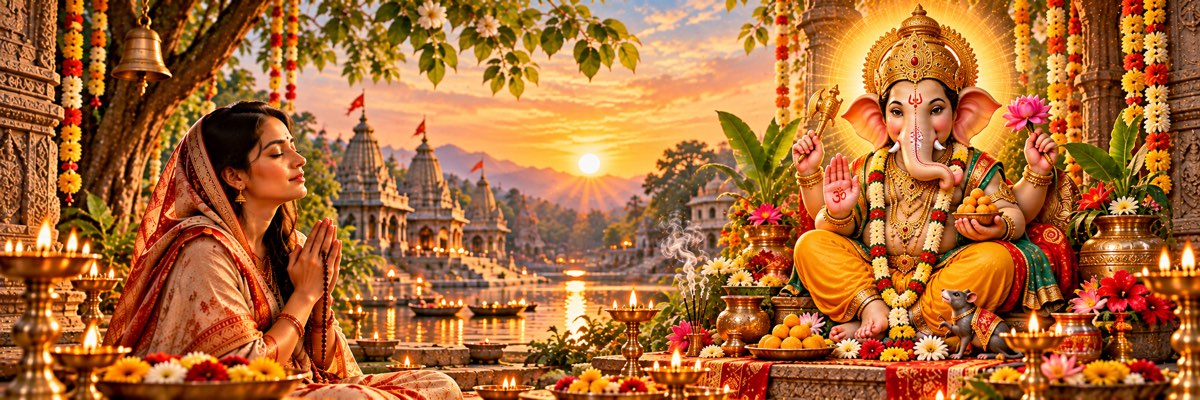
Ganesha is the elephant-headed son of Shiva and Parvati. He is worshipped as the remover of obstacles (Vighnaharta) and as the lord of beginnings, invoked first before any undertaking: a new business, a wedding, an exam, a house-warming, even the writing of a scripture. Almost every puja, whatever deity it is for, begins with a prayer to him. He is also the patron of learning and the arts, and one of the five deities of the Smarta panchayatana worship.
How he got his elephant head
The best-known version comes from the Shiva Purana. Parvati shaped a boy from the turmeric paste on her body and set him to guard her door while she bathed. When Shiva returned and the boy would not let him in, Shiva cut off his head in the fight that followed. Seeing Parvati's grief, Shiva sent his attendants to bring the head of the first creature they found, an elephant, restored the boy to life and made him leader of his hosts (ganas): Ganapati. The Brahmavaivarta Purana tells it differently: the child lost his head to the gaze of Shani, the version followed in the Ganesh Chalisa.
Other stories told of him
- Circling his parents: when Shiva and Parvati set a race around the world between Ganesha and his brother Kartikeya, Kartikeya set off on his peacock. Ganesha simply walked around his parents, saying they were his whole world, and won.
- The scribe of the Mahabharata: he agreed to write down the Mahabharata as Vyasa dictated it, on the condition that Vyasa never pause. Tradition says he broke off his own tusk to use as a pen when his stylus failed.
- The moon's curse: when the moon laughed at Ganesha tumbling off his mouse, Ganesha cursed him. That is why it is considered unlucky to look at the moon on the night of Ganesh Chaturthi.
Symbols and names
His large belly is said to hold the whole universe, his big ears to listen well, and his single tusk to stand for keeping what is good and giving up the rest. He loves modak sweets. His vehicle, curiously, is a small mouse (Mushak), a deliberate contrast showing that even the largest being can be carried by the humblest, and that no obstacle is too small or too large for him. His names include Vinayaka, Ganapati, Gajanan (elephant-faced), Lambodar (large-bellied), Ekadanta (one-tusked), Vakratunda (curved trunk) and Siddhivinayak (giver of success).
How he is worshipped
His day is Wednesday (see Wednesday Ganesh Bhakti). His favourite offerings are durva grass (traditionally 21 blades), modak or laddoos, red flowers and shami leaves. Tulsi is traditionally not offered to him. The aarti Jai Ganesh Deva opens most household pujas, whichever deity the day's worship is centred on, and the Ganesh Gayatri Mantra is a short daily practice. Many keep the Sankashti Chaturthi fast each month, on the fourth day of the waning moon, breaking it after sighting the moon.
Festivals and temples
Ganesh Chaturthi, on the fourth day of the bright fortnight of Bhadrapad, is his great festival. Clay idols are installed at home and in public pandals for one and a half to ten days, then immersed (visarjan) on or before Anant Chaturdashi. Lokmanya Tilak turned it into a public festival in 1893. Famous temples include Siddhivinayak in Mumbai, Dagdusheth Halwai in Pune, the eight Ashtavinayak temples of Maharashtra, Khajrana in Indore, and the Ucchi Pillayar temple on the Rockfort in Tiruchirappalli.
Mantra
Ganesh Gayatri Mantra
A Gayatri-pattern mantra invoking Ganesha as Ekadanta, the one-tusked remover of obstacles.
Read more →MantraOm Gam Ganapataye Namah
Ganesha's best-known japa mantra, built around his seed syllable "Gam". It appears word for word in the Ganapati Atharvashirsha, which also explains how the syllable is assembled, letter by letter, and names the mantra's seer, metre and deity. It is chanted 108 times before new beginnings, exams and journeys.
Read more →MantraVakratunda Mahakaya
The four-line Ganesh shloka recited before starting anything, asking the curved-trunked Lord, brilliant as ten million suns, to keep every undertaking free of obstacles.
Read more →MantraGajananam Bhutaganadi Sevitam (Ganesh Mantra)
A four-line Ganesh shloka that pictures him eating wood-apple and jamun, served by his ganas, and bows at his lotus feet. Its meaning, the fruits it names, the two readings of the second line, and when to recite it.
Read more →Stotra
Sankat Nashan Ganesh Stotra (Pranamya Shirasa Devam)
A short stotra from the Narada Purana, spoken by the sage Narada, that gives Ganesha's twelve names, from Vakratunda to Gajanana, and promises that reciting them at the three junctions of the day removes the fear of obstacles. It is the standard recitation for Sankashti Chaturthi and a favourite of students before exams.
Read more →
Ganesha Pancharatnam – Mudakaratta Modakam
Adi Shankaracharya's "five jewels" for Ganesh, beginning "Mudakaratta modakam" — the modaka in his hand, the moon on his head, the one-tusked remover of obstacles. What each verse says, its quick rhythm, and the phalashruti for morning recitation.
Read more →
Aarti
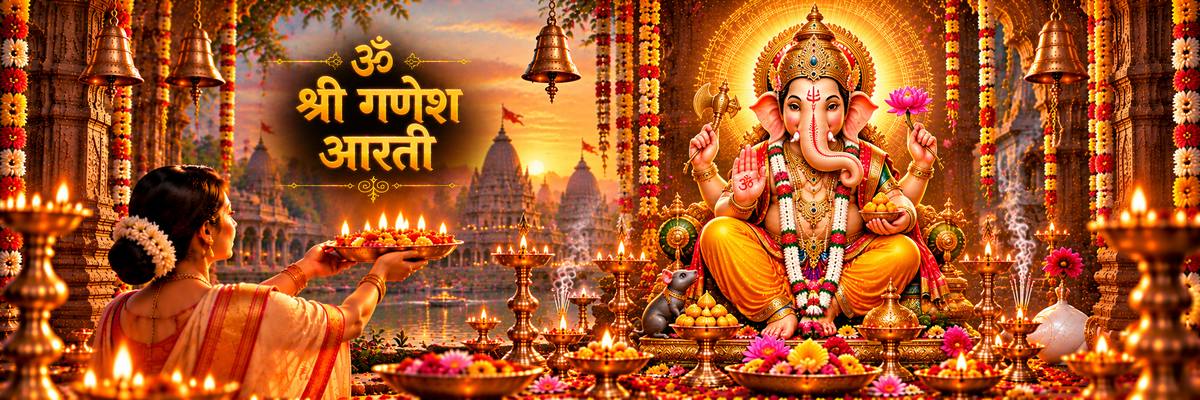
Ganesh Aarti
The traditional aarti sung to Lord Ganesha before beginning any auspicious work.
Read more →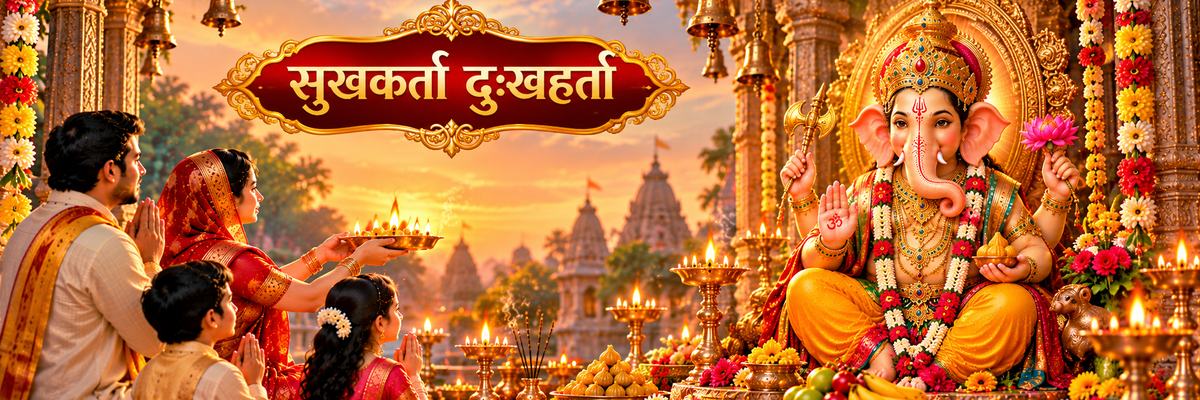
Sukhkarta Dukhharta (Marathi Ganesh Aarti)
The Marathi Ganesh aarti by Samarth Ramdas (1608–1682), sung at every Ganeshotsav pandal in Maharashtra and at Mumbai's Siddhivinayak. Its three stanzas describe Ganesha smeared with sindoor, crowned with diamonds and three-eyed, as in the Mayureshwar idol at Morgaon that is said to have inspired it, with the refrain "Jai Dev, Jai Dev, Jai Mangalmurti".
Read more →Vrat
Budhvar Vrat: Wednesday Fast to Ganesha and Budh – Vidhi, Katha and Rules
The green Wednesday fast to Lord Ganesha and the planet Budh (Mercury), kept for intelligence, study, speech and business: when to begin and how many Wednesdays, durva and moong in the puja, the one salt-free meal, the katha of the man who left on a Wednesday, and the udyapan.
Read more →VratSankashti Chaturthi Vrat: Fast Until Moonrise
The monthly Ganesh fast on the fourth day of the waning moon, broken only after offering arghya to the moon at moonrise. Angaraki Sankashti, Sakat Chauth in Magh, the vidhi, and why it is called the remover of obstacles.
Read more →Temple
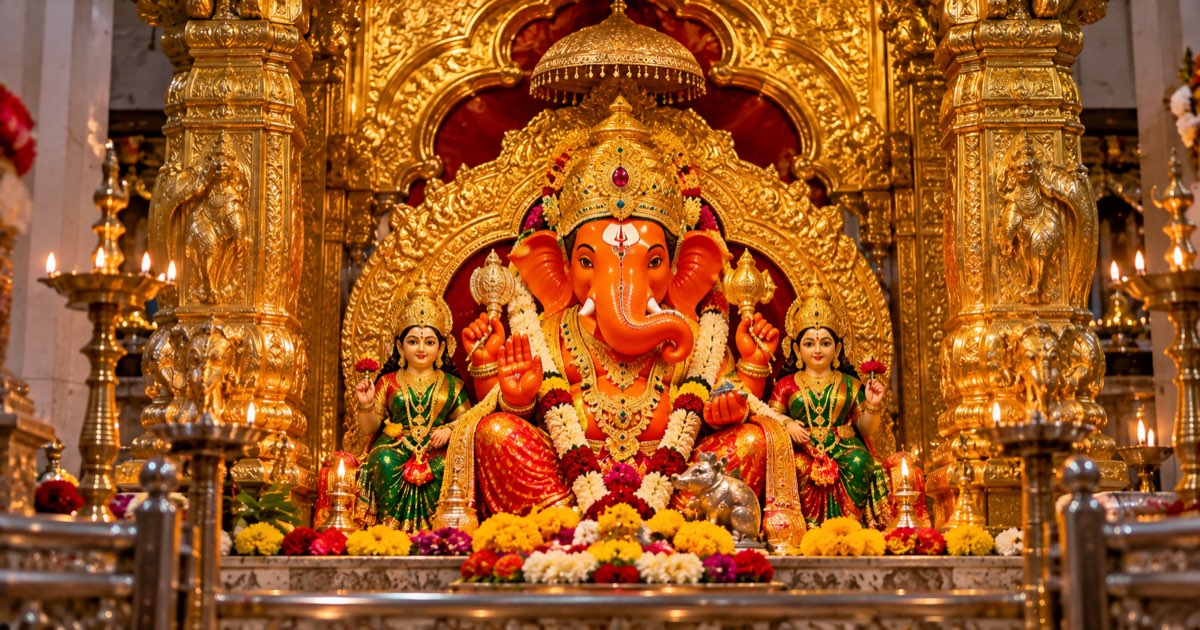
Puja Vidhi
Festival
Spotted a mistake?
If you find any grammatical, Hindi, English, mantra-text or other mistake on this page, tell us — we will correct it within 24 hours.