Maa Durga
The fierce and protective mother goddess, celebrated during Navratri as the victor over evil.
Who Maa Durga is
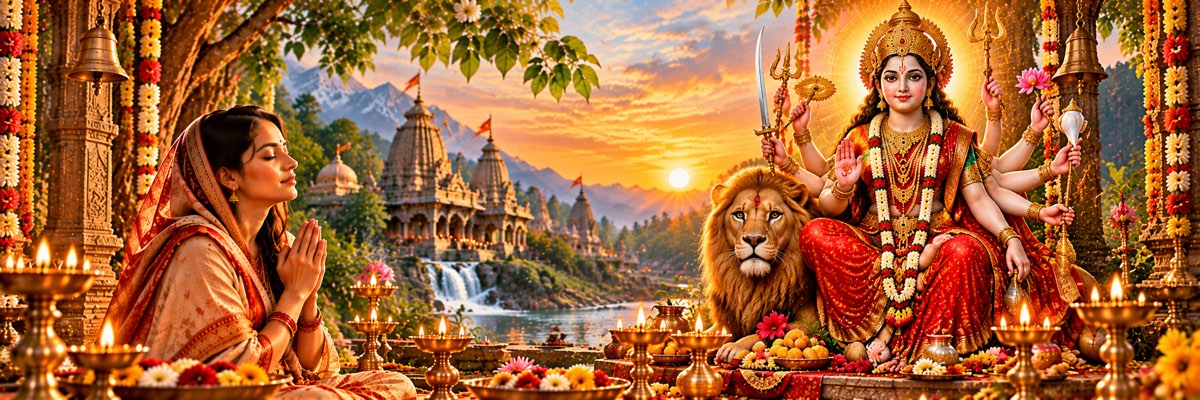
Durga is the supreme mother goddess: Shakti, the divine feminine power, invoked in her fierce, protective form when evil has grown too strong for the gods alone to handle. Her name means "the one who is hard to reach" or "the invincible", and she is also called Durgatinashini, "the one who removes hardship". For Shakta traditions she is the highest reality itself, and every other goddess, from gentle Gauri to fierce Kali, is one of her forms.
Where her story is told
Her central text is the Devi Mahatmya, 700 verses from the Markandeya Purana also known as the Durga Saptashati or Chandi Path, which is recited in full during Navratri. It tells three great victories of the Goddess:
- Madhu and Kaitabha: two demons born from Vishnu's ears as he slept, killed once the Goddess released Vishnu from his sleep.
- Mahishasura: the buffalo demon had a boon that no man or god could kill him. The gods combined their energy (tejas) to create Durga, each giving her a weapon: Shiva his trident, Vishnu his discus, Indra his thunderbolt. She fought him and killed him on the tenth day, which gives Vijayadashami its name, "the victory of the tenth".
- Shumbha and Nishumbha: in this war she took fierce forms. As Chamunda she killed the generals Chanda and Munda, and as Kali she drank the blood of Raktabija, every drop of whose spilled blood would otherwise have grown into a new demon.
Iconography
She is shown with ten (sometimes eight) arms, each holding a weapon given by a different god, riding a lion or a tiger, and calm-faced even in battle. The calm is part of the message: she destroys evil without hatred, the way a mother protects her child. The many weapons suggest that real protection often means drawing on many strengths at once.
Navadurga: her nine forms
During Navratri a different form is worshipped each day: Shailaputri, Brahmacharini, Chandraghanta, Kushmanda, Skandamata, Katyayani, Kalaratri, Mahagauri and Siddhidatri. The journey runs from the daughter of the mountain, through austerity, courage and fierce protection, to the giver of all spiritual accomplishment. The nine days are also often divided into three for Durga, three for Lakshmi and three for Saraswati.
How she is worshipped
Offerings to the Goddess include a red chunri (scarf), red flowers, especially hibiscus, sindoor, bangles and a coconut. During Navratri many households set up a kalash (sacred pot) with sown barley (jau/jawara), keep a fast, recite the Durga Saptashati or the Durga Kavach, and on Ashtami or Navami honour young girls as forms of the Goddess (kanya pujan). The Durga Chalisa is recited throughout the year, and many devotees worship her on Tuesdays and Fridays.
Festivals and temples
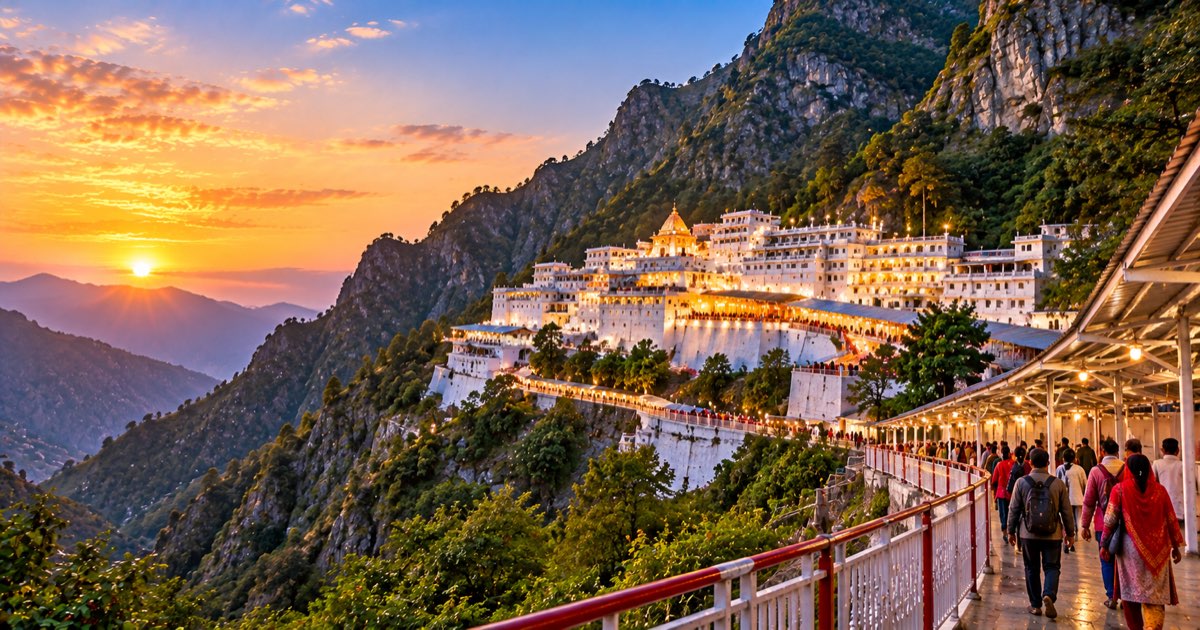
There are two major Navratris: Chaitra Navratri in spring and Shardiya Navratri in autumn, the bigger of the two (see Shardiya Navratri 2026 dates). In Bengal and eastern India the autumn festival is Durga Puja, with huge pandals, the arrival of the Goddess and her tearful immersion (bisarjan) on Dashami. Her great shrines include Vaishno Devi in Jammu, Kamakhya in Assam, Kalighat in Kolkata, Ambaji in Gujarat, Chamundeshwari in Mysuru, and Jwala Ji and Naina Devi in Himachal Pradesh. Many of these are counted among the Shakti Peethas, the places where, in the Puranic story, parts of the goddess Sati's body fell to earth.
Navdurga — the nine forms of Maa Durga
The forms worshipped in order on the nine days of Navratri — each with her story, mantras, bhog and puja vidhi.
Maa Shailputri: Navratri Day 1 Puja Vidhi, Mantra and Katha
Maa Shailputri, the first of the Navdurga, worshipped on Day 1 of Navratri (Sunday 11 October 2026). Who she is, her story and form, her mantras, bhog and the day's puja vidhi.
Read more →Puja VidhiMaa Brahmacharini: Navratri Day 2 Puja Vidhi, Mantra and Katha
Maa Brahmacharini, the second of the Navdurga, worshipped on Day 2 of Navratri (Monday 12 October 2026). Who she is, her story and form, her mantras, bhog and the day's puja vidhi.
Read more →Puja VidhiMaa Chandraghanta: Navratri Day 3 Puja Vidhi, Mantra and Katha
Maa Chandraghanta, the third of the Navdurga, worshipped on Day 3 of Navratri (Tuesday 13 October 2026). Who she is, her story and form, her mantras, bhog and the day's puja vidhi.
Read more →Puja VidhiMaa Kushmanda: Navratri Day 4 Puja Vidhi, Mantra and Katha
Maa Kushmanda, the fourth of the Navdurga, worshipped on Day 4 of Navratri (Wednesday 14 October 2026). Who she is, her story and form, her mantras, bhog and the day's puja vidhi.
Read more →Puja VidhiMaa Skandamata: Navratri Day 5 Puja Vidhi, Mantra and Katha
Maa Skandamata, the fifth of the Navdurga, worshipped on Day 5 of Navratri (Thursday 15 October 2026). Who she is, her story and form, her mantras, bhog and the day's puja vidhi.
Read more →Puja VidhiMaa Katyayani: Navratri Day 6 Puja Vidhi, Mantra and Katha
Maa Katyayani, the sixth of the Navdurga, worshipped on Day 6 of Navratri (Friday 16 October 2026). Who she is, her story and form, her mantras, bhog and the day's puja vidhi.
Read more →Puja VidhiMaa Kalaratri: Navratri Day 7 Puja Vidhi, Mantra and Katha
Maa Kalaratri, the seventh of the Navdurga, worshipped on Day 7 of Navratri (Saturday 17 October 2026). Who she is, her story and form, her mantras, bhog and the day's puja vidhi.
Read more →Puja VidhiMaa Mahagauri: Navratri Day 8 Puja Vidhi, Mantra and Katha
Maa Mahagauri, the eighth of the Navdurga, worshipped on Day 8 of Navratri (Sunday 18 October 2026). Who she is, her story and form, her mantras, bhog and the day's puja vidhi.
Read more →Puja VidhiMaa Siddhidatri: Navratri Day 9 Puja Vidhi, Mantra and Katha
Maa Siddhidatri, the ninth of the Navdurga, worshipped on Day 9 of Navratri (Monday 19 October 2026). Who she is, her story and form, her mantras, bhog and the day's puja vidhi.
Read more →Mantra
Navarna Mantra
Om Aim Hreem Kleem Chamundayai Vichche: the nine-syllable root mantra of the Durga Saptashati, addressed to Chamunda as Mahakali, Mahalakshmi and Mahasaraswati.
Read more →MantraDurga Gayatri Mantra (Katyayanaya Vidmahe)
The Vedic Gayatri of Durga, "Katyayanaya vidmahe, Kanyakumari dhimahi, tanno Durgih prachodayat", which closes the series of Gayatris in the Mahanarayana Upanishad. It addresses the Goddess as Katyayani and as the virgin Kanyakumari, and is chanted especially in Navratri.
Read more →MantraYa Devi Sarvabhuteshu (Devi Stuti from the Durga Saptashati)
The gods' hymn from chapter 5 of the Durga Saptashati: the Devi who lives in every being as intelligence, sleep, hunger, shakti, faith, mother and even delusion. All the "Ya devi" stanzas in their textual order, with meaning, and how they are sung in Navratri.
Read more →MantraOm Dum Durgayai Namah – Durga Beej Mantra
The seed mantra of Maa Durga — what the bija "Dum" means, the eight-syllable form with "Hreem", how to chant it through Navratri, and how it differs from the Navarna mantra.
Read more →MantraSarva Mangala Mangalye (Durga Mantra)
Perhaps the most recited verse of the Durga Saptashati (11.10), sung at the close of countless pujas: the Devi as the auspiciousness in everything auspicious. Meaning, source, the reading Gita Press gives, and how to use it in Navratri and daily worship.
Read more →Stotra
Mahishasura Mardini Stotram – Aigiri Nandini
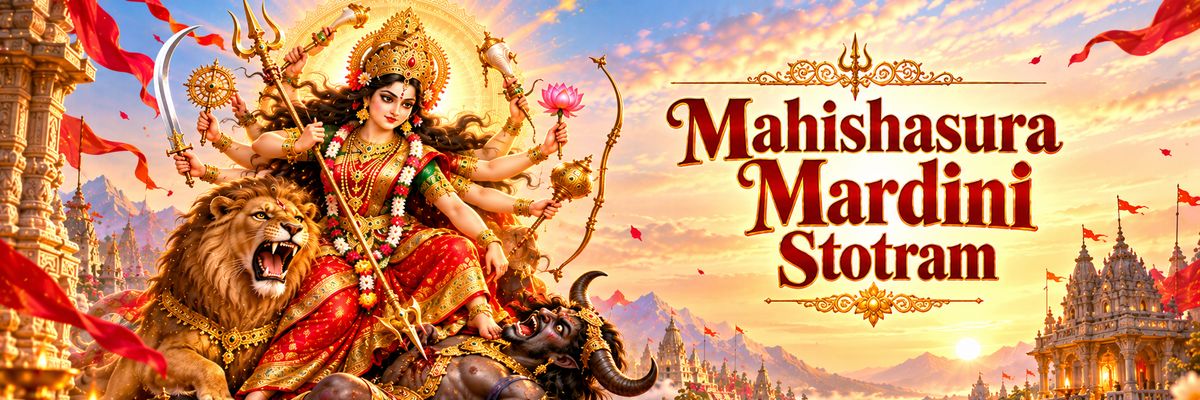
The thundering 21-verse hymn to Durga as slayer of the buffalo-demon Mahisha, every verse ending "Jaya jaya he Mahishasura-mardini ramya-kapardini shaila-sute". What it describes — the battle, Shumbha-Nishumbha, Raktabija — its sound-play, authorship and its place in Navratri and Mahalaya.
Read more →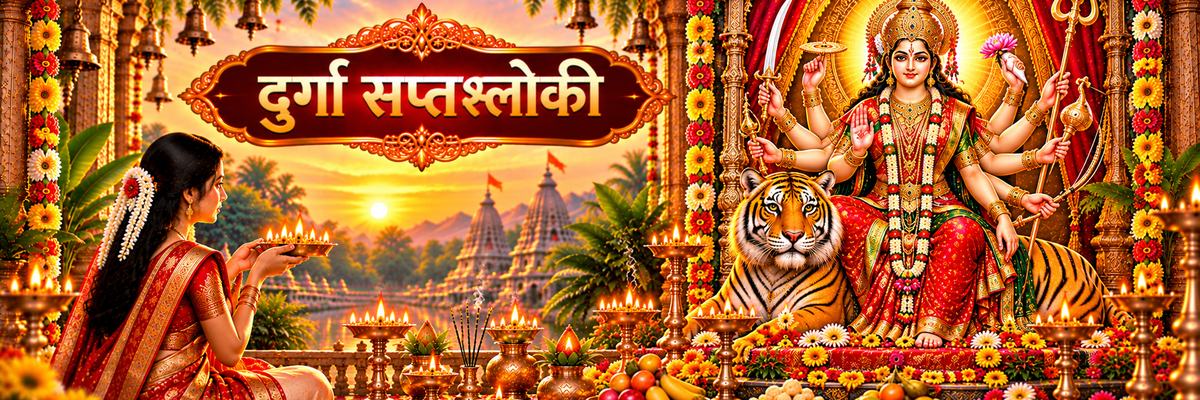
Durga Saptashloki
Seven verses chosen from the 700 of the Durga Saptashati, given by the Devi herself to Shiva as a way to her grace in the Kali age. They include "Sarva mangala mangalye" and "Durge smrita harasi bhitim", and are read when there is no time for the full Saptashati, especially in Navratri.
Read more →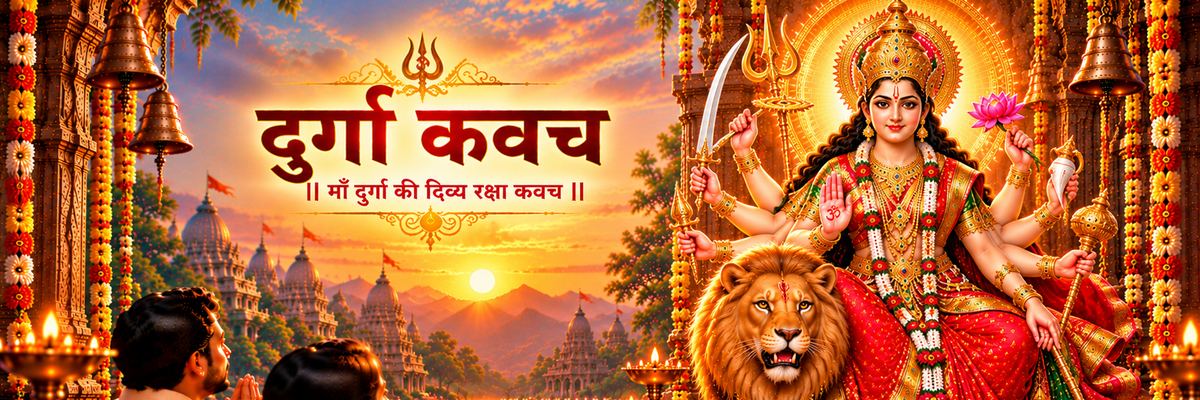
Durga Kavach (Devi Kavacham)
The 56-verse armour of the Goddess recited before the Durga Saptashati — the nine Durgas, the Matrikas guarding every direction, and protection placed on every part of body and life.
Read more →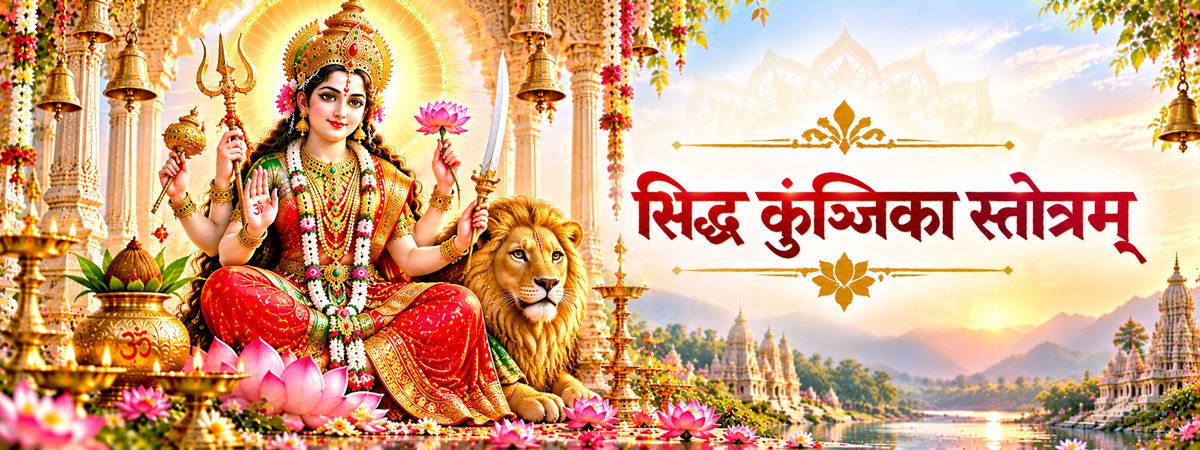
Siddha Kunjika Stotram
The "key" to the Durga Saptashati: a short Tantric hymn in which Shiva tells Parvati that reciting it alone gives the fruit of the whole Chandi path. It contains the Navarna mantra and a dense string of bija syllables, and is read especially in Navratri.
Read more →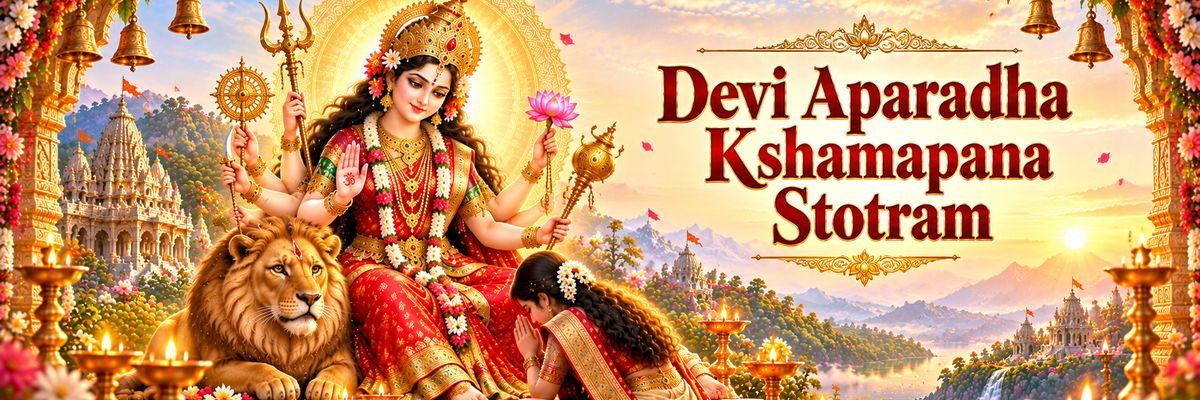
Devi Aparadha Kshamapana Stotram – Na Mantram No Yantram
The hymn asking the Divine Mother's forgiveness, famous for its refrain "Kuputro jayeta kvachidapi kumata na bhavati" — a bad son may be born, but never a bad mother. What its twelve verses confess, and why it is recited at the end of every Devi puja.
Read more →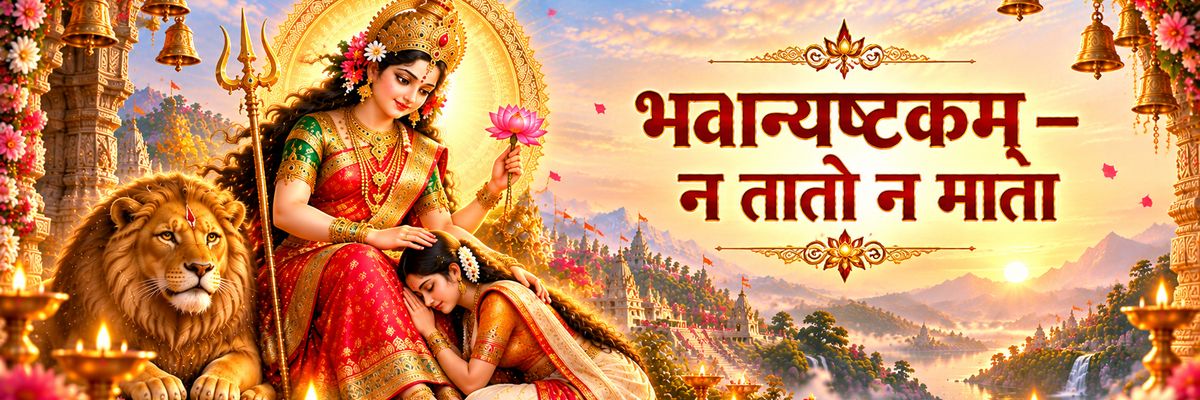
Bhavani Ashtakam – Na Tato Na Mata
Adi Shankaracharya's eight verses of complete surrender to the Divine Mother — "no father, no mother, no friend... you alone are my refuge, Bhavani". What each verse confesses, why it is so loved, and when to recite it.
Read more →
Aarti
Jai Ambe Gauri
The best-known aarti of Maa Durga, signed by Shivanand Swami and sung through Navratri, at mata ki chowki and at jagrans. It describes her form and her battles from the Durga Saptashati.
Read more →
Jai Vaishnavi Mata (Vaishno Devi Aarti)
The aarti of Maa Vaishno Devi of Trikuta, sung by pilgrims on the way to her cave shrine and at home in Navratri. It describes her cave, the Ganga at her feet, the flags at the Bhawan and the offerings pilgrims carry, and is signed by the devotee Dhyanu.
Read more →Festival
Navratri
Nine nights of the Goddess, kept twice a year in Chaitra and Ashwin: the four Navratris, ghatasthapana, the nine forms of Durga day by day, the fast, kanya pujan, and how Gujarat, Bengal and the South each celebrate it.
Read more →FestivalDussehra (Vijayadashami)
The festival of victory on Ashwin Shukla Dashami: why it is celebrated, the stories of Shri Ram and Maa Durga, a home puja vidhi and how India marks the day.
Read more →Temple
Puja Vidhi
Article
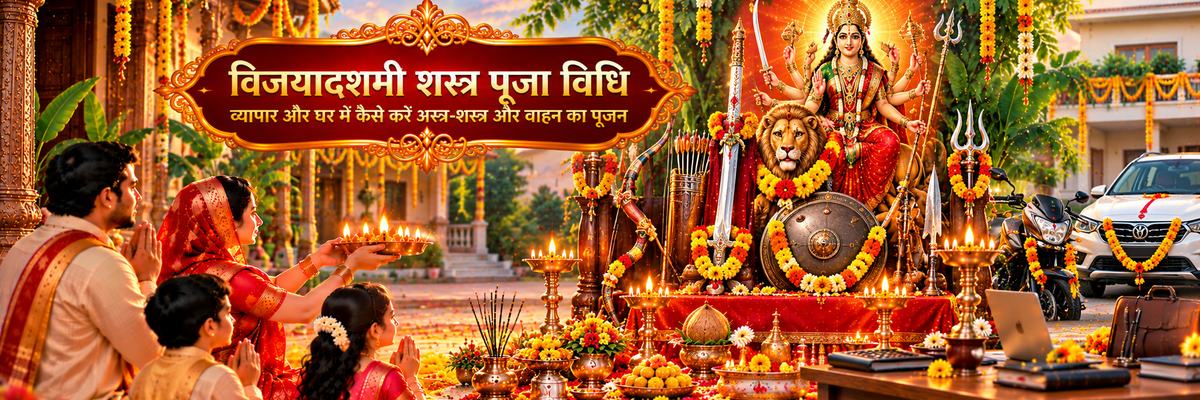
Vijayadashami Shastra Puja Vidhi: How to Worship Weapons, Tools and Vehicles at Home and at Work
Why weapons and the tools of one's livelihood are worshipped on Dussehra, the 2026 Vijay muhurat (Tuesday 20 October), a step-by-step shastra puja for the home, how shops, offices and factories do it, the vahan puja, safety rules for licensed arms, and answers to common questions.
Read more →Published11 min read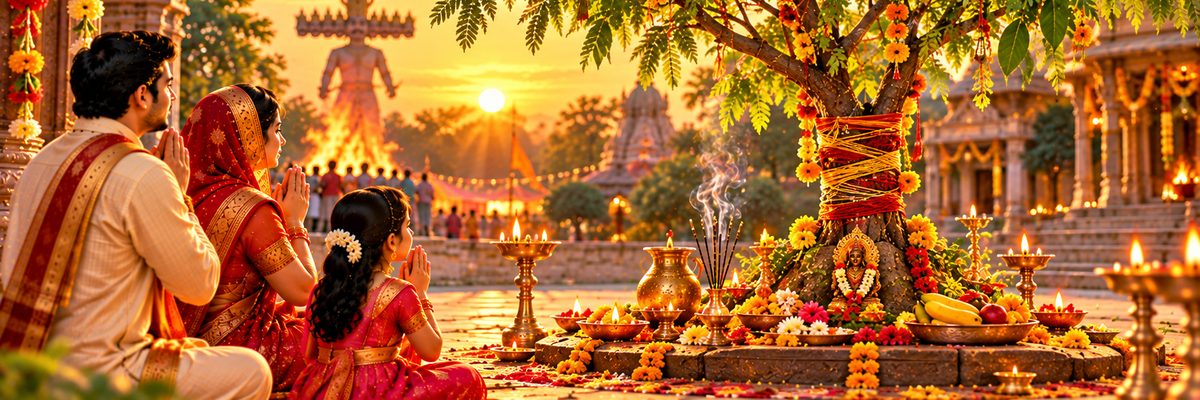
How to Worship the Shami Tree on Dussehra: Vidhi, Mantra and Significance
Besides Ravan Dahan, Vijayadashami has two quieter household rites: Aparajita puja and Shami puja. Their 2026 muhurat (Tuesday 20 October), the step-by-step vidhi, the mantras, the Mahabharata story of the Pandavas' hidden weapons, and the tradition of keeping Shami leaves in the tijori.
Read more →Published8 min read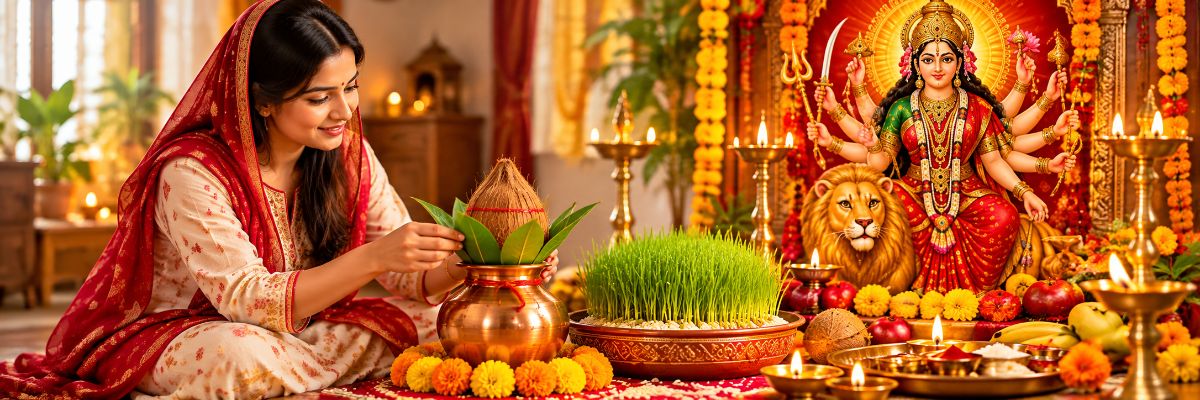
Navratri Kalash Sthapana, Fasting and Puja Vidhi: A Complete Guide for Home
A step-by-step guide to Navratri at home: what to gather, how to set up the kalash and sow the jau, how to keep the fast and what to eat, how to do the daily puja, and how to close the nine days with kanya pujan and visarjan.
Read more →Published10 min readShardiya Navratri 2026: Kalash Sthapana Muhurat and Day-by-Day Puja Dates
Jyotishacharya Harendra Chaubey's calendar for Shardiya Navratri 2026 (11–20 October): the kalash sthapana muhurat, which form of Maa Durga is worshipped each day, and the timings for Mahanisha puja, the Navami havan and the Dashami parana.
Read more →Published4 min readSpotted a mistake?
If you find any grammatical, Hindi, English, mantra-text or other mistake on this page, tell us — we will correct it within 24 hours.