Shri Krishna
The eighth avatar of Vishnu — teacher of the Bhagavad Gita, divine cowherd, and embodiment of love and playful wisdom.
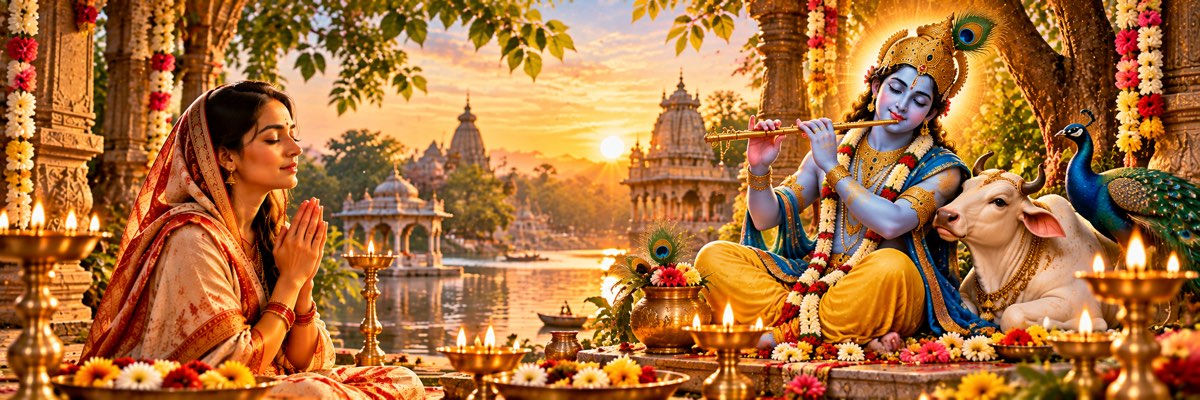
Who Shri Krishna is
Krishna is the eighth avatar of Vishnu, and for many devotees, especially in the Gaudiya and Pushti traditions, he is the Supreme Lord himself rather than one avatar among many. He was born in Mathura to Devaki and Vasudeva but raised in secret in Gokul and Vrindavan by the cowherd couple Nanda and Yashoda, to protect him from his tyrant uncle Kamsa. Few figures in any tradition are loved in so many ways at once: as a mischievous child, a friend, a beloved, a king, a statesman and the teacher of the Bhagavad Gita.
Where his story is told
His life is told in the Mahabharata, the Harivamsha, the Vishnu Purana and above all the tenth canto of the Shrimad Bhagavatam. Later poet-saints such as Jayadeva (the Gita Govinda), Surdas, Mirabai and the Ashtachhap poets of Braj made his childhood and his love with Radha the heart of North Indian devotional song.
The stories that shaped him
- A midnight birth: Krishna was born at midnight in Kamsa's prison. Vasudeva carried the newborn across the flooded Yamuna to Gokul in a basket, with the serpent Shesha shielding him from the rain.
- The childhood in Braj: he stole butter (Makhan Chor), killed demons sent by Kamsa, such as the demoness Putana, and subdued the serpent Kaliya by dancing on his hoods in the Yamuna.
- Lifting Govardhan: when Indra sent torrential rain on Braj, Krishna lifted Govardhan hill on his little finger and sheltered everyone under it for seven days. This is why he is called Giridhari, and why Govardhan Puja is celebrated the day after Diwali.
- The Raas: his dance with the gopis on autumn full-moon nights became, in devotional tradition, the highest image of the soul's love for God.
- Kurukshetra: as Arjuna's charioteer he spoke the Bhagavad Gita, teaching duty (dharma), selfless action (karma yoga) and devotion (bhakti yoga). He protected Draupadi's honour, stood by the Pandavas, and later ruled from Dwarka.
His names and symbols
Govinda (protector of cows), Gopal, Madhava, Keshava, Murari (slayer of the demon Mura), Mohan, Banke Bihari and Dwarkadhish are among his many names, each tied to a story or a place. He is shown dark blue, with a flute (bansuri), a peacock feather in his crown, a yellow garment (pitambar) and a vaijayanti garland, often with a cow or with Radha beside him.
How he is worshipped
Many homes keep a small image of the child Krishna, Laddu Gopal, who is woken, bathed, dressed, fed and put to sleep each day like a member of the family. Tulsi leaves are essential in any offering to him, and makhan-mishri (butter with sugar crystals) and panchamrit are his favourite bhog. Singing his names is central: the Hare Krishna Maha Mantra, the Om Namo Bhagavate Vasudevaya mantra and the Krishna Chalisa. Reading a chapter of the Bhagavad Gita daily is a practice in its own right.
Festivals and temples
Janmashtami, on the eighth day of the dark fortnight of Bhadrapad, is his birthday, kept with a fast and midnight worship, jhankis (tableaux) of his life and the dahi handi tradition in Maharashtra. Holi in Braj, Govardhan Puja and Sharad Purnima (the night of the Raas) are also his. Major temples include Banke Bihari and ISKCON in Vrindavan, the Krishna Janmabhoomi in Mathura, Dwarkadhish in Dwarka, Jagannath in Puri, Shrinathji at Nathdwara, Guruvayur in Kerala and the Udupi Krishna temple in Karnataka.
Mantra
Hare Krishna Mahamantra
The sixteen-word "great mantra" made only of three names: Hare, Krishna and Rama. It comes from the Kali-Santarana Upanishad, where Brahma tells Narada it is the surest way across the Kali age. Chaitanya Mahaprabhu made it the heart of congregational kirtan, and ISKCON carried it around the world.
Read more →MantraKrishnaya Vasudevaya Haraye Paramatmane
A verse from the Bhagavata Purana (10.73.16), first spoken by kings Krishna had freed from Jarasandha's prison, and chanted as a mantra for relief from suffering.
Read more →MantraKrishna Gayatri Mantra – Om Devakinandanaya Vidmahe
The Krishna Gayatri, "Om Devakinandanaya Vidmahe Vasudevaya Dhimahi, Tannah Krishnah Prachodayat", in Sanskrit and English with word-by-word meaning, why it names Devaki and Vasudeva, how it relates to the Vishnu Gayatri, and how to chant it in Kartik, on Ekadashi and at Janmashtami.
Read more →MantraShri Krishna Govind Hare Murari (Krishna Naam Mantra)
"Shri Krishna Govinda Hare Murare, He Natha Narayana Vasudeva": a verse of Krishna's names from the Govinda Damodara Stotra, which asks the tongue to drink this nectar alone. The Sanskrit original, what each name means, and the much-loved Hindi bhajan built on it.
Read more →MantraVasudeva Sutam Devam (Krishna Mantra)
The two-line Krishna shloka that opens the Krishnashtakam and stands on its own as a daily prayer: Krishna as Vasudeva's son, Kamsa's vanquisher, Devaki's joy and the teacher of the world. Meaning, use on Janmashtami, and the full ashtakam it begins.
Read more →Stotra
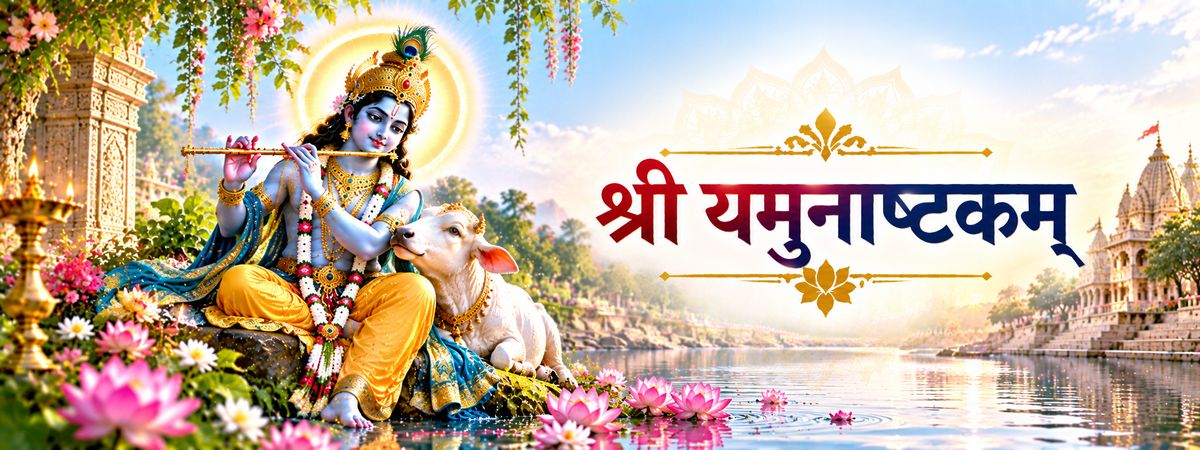
Shri Yamunashtakam (Vallabhacharya)
Shri Vallabhacharya's nine-verse hymn to Yamuna Maharani, the first of his Shodasha Granth and the daily prayer of the Pushtimarg. It praises Yamuna as Krishna's beloved, daughter of the Sun and sister of Yama, whose water frees from Yama's punishment and grows love for Mukunda.
Read more →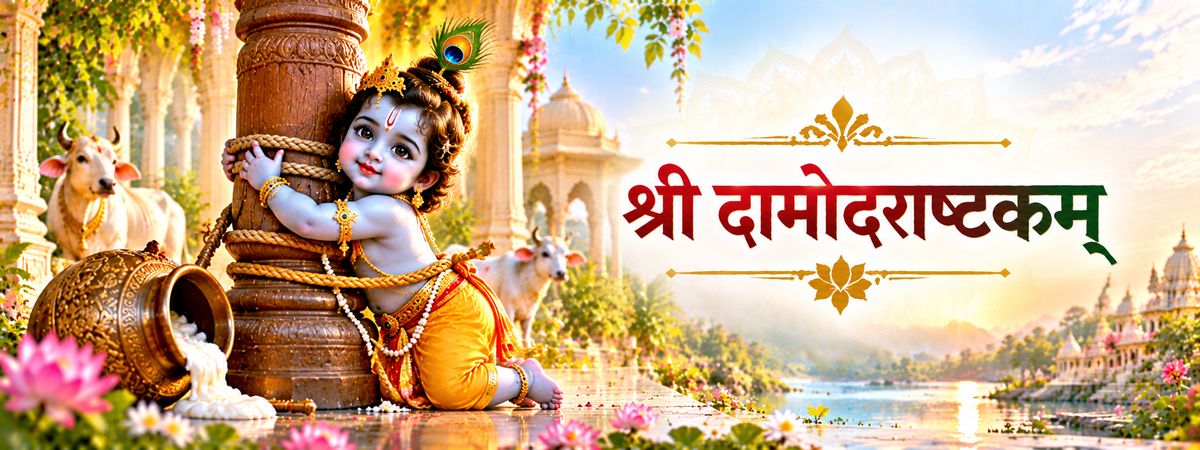
Shri Damodarashtakam
The eight-verse hymn to Krishna as Damodar, "bound at the waist" by Yashoda's rope, sung every evening of the month of Kartik with a lamp offering. From the Padma Purana, spoken by Satyavrata Muni, it asks not for liberation but for the vision of the child Krishna in the heart.
Read more →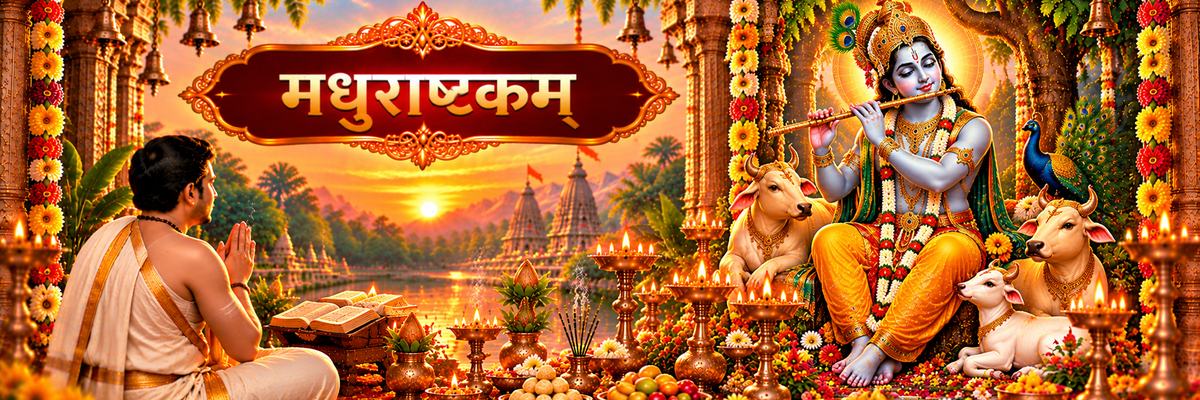
Madhurashtakam (Adharam Madhuram)
Vallabhacharya's eight verses on the sweetness of Krishna, in which nearly every word is followed by "madhuram", "sweet". His lips, eyes, flute, the dust he raises, his cows, his friends and even the Yamuna's waves are sweet, and each verse ends: "everything about the Lord of sweetness is sweet".
Read more →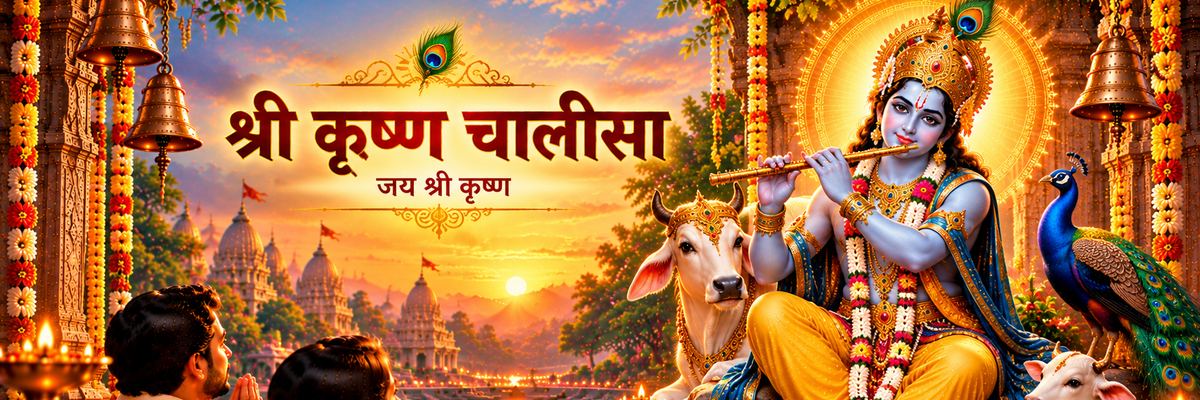
Aarti
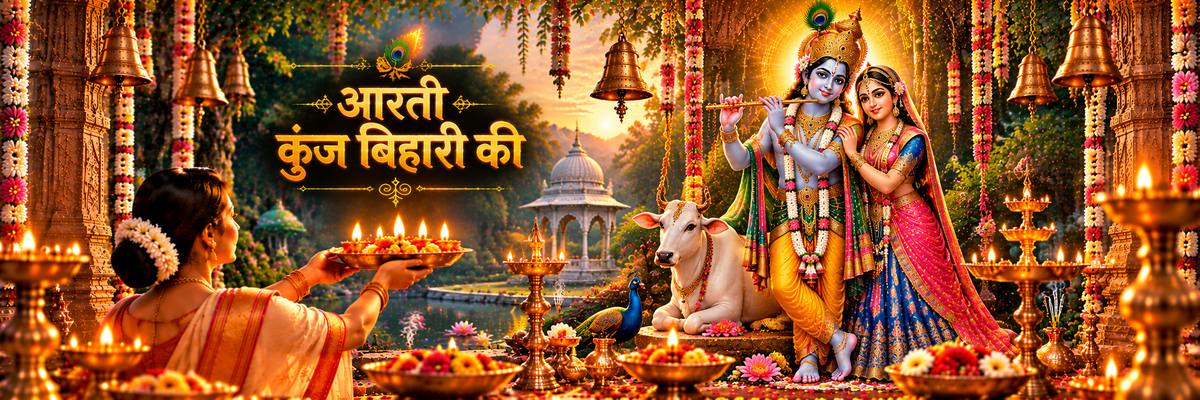
Aarti Kunj Bihari Ki
The best-loved aarti of Shri Krishna, in Braj Bhasha, describing him as he stands in the groves of Vrindavan. It is sung every evening and at midnight on Janmashtami.
Read more →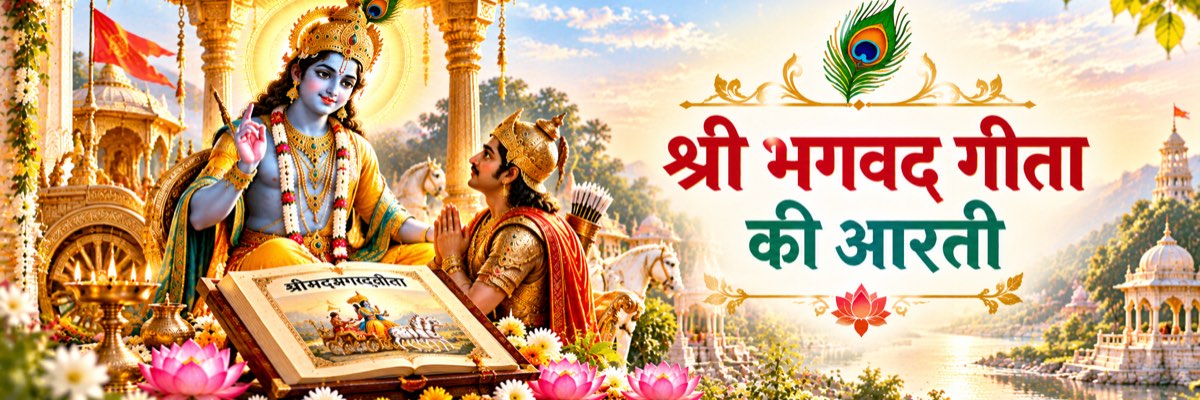
Jai Bhagavad Gite – Shri Bhagavad Gita Aarti
The aarti that worships the Bhagavad Gita itself as a mother — 'she who dwells in the lotus of Hari's heart'. Each line names something the Gita does: reveals the secret of action, removes attachment, grants the secret of surrender. Full text, meaning, and when to sing it, especially on Gita Jayanti.
Read more →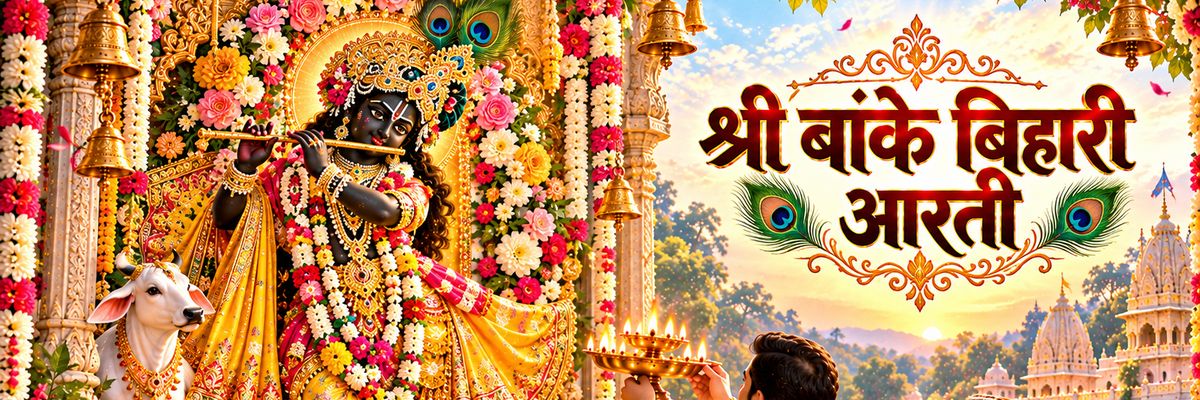
Shri Banke Bihari Teri Aarti Gaun
A tender aarti to Banke Bihari, the Krishna of Vrindavan's most beloved temple. It dwells on his peacock crown and flute, the Ganga that flows from his feet, and ends at the sight of the divine couple, "Shri Haridas ke pyare", beloved of Swami Haridas.
Read more →Festival
Krishna Janmashtami
The birth of Shri Krishna at midnight on the eighth day of Bhadrapad's dark fortnight: the story of the prison in Mathura and the crossing of the Yamuna, the fast and midnight puja, why there are often two dates, Laddu Gopal's care, Dahi Handi and how Mathura, Dwarka, Udupi and ISKCON celebrate.
Read more →FestivalHoli and Holika Dahan
The spring festival of colours: Holika Dahan on the night of Phalgun Purnima, colours the next morning, the story of Prahlad and Holika, Radha-Krishna's Holi in Braj, Holashtak, regional forms and how to play safely.
Read more →Story
Bhajan
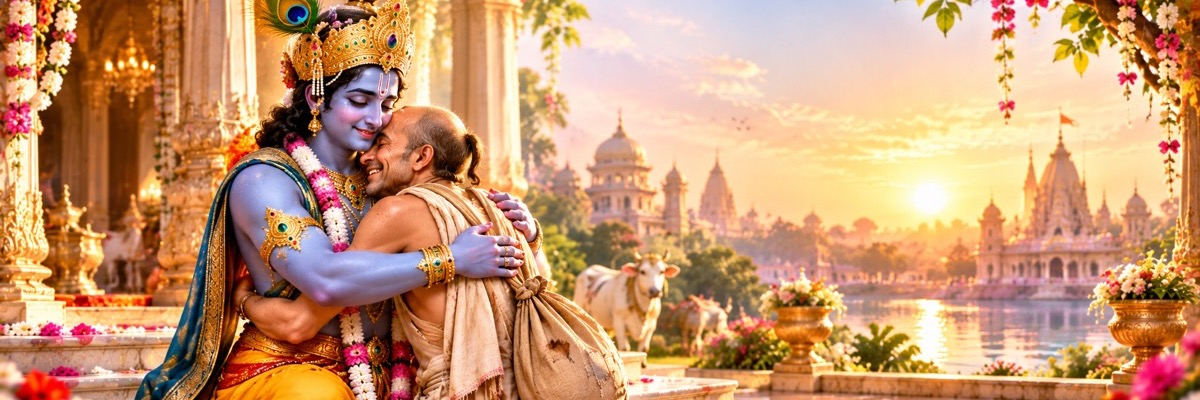
Maiya Mori Main Nahi Makhan Khayo – Surdas
Surdas's most loved pad of child Krishna: caught with butter on his face, little Kanha argues his innocence to Yashoda — he was out with the cows all day, his arms are too short to reach the pot, his friends smeared it on him. Both well-known versions of the pad, their meaning, and the vatsalya bhakti behind them.
Read more →BhajanPayo Ji Maine Ram Ratan Dhan Payo – Mirabai
Mirabai's joyful pad about the one treasure that no thief can steal and no spending can exhaust — the jewel of the Name, given to her by her satguru. The full text, line-by-line meaning, who Mira's guru was, and how this bhajan travelled from Rajasthan to every Indian home.
Read more →BhajanHari Tum Haro Jan Ki Bhir – Meera Bhajan
Meera's short pad asking Hari to take away his devotees' distress, as he did for Draupadi, Prahlada and the elephant Gajendra. The text, its three stories, and the place of this bhajan in Gandhi's prayers.
Read more →BhajanHare Krishna Maha Mantra
The sixteen-word chant central to Krishna bhakti, sung in temples and kirtans worldwide.
Read more →Temple
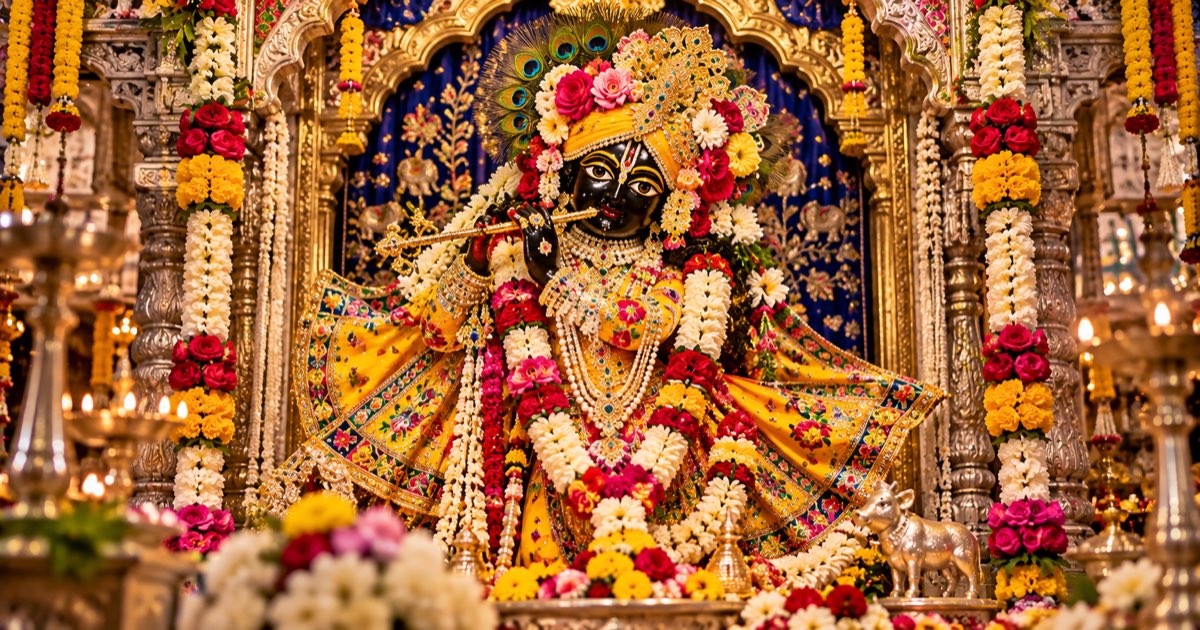
Shri Banke Bihari Temple, Vrindavan
Vrindavan's most beloved Krishna temple: the image that appeared to Swami Haridas at Nidhivan, the curtain drawn every few moments, no bells and no daily mangala aarti, seasonal darshan hours, the few days a year of special darshan, and tips for the crowds.
Read more →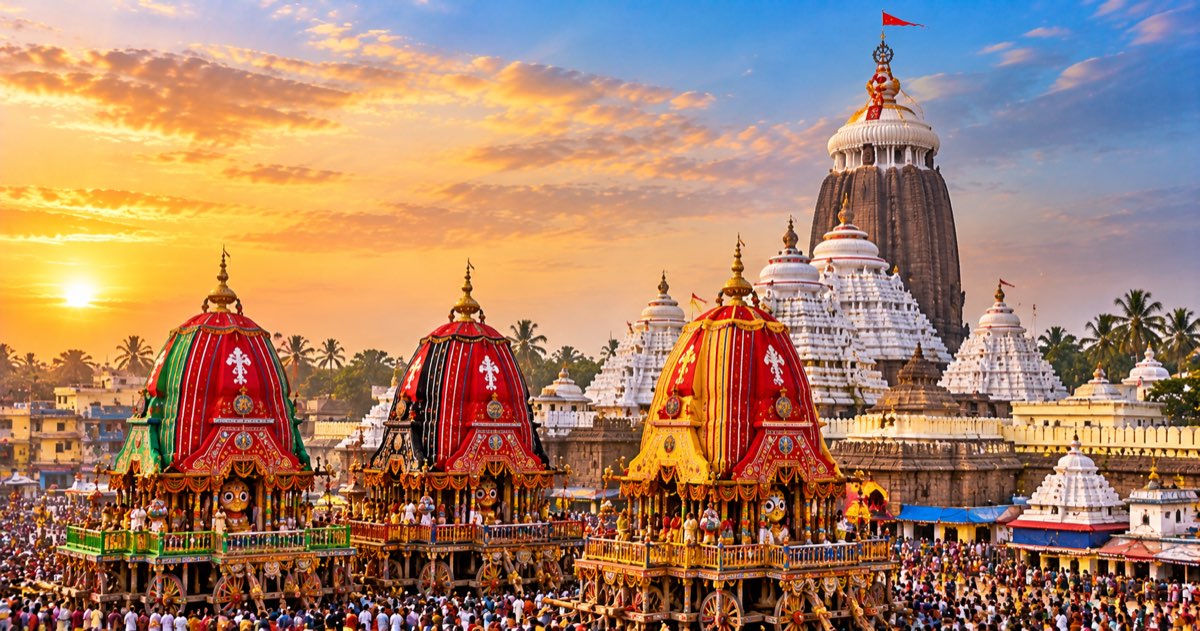
Shree Jagannath Temple, Puri
The temple of Jagannath, Balabhadra and Subhadra at Puri, one of the Char Dham: the wooden deities and Nabakalebara, the daily rituals (nitis) from Mangala Alati to Pahuda, Mahaprasad of Ananda Bazar, Ratha Yatra, entry rules and how to reach.
Read more →Puja Vidhi
Spotted a mistake?
If you find any grammatical, Hindi, English, mantra-text or other mistake on this page, tell us — we will correct it within 24 hours.