
Original text
जय भगवद् गीते, जय भगवद् गीते । हरि-हिय-कमल-विहारिणि, सुन्दर सुपुनीते ॥ कर्म-सुमर्म-प्रकाशिनि, कामासक्तिहरा । तत्त्वज्ञान-विकाशिनि, विद्या ब्रह्म परा ॥ जय भगवद् गीते ॥ निश्चल-भक्ति-विधायिनि, निर्मल मलहारी । शरण-रहस्य-प्रदायिनि, सब विधि सुखकारी ॥ जय भगवद् गीते ॥ राग-द्वेष-विदारिणि, कारिणि मोद सदा । भव-भय-हारिणि, तारिणि परमानन्दप्रदा ॥ जय भगवद् गीते ॥ आसुर-भाव-विनाशिनि, नाशिनि तम रजनी । दैवी सद्गुणदायिनि, हरि-रसिका सजनी ॥ जय भगवद् गीते ॥ समता, त्याग सिखावनि, हरि-मुख की बानी । सकल शास्त्र की स्वामिनी, श्रुतियों की रानी ॥ जय भगवद् गीते ॥ दया-सुधा बरसावनि, मातु! कृपा कीजै । हरिपद-प्रेम दान कर, अपनो कर लीजै ॥ जय भगवद् गीते ॥ जय भगवद् गीते, जय भगवद् गीते । हरि-हिय-कमल-विहारिणि, सुन्दर सुपुनीते ॥
Transliteration
Jai Bhagavad Gite, Jai Bhagavad Gite. Hari-Hiy-Kamal-Viharini, Sundar Supunite. Karma-Sumarma-Prakashini, Kamasaktihara. Tattvagyan-Vikashini, Vidya Brahma Para. Jai Bhagavad Gite. Nishchal-Bhakti-Vidhayini, Nirmal Malhari. Sharan-Rahasya-Pradayini, Sab Vidhi Sukhkari. Jai Bhagavad Gite. Raag-Dvesh-Vidarini, Karini Mod Sada. Bhav-Bhay-Harini, Tarini Paramanandaprada. Jai Bhagavad Gite. Aasur-Bhaav-Vinashini, Nashini Tam Rajani. Daivi Sadgunadayini, Hari-Rasika Sajani. Jai Bhagavad Gite. Samata, Tyag Sikhavani, Hari-Mukh Ki Baani. Sakal Shastra Ki Swamini, Shrutiyon Ki Rani. Jai Bhagavad Gite. Daya-Sudha Barsavani, Maatu! Kripa Keejai. Haripad-Prem Daan Kar, Apno Kar Leejai. Jai Bhagavad Gite. Jai Bhagavad Gite, Jai Bhagavad Gite. Hari-Hiy-Kamal-Viharini, Sundar Supunite.
An aarti to a book
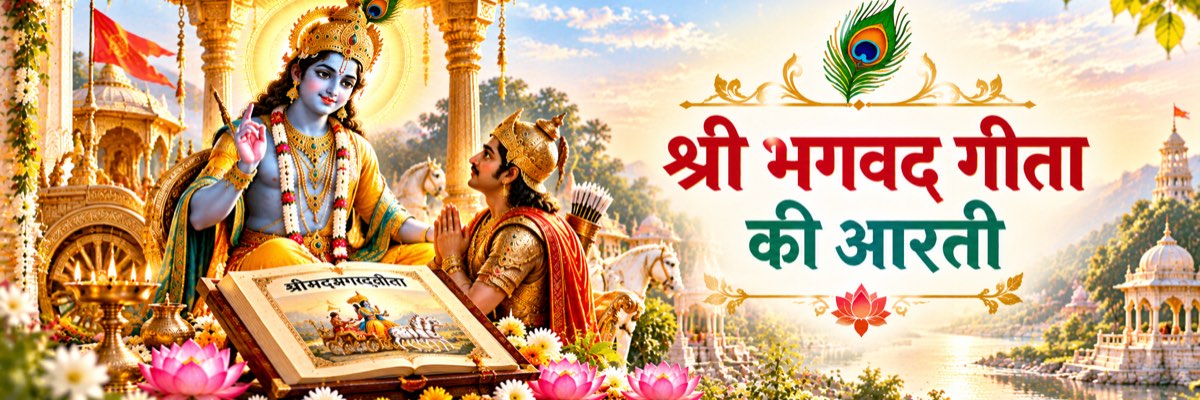
Most aartis are offered to a deity. This one is offered to a scripture: the Bhagavad Gita, addressed throughout as a mother (matu) and a goddess. It is not part of the Gita — it is a Hindi devotional hymn sung to the Gita, usually at the end of a Gita reading, and it is printed at the back of many Hindi editions of the text. Its author is not named in the versions in circulation.
The aarti's opening image sets the tone: the Gita is "she who plays in the lotus of Hari's heart" — the teaching that came straight from Krishna's own heart, beautiful and supremely pure.
What each line says the Gita does
Almost every phrase is a compressed reference to a teaching of the Gita itself:
- Karma-sumarma-prakashini — she reveals the inner secret of action: work done without attachment to its fruit (chapters 2–5).
- Kamasakti-hara — she removes desire and attachment, which the Gita names as the enemy of wisdom (3.37).
- Tattvajnana-vikashini, vidya brahma para — she unfolds knowledge of reality and is herself the supreme knowledge of Brahman.
- Nishchal-bhakti-vidhayini — she establishes unwavering devotion (chapter 12).
- Sharan-rahasya-pradayini — she gives the secret of surrender, the Gita's culminating teaching: "Abandoning all dharmas, take refuge in Me alone" (18.66).
- Raga-dvesha-vidarini — she cuts through attraction and aversion, the pair the Gita repeatedly says must be overcome.
- Asura-bhava-vinashini … daivi sadguna-dayini — she destroys demonic tendencies and grants the divine qualities listed in chapter 16.
- Samata, tyaga sikhavani — she teaches equanimity (samatvam yoga uchyate, 2.48) and renunciation (chapter 18).
- Sakal shastra ki swamini, shrutiyon ki rani — mistress of all scriptures, queen of the Vedas: the Gita as the essence of the Upanishads.
The last stanza turns from praise to prayer: "Mother, shower the nectar of compassion; grant me love for Hari's feet and make me your own."
When to sing it
- At the end of a daily Gita reading, whether one shloka or a full chapter.
- On Gita Jayanti, Margashirsha Shukla Ekadashi (Mokshada Ekadashi), which marks the day the Gita was spoken at Kurukshetra.
- At the completion (samapti) of a full 18-chapter Gita path, and at Gita satsangs.
- On Janmashtami, alongside Krishna's own aartis such as Aarti Kunj Bihari Ki.
How to perform it
Place the Gita on a clean cloth or stand — never directly on the floor — with a lamp and flowers before it. Wave the lamp before the book while singing, repeat the refrain "Jai Bhagavad Gite" after each stanza, and close by touching the book to your forehead.
Frequently asked questions
Is the Gita aarti part of the Bhagavad Gita?
No. The Gita is 700 Sanskrit verses in 18 chapters. The aarti is a later Hindi hymn in praise of the Gita, sung after reading it.
Who wrote "Jai Bhagavad Gite"?
The versions in circulation do not name a poet. It spread through Hindi Gita editions and prayer books.
When is Gita Jayanti?
On Margashirsha Shukla Ekadashi (November–December), also called Mokshada Ekadashi. It is celebrated on a large scale at Kurukshetra.
What does "Hari-hiy-kamal-viharini" mean?
"She who dwells (plays) in the lotus of Hari's heart" — the Gita as teaching that comes from Krishna's innermost heart.
What is the "sharan rahasya" in the aarti?
The "secret of surrender" — the Gita's final teaching that one should take refuge in the Lord alone (18.66), which Krishna calls the most secret of all.
Can the aarti be sung without reading the Gita?
Yes, though it is traditionally the closing of a reading. Even reading one verse before the aarti keeps the spirit of the custom.
Spotted a mistake?
If you find any grammatical, Hindi, English, mantra-text or other mistake on this page, tell us — we will correct it within 24 hours.