
The practice in one paragraph
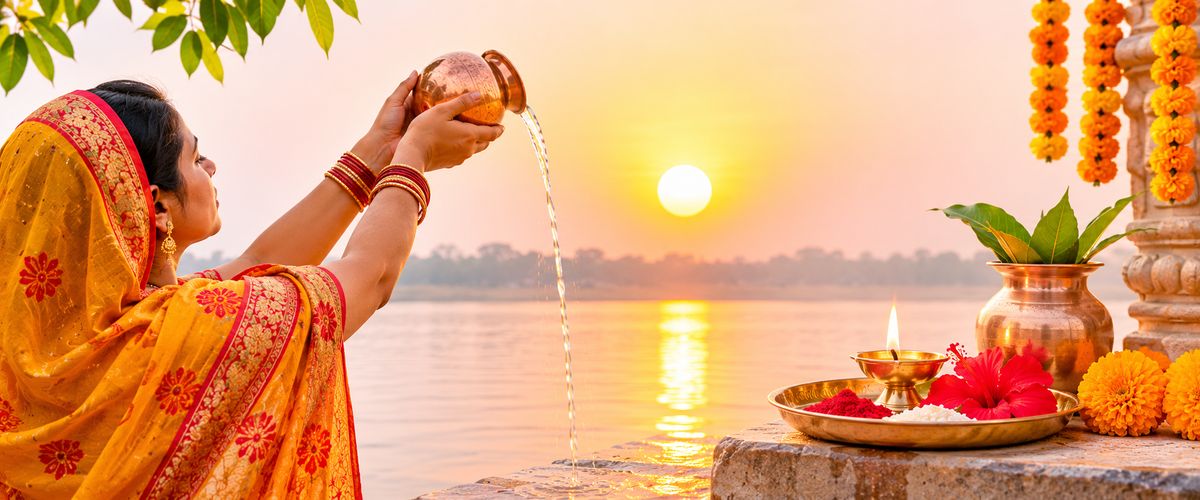
After bathing, stand facing the rising sun with a lota of water, raise it to about head height and pour it out in a thin stream while saying a mantra, looking at the sun through the falling water. Let the water fall into a plant or a vessel, not around your feet, and finish with a namaskar. That is the whole of it. Our Surya arghya page covers the step-by-step vidhi; this article is about doing it every day, and the questions that come up when you do.
When to offer: sunrise through the year
The arghya is offered at sunrise or within roughly the first hour after it, while the sun is still low and soft. Sunrise moves a lot through the year, so a fixed alarm time does not work:
| Season | Approximate sunrise, New Delhi |
|---|---|
| Mid-June (earliest) | about 5:25 am |
| March and September equinoxes | about 6:10 to 6:25 am |
| Early January (latest) | about 7:15 am |
Check the sunrise time for your city on our daily Panchang and set the alarm by that. If you are late, offer when you can rather than skip the day, but make sunrise the aim.
What to put in the water, and what to leave out
- The basics: clean water in a copper lota, with a pinch of red chandan or roli, a few grains of akshat and a red flower if you have one.
- Common additions: a few drops of Ganga jal; a little jaggery or mishri, especially on Sundays, in many families.
- Leave out: milk on an ordinary day in most traditions (it is part of the Chhath arghya, a different occasion), salt, and anything that would stain the ground or harm the plant the water falls into.
- The vessel: copper is traditional for Surya. Brass works; steel is fine if it is what you have. Avoid plastic.
None of the additions are compulsory. Plain clean water, offered regularly with attention, is a complete arghya.
Which mantra to say
Choose one and keep to it; the habit matters more than which.
- The arghya mantra, the one written for this offering:
ॐ एहि सूर्य सहस्रांशो तेजोराशे जगत्पते।
अनुकम्पय मां भक्त्या गृहाणार्घ्यं दिवाकर॥
"Come, O thousand-rayed Surya, mass of radiance, lord of the world; be gracious to me and accept this arghya offered with devotion, O Divakara." - The short name mantra: ॐ घृणि सूर्याय नमः (Om Ghrini Suryaya Namah), said once, three times or while the whole lota is poured.
- The simplest: ॐ सूर्याय नमः (Om Suryaya Namah).
- The Gayatri: many people offer the arghya with the Gayatri mantra, which is addressed to Savitri, the sun as the one who impels and awakens.
Many people pour the water in three parts, with the mantra each time.
Surya arghya and the Sandhyavandan arghya
There are two related practices, and people often mix them up. The Sandhyavandan is a Vedic daily rite kept by those who have had the sacred-thread ceremony. Its arghya is offered to the sun at dawn with water in cupped palms (anjali), with the Gayatri mantra, as part of a longer sequence with achaman, pranayama and Gayatri japa, and it follows the rules of that family's Veda and lineage. The Surya arghya described here is the devotional practice that anyone can keep: a lota, a mantra, a namaskar. If your family keeps Sandhyavandan, learn it from your elders or acharya; it is not replaced by the lota arghya.
If you live in a flat or can't see the sun
- Balcony or terrace: face east, even if a building blocks the sun itself, and offer into a large plant pot or a bucket you later pour onto a plant.
- No east-facing opening: stand where you can face east, even indoors, and offer into a vessel. The direction and the intention are what matter.
- Clouds, fog or rain: the sun has risen even if you can't see it. Face east and offer as usual.
- Travelling: a hotel window or a short walk outside with a bottle of water and a cup is enough. Many people carry a small copper lota.
Mistakes that are easy to make
- Staring at the sun. Look through the stream of water, briefly. Never look straight at the sun for long, especially once it is up.
- Letting the water splash onto your feet or onto a path people walk on. Offer into a plant or vessel.
- Offering in shoes or slippers. Offer barefoot, as for any puja.
- Rushing it. A slow, thin stream with the mantra takes less than a minute. Pouring the whole lota out in a second loses the point.
- Expecting it to work like a transaction. Arghya is a daily act of reverence and gratitude, not a payment for results. Jyotish recommends it for a weak Surya, but treat promises of guaranteed health, money or promotion with caution.
Things that vary by family
Whether to add jaggery, how many pours, whether to turn around in place (pradakshina) after offering, whether to touch the wet ground and then the forehead: all of these differ from home to home. If your family has a way, keep it. If you are starting fresh, the simple version above is complete.
Frequently asked questions
What is the best time to offer water to the Sun?
At sunrise or within about an hour after it, while the sun is low. Use your city's actual sunrise time, which changes by nearly two hours between June and January in North India.
Can I offer water to the Sun without taking a bath?
Tradition asks for a bath first. If you are unwell or genuinely can't, wash your hands, face and feet and change into clean clothes; offering that way is far better than not offering at all.
Can women offer arghya to the Sun?
Yes. Surya arghya has no restriction by gender; Chhath, the biggest Surya festival, is kept mostly by women. Whether to offer during menstruation is decided by family custom, and practice varies.
Can I use a steel lota instead of copper?
Yes. Copper is traditional and preferred, but a clean steel or brass lota is perfectly acceptable. Avoid plastic.
Should I add sugar, jaggery or milk to the water?
Not necessary. Many families add a little jaggery or mishri on Sundays. Milk is usually kept for the Chhath arghya. Clean water with roli, akshat and a red flower is the standard daily offering.
What if I miss sunrise?
Offer as soon as you can that morning, before the sun is high and harsh. Daily regularity matters more than an occasional late day.
Is Sunday special for Surya arghya?
Yes. Ravivar is Surya's day, and many people who don't offer daily begin with Sundays. See our Sunday Surya bhakti page. Makar Sankranti, Ratha Saptami and Chhath are the major Surya festivals.
Was this article helpful?
Spotted a mistake?
If you find any grammatical, Hindi, English, mantra-text or other mistake on this page, tell us — we will correct it within 24 hours.