
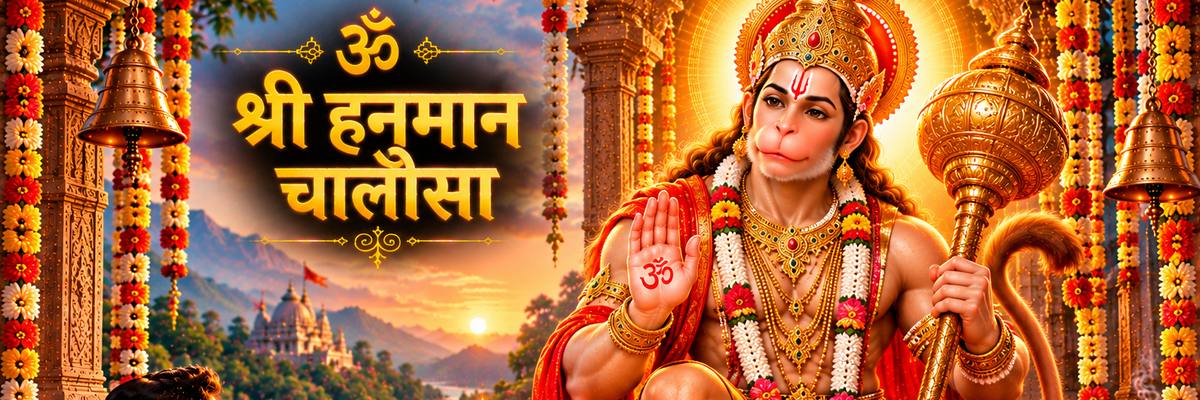
Original text
॥ दोहा ॥ श्रीगुरु चरन सरोज रज, निज मनु मुकुरु सुधारि। बरनउं रघुबर बिमल जसु, जो दायकु फल चारि॥ बुद्धिहीन तनु जानिके, सुमिरौं पवन-कुमार। बल बुधि विद्या देहु मोहिं, हरहु कलेश विकार॥ ॥ चौपाई ॥ जय हनुमान ज्ञान गुन सागर। जय कपीस तिहुँ लोक उजागर॥1॥ राम दूत अतुलित बल धामा। अंजनि पुत्र पवनसुत नामा॥2॥ महाबीर बिक्रम बजरंगी। कुमति निवार सुमति के संगी॥3॥ कंचन बरन बिराज सुबेसा। कानन कुंडल कुंचित केसा॥4॥ हाथ बज्र औ ध्वजा बिराजे। कांधे मूंज जनेऊ साजे॥5॥ शंकर सुवन केसरीनंदन। तेज प्रताप महा जग वंदन॥6॥ विद्यावान गुनी अति चातुर। राम काज करिबे को आतुर॥7॥ प्रभु चरित्र सुनिबे को रसिया। राम लखन सीता मन बसिया॥8॥ सूक्ष्म रूप धरि सियहिं दिखावा। बिकट रूप धरि लंक जरावा॥9॥ भीम रूप धरि असुर सँहारे। रामचंद्र के काज सँवारे॥10॥ लाय सजीवन लखन जियाये। श्रीरघुबीर हरषि उर लाये॥11॥ रघुपति कीन्ही बहुत बड़ाई। तुम मम प्रिय भरतहि सम भाई॥12॥ सहस बदन तुम्हरो जस गावैं। अस कहि श्रीपति कंठ लगावैं॥13॥ सनकादिक ब्रह्मादि मुनीसा। नारद सारद सहित अहीसा॥14॥ जम कुबेर दिगपाल जहां ते। कवि कोविद कहि सके कहां ते॥15॥ तुम उपकार सुग्रीवहिं कीन्हा। राम मिलाय राज पद दीन्हा॥16॥ तुम्हरो मंत्र बिभीषन माना। लंकेश्वर भए सब जग जाना॥17॥ जुग सहस्र जोजन पर भानू। लील्यो ताहि मधुर फल जानू॥18॥ प्रभु मुद्रिका मेलि मुख माहीं। जलधि लांघि गये अचरज नाहीं॥19॥ दुर्गम काज जगत के जेते। सुगम अनुग्रह तुम्हरे तेते॥20॥ राम दुआरे तुम रखवारे। होत न आज्ञा बिनु पैसारे॥21॥ सब सुख लहै तुम्हारी सरना। तुम रच्छक काहू को डर ना॥22॥ आपन तेज सम्हारो आपै। तीनों लोक हांक तें कांपै॥23॥ भूत पिशाच निकट नहिं आवै। महाबीर जब नाम सुनावै॥24॥ नासै रोग हरै सब पीरा। जपत निरंतर हनुमत बीरा॥25॥ संकट तें हनुमान छुड़ावै। मन क्रम बचन ध्यान जो लावै॥26॥ सब पर राम तपस्वी राजा। तिन के काज सकल तुम साजा॥27॥ और मनोरथ जो कोई लावै। सोइ अमित जीवन फल पावै॥28॥ चारों जुग परताप तुम्हारा। है परसिद्ध जगत उजियारा॥29॥ साधु संत के तुम रखवारे। असुर निकंदन राम दुलारे॥30॥ अष्ट सिद्धि नौ निधि के दाता। अस बर दीन जानकी माता॥31॥ राम रसायन तुम्हरे पासा। सदा रहो रघुपति के दासा॥32॥ तुम्हरे भजन राम को पावै। जनम जनम के दुख बिसरावै॥33॥ अंत काल रघुबर पुर जाई। जहां जन्म हरिभक्त कहाई॥34॥ और देवता चित्त न धरई। हनुमत सेइ सर्ब सुख करई॥35॥ संकट कटै मिटै सब पीरा। जो सुमिरै हनुमत बलबीरा॥36॥ जय जय जय हनुमान गोसाईं। कृपा करहु गुरुदेव की नाईं॥37॥ जो सत बार पाठ कर कोई। छूटहि बंदि महा सुख होई॥38॥ जो यह पढ़ै हनुमान चालीसा। होय सिद्धि साखी गौरीसा॥39॥ तुलसीदास सदा हरि चेरा। कीजै नाथ हृदय महं डेरा॥40॥ ॥ दोहा ॥ पवनतनय संकट हरन, मंगल मूरति रूप। राम लखन सीता सहित, हृदय बसहु सुर भूप॥
Transliteration
Doha: Shri Guru Charan Saroj Raj, Nij Manu Mukuru Sudhari. Baranau Raghubar Bimal Jasu, Jo Dayaku Phal Chari. Buddhiheen Tanu Janike, Sumirau Pavan-Kumar. Bal Buddhi Vidya Dehu Mohin, Harahu Kalesh Vikar. Chaupai: 1. Jai Hanuman Gyan Gun Sagar, Jai Kapis Tihun Lok Ujagar. 2. Ram Doot Atulit Bal Dhama, Anjani Putra Pavansut Nama. 3. Mahabir Bikram Bajrangi, Kumati Nivar Sumati Ke Sangi. 4. Kanchan Baran Biraj Subesa, Kanan Kundal Kunchit Kesa. 5. Hath Bajra Aau Dhwaja Biraje, Kandhe Moonj Janeu Saje. 6. Shankar Suvan Kesarinandan, Tej Pratap Maha Jag Vandan. 7. Vidyavan Guni Ati Chatur, Ram Kaj Karibe Ko Atur. 8. Prabhu Charitra Sunibe Ko Rasiya, Ram Lakhan Sita Man Basiya. 9. Sukshma Roop Dhari Siyahin Dikhava, Bikat Roop Dhari Lank Jarava. 10. Bhim Roop Dhari Asur Sanhare, Ramchandra Ke Kaj Sanvare. 11. Laay Sajeevan Lakhan Jiyaye, Shri Raghubir Harashi Ur Laye. 12. Raghupati Kinhi Bahut Badai, Tum Mam Priya Bharat-hi Sam Bhai. 13. Sahas Badan Tumharo Jas Gaavai, As Kahi Shripati Kanth Lagavai. 14. Sanakadik Brahmadi Munisa, Narad Sarad Sahit Ahisa. 15. Jam Kuber Digpal Jahan Te, Kavi Kovid Kahi Sake Kahan Te. 16. Tum Upkar Sugrivahin Kinha, Ram Milaay Rajpad Dinha. 17. Tumharo Mantra Bibhishan Mana, Lankeshwar Bhaye Sab Jag Jana. 18. Jug Sahastra Jojan Par Bhanu, Leelyo Tahi Madhur Phal Janu. 19. Prabhu Mudrika Meli Mukh Mahin, Jaladhi Langhi Gaye Achraj Nahin. 20. Durgam Kaj Jagat Ke Jete, Sugam Anugrah Tumhare Tete. 21. Ram Duare Tum Rakhware, Hot Na Aagya Binu Paisare. 22. Sab Sukh Lahai Tumhari Sarna, Tum Rakshak Kahu Ko Dar Na. 23. Aapan Tej Samharo Aape, Teenon Lok Haank Te Kaanpe. 24. Bhoot Pishach Nikat Nahin Aavai, Mahabir Jab Naam Sunavai. 25. Naasai Rog Harai Sab Peera, Japat Nirantar Hanumat Beera. 26. Sankat Te Hanuman Chhudavai, Man Kram Bachan Dhyan Jo Lavai. 27. Sab Par Ram Tapasvi Raja, Tin Ke Kaj Sakal Tum Saja. 28. Aur Manorath Jo Koi Lavai, Soi Amit Jeevan Phal Pavai. 29. Charon Jug Partap Tumhara, Hai Parasiddha Jagat Ujiyara. 30. Sadhu Sant Ke Tum Rakhware, Asur Nikandan Ram Dulare. 31. Ashta Siddhi Nau Nidhi Ke Data, As Bar Din Janki Mata. 32. Ram Rasayan Tumhare Pasa, Sada Raho Raghupati Ke Dasa. 33. Tumhare Bhajan Ram Ko Pavai, Janam Janam Ke Dukh Bisravai. 34. Ant Kal Raghubar Pur Jaai, Jahan Janma Haribhakt Kahaai. 35. Aur Devta Chitt Na Dharaee, Hanumat Sei Sarb Sukh Karaee. 36. Sankat Katai Mitai Sab Peera, Jo Sumirai Hanumat Balbeera. 37. Jai Jai Jai Hanuman Gosaain, Kripa Karahu Gurudev Ki Naain. 38. Jo Sat Baar Paath Kare Koi, Chhootahi Bandi Maha Sukh Hoi. 39. Jo Yah Padhai Hanuman Chalisa, Hoy Siddhi Sakhi Gaurisa. 40. Tulsidas Sada Hari Chera, Keeje Nath Hriday Mahan Dera. Doha: Pavantanay Sankat Haran, Mangal Murati Roop. Ram Lakhan Sita Sahit, Hriday Basahu Sur Bhoop.
Who wrote it, and when
The Hanuman Chalisa was composed by Goswami Tulsidas, the 16th-century poet-saint better known for writing the Ramcharitmanas, the Awadhi retelling of the Ramayana that remains the most widely read version of the epic in North India. "Chalisa" simply means "forty" — the hymn is built from forty chaupais (four-line verses), framed by two opening dohas (couplets) and one closing doha, all in the same Awadhi dialect as the Ramcharitmanas rather than classical Sanskrit, which is part of why it has always felt accessible rather than academic.
What the verses actually cover
The opening doha asks for the guru's grace to purify the mind before attempting to describe Rama's glory — a conventional and humble opening. The chaupais that follow move through several distinct themes: Hanuman's birth and his mother Anjani, his boundless strength and the story of him mistaking the sun for a fruit as a child, his role as Rama's messenger and warrior in the Ramayana (carrying the mountain of sanjeevani herb to save Lakshmana, burning Lanka), his identity as an incarnation of Shiva's own energy (Rudra), and repeated verses on how simply remembering his name relieves fear, illness and obstacles. The chalisa closes by asking Hanuman to dwell in the devotee's heart alongside Rama, Lakshmana and Sita.
Author, language and form at a glance
- Who wrote it: Goswami Tulsidas, the 16th-century poet-saint of the Ramcharitmanas. He signs it himself in the fortieth chaupai: "Tulsidas sada Hari chera, kijai Nath hriday mahan dera", "Tulsidas, forever Hari's servant, asks you, Lord, to make your home in his heart." A popular story says he wrote it while imprisoned by Akbar; no record from the time confirms this, and it is best read as legend.
- Language: Awadhi, the eastern Hindi of Ayodhya and the Ramcharitmanas, not Sanskrit. You can hear it in forms like baranau (I describe), sumirau (I remember) and janike (knowing). That is why most Hindi speakers can follow it without a translation.
- Form: two opening dohas, forty chaupais and one closing doha. A chaupai has four quarters of sixteen matras each, which gives the hymn its steady, walking rhythm. A doha is a couplet of 13 + 11 matras per line.
- Length: read aloud at an ordinary pace it takes about eight to twelve minutes.
Why read it
The chalisa gives its own reason in the second opening doha: "Buddhiheen tanu janike sumirau Pavan-kumar, bal buddhi vidya dehu mohi, harahu kalesh vikar." Knowing myself to be short of understanding, I remember the son of the Wind: give me strength, intelligence and knowledge, and take away my troubles and impurities. It is a prayer for steadiness and clear thinking first, and only then for help in trouble.
The second reason is that Hanuman is the way to Ram. Chaupai 33 says "tumhre bhajan Ram ko pavai", through singing of you one reaches Ram, and chaupai 21 calls him the doorkeeper of Ram's door, without whose leave no one enters. For a Ram devotee, the chalisa is the doorway prayer.
And it asks very little of the reader. It needs no priest, no initiation and no special materials, and it is short enough for a single morning. That is a large part of why it is the most widely recited hymn in North India.
When to read it
- Tuesday and Saturday: the days most associated with Hanuman. Saturday also links him to Shani, since tradition holds that Hanuman's devotees are spared Shani's harshness.
- Morning or evening: after bathing in the morning, or at dusk when the evening lamp is lit. There is no rule against reading it at night. Many people say chaupai 24, "bhoot pishach nikat nahi avai", when they are afraid in the dark.
- Hanuman Jayanti: on Chaitra Purnima in most of North India, and on Kartik Krishna Chaturdashi (the day before Diwali) in some traditions.
- At difficult moments: before an exam, an interview, a journey, a hospital visit or a court date. These are the situations that chaupais 25 and 26 speak to.
- In counts: chaupai 38 says "jo sat bar path kar koi". It is usually understood as reading it a hundred times (shat), and some read sat as "with truth, sincerely". Common vows are 7, 11, 21 or 108 recitations on a Tuesday or Saturday, or a hundred over several days.
How to read it (path vidhi)
- Bathe and wear clean clothes. Red or saffron is traditional for Hanuman but not required.
- Sit before an image of Hanuman, or of Ram's darbar with Hanuman at his feet. Face east if you can.
- Light a lamp of ghee or chameli (jasmine) oil and offer a red flower. Many also offer sindoor, and gud-chana or boondi as prasad.
- Begin as the chalisa itself begins, by remembering your guru and Ram. The opening doha "Shri Guru charan saroj raj" does exactly this.
- Read aloud and clearly, at a pace at which you can follow the meaning. Chaupai 26 asks for attention in "man, kram, bachan", in mind, action and word, and that counts for more than speed.
- Finish with the closing doha, then "Siyavar Ramchandra ki jai, Pavansut Hanuman ki jai", and the Hanuman aarti if you are doing a full puja.
If you are travelling or unwell, reading it silently or listening to it attentively is still the same prayer. The text promises its fruit to one who "reads" (padhai) and "remembers" (sumirai), and it names no other conditions.
Benefits the chalisa itself names
- Fearlessness: "all happiness comes to those who take your refuge; with you as protector there is no fear" (22).
- Protection from negative forces: spirits and ghosts do not come near when the Mahavir's name is recited (24).
- Health and relief from pain: "disease is destroyed and all pain removed by constantly chanting brave Hanuman's name" (25).
- Rescue from crises: Hanuman frees from trouble the one who meditates on him in mind, deed and word (26, and again in 36).
- Wishes fulfilled: whoever brings any other desire to him receives the "unlimited fruit of life" (28).
- Freedom from bondage: whoever recites it a hundred times is released from bondage and finds great happiness (38).
- Spiritual attainment: whoever reads it attains siddhi, with Gaurisha (Shiva) as witness (39). Singing of Hanuman leads to Ram, wipes out the sorrows of many births (33), and at the end takes one to Raghubar's city (34).
These are the promises of a devotional text, made to faith and sincerity. Devotees read it alongside a doctor's care or a lawyer's advice, not instead of them.
Frequently asked questions
Can women read the Hanuman Chalisa?
Yes. The chalisa promises its fruit to "whoever reads it" (jo yah padhai) and makes no distinction. Women all over India recite it daily. Some families keep their own customs about touching Hanuman's image, but reading and singing the chalisa is not restricted.
How many times should I read it?
Once a day is the most common practice. On Tuesdays and Saturdays many read it 7, 11 or 21 times. Chaupai 38 speaks of a hundred recitations, which some complete in one sitting and others spread over several days as a vow.
Can it be read at night?
Yes. Nothing in the text limits the time. Reading it at night, especially when anxious or afraid, is an old habit, and chaupai 24 is the line people remember most then.
Is the Hanuman Chalisa in Sanskrit?
No. It is in Awadhi, a dialect of Hindi, the same language as Tulsidas's Ramcharitmanas. That is why it is easier to understand than Sanskrit stotras like the Apaduddharak Stotram.
Should I read it for forty days?
The chalisa itself does not prescribe forty days. "Chalisa" refers to its forty verses. A forty-day or Tuesday-to-Tuesday vow is a popular way to build a habit, and it is a good one, but it is a custom rather than a rule of the text.
What is the difference between the Hanuman Chalisa and the Sundarkand?
The Sundarkand is the fifth book of the Ramcharitmanas, which tells Hanuman's journey to Lanka in full and takes one to three hours to read. The chalisa is Tulsidas's short hymn of praise, and it is often read at the start or end of a Sundarkand path.
Do I need a picture or idol to read it?
No. An image helps focus, but chaupai 26 says what matters is attention in mind, deed and word. Many people recite it from memory on the way to work.
Spotted a mistake?
If you find any grammatical, Hindi, English, mantra-text or other mistake on this page, tell us — we will correct it within 24 hours.