
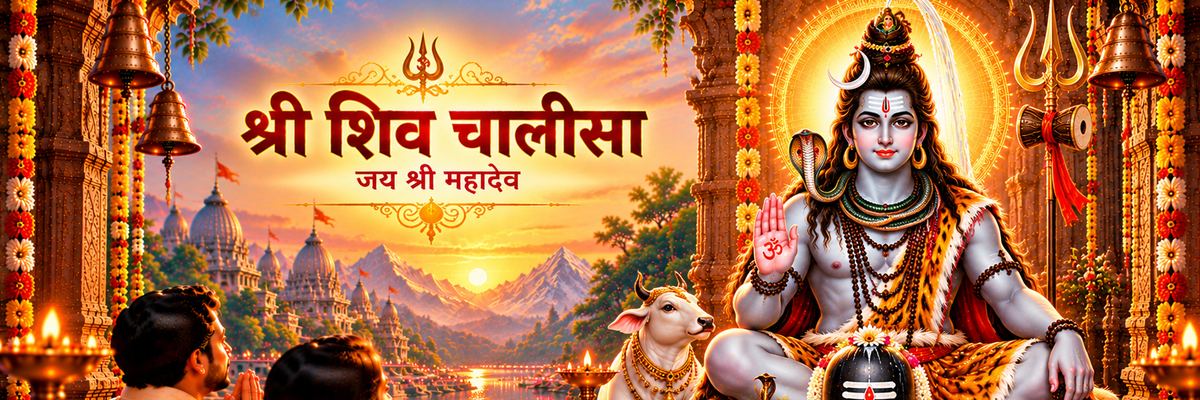
Original text
॥ दोहा ॥ जय गणेश गिरिजा सुवन, मंगल मूल सुजान। कहत अयोध्यादास तुम, देहु अभय वरदान॥ ॥ चौपाई ॥ जय गिरिजा पति दीन दयाला। सदा करत सन्तन प्रतिपाला॥1॥ भाल चन्द्रमा सोहत नीके। कानन कुण्डल नागफनी के॥2॥ अंग गौर शिर गंग बहाये। मुण्डमाल तन क्षार लगाए॥3॥ वस्त्र खाल बाघम्बर सोहे। छवि को देखि नाग मन मोहे॥4॥ मैना मातु की हवे दुलारी। बाम अंग सोहत छवि न्यारी॥5॥ कर त्रिशूल सोहत छवि भारी। करत सदा शत्रुन क्षयकारी॥6॥ नन्दि गणेश सोहैं तहँ कैसे। सागर मध्य कमल हैं जैसे॥7॥ कार्तिक श्याम और गणराऊ। या छवि को कहि जात न काऊ॥8॥ देवन जबहीं जाय पुकारा। तब ही दुख प्रभु आप निवारा॥9॥ किया उपद्रव तारक भारी। देवन सब मिलि तुमहिं जुहारी॥10॥ तुरत षडानन आप पठायउ। लवनिमेष महँ मारि गिरायउ॥11॥ आप जलंधर असुर संहारा। सुयश तुम्हार विदित संसारा॥12॥ त्रिपुरासुर सन युद्ध मचाई। सबहिं कृपा कर लीन बचाई॥13॥ किया तपहिं भागीरथ भारी। पुरब प्रतिज्ञा तासु पुरारी॥14॥ दानिन महँ तुम सम कोउ नाहीं। सेवक स्तुति करत सदाहीं॥15॥ वेद नाम महिमा तव गाई। अकथ अनादि भेद नहिं पाई॥16॥ प्रकटी उदधि मंथन में ज्वाला। जरत सुरासुर भए विहाला॥17॥ कीन्ही दया तहं करी सहाई। नीलकण्ठ तब नाम कहाई॥18॥ पूजन रामचन्द्र जब कीन्हा। जीत के लंक विभीषण दीन्हा॥19॥ सहस कमल में हो रहे धारी। कीन्ह परीक्षा तबहिं पुरारी॥20॥ एक कमल प्रभु राखेउ जोई। कमल नयन पूजन चहं सोई॥21॥ कठिन भक्ति देखी प्रभु शंकर। भए प्रसन्न दिए इच्छित वर॥22॥ जय जय जय अनन्त अविनाशी। करत कृपा सब के घटवासी॥23॥ दुष्ट सकल नित मोहि सतावै। भ्रमत रहौं मोहि चैन न आवै॥24॥ त्राहि त्राहि मैं नाथ पुकारो। येहि अवसर मोहि आन उबारो॥25॥ लै त्रिशूल शत्रुन को मारो। संकट से मोहि आन उबारो॥26॥ मात-पिता भ्राता सब होई। संकट में पूछत नहिं कोई॥27॥ स्वामी एक है आस तुम्हारी। आय हरहु मम संकट भारी॥28॥ धन निर्धन को देत सदा हीं। जो कोई जांचे सो फल पाहीं॥29॥ अस्तुति केहि विधि करैं तुम्हारी। क्षमहु नाथ अब चूक हमारी॥30॥ शंकर हो संकट के नाशन। मंगल कारण विघ्न विनाशन॥31॥ योगी यति मुनि ध्यान लगावैं। शारद नारद शीश नवावैं॥32॥ नमो नमो जय नमः शिवाय। सुर ब्रह्मादिक पार न पाय॥33॥ जो यह पाठ करे मन लाई। ता पर होत है शम्भु सहाई॥34॥ ॠनियां जो कोई हो अधिकारी। पाठ करे सो पावनहारी॥35॥ पुत्र हीन कर इच्छा जोई। निश्चय शिव प्रसाद तेहि होई॥36॥ पण्डित त्रयोदशी को लावे। ध्यान पूर्वक होम करावे॥37॥ त्रयोदशी व्रत करै हमेशा। ताके तन नहीं रहै कलेशा॥38॥ धूप दीप नैवेद्य चढ़ावे। शंकर सम्मुख पाठ सुनावे॥39॥ जन्म जन्म के पाप नसावे। अन्त धाम शिवपुर में पावे॥40॥ कहैं अयोध्यादास आस तुम्हारी। जानि सकल दुःख हरहु हमारी॥ ॥ दोहा ॥ नित्त नेम कर प्रातः ही, पाठ करौं चालीसा। तुम मेरी मनोकामना, पूर्ण करो जगदीश॥ मगसर छठि हेमन्त ऋतु, संवत चौसठ जान। अस्तुति चालीसा शिवहि, पूर्ण कीन कल्याण॥
Transliteration
Doha: Jai Ganesh Girija Suvan, Mangal Mool Sujan. Kahat Ayodhyadas Tum, Dehu Abhay Varadan. Chaupai: 1. Jai Girija Pati Deen Dayala, Sada Karat Santan Pratipala. 2. Bhal Chandrama Sohat Neeke, Kanan Kundal Nagphani Ke. 3. Ang Gaur Shir Gang Bahaye, Mundmal Tan Kshar Lagaye. 4. Vastra Khal Baghambar Sohe, Chhavi Ko Dekhi Nag Man Mohe. 5. Maina Matu Ki Have Dulari, Baam Ang Sohat Chhavi Nyari. 6. Kar Trishul Sohat Chhavi Bhari, Karat Sada Shatrun Kshaykari. 7. Nandi Ganesh Sohain Tahan Kaise, Sagar Madhya Kamal Hain Jaise. 8. Kartik Shyam Aur Ganrau, Ya Chhavi Ko Kahi Jaat Na Kau. 9. Devan Jabahin Jaay Pukara, Tab Hi Dukh Prabhu Aap Nivara. 10. Kiya Upadrav Tarak Bhari, Devan Sab Mili Tumahin Juhari. 11. Turat Shadanan Aap Pathayau, Lav Nimesh Mahan Mari Girayau. 12. Aap Jalandhar Asur Sanhara, Suyash Tumhar Vidit Sansara. 13. Tripurasur San Yuddh Machai, Sabahin Kripa Kar Leen Bachai. 14. Kiya Tapahin Bhagirath Bhari, Purab Pratigya Tasu Purari. 15. Danin Mahan Tum Sam Kou Nahin, Sevak Stuti Karat Sadahin. 16. Ved Naam Mahima Tav Gai, Akath Anadi Bhed Nahin Pai. 17. Prakati Udadhi Manthan Mein Jwala, Jarat Surasur Bhaye Vihala. 18. Kinhi Daya Tahan Kari Sahai, Neelkanth Tab Naam Kahai. 19. Poojan Ramchandra Jab Kinha, Jeet Ke Lank Vibhishan Dinha. 20. Sahas Kamal Mein Ho Rahe Dhari, Kinh Pariksha Tabahin Purari. 21. Ek Kamal Prabhu Rakheu Joi, Kamal Nayan Poojan Chahan Soi. 22. Kathin Bhakti Dekhi Prabhu Shankar, Bhaye Prasann Diye Ichchhit Var. 23. Jai Jai Jai Anant Avinasi, Karat Kripa Sab Ke Ghatvasi. 24. Dusht Sakal Nit Mohi Satavai, Bhramat Rahaun Mohi Chain Na Avai. 25. Trahi Trahi Main Nath Pukaro, Yehi Avasar Mohi Aan Ubaro. 26. Lai Trishul Shatrun Ko Maro, Sankat Se Mohi Aan Ubaro. 27. Mat-Pita Bhrata Sab Hoi, Sankat Mein Poochhat Nahin Koi. 28. Swami Ek Hai Aas Tumhari, Aay Harahu Mam Sankat Bhari. 29. Dhan Nirdhan Ko Det Sada Hin, Jo Koi Jaanche So Phal Pahin. 30. Astuti Kehi Vidhi Karain Tumhari, Kshamahu Nath Ab Chook Hamari. 31. Shankar Ho Sankat Ke Nashan, Mangal Karan Vighna Vinashan. 32. Yogi Yati Muni Dhyan Lagavain, Sharad Narad Sheesh Navavain. 33. Namo Namo Jai Namah Shivay, Sur Brahmadik Paar Na Paay. 34. Jo Yah Path Kare Man Lai, Ta Par Hot Hai Shambhu Sahai. 35. Riniyan Jo Koi Ho Adhikari, Path Kare So Pavanhari. 36. Putra Heen Kar Ichchha Joi, Nishchay Shiv Prasad Tehi Hoi. 37. Pandit Trayodashi Ko Lave, Dhyan Poorvak Hom Karave. 38. Trayodashi Vrat Karai Hamesha, Take Tan Nahin Rahai Kalesha. 39. Dhoop Deep Naivedya Chadhave, Shankar Sammukh Path Sunave. 40. Janam Janam Ke Paap Nasave, Ant Dham Shivpur Mein Pave. Kahain Ayodhyadas Aas Tumhari, Jaani Sakal Dukh Harahu Hamari. Doha: Nitt Nem Kar Pratah Hi, Path Karaun Chalisa. Tum Meri Manokamna, Poorn Karo Jagdish. Magsar Chhathi Hemant Ritu, Samvat Chausath Jaan. Astuti Chalisa Shivahi, Poorn Keen Kalyan.
Who it's addressed to, and by whom
The Shiva Chalisa's opening doha names its author as Ayodhyadas, and opens, fittingly, with a salutation to Ganesha before turning to Shiva himself — following the common convention of invoking the remover of obstacles before any major undertaking, including the writing of a hymn.
What the verses describe
The chaupais move through vivid physical description of Shiva — the crescent moon on his brow, the Ganga flowing from his matted hair, the ash smeared across his body, the serpent around his neck, and his tiger-skin garment — before moving into narrative episodes drawn from Puranic tradition: his role in the destruction of the demon Tarakasura, his defeat of Jalandhara and the Tripura demons, his help in bringing the Ganga to earth for sage Bhagiratha, and his swallowing of the poison (halahala) that emerged during the churning of the cosmic ocean, which turned his throat blue and earned him the name Neelkanth. Later verses describe Rama worshipping Shiva through a thousand lotuses before the Lanka campaign, and Shiva testing that devotion by hiding one lotus, prompting Rama to offer his own eye in its place.
The direct appeals in the later verses
From around the twenty-third chaupai, the tone shifts from narrating Shiva's deeds to a personal, first-person plea — asking for rescue from difficulty, freedom from debt, relief from illness, and a peaceful passing. This section is often what devotees hold in mind most closely, since it reads less like retelling mythology and more like speaking directly to Shiva.
Author, language and form at a glance
- Who wrote it: a poet named Ayodhyadas, who signs it twice. Once in the opening doha ("kahat Ayodhyadas tum, dehu abhay vardan") and again in a line after the fortieth chaupai: "kahain Ayodhyadas aas tumhari". Nothing reliable is known about him beyond this signature (chhap).
- When: the last doha gives a date: "Magsar chhathi Hemant ritu, samvat chausath jaan", completed on the sixth day of Margashirsha, in the Hemant season, in "samvat sixty-four". The century isn't stated, so the exact year can't be fixed.
- Language: simple devotional Hindi with Awadhi and Braj forms (pathayau, kinha, jaan), not Sanskrit. It is meant to be sung by ordinary householders.
- Form: an opening doha to Ganesha, forty chaupais, Ayodhyadas's signature line, and two closing dohas. It takes about ten minutes to read aloud.
Why read it
Most of the chalisa is a reminder of what Shiva has already done for those who called on him. He sent Kartikeya to kill Tarakasura when the gods appealed to him (10–11). He drank the poison from the churning of the ocean when it was burning gods and demons alike (17–18). He fulfilled Bhagiratha's penance (14). Having recalled all this, the poet turns to his own life with a plea many readers recognise: "in trouble, mother, father and brother — no one asks after you; Lord, you are my only hope, come and take away my heavy troubles" (27–28).
So people read it for two reasons: to praise Shiva as "Shankar ho sankat ke nashan", the destroyer of troubles (31), and to speak to him directly when other help has run out.
When to read it
- Every morning: the closing doha itself says "nitt nem kar pratah hi, path karau chalisa", make it a daily rule to read the chalisa in the morning.
- On Trayodashi (Pradosh): chaupais 37–38 name the thirteenth lunar day twice. A pandit is to be invited for a homa on Trayodashi, and whoever always keeps the Trayodashi fast stays free of bodily affliction. That makes Pradosh Vrat evenings the chalisa's own special time.
- Mondays and Sawan: Somvar is Shiva's day, and the month of Shravan (July–August) is when it is read most, often after jalabhishek.
- Maha Shivratri: through the four night prahars, alongside chanting Om Namah Shivaya.
- Margashirsha Shashthi: the date of its completion, which some devotees mark with an extra recitation.
How to read it (path vidhi)
The chalisa gives its own short vidhi in chaupai 39: "dhoop deep naivedya chadhave, Shankar sammukh path sunave", offer incense, a lamp and food, and recite facing Shankar. In practice:
- Bathe and sit before a Shivling or an image of Shiva, facing north or east.
- Offer water or milk (jalabhishek) and, if you have them, bel patra, white flowers and a little sandal paste.
- Light incense and a ghee lamp, and offer naivedya: fruit, mishri or whatever is pure and simple.
- Begin with the opening doha to Ganesha. Do not skip it, because the chalisa is built to start there.
- Recite aloud through the forty chaupais and both closing dohas, then chant Om Namah Shivaya a few times or sing Om Jai Shiv Omkara.
Benefits the chalisa itself names
- Shiva's help: Shambhu becomes the helper of whoever reads it with their mind on it (34).
- Freedom from debt: one in debt (riniyan) who recites it is released (35).
- Children: one who longs for a son receives Shiva's grace "for certain" (36).
- A body free of affliction: for the one who keeps the Trayodashi fast always (38).
- Sins of many births destroyed, and Shiva's abode (Shivpur) at the end (40).
- Wishes fulfilled: "fulfil my heart's desire, Jagdish" is the closing prayer of the daily reader.
- Alongside these, the chalisa also describes him as one who gives wealth to the poor and fruit to whoever asks (29).
Frequently asked questions
Who wrote the Shiv Chalisa?
A poet who calls himself Ayodhyadas, in the opening doha and again near the end. Beyond his name and the date he gives (Margashirsha Shashthi, samvat "64"), no biography of him survives.
What is the best day to read it?
Monday and Trayodashi (Pradosh) are the strongest choices, and the text names Trayodashi twice. Its closing doha asks for a daily morning reading, so any day is right.
Can I read it without a Shivling at home?
Yes. "Shankar sammukh", facing Shankar, can be a picture, a temple Shivling or, when neither is possible, Shiva held in the mind.
Can women read the Shiv Chalisa?
Yes. Nothing in the chalisa restricts who may read it. Women keep Monday and Sawan fasts and read it widely, especially unmarried girls praying for a good husband and wives on Somvar vrat.
How is it different from the Shiva Tandava Stotram?
The Shiva Tandava Stotram is in difficult Sanskrit and attributed to Ravana. The Shiv Chalisa is in simple Hindi, tells stories of Shiva's help, and ends in a personal prayer. Many read the chalisa daily and keep the Tandava for Mondays or Shivratri.
Should I read it forty days in a row?
The chalisa doesn't ask for forty days. It asks for a daily morning habit and for the Trayodashi fast. A forty-day vow is a popular custom, not a requirement.
What should I offer while reading it?
What chaupai 39 lists: incense, a lamp and naivedya. Water, bel patra and white flowers are customary additions. Tulsi, kumkum and ketaki flowers are traditionally not offered to Shiva.
Spotted a mistake?
If you find any grammatical, Hindi, English, mantra-text or other mistake on this page, tell us — we will correct it within 24 hours.