
Maa Lakshmi
The goddess of wealth, prosperity and fortune, worshipped especially during Diwali.
Who Maa Lakshmi is
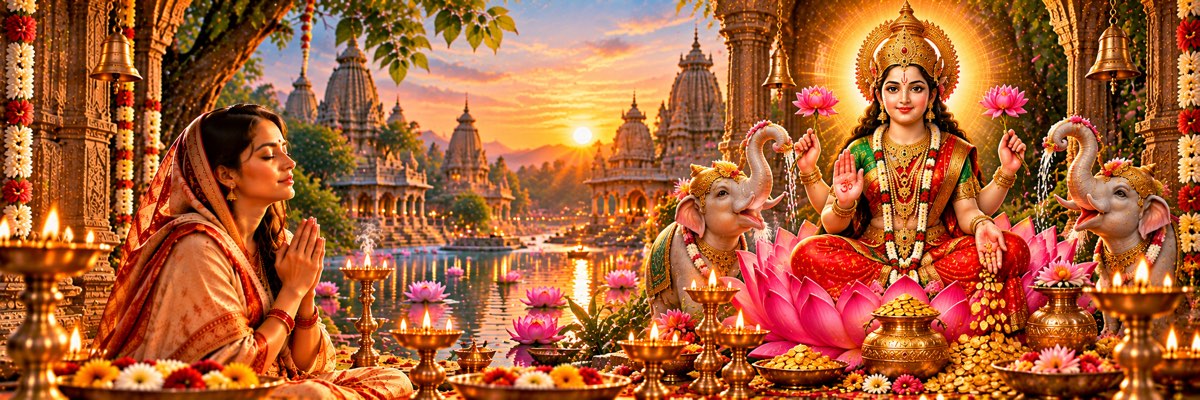
Lakshmi is the goddess of wealth, prosperity, good fortune and beauty, and the consort of Vishnu. "Wealth" in her case means much more than money: food, health, children, courage, knowledge and success are all counted as her gifts. That is why she is also called Shri, the word used before names as a mark of auspiciousness. Where she is present there is well-being; where she leaves, it goes with her.
Where she comes from
She is praised in the Shri Sukta, an ancient hymn attached to the Rigveda that is still chanted in Lakshmi puja. The best-known story of her appearance comes from the Puranas: when the gods and demons churned the cosmic ocean (Samudra Manthan), she rose from the waters seated on a lotus, one of the fourteen treasures to emerge, and chose Vishnu as her husband. That is why she is called Padma or Kamala, "the lotus one", and Kshirasagara-kanya, "daughter of the ocean of milk".
Her devotion to Vishnu across his avatars
A distinctive feature of Lakshmi's mythology is that she comes with Vishnu in each of his incarnations, taking a matching form each time: as Sita beside Ram, as Rukmini beside Krishna, and, in the Tirupati tradition, as Padmavati beside Venkateswara. In Sri Vaishnava theology she is the compassionate mediator (purushakara) who brings the devotee to Vishnu.
Symbols and forms
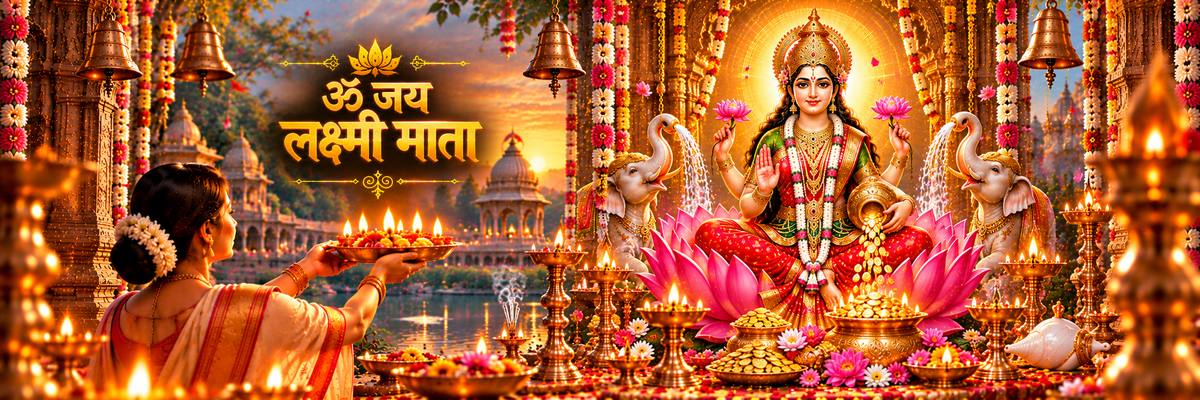
She is shown with four arms, standing or seated on a lotus, holding lotuses, with gold coins pouring from her palm. In classical images, Gaja Lakshmi, elephants pour water over her, a sign of royal power and life-giving rain. In Bengal and eastern India her vehicle is the owl. Many traditions worship eight forms, the Ashtalakshmi, each a different kind of wealth: Adi (primordial), Dhana (money), Dhanya (grain), Gaja (power), Santana (children), Dhairya (courage), Vijaya (victory) and Vidya (knowledge).
How she is worshipped
Her day is Friday (see Friday Lakshmi Bhakti). Tradition says she lives where there is cleanliness, light and harmony, so the simplest worship is a clean home, a lamp lit at dusk at the entrance, and a peaceful household. Offerings include lotus or red flowers, kheer or white sweets, rice, and kumkum. Chanting the Lakshmi Gayatri Mantra, reciting the Lakshmi Chalisa and singing Om Jai Lakshmi Mata are the common home practices. Because she is Vishnu's consort, she is often worshipped with him (see Shri Vishnu).
Festivals and temples
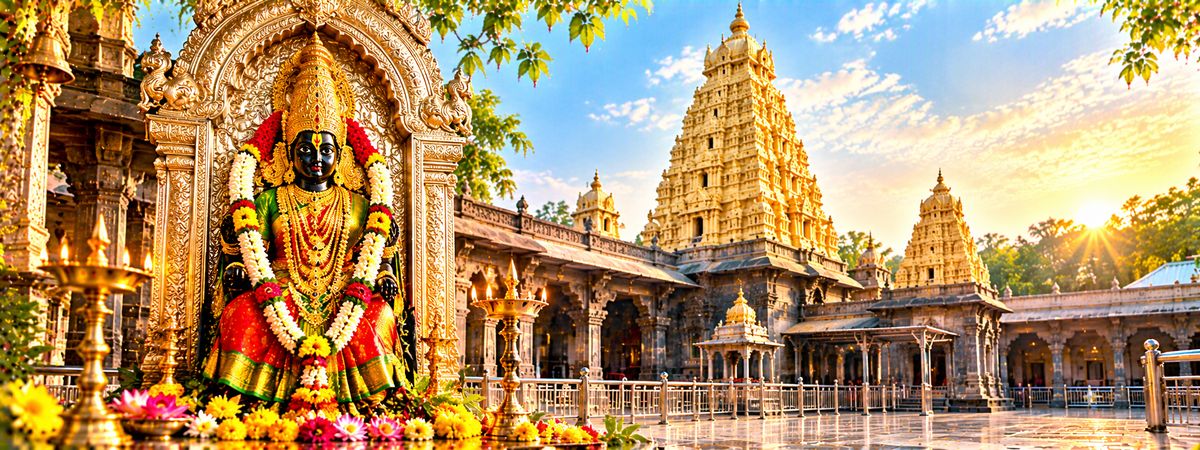
Diwali night, the new moon of Kartik, is her central festival. Homes are cleaned and lit to welcome her, and Lakshmi-Ganesh puja is done at an auspicious time, often with account books and cash boxes. Dhanteras, two days earlier, is the day for buying metal and new utensils. In Bengal and Odisha she is worshipped on the full moon of Sharad Purnima as Kojagari Lakshmi, and in South India married women keep the Varalakshmi Vratam on a Friday in Shravan. Famous temples include the Mahalakshmi temple in Kolhapur (one of the Shakti Peethas), the Mahalakshmi temple in Mumbai, the Padmavati temple at Tiruchanoor near Tirupati, and the Sripuram golden temple near Vellore.
Mantra
Lakshmi Gayatri Mantra
A Gayatri-pattern mantra invoking Lakshmi as the consort of Vishnu and goddess of prosperity.
Read more →MantraOm Shreem Mahalakshmyai Namah (Lakshmi Beej Mantra)
Lakshmi's seed-syllable mantra, built on "Shreem". What the bija means, how it differs from the longer Lakshmi mantras, and how to do its japa on Fridays and Diwali without turning it into a money charm.
Read more →Stotra
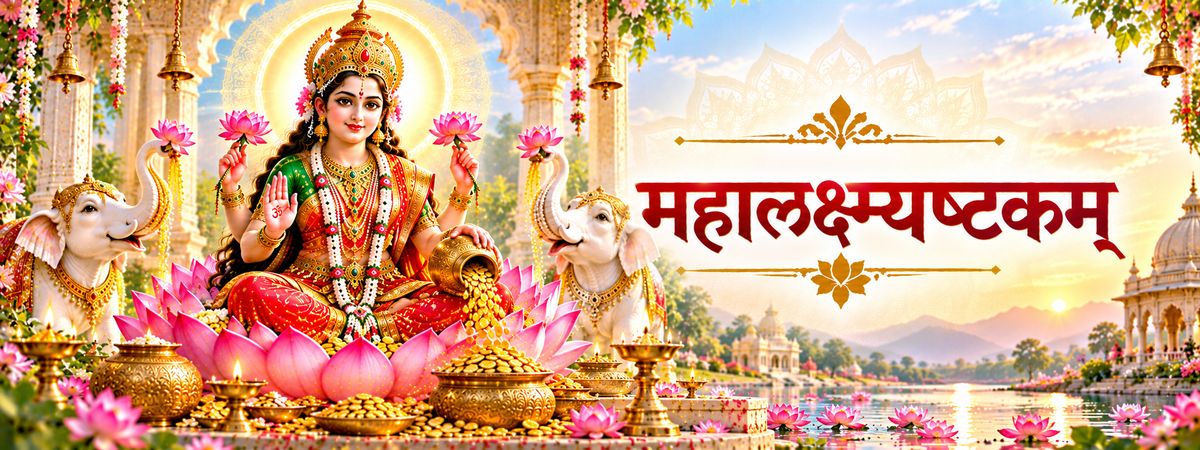
Mahalakshmi Ashtakam – Namaste'stu Mahamaye
Indra's eight verses to Mahalakshmi, each ending "Mahalakshmi namo'stu te" — the goddess on Garuda who terrified Kolasura, giver of both bhukti and mukti. Their meaning, the phalashruti on reciting it once, twice or three times a day, and when to chant it.
Read more →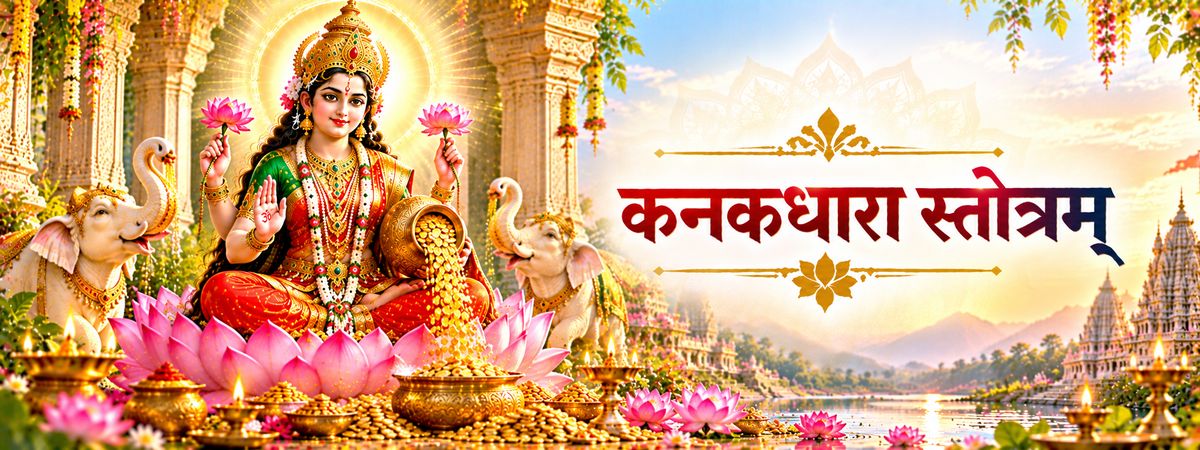
Kanakadhara Stotram
Adi Shankaracharya's hymn to Lakshmi, sung — the story goes — at the door of a poor brahmin woman who gave the young monk her last amla, until a shower of golden amlas fell on her house. What its verses ask for, and how it is recited on Fridays and Diwali.
Read more →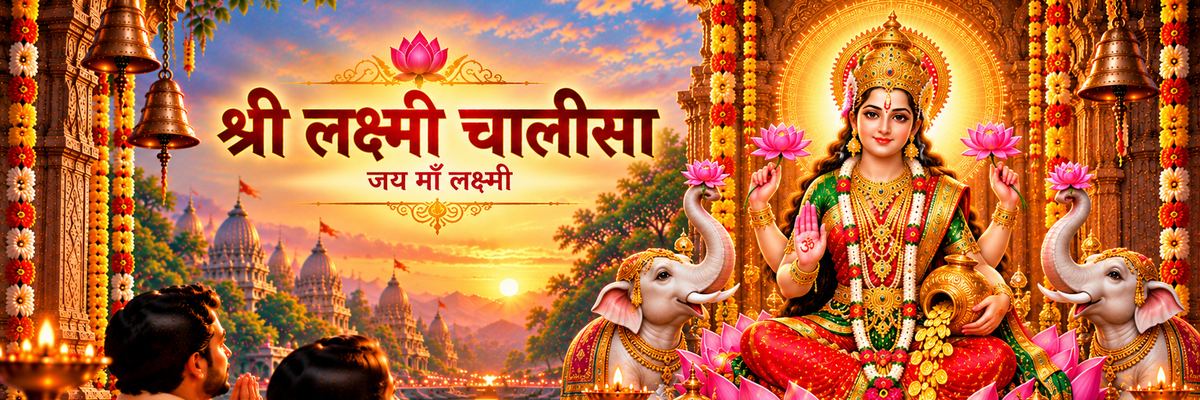
Temple
Festival
Sharad Purnima (Kojagari Purnima)
The full moon of Ashwin, said to be the only one complete in all sixteen kalas: the Kojagari Lakshmi puja, kheer left in the moonlight, Krishna's Maha-Raas, Valmiki Jayanti, the vrat katha and how each region keeps the night.
Read more →FestivalDiwali (Deepavali)
The festival of lamps on Kartik Amavasya: five days from Dhanteras to Bhai Dooj, Lakshmi-Ganesh puja in the evening, the stories of Ram's return, Narakasura and Bali, and how Diwali is kept across India, by Jains and by Sikhs.
Read more →Article
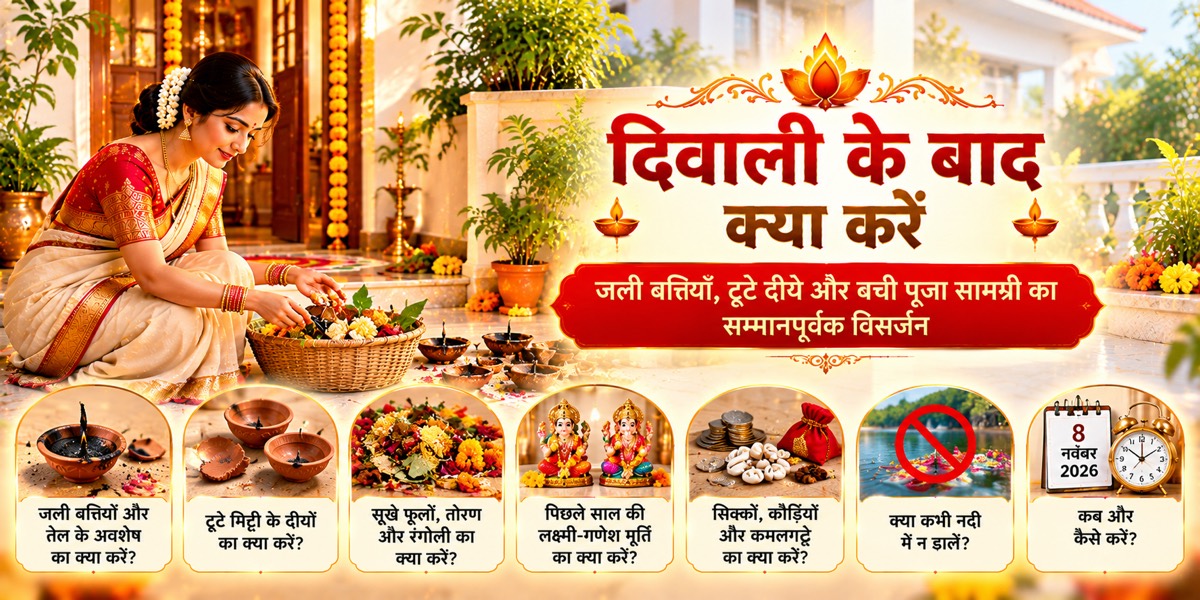
After the Lamps Go Out: How to Respectfully Dispose of Burnt Wicks, Broken Diyas and Leftover Diwali Puja Samagri
What to do with the charred wicks, oil residue, chipped clay diyas, dried flowers and torans, rangoli, last year's Lakshmi-Ganesh idol, and the coins, cowries and kamalgatta from the Lakshmi Puja after Diwali, 8 November 2026: what to keep, what to return to the soil, what never to put in a river, and when to do it.
Read more →Published8 min read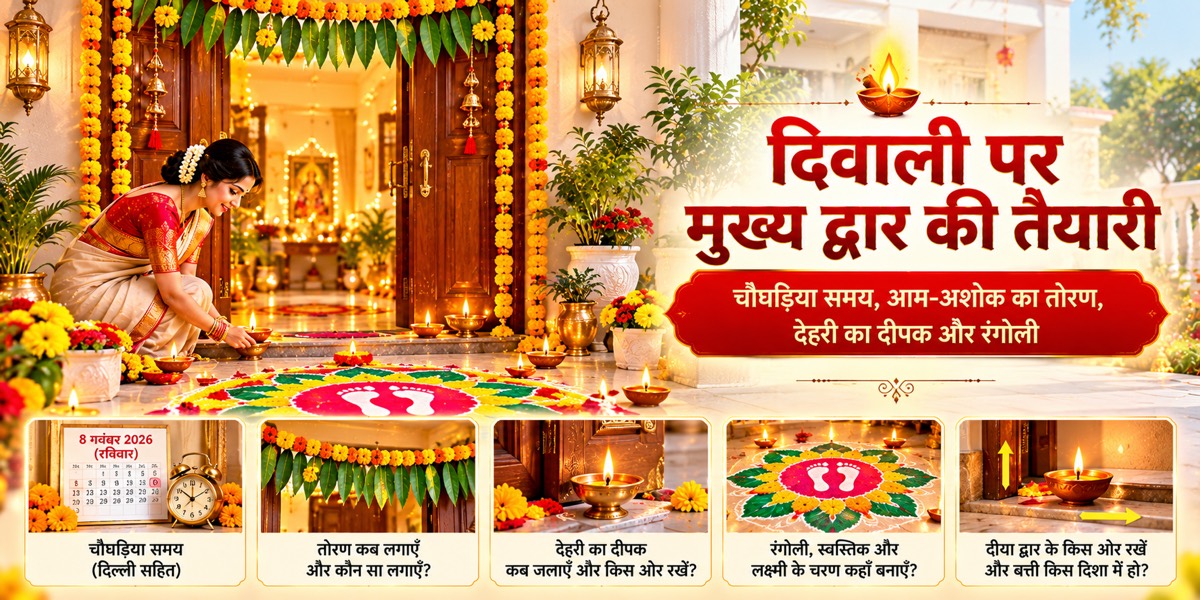
Main Gate Rituals for Diwali: Choghadiya Timings, Toran Leaves and Guarding the Threshold
How to prepare the main door for Diwali, Sunday 8 November 2026: when to put up the toran and light the threshold lamp (with Delhi's choghadiya), which side of the door the diya goes and which way its wick should point, mango vs ashoka vs plastic torans, and where the rangoli, swastik and Lakshmi's footprints belong.
Read more →Published7 min read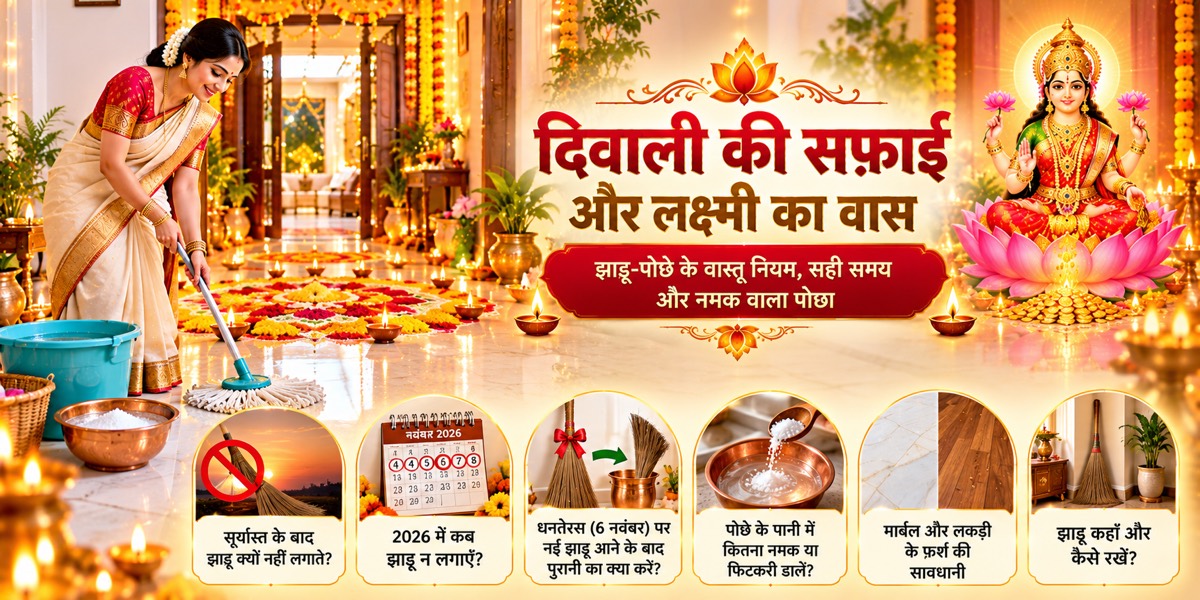
Deep Clean or Deep Wealth? The Vastu Rules of Pre-Diwali Sweeping, Mopping and the Broom
Why homes don't sweep after sunset, when not to sweep during the Diwali days of 2026, where and how the broom is kept, what to do with the old broom once the new one comes on Dhanteras (6 November), and how much salt or alum families add to the mopping water, with a warning for marble and wooden floors.
Read more →Published7 min read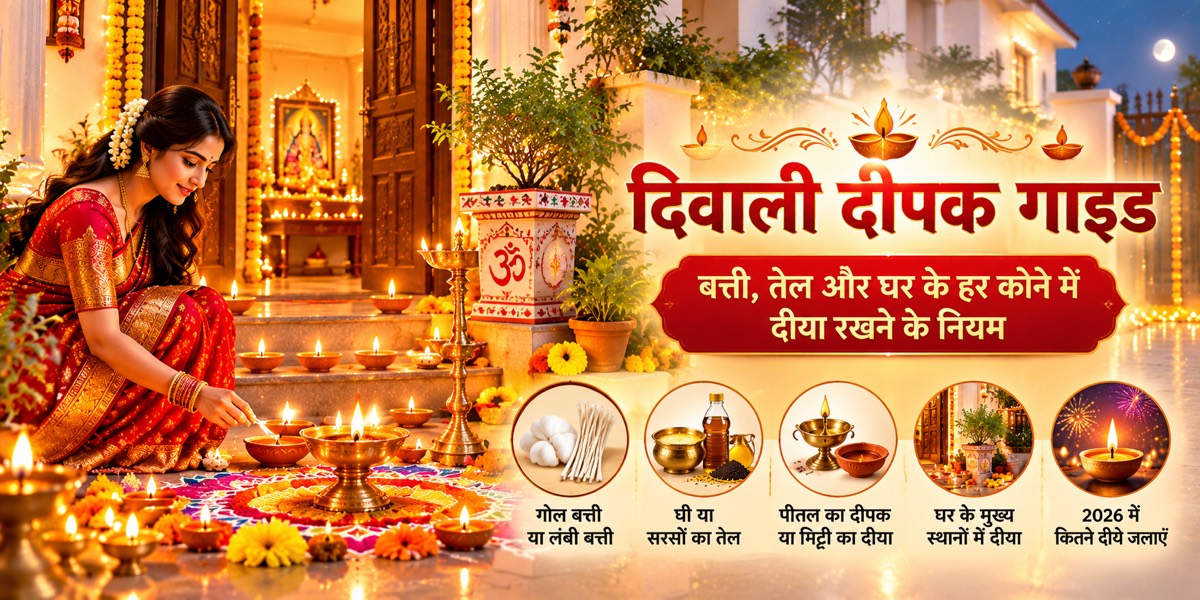
The Diwali Diya Guide: Rules for Wicks, Oils and Placement in Every Corner of the Home
Round wick or long wick, ghee or mustard oil, brass lamp or clay diya: how the daily evening lamp differs from Diwali's rows of lamps, why ghee stays in the mandir while oil goes to the threshold, the three core spots (mandir, Tulsi, main gate), and how many diyas families light on Dhanteras, Chhoti Diwali and Diwali in 2026.
Read more →Published8 min read
Diwali 2026 Laxmi Puja Vidhi: A Step-by-Step Guide to Welcoming Mahalakshmi at Home and at Your Shop or Office
Diwali Lakshmi Puja is on Sunday, 8 November 2026. In Delhi the muhurat is 5:54 to 7:50 pm (Pradosh kaal with Vrishabha lagna) and Nishita kaal is 11:39 pm to 12:31 am. How to place Lakshmi, Ganesh and Saraswati, a full samagri checklist, the puja step by step at home, and the extra steps for a shop or office.
Read more →Published10 min read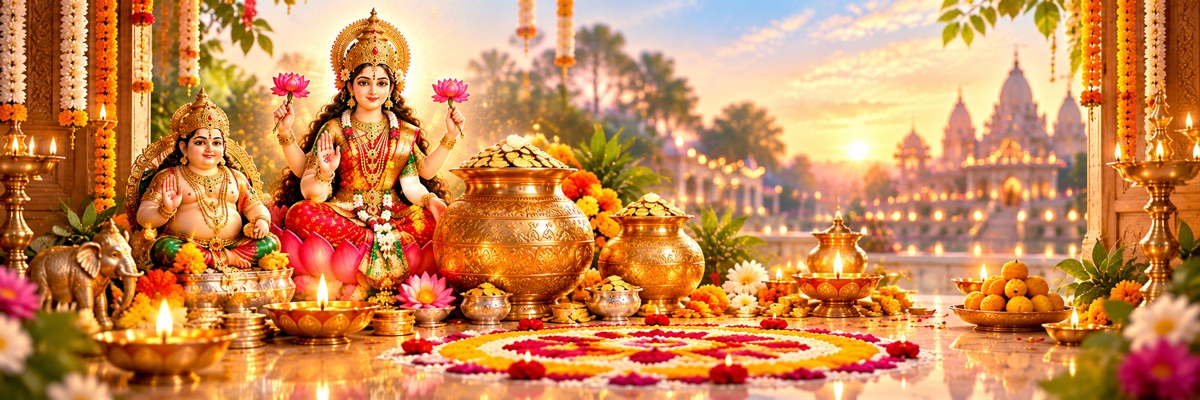
What to Buy and Avoid on Dhanteras 2026? Zodiac-wise Shopping, 3 Coriander Remedies and Yama Deepam
Dhanteras is on Friday, 6 November 2026, with the puja muhurat at 6:02 to 7:57 pm in Delhi. Why gold, silver, brass, a broom, whole coriander and salt are bought; why iron, glass and sharp things are avoided; zodiac-wise suggestions; three coriander customs; and how to light the Yama Deepam facing south.
Read more →Published10 min readPuja Vidhi
Spotted a mistake?
If you find any grammatical, Hindi, English, mantra-text or other mistake on this page, tell us — we will correct it within 24 hours.