
Shri Hanuman
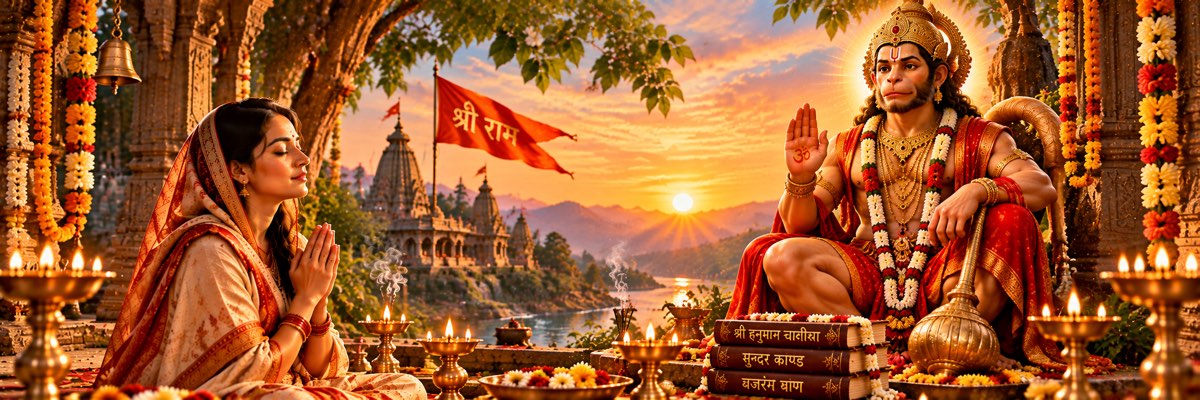
The devoted disciple of Lord Rama, revered as the embodiment of strength, courage and selfless devotion.
Who Shri Hanuman is
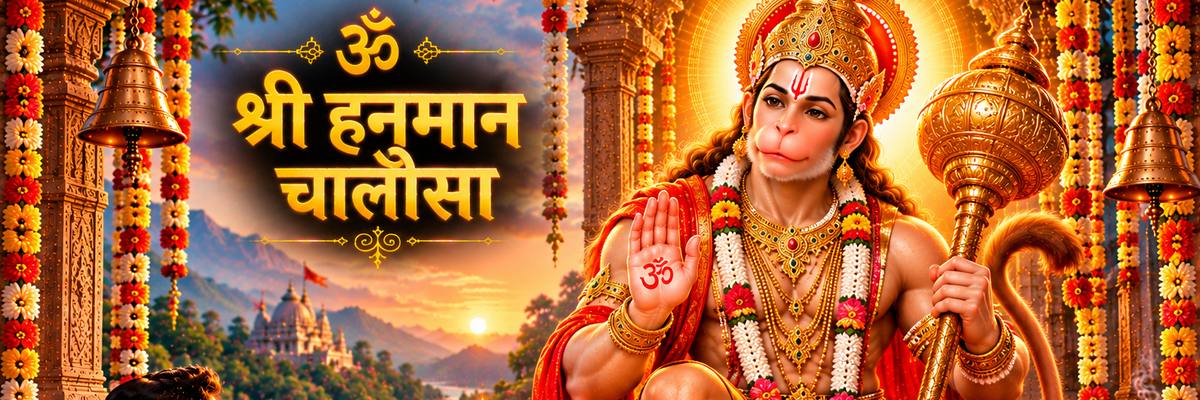
Hanuman is a vanara (a monkey-form being) of the Ramayana, celebrated as the most devoted follower of Lord Rama and the very embodiment of strength, courage and selfless service (seva). Unlike deities approached through elaborate ritual, Hanuman is regarded as immediately accessible. He is one of the eight Chiranjivi (immortals) said to still walk the earth, and tradition holds that wherever the Ramayana is recited, he is present, listening.
His parentage and birth
His mother was Anjana, an apsara born on earth as a vanara because of a sage's curse, and his father is usually named as Kesari, a vanara chieftain. Tradition also holds Vayu, the wind god, as his spiritual father: Anjana's devotion earned a divine blessing carried to her by the wind. That is why Hanuman has the wind's own speed and power, and why so many of his names refer to Vayu. Many traditions also regard him as an incarnation of Shiva's energy (Rudra), born to serve Vishnu as Ram. Places including Anjaneri near Nashik and Anjanadri hill near Hampi are each revered locally as his birthplace.
The stories that shaped him
- The sun as a fruit: as a baby, Hanuman leapt at the rising sun thinking it was a ripe fruit. Indra struck him on the jaw (hanu) with his thunderbolt to stop him, which is traditionally how he got the name Hanuman. The gods then blessed him with many powers to make amends.
- Meeting Ram: serving the exiled vanara king Sugriva, Hanuman met Ram and Lakshmana in the forest of Kishkindha, and from that moment gave his whole life to Ram.
- The leap to Lanka: searching for Sita, he crossed the ocean in one leap, found her in the Ashoka grove, gave her Ram's ring as a sign, and set Lanka alight with his burning tail. This is the story of the Sundarkand, one of the most-read parts of the Ramayana.
- The Sanjeevani mountain: when Lakshmana lay dying on the battlefield, Hanuman flew to the Himalayas for the healing herb. Unable to tell which plant it was, he carried back the whole mountain.
- Ram in his heart: a well-loved later tradition says that when his devotion was doubted, Hanuman tore open his chest to show Ram and Sita seated in his heart.
What his names mean
- Anjaneya: son of Anjana, his mother.
- Maruti / Pavanputra / Vayuputra: all three mean "son of the wind".
- Kesarinandan: son of Kesari, his father.
- Bajrangbali: "one with a body as strong as a thunderbolt".
- Sankatmochan: "remover of difficulties", the name most called on in hard times.
- Ramdoot: "Ram's messenger".
Each name points to a relationship or a deed: Bajrangbali for strength (see the Mahabal Prapti Mantra), Sankatmochan for relief from trouble (the Hanuman Ashtak and Bajrang Baan), and Ramdoot when the focus is devotion.
How he is worshipped
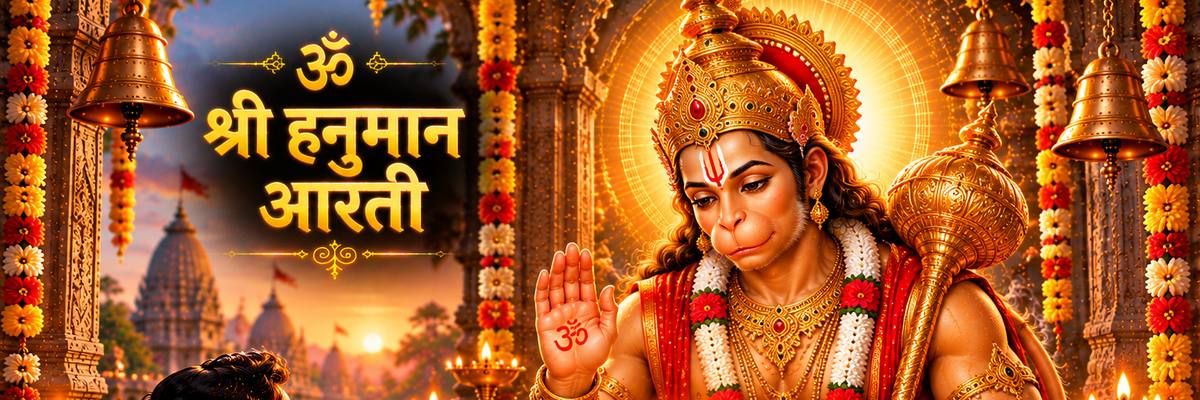
Hanuman is worshipped especially on Tuesdays and Saturdays (see Tuesday Hanuman Bhakti). The simplest worship is to light a lamp, offer red flowers and something sweet such as boondi, laddoo or gur-chana, and recite the Hanuman Chalisa. A traditional offering is sindoor mixed with jasmine (chameli) oil, applied to his image. A popular story says Hanuman covered himself in sindoor after hearing that Sita wore it for Ram's long life. Because his defining trait is uncomplicated devotion, he is often the first deity children are introduced to. Many devotees also read the Sundarkand on Tuesdays or during difficult times. For daily practice there are the Hanuman Aarti, the Hanuman Gayatri Mantra, the Hanuman Namaskar Mantra and the Apaduddharak Stotram.
Hanuman and Shani
Hanuman worship is widely recommended during a difficult period of Saturn (Shani). A popular tradition says Hanuman once freed Shani from Ravana's captivity, and Shani in return promised never to trouble Hanuman's devotees. This is why Saturday is shared between the two, and why many people recite the Hanuman Chalisa during Sade Sati (see Shani Dev).
Festivals and temples
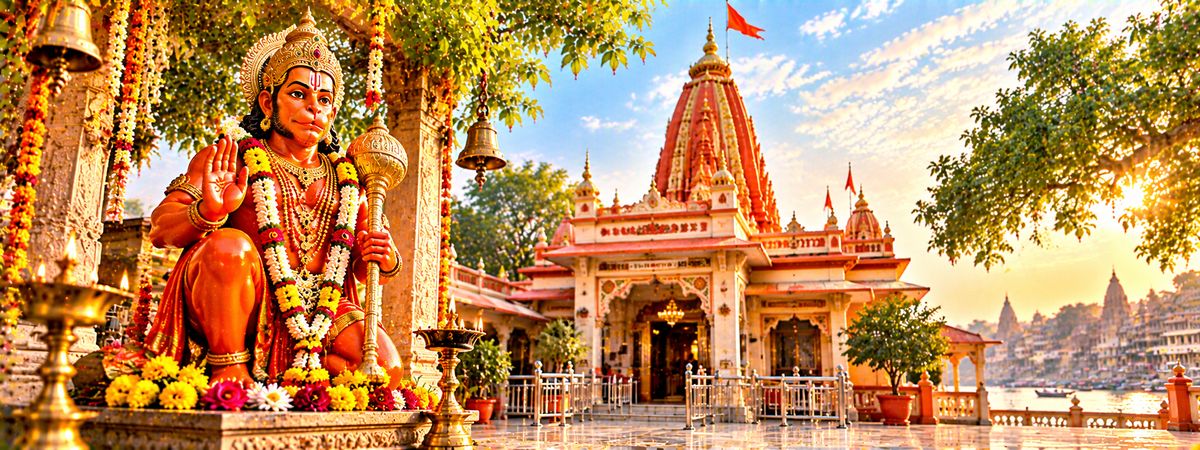
Hanuman Jayanti is celebrated on Chaitra Purnima in most of North India; some regions, especially in the South, mark it in other months. Well-known temples include Hanuman Garhi in Ayodhya, the Sankat Mochan temple in Varanasi (associated with Tulsidas), Salasar Balaji and Mehandipur Balaji in Rajasthan, and the Jakhu temple in Shimla. Almost every village in North India has a Hanuman shrine, often under a peepal tree.
Mantra
Hanuman Namaskar Mantra
A Sanskrit verse of salutation from the opening of Tulsidas's Sundarkand (Ramcharitmanas), describing Hanuman's strength, wisdom and devotion.
Read more →MantraHanuman Manokamna Purti Mantra
A simple namaskara mantra chanted 108 times with a specific wish held in mind.
Read more →MantraHanuman Gayatri Mantra
A Gayatri-pattern mantra invoking Hanuman as Anjaneya, son of the wind, chanted for wisdom, strength and protection.
Read more →MantraHanuman Mahabal Prapti Mantra
A mantra chanted for physical strength, courage and resilience, invoking Hanuman as Anjaneya, the son of Anjana.
Read more →MantraOm Namo Hanumate Rudravataraya – Hanuman Mantra
The Hanuman mantra that salutes him as Rudra's avatar and Rama's messenger, asking for victory over enemies and freedom from illness. Its meaning word by word, why Hanuman is called Rudravatar, and how to chant it on Tuesdays and Saturdays.
Read more →Stotra
Bajrang Baan
An intense, urgent hymn invoking Hanuman for immediate protection from fear, evil forces and danger.
Read more →
Sankat Mochan Hanuman Ashtak
An eight-verse hymn recounting Hanuman's greatest deeds, recited specifically to resolve serious difficulty.
Read more →
Hanuman Apaduddharak Stotram
A protective hymn of salutations to Hanuman, chanted for rescue and refuge during calamity, danger and adversity.
Read more →Chalisa
Aarti
Temple
Festival
Vrat
Puja Vidhi
Spotted a mistake?
If you find any grammatical, Hindi, English, mantra-text or other mistake on this page, tell us — we will correct it within 24 hours.