Original text
॥ दोहा ॥ बंशी शोभित कर मधुर, नील जलद तन श्याम । अरुण अधर जनु बिम्बफल, नयन कमल अभिराम ॥ पूर्ण इन्द्र, अरविन्द मुख, पीताम्बर शुभ साज । जय मनमोहन मदन छवि, कृष्णचन्द्र महाराज ॥ ॥ चौपाई ॥ जय यदुनन्दन जय जगवन्दन । जय वसुदेव देवकी नन्दन॥1॥ जय यशुदा सुत नन्द दुलारे । जय प्रभु भक्तन के दृग तारे॥2॥ जय नट-नागर नाग नथैया । कृष्ण कन्हैया धेनु चरैया॥3॥ पुनि नख पर प्रभु गिरिवर धारो । आओ दीनन कष्ट निवारो॥4॥ वंशी मधुर अधर धरी तेरी । होवे पूर्ण मनोरथ मेरो॥5॥ आओ हरि पुनि माखन चाखो । आज लाज भारत की राखो॥6॥ गोल कपोल, चिबुक अरुणारे । मृदु मुस्कान मोहिनी डारे॥7॥ रंजित राजिव नयन विशाला । मोर मुकुट वैजयंती माला॥8॥ कुण्डल श्रवण पीतपट आछे । कटि किंकणी काछन काछे॥9॥ नील जलज सुन्दर तनु सोहे । छवि लखि, सुर नर मुनिमन मोहे॥10॥ मस्तक तिलक, अलक घुंघराले । आओ कृष्ण बांसुरी वाले॥11॥ करि पय पान, पुतनहि तारयो । अका बका कागासुर मारयो॥12॥ मधुवन जलत अग्नि जब ज्वाला । भै शीतल, लखितहिं नन्दलाला॥13॥ सुरपति जब ब्रज चढ़यो रिसाई । मसूर धार वारि वर्षाई॥14॥ लगत-लगत ब्रज चहन बहायो । गोवर्धन नखधारि बचायो॥15॥ लखि यसुदा मन भ्रम अधिकाई । मुख महं चौदह भुवन दिखाई॥16॥ दुष्ट कंस अति उधम मचायो । कोटि कमल जब फूल मंगायो॥17॥ नाथि कालियहिं तब तुम लीन्हें । चरणचिन्ह दै निर्भय किन्हें॥18॥ करि गोपिन संग रास विलासा । सबकी पूरण करी अभिलाषा॥19॥ केतिक महा असुर संहारयो । कंसहि केस पकड़ि दै मारयो॥20॥ मात-पिता की बन्दि छुड़ाई । उग्रसेन कहं राज दिलाई॥21॥ महि से मृतक छहों सुत लायो । मातु देवकी शोक मिटायो॥22॥ भौमासुर मुर दैत्य संहारी । लाये षट दश सहसकुमारी॥23॥ दै भिन्हीं तृण चीर सहारा । जरासिंधु राक्षस कहं मारा॥24॥ असुर बकासुर आदिक मारयो । भक्तन के तब कष्ट निवारियो॥25॥ दीन सुदामा के दुःख टारयो । तंदुल तीन मूंठ मुख डारयो॥26॥ प्रेम के साग विदुर घर मांगे । दुर्योधन के मेवा त्यागे॥27॥ लखि प्रेम की महिमा भारी । ऐसे श्याम दीन हितकारी॥28॥ भारत के पारथ रथ हांके । लिए चक्र कर नहिं बल ताके॥29॥ निज गीता के ज्ञान सुनाये । भक्तन ह्रदय सुधा वर्षाये॥30॥ मीरा थी ऐसी मतवाली । विष पी गई बजाकर ताली॥31॥ राना भेजा सांप पिटारी । शालिग्राम बने बनवारी॥32॥ निज माया तुम विधिहिं दिखायो । उर ते संशय सकल मिटायो॥33॥ तब शत निन्दा करी तत्काला । जीवन मुक्त भयो शिशुपाला॥34॥ जबहिं द्रौपदी टेर लगाई । दीनानाथ लाज अब जाई॥35॥ तुरतहिं वसन बने ननन्दलाला । बढ़े चीर भै अरि मुँह काला॥36॥ अस नाथ के नाथ कन्हैया । डूबत भंवर बचावत नैया॥37॥ सुन्दरदास आस उर धारी । दयादृष्टि कीजै बनवारी॥38॥ नाथ सकल मम कुमति निवारो । क्षमहु बेगि अपराध हमारो॥39॥ खोलो पट अब दर्शन दीजै । बोलो कृष्ण कन्हैया की जै॥40॥ ॥ दोहा ॥ यह चालीसा कृष्ण का, पाठ करै उर धारि । अष्ट सिद्धि नवनिधि फल, लहै पदारथ चारि ॥
Transliteration
Doha: Banshi Shobhit Kar Madhur, Nil Jalad Tan Shyam, Arun Adhar Janu Bimbaphal, Nayan Kamal Abhiram. Purna Indra, Aravinda Mukh, Pitambar Shubh Saj, Jai Manamohan Madan Chhavi, Krishnachandra Maharaj. Chaupai: 1. Jai Yadunandan Jai Jagavandan, Jai Vasudev Devaki Nandan. 2. Jai Yashuda Sut Nanda Dulare, Jai Prabhu Bhaktan Ke Drig Tare. 3. Jai Nat-Nagar Nag Nathaiya, Krishna Kanhaiya Dhenu Charaiya. 4. Puni Nakh Par Prabhu Girivar Dharo, Ao Dinan Kashta Nivaro. 5. Vanshi Madhur Adhar Dhari Teri, Hove Purna Manorath Mero. 6. Ao Hari Puni Makhan Chakho, Aj Laj Bharat Ki Rakho. 7. Gol Kapol, Chibuk Arunare, Mridu Muskan Mohini Dare. 8. Ranjit Rajiv Nayan Vishala, Mor Mukut Vaijayanti Mala. 9. Kundal Shravan Pitapat Achhe, Kati Kinkani Kachhan Kachhe. 10. Nil Jalaj Sundar Tanu Sohe, Chhavi Lakhi, Sur Nar Muniman Mohe. 11. Mastak Tilak, Alak Ghungharale, Ao Krishna Bansuri Vale. 12. Kari Pay Pan, Putanahi Tarayo, Aka Baka Kagasur Marayo. 13. Madhuvan Jalat Agni Jab Jvala, Bhai Shital, Lakhitahin Nandalala. 14. Surapati Jab Braj Charhayo Risai, Masur Dhar Vari Varshai. 15. Lagat-Lagat Braj Chahan Bahayo, Govardhan Nakhadhari Bachayo. 16. Lakhi Yasuda Man Bhram Adhikai, Mukh Mahan Chaudah Bhuvan Dikhai. 17. Dushta Kans Ati Udham Machayo, Koti Kamal Jab Phul Mangayo. 18. Nathi Kaliyahin Tab Tum Linhein, Charanachinha Dai Nirbhay Kinhein. 19. Kari Gopin Sang Ras Vilasa, Sabaki Puran Kari Abhilasha. 20. Ketik Maha Asur Sanharayo, Kansahi Kes Pakari Dai Marayo. 21. Mat-Pita Ki Bandi Chhurai, Ugrasen Kahan Raj Dilai. 22. Mahi Se Mritak Chhahon Sut Layo, Matu Devaki Shok Mitayo. 23. Bhaumasur Mur Daitya Sanhari, Laye Shat Dash Sahasakumari. 24. Dai Bhinhin Trin Chir Sahara, Jarasindhu Rakshas Kahan Mara. 25. Asur Bakasur Adik Marayo, Bhaktan Ke Tab Kashta Nivariyo. 26. Din Sudama Ke Duhkh Tarayo, Tandul Tin Munth Mukh Darayo. 27. Prem Ke Sag Vidur Ghar Mange, Duryodhan Ke Meva Tyage. 28. Lakhi Prem Ki Mahima Bhari, Aise Shyam Din Hitakari. 29. Bharat Ke Parath Rath Hanke, Lie Chakra Kar Nahin Bal Take. 30. Nij Gita Ke Gyan Sunaye, Bhaktan Hraday Sudha Varshaye. 31. Mira Thi Aisi Matavali, Vish Pi Gai Bajakar Tali. 32. Rana Bheja Samp Pitari, Shaligram Bane Banavari. 33. Nij Maya Tum Vidhihin Dikhayo, Ur Te Sanshay Sakal Mitayo. 34. Tab Shat Ninda Kari Tatkala, Jivan Mukta Bhayo Shishupala. 35. Jabahin Draupadi Ter Lagai, Dinanath Laj Ab Jai. 36. Turatahin Vasan Bane Nanandalala, Barhe Chir Bhai Ari Munh Kala. 37. As Nath Ke Nath Kanhaiya, Dubat Bhanvar Bachavat Naiya. 38. Sundaradas As Ur Dhari, Dayadrishti Kijai Banavari. 39. Nath Sakal Mam Kumati Nivaro, Kshamahu Begi Aparadh Hamaro. 40. Kholo Pat Ab Darshan Dijai, Bolo Krishna Kanhaiya Ki Jai. Doha: Yah Chalisa Krishna Ka, Path Karai Ur Dhari, Ashta Siddhi Navanidhi Phal, Lahai Padarath Chari.
A portrait first
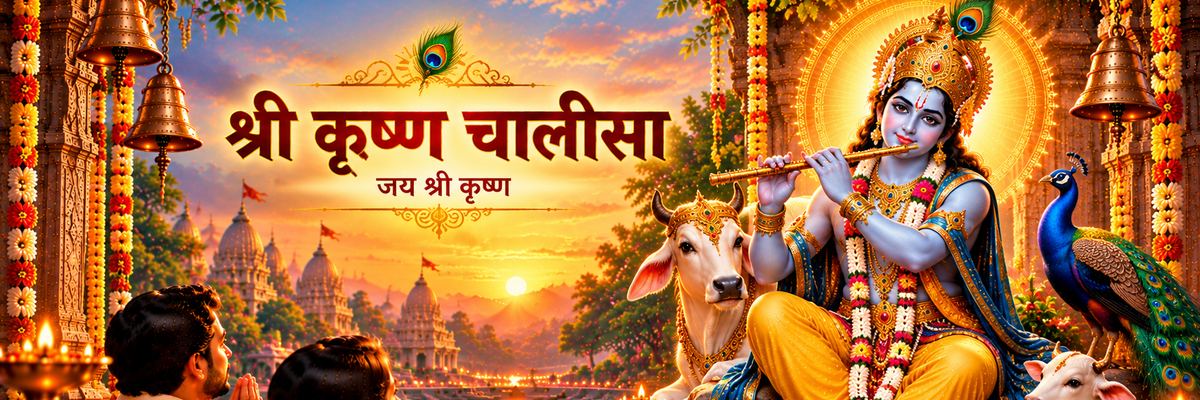
Before any story, the two opening dohas simply look at him: a flute in his hand, a body dark as a rain-cloud, lips red like the bimba fruit, lotus eyes, a face like the full moon, and a yellow pitambar — "Jai Manmohan, Madan-chhavi, Krishnachandra Maharaj." The chaupais continue the description a few verses later: round cheeks, a gentle bewitching smile, a peacock crown, earrings and the vaijayanti garland.
The Braj leelas
The chalisa greets him by his family names — son of Vasudev and Devaki, son of Yashoda, darling of Nand — and then recounts the childhood episodes: Putana freed even as he drank her milk, the demons Aka, Baka and Kagasur slain, the forest fire in Madhuvan turned cool, the Govardhan hill held up on a fingernail against Indra's downpour, and the fourteen worlds shown to a bewildered Yashoda inside his mouth. It ties the subduing of Kaliya to Kamsa's demand for ten million (koti) lotus flowers, and mentions the raas with the gopis.
From Mathura to Kurukshetra
The later verses follow his adult life: Kamsa killed by the hair, his parents freed from prison, Ugrasen restored to the throne, Devaki's six dead sons brought back to her, Bhaumasura and Mura slain and sixteen thousand princesses freed, and Jarasandha killed through Bhima after a signal made with a blade of grass. Then the stories of love over wealth: Sudama's three fistfuls of rice, and the simple greens he asked for at Vidura's house while refusing Duryodhana's feast. He drives Arjuna's chariot without lifting a weapon and speaks the Gita.
Meera, Shishupala and Draupadi
Unusually, the chalisa brings in a devotee from much later history: Meera, who drank poison while clapping, and for whom the snake sent in a basket by the Rana became a Shaligram. Its inclusion is a reminder that the chalisa itself is a later devotional composition, not a Puranic text. It ends with Shishupala freed after a hundred insults, and Draupadi's cry answered as her garment kept growing. The poet signs as Sundardas, and the final doha promises the eight siddhis, the nine nidhis and all four aims of life to one who recites it with a sincere heart.
Author, language and form at a glance
- Who wrote it: a poet who signs as Sundardas in chaupai 38: "Sundardas aas ur dhari, dayadrishti kijai Banwari", "Sundardas holds hope in his heart: look on him with mercy, Banwari." No date is given. Because it mentions Meera (16th century), it must have been written after her time.
- Language: devotional Hindi with a strong Braj flavour (taryo, maryo, dikhayo, kanhaiya), suited to Krishna, whose own country is Braj.
- Form: two opening dohas describing his form, forty chaupais, and one closing doha. About ten minutes aloud.
- What it covers: his childhood in Braj, Mathura, Dwarka, the Mahabharata, the Gita, and devotees from Sudama and Vidura to Draupadi and Meera.
Why read it
The chalisa begins by simply looking at him, the flute, the rain-cloud body and the yellow cloth, and that sets its tone. It is a hymn of affection as much as of praise. It calls him by the names people use with love: Kanhaiya, Nandlal, Banwari, Nat-nagar.
Its second theme is that Krishna values love over wealth. He ate Sudama's three fistfuls of rice, and he asked for the simple greens of love at Vidura's house while refusing Duryodhana's feast (26–27): "seeing the great glory of love, such is Shyam, friend of the poor" (28). And it is a hymn of rescue, from Draupadi's cry to the boat caught in a whirlpool (35–37). Chaupai 6 even asks him to "come again, taste butter, and save India's honour today".
When to read it
- Janmashtami: Bhadrapada Krishna Ashtami, especially at midnight, his hour of birth, after the abhishek of the Bal Gopal image.
- Ekadashi: both Ekadashis each month, as Krishna is Vishnu himself.
- Daily: morning or evening worship before Laddu Gopal or a Radha-Krishna image.
- Kartik month, Holi and Phalgun: the Braj festival seasons.
- When you need help: chaupais 4 and 37 call on him as the remover of the distress of the poor and the saviour of the sinking boat.
How to read it (path vidhi)
- Bathe and sit before Krishna's image, facing east or north. In many homes this is a Laddu Gopal, the infant Krishna, who is bathed and dressed first.
- Light a ghee lamp. Offer tulsi leaves (Krishna's bhog is not considered complete without tulsi), yellow flowers, and makhan-mishri, butter with rock sugar, the chalisa's own image of what he loves (6).
- Read the two dohas slowly, picturing the form they describe, then the chaupais and the closing doha aloud.
- End as the chalisa ends: "Bolo Krishna Kanhaiya ki jai!" (40). Then sing the aarti Aarti Kunj Bihari Ki, or chant the Hare Krishna Maha Mantra.
Benefits the chalisa itself names
- The eight siddhis and nine nidhis: the closing doha promises them to whoever reads it with their heart in it.
- All four aims of life: "lahai padarath chari", dharma, artha, kama and moksha (closing doha).
- Wishes fulfilled: "let my heart's wish be fulfilled" (5).
- The distress of the poor removed: "come and remove the troubles of the poor" (4).
- Bad thinking removed and faults forgiven: "Lord, remove all my wrong thinking, and quickly forgive my offences" (39).
- Rescue in crisis: he saves the boat sinking in the whirlpool (37), and the lesson of Draupadi's story is that he answers the one who calls (35–36).
Frequently asked questions
Who wrote the Krishna Chalisa?
A poet named Sundardas, who signs in chaupai 38. Because it mentions Meera Bai, it was written after the 16th century. No more is known about him.
When should I read it on Janmashtami?
Most families read it at midnight, after Krishna's birth is celebrated and the abhishek is done, before the aarti and breaking the fast. It can also be read in the morning puja.
Can I read it daily?
Yes. It is a common part of daily Laddu Gopal seva, usually after the morning bhog.
Why does it mention Meera Bai?
Meera's story, drinking poison sent by the Rana and finding a Shaligram in the snake basket, shows that Krishna protects his devotees in every age. Including her shows that the chalisa is a late devotional poem, not an ancient Puranic text.
What is the difference between the Krishna Chalisa and the Gopal Chalisa?
They are different hymns. The Krishna Chalisa covers his whole life, from Braj to Kurukshetra. The Gopal Chalisa is a separate text centred on Krishna as the cowherd child.
Do I need to offer tulsi while reading it?
It is traditional, because Krishna's bhog is offered with a tulsi leaf, but the chalisa itself asks only that you read it "ur dhari", with your heart in it.
Is it read on Ekadashi?
Yes. Krishna is a full avatar of Vishnu, and Ekadashi is a natural day for it, along with the Vishnu Chalisa.
Spotted a mistake?
If you find any grammatical, Hindi, English, mantra-text or other mistake on this page, tell us — we will correct it within 24 hours.