
Original text
॥ चौपाई ॥ नमो नमो दुर्गे सुख करनी । नमो नमो दुर्गे दुःख हरनी॥1॥ निरंकार है ज्योति तुम्हारी । तिहूँ लोक फैली उजियारी॥2॥ शशि ललाट मुख महाविशाला । नेत्र लाल भृकुटि विकराला॥3॥ रूप मातु को अधिक सुहावे । दरश करत जन अति सुख पावे॥4॥ तुम संसार शक्ति लै कीना । पालन हेतु अन्न धन दीना॥5॥ अन्नपूर्णा हुई जग पाला । तुम ही आदि सुन्दरी बाला॥6॥ प्रलयकाल सब नाशन हारी । तुम गौरी शिवशंकर प्यारी॥7॥ शिव योगी तुम्हरे गुण गावें । ब्रह्मा विष्णु तुम्हें नित ध्यावें॥8॥ रूप सरस्वती को तुम धारा । दे सुबुद्धि ऋषि मुनिन उबारा॥9॥ धरयो रूप नरसिंह को अम्बा । परगट भई फाड़कर खम्बा॥10॥ रक्षा करि प्रह्लाद बचायो । हिरण्याक्ष को स्वर्ग पठायो॥11॥ लक्ष्मी रूप धरो जग माहीं । श्री नारायण अंग समाहीं॥12॥ क्षीरसिन्धु में करत विलासा । दयासिन्धु दीजै मन आसा॥13॥ हिंगलाज में तुम्हीं भवानी । महिमा अमित न जात बखानी॥14॥ मातंगी अरु धूमावति माता । भुवनेश्वरी बगला सुख दाता॥15॥ श्री भैरव तारा जग तारिणी । छिन्न भाल भव दुःख निवारिणी॥16॥ केहरि वाहन सोह भवानी । लांगुर वीर चलत अगवानी॥17॥ कर में खप्पर खड्ग विराजै । जाको देख काल डर भाजै॥18॥ सोहै अस्त्र और त्रिशूला । जाते उठत शत्रु हिय शूला॥19॥ नगरकोट में तुम्हीं विराजत । तिहुँलोक में डंका बाजत॥20॥ शुम्भ निशुम्भ दानव तुम मारे । रक्तबीज शंखन संहारे॥21॥ महिषासुर नृप अति अभिमानी । जेहि अघ भार मही अकुलानी॥22॥ रूप कराल कालिका धारा । सेन सहित तुम तिहि संहारा॥23॥ परी गाढ़ सन्तन पर जब जब । भई सहाय मातु तुम तब तब॥24॥ अमरपुरी अरु बासव लोका । तब महिमा सब रहें अशोका॥25॥ ज्वाला में है ज्योति तुम्हारी । तुम्हें सदा पूजें नरनारी॥26॥ प्रेम भक्ति से जो यश गावें । दुःख दारिद्र निकट नहिं आवें॥27॥ ध्यावे तुम्हें जो नर मन लाई । जन्ममरण ताकौ छुटि जाई॥28॥ जोगी सुर मुनि कहत पुकारी । योग न हो बिन शक्ति तुम्हारी॥29॥ शंकर आचारज तप कीनो । काम अरु क्रोध जीति सब लीनो॥30॥ निशिदिन ध्यान धरो शंकर को । काहु काल नहिं सुमिरो तुमको॥31॥ शक्ति रूप का मरम न पायो । शक्ति गई तब मन पछितायो॥32॥ शरणागत हुई कीर्ति बखानी । जय जय जय जगदम्ब भवानी॥33॥ भई प्रसन्न आदि जगदम्बा । दई शक्ति नहिं कीन विलम्बा॥34॥ मोको मातु कष्ट अति घेरो । तुम बिन कौन हरै दुःख मेरो॥35॥ आशा तृष्णा निपट सतावें । मोह मदादिक सब बिनशावें॥36॥ शत्रु नाश कीजै महारानी । सुमिरौं इकचित तुम्हें भवानी॥37॥ करो कृपा हे मातु दयाला । ऋद्धिसिद्धि दै करहु निहाला॥38॥ जब लगि जिऊँ दया फल पाऊँ । तुम्हरो यश मैं सदा सुनाऊँ॥39॥ श्री दुर्गा चालीसा जो कोई गावै । सब सुख भोग परमपद पावै॥40॥ देवीदास शरण निज जानी । कहु कृपा जगदम्ब भवानी॥41॥ ॥ दोहा ॥ शरणागत रक्षा करे, भक्त रहे नि:शंक । मैं आया तेरी शरण में, मातु लिजिये अंक ॥
Transliteration
Chaupai: 1. Namo Namo Durge Sukh Karani, Namo Namo Durge Duhkh Harani. 2. Nirankar Hai Jyoti Tumhari, Tihun Lok Phaili Ujiyari. 3. Shashi Lalat Mukh Mahavishala, Netra Lal Bhrikuti Vikarala. 4. Rup Matu Ko Adhik Suhave, Darash Karat Jan Ati Sukh Pave. 5. Tum Sansar Shakti Lai Kina, Palan Hetu Anna Dhan Dina. 6. Annapurna Hui Jag Pala, Tum Hi Adi Sundari Bala. 7. Pralayakal Sab Nashan Hari, Tum Gauri Shivashankar Pyari. 8. Shiv Yogi Tumhare Gun Gavein, Brahma Vishnu Tumhein Nit Dhyavein. 9. Rup Sarasvati Ko Tum Dhara, De Subuddhi Rishi Munin Ubara. 10. Dharayo Rup Narasinh Ko Amba, Paragat Bhai Pharakar Khamba. 11. Raksha Kari Prahlad Bachayo, Hiranyaksha Ko Svarga Pathayo. 12. Lakshmi Rup Dharo Jag Mahin, Shri Narayan Ang Samahin. 13. Kshirasindhu Mein Karat Vilasa, Dayasindhu Dijai Man Asa. 14. Hingalaj Mein Tumhin Bhavani, Mahima Amit Na Jat Bakhani. 15. Matangi Aru Dhumavati Mata, Bhuvaneshvari Bagala Sukh Data. 16. Shri Bhairav Tara Jag Tarini, Chhinna Bhal Bhav Duhkh Nivarini. 17. Kehari Vahan Soh Bhavani, Langur Vir Chalat Agavani. 18. Kar Mein Khappar Khadga Virajai, Jako Dekh Kal Dar Bhajai. 19. Sohai Astra Aur Trishula, Jate Uthat Shatru Hiy Shula. 20. Nagarakot Mein Tumhin Virajat, Tihunlok Mein Danka Bajat. 21. Shumbha Nishumbha Danav Tum Mare, Raktabij Shankhan Sanhare. 22. Mahishasur Nrip Ati Abhimani, Jehi Agh Bhar Mahi Akulani. 23. Rup Karal Kalika Dhara, Sen Sahit Tum Tihi Sanhara. 24. Pari Garh Santan Par Jab Jab, Bhai Sahay Matu Tum Tab Tab. 25. Amarapuri Aru Basav Loka, Tab Mahima Sab Rahein Ashoka. 26. Jvala Mein Hai Jyoti Tumhari, Tumhein Sada Pujein Naranari. 27. Prem Bhakti Se Jo Yash Gavein, Duhkh Daridra Nikat Nahin Avein. 28. Dhyave Tumhein Jo Nar Man Lai, Janmamaran Takau Chhuti Jai. 29. Jogi Sur Muni Kahat Pukari, Yog Na Ho Bin Shakti Tumhari. 30. Shankar Acharaj Tap Kino, Kam Aru Krodh Jiti Sab Lino. 31. Nishidin Dhyan Dharo Shankar Ko, Kahu Kal Nahin Sumiro Tumako. 32. Shakti Rup Ka Maram Na Payo, Shakti Gai Tab Man Pachhitayo. 33. Sharanagat Hui Kirti Bakhani, Jai Jai Jai Jagadamba Bhavani. 34. Bhai Prasanna Adi Jagadamba, Dai Shakti Nahin Kin Vilamba. 35. Moko Matu Kashta Ati Ghero, Tum Bin Kaun Harai Duhkh Mero. 36. Asha Trishna Nipat Satavein, Moh Madadik Sab Binashavein. 37. Shatru Nash Kijai Maharani, Sumiraun Ikachit Tumhein Bhavani. 38. Karo Kripa He Matu Dayala, Riddhisiddhi Dai Karahu Nihala. 39. Jab Lagi Jiun Daya Phal Paun, Tumharo Yash Main Sada Sunaun. 40. Shri Durga Chalisa Jo Koi Gavai, Sab Sukh Bhog Paramapad Pavai. 41. Devidas Sharan Nij Jani, Kahu Kripa Jagadamba Bhavani. Doha: Sharanagat Raksha Kare, Bhakta Rahe Nihshank, Main Aya Teri Sharan Mein, Matu Lijiye Ank.
How it opens, and who signs it
Most chalisas begin with a doha, but the Durga Chalisa starts straight into its chaupais with "Namo namo Durge sukh karani, namo namo Durge dukh harani" — salutation to the one who gives happiness and removes sorrow. The very next line sets the tone for the whole hymn: her light is nirankar, formless, and it fills all three worlds. The poet names himself near the end as Devidas ("Devidas sharan nij jani"), and the text closes with a single doha asking the Mother to take the devotee into her lap.
Every goddess as one Devi
The first third of the chalisa is a catalogue built to make one point: every form of the divine feminine is her. She is Annapurna who feeds the world, Gauri beloved of Shiva, Saraswati who gives the rishis wisdom, and Lakshmi in the ocean of milk. It even credits her with the Narasimha form that burst from the pillar to save Prahlad — a distinctly Shakta reading in which Vishnu's avatars are expressions of her power. It then names the Mahavidyas (Matangi, Dhumavati, Bhuvaneshwari, Bagala, Bhairavi, Tara and Chhinnamasta) and three famous seats of the goddess: Hinglaj, Nagarkot (Kangra) and Jwala, where her flame burns.
The battles
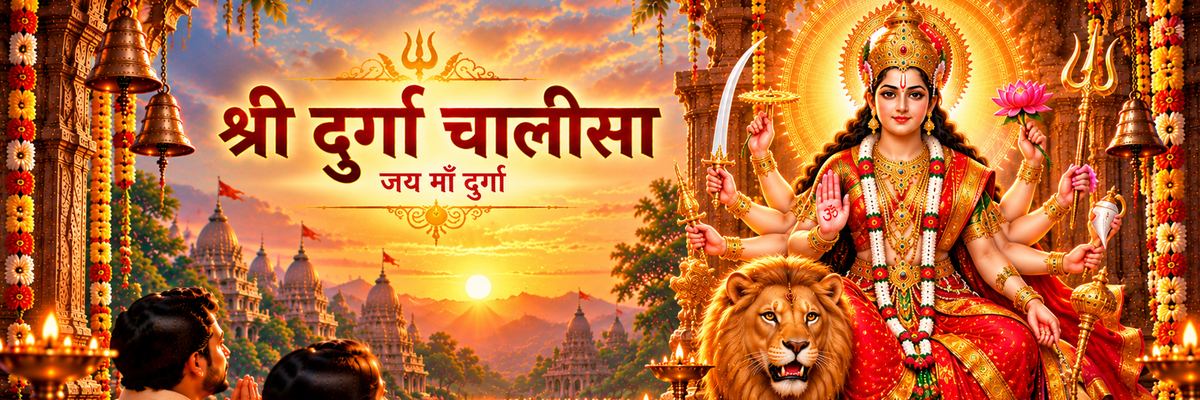
The middle verses recall the Devi Mahatmya's great victories — Shumbha and Nishumbha, Raktabija, and the arrogant king Mahishasura whose weight of sin made the earth restless — with her Kali form destroying his army. The imagery is martial: a lion as her mount, a skull-bowl, sword and trident in her hands, and "kaal" itself running from the sight of her.
The Shankaracharya episode
Verses 30–34 tell a story that surprises many first-time readers. Shankar Acharaj — traditionally understood as Adi Shankaracharya — performed great austerities and conquered desire and anger, and meditated on Shankar night and day, but never once remembered the Devi. Not understanding the secret of Shakti, he lost his power and regretted it; only when he took refuge and cried "Jai jai jai Jagadamba Bhavani" did she, pleased, return his strength without delay. The lesson the chalisa draws is its underlying theme: even yoga, as verse 29 puts it, is impossible without her shakti.
A note on the text
Verse 11 in the version given here says she sent "Hiranyaksha" to heaven while saving Prahlad; the Prahlad story is usually told with his father Hiranyakashipu, and some printed editions read it that way. The text above follows the source it was verified against.
Author, language and form at a glance
- Who wrote it: a poet who signs as Devidas in the forty-first chaupai: "Devidas sharan nij jani, kahu kripa Jagdamb Bhavani", "knowing Devidas to be in your refuge, have mercy, Jagadamba Bhavani." The name means "servant of the Devi", and nothing more is known of him.
- Language: devotional Hindi with Braj and Awadhi forms (dhyavein, bakhani, pathayo), easy to sing in a group.
- Form: unusually, no opening doha. It begins straight into chaupais, runs to forty-one, and ends with one doha. About ten minutes aloud.
- Its background: the battle verses retell the Sanskrit Devi Mahatmya (Durga Saptashati) from the Markandeya Purana, and the list of goddesses draws on the Shakta temple tradition of North India: Hinglaj, Nagarkot (Kangra) and Jwalamukhi.
Why read it
The first two lines say why: "Namo namo Durge sukh karani, namo namo Durge dukh harani", salutations to Durga who gives happiness and removes sorrow. The chalisa then shows how many forms that one power takes, as Annapurna, Gauri, Saraswati, Lakshmi and the Mahavidyas. Reading it is a way of meeting the whole goddess tradition in one short hymn.
It is also a hymn of protection. Verse 24 is the line people hold onto: "pari gaadh santan par jab jab, bhai sahay matu tum tab tab", whenever hard times fell on the good, Mother, you came to help. The closing verses turn into a direct prayer against fear, craving and enemies, asking only to keep singing her praise as long as one lives (35–39).
When to read it
- Navratri: every day of both Chaitra and Sharad (Ashwin) Navratri, morning and evening, before the kalash and akhand jyoti. Many read it once on each of the nine days, and some read it nine times on Ashtami or Navami.
- Durga Ashtami and Navami: with kanya pujan.
- Friday and Tuesday: the Devi's weekly days in most North Indian homes.
- Jagratas and Mata ki chauki: it is a standard part of night-long singing.
- In trouble: verses 35–37 are a prayer for exactly this: "Mother, great suffering surrounds me; who but you can remove my pain?"
How to read it (path vidhi)
- Bathe and sit before an image of Durga on her lion, facing east or north. Red is the Devi's colour: a red cloth on the altar, a red chunri for the image.
- Light a ghee lamp. In Navratri, many keep an akhand jyoti burning all nine days.
- Offer red flowers (hibiscus is her favourite), kumkum, akshat, and a sweet or fruit. Halwa-puri and chana are traditional on Ashtami.
- Recite the chalisa aloud from "Namo namo Durge" through the closing doha. In a group, it is sung line by line with the leader.
- Finish with the aarti Jai Ambe Gauri, and on Navratri with the Navarna mantra if you chant it.
Benefits the chalisa itself names
- Freedom from sorrow and poverty: "dukh daridra nikat nahi aavein" for those who sing her glory with love and devotion (27).
- Release from the cycle of birth and death for one who meditates on her with a whole heart (28).
- Protection in crisis: she came to the aid of the good whenever trouble fell (24).
- Inner strength: even yoga is impossible without her shakti (29), and she restored the Acharya's power the moment he took refuge (33–34).
- Riddhi and siddhi: prosperity and accomplishment (38).
- Every comfort and the highest state: "sab sukh bhog parampad pavai", for whoever sings the Shri Durga Chalisa (40).
- Fearlessness: she protects those who take refuge, and the devotee stays nihshank, free of doubt and fear (closing doha).
Frequently asked questions
What is the difference between the Durga Chalisa and the Durga Saptashati?
The Durga Saptashati (Devi Mahatmya) is a 700-verse Sanskrit text in thirteen chapters, recited over one or more days with specific rules. The Durga Chalisa is a short Hindi hymn of about forty verses that retells some of the same battles in a few lines. It suits daily reading, and many read it as a simpler alternative when a full Saptashati path isn't possible.
Can I read the Durga Chalisa every day?
Yes. Nothing in the text restricts it to Navratri, and verse 39 asks to sing her praise "as long as I live".
How many times should it be read in Navratri?
Once a day for nine days is the most common practice. Some read it nine times on Ashtami or Navami, or 108 times across the festival. These are customs, not instructions from the text.
Who is the "Shankar Acharaj" in the chalisa?
Verses 30–34 tell of an Acharya named Shankar, traditionally taken to be Adi Shankaracharya. He meditated only on Shiva, ignored Shakti, lost his power, and regained it when he praised the Devi. This connects with the tradition that Shankaracharya composed hymns to the goddess, such as the Devi Aparadha Kshamapana Stotram.
Can women read it during their periods?
Customs differ by family and region. The chalisa itself gives no rule about it. Many who avoid temple worship or touching the altar on those days still recite it mentally or listen to it.
Why does the Durga Chalisa have no opening doha?
This is simply how this composition begins: it opens straight into salutations. Some printed editions add a separate dhyana or doha in front, but the standard text starts with "Namo namo Durge".
Which aarti is sung after it?
Most commonly Jai Ambe Gauri, and in some homes "Ambe tu hai Jagdambe Kali".
Spotted a mistake?
If you find any grammatical, Hindi, English, mantra-text or other mistake on this page, tell us — we will correct it within 24 hours.