
Original text
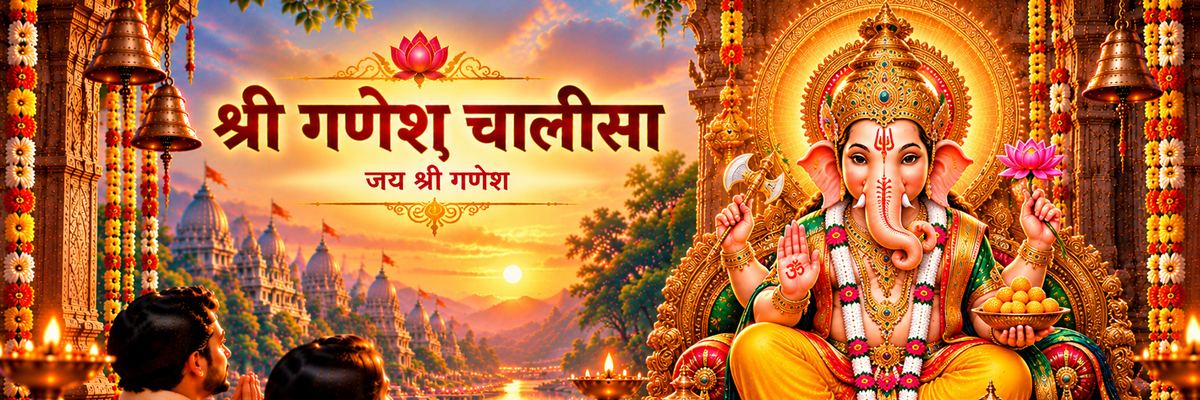
॥ दोहा ॥ जय गणपति सद्गुण सदन, कविवर बदन कृपाल। विघ्न हरण मंगल करण, जय जय गिरिजालाल॥ ॥ चौपाई ॥ जय जय जय गणपति गणराजू। मंगल भरण करण शुभ काजू॥1॥ जय गजबदन सदन सुखदाता। विश्व विनायक बुद्धि विधाता॥2॥ वक्रतुण्ड शुचि शुण्ड सुहावन। तिलक त्रिपुण्ड भाल मन भावन॥3॥ राजत मणि मुक्तन उर माला। स्वर्ण मुकुट शिर नयन विशाला॥4॥ पुस्तक पाणि कुठार त्रिशूलं। मोदक भोग सुगन्धित फूलं॥5॥ सुन्दर पीताम्बर तन साजित। चरण पादुका मुनि मन राजित॥6॥ धनि शिव सुवन षडानन भ्राता। गौरी लालन विश्व-विख्याता॥7॥ ऋद्धि-सिद्धि तव चंवर सुधारे। मूषक वाहन सोहत द्वारे॥8॥ कहौं जन्म शुभ कथा तुम्हारी। अति शुचि पावन मंगलकारी॥9॥ एक समय गिरिराज कुमारी। पुत्र हेतु तप कीन्हा भारी॥10॥ भयो यज्ञ जब पूर्ण अनूपा। तब पहुंच्यो तुम धरि द्विज रूपा॥11॥ अतिथि जानि के गौरी सुखारी। बहुविधि सेवा करी तुम्हारी॥12॥ अति प्रसन्न हवै तुम वर दीन्हा। मातु पुत्र हित जो तप कीन्हा॥13॥ मिलहि पुत्र तुहि बुद्धि विशाला। बिना गर्भ धारण यहि काला॥14॥ गणनायक गुण ज्ञान निधाना। पूजित प्रथम रूप भगवाना॥15॥ अस कहि अन्तर्धान रूप है। पालना पर बालक स्वरूप है॥16॥ बनि शिशु रुदन जबहिं तुम ठाना। लखि मुख सुख नहिं गौरी समाना॥17॥ सकल मगन सुखमंगल गावहिं। नाभ ते सुरन सुमन वर्षावहिं॥18॥ शम्भु उमा बहु दान लुटावहिं। सुर मुनिजन सुत देखन आवहिं॥19॥ लखि अति आनन्द मंगल साजा। देखन भी आये शनि राजा॥20॥ निज अवगुण गुनि शनि मन माहीं। बालक देखन चाहत नाहीं॥21॥ गिरिजा कछु मन भेद बढायो। उत्सव मोर न शनि तुहि भायो॥22॥ कहत लगे शनि मन सकुचाई। का करिहौं शिशु मोहि दिखाई॥23॥ नहिं विश्वास उमा उर भयऊ। शनि सों बालक देखन कहयऊ॥24॥ पड़तहिं शनि दृग कोण प्रकाशा। बालक सिर उड़ि गयो अकाशा॥25॥ गिरिजा गिरीं विकल है धरणी। सो दुःख दशा गयो नहिं वरणी॥26॥ हाहाकार मच्यौ कैलाशा। शनि कीन्हों लखि सुत को नाशा॥27॥ तुरत गरुड़ चढ़ि विष्णु सिधायो। काटि चक्र सो गज सिर लाये॥28॥ बालक के धड़ ऊपर धारयो। प्राण मन्त्र पढ़ि शंकर डारयो॥29॥ नाम गणेश शम्भु तब कीन्हे। प्रथम पूज्य बुद्धि निधि वर दीन्हे॥30॥ बुद्धि परीक्षा जब शिव कीन्हा। पृथ्वी कर प्रदक्षिणा लीन्हा॥31॥ चले षडानन भरमि भुलाई। रचेउ बैठ तुम बुद्धि उपाई॥32॥ चरण मातु-पितु के धरि लीन्हें। तिनके सात प्रदक्षिण कीन्हें॥33॥ धनि गणेश कहि शिव हिय हरषे। नभ ते सुरन सुमन बहु बरषे॥34॥ तुम्हरी महिमा बुद्धि बड़ाई। शेष सहसमुख सके न गाई॥35॥ मैं मतिहीन मलीन दुखारी। करहूं कौन विधि विनय तुम्हारी॥36॥ भजत रामसुन्दर प्रभुदासा। जग प्रयाग ककरा दुर्वासा॥37॥ अब प्रभु दया दीन पर कीजै। अपनी शक्ति भक्ति कुछ दीजै॥38॥ ॥ दोहा ॥ श्री गणेश यह चालीसा, पाठ करै कर ध्यान। नित नव मंगल गृह बसै, लहे जगत सन्मान॥ सम्बत् अपने सहस्र दश, ऋषि पंचमी दिनेश। पूरण चालीसा भयो, मंगल मूरति गणेश॥
Transliteration
Doha: Jai Ganpati Sadgun Sadan, Kavivar Badan Kripal. Vighna Haran Mangal Karan, Jai Jai Girijalal. Chaupai: 1. Jai Jai Jai Ganpati Ganraju, Mangal Bharan Karan Shubh Kaju. 2. Jai Gajbadan Sadan Sukhdata, Vishwa Vinayak Buddhi Vidhata. 3. Vakratunda Shuchi Shund Suhavan, Tilak Tripund Bhal Man Bhavan. 4. Rajat Mani Muktan Ur Mala, Swarna Mukut Shir Nayan Vishala. 5. Pustak Pani Kuthar Trishoolam, Modak Bhog Sugandhit Phoolam. 6. Sundar Pitambar Tan Sajit, Charan Paduka Muni Man Rajit. 7. Dhani Shiv Suvan Shadanan Bhrata, Gauri Lalan Vishwa-Vikhyata. 8. Riddhi-Siddhi Tav Chanwar Sudhare, Mooshak Vahan Sohat Dware. 9. Kahaun Janma Shubh Katha Tumhari, Ati Shuchi Pavan Mangalkari. 10. Ek Samay Girirajkumari, Putra Hetu Tap Kinha Bhari. 11. Bhayo Yagya Jab Poorn Anoopa, Tab Pahunchyo Tum Dhari Dwij Roopa. 12. Atithi Jani Ke Gauri Sukhari, Bahuvidhi Seva Kari Tumhari. 13. Ati Prasann Havai Tum Var Dinha, Matu Putra Hit Jo Tap Kinha. 14. Milahi Putra Tuhi Buddhi Vishala, Bina Garbh Dharan Yahi Kala. 15. Gananayak Gun Gyan Nidhana, Poojit Pratham Roop Bhagwana. 16. As Kahi Antardhan Roop Hai, Palna Par Balak Swaroop Hai. 17. Bani Shishu Rudan Jabahin Tum Thana, Lakhi Mukh Sukh Nahin Gauri Samana. 18. Sakal Magan Sukhmangal Gavahin, Nabh Te Suran Suman Varshavahin. 19. Shambhu Uma Bahu Daan Lutavahin, Sur Munijan Sut Dekhan Avahin. 20. Lakhi Ati Anand Mangal Saja, Dekhan Bhi Aaye Shani Raja. 21. Nij Avagun Guni Shani Man Mahin, Balak Dekhan Chahat Nahin. 22. Girija Kachhu Man Bhed Badhayo, Utsav Mor Na Shani Tuhi Bhayo. 23. Kahat Lage Shani Man Sakuchai, Ka Karihaun Shishu Mohi Dikhai. 24. Nahin Vishwas Uma Ur Bhayoo, Shani Son Balak Dekhan Kahayoo. 25. Padatahin Shani Drig Kon Prakasha, Balak Sir Udi Gayo Akasha. 26. Girija Girin Vikal Hai Dharani, So Dukh Dasha Gayo Nahin Varani. 27. Hahakar Machyau Kailasha, Shani Kinho Lakhi Sut Ko Nasha. 28. Turat Garud Chadhi Vishnu Sidhayo, Kati Chakra So Gaj Sir Laye. 29. Balak Ke Dhad Oopar Dharyo, Pran Mantra Padhi Shankar Daryo. 30. Naam Ganesh Shambhu Tab Kinhe, Pratham Poojya Buddhi Nidhi Var Dinhe. 31. Buddhi Pariksha Jab Shiv Kinha, Prithvi Kar Pradakshina Leenha. 32. Chale Shadanan Bharami Bhulai, Racheu Baithi Tum Buddhi Upai. 33. Charan Matu-Pitu Ke Dhari Leenhen, Tinke Saat Pradakshin Kinhen. 34. Dhani Ganesh Kahi Shiv Hiye Harashe, Nabh Te Suran Suman Bahu Barashe. 35. Tumhari Mahima Buddhi Badai, Shesh Sahasmukh Sake Na Gai. 36. Main Matiheen Malin Dukhari, Karahun Kaun Vidhi Vinay Tumhari. 37. Bhajat Ramsundar Prabhudasa, Jag Prayag Kakra Durvasa. 38. Ab Prabhu Daya Deen Par Kije, Apni Shakti Bhakti Kuchh Dije. Doha: Shri Ganesh Yah Chalisa, Path Karai Kar Dhyan. Nit Nav Mangal Grih Basai, Lahe Jagat Sanman. Sambat Apne Sahasra Dash, Rishi Panchami Dinesh. Pooran Chalisa Bhayo, Mangal Moorati Ganesh.
Who wrote it
The Ganesh Chalisa's closing verses credit Ram Sunder (Prabhudas), placing its composition on Rishi Panchami. Some traditions loosely fold it into the wider Tulsidas-attributed chalisa tradition, but its own text names its author directly.
The birth story it tells
The heart of this chalisa is a specific, complete narrative: Parvati, longing for a son, performs intense austerity and is blessed with one. Overjoyed, she invites the gods and sages to see the newborn — including Shani (Saturn), who is reluctant to look at the child because his own gaze is cursed to bring misfortune. Parvati insists, Shani's glance falls on the infant, and the child's head vanishes into the sky. In the chaos that follows, Vishnu rides Garuda, cuts off the head of an elephant, and it's fixed onto the child's body; Shiva then names him Ganesha and declares him the first deity to be worshipped in any undertaking.
The wisdom test that follows
A second, equally well-known episode follows: Shiva sets Ganesha and his brother Kartikeya (Shadanan) a contest to circle the earth, and whoever finishes first wins a boon. Kartikeya sets off at once; Ganesha instead circles his own parents seven times, reasoning that they contain the entire world within them — and wins.
Author, language and form at a glance
- Who wrote it: the poet signs in chaupai 37, "bhajat Ramsundar Prabhudasa, jag Prayag Kakra Durvasa". Ramsundar, the Lord's servant, sings this, and the line ties him to Kakra near Prayag, where the sage Durvasa's ashram stands. That is the only biography the text gives.
- When: the last doha says it was completed on Rishi Panchami, on a Sunday (dinesh, the sun's day). The samvat in that line is not clear enough to give a year.
- Language: devotional Hindi with Awadhi forms (kinha, dinhe, lavai), with Sanskrit names woven in: Vakratunda, Vinayaka, Gajavadana.
- Form: one opening doha, thirty-eight chaupais in this version, and two closing dohas. Many chalisas don't have exactly forty verses, and "chalisa" became the name of the genre rather than a strict count.
Why read it
Ganesha is worshipped first in any undertaking, and the chalisa explains why from inside its own story. After the elephant head is placed and life restored, "naam Ganesh Shambhu tab kinhe, pratham pujya buddhi nidhi var dinhe": Shiva named him Ganesha and gave the boon of being worshipped first and being a treasury of wisdom (30). The second story makes the same point. He won the race around the world by circling his parents seven times, and won it with intelligence, not speed (31–34).
So people read it before beginning something, when they need a clear head, and when obstacles keep piling up. The opening doha names him "vighna haran, mangal karan", remover of obstacles and maker of good fortune. The last chaupai is the poet's own modest request: "now Lord, have mercy on this poor one, and give me some of your strength and devotion" (38).
When to read it
- Wednesday: Budhvar is Ganesha's weekly day.
- Chaturthi: every month on Sankashti Chaturthi (the fourth day of the waning moon, with the fast broken at moonrise) and Vinayaka Chaturthi (the waxing fourth).
- Ganesh Chaturthi: Bhadrapada Shukla Chaturthi and the ten days to Anant Chaturdashi, morning and evening before the murti.
- Rishi Panchami: the day the chalisa says it was completed, the day after Ganesh Chaturthi.
- Before beginnings: a new job, shop, house, school year, wedding preparations, a journey or an exam.
- During a hard Shani period: because the chalisa itself tells how Shani's glance fell on the infant Ganesha (20–27), many read it in Sade Sati alongside the Shani Chalisa.
How to read it (path vidhi)
- Bathe and sit before an image of Ganesha, facing east or north. A clean, uncluttered place matters more than an elaborate altar.
- Offer what the chalisa itself describes him enjoying: modak and fragrant flowers (5). Durva grass (often 21 blades) and red flowers are the classic offerings, with a dot of sindoor.
- Light a ghee lamp and incense, and chant Om Gan Ganapataye Namah a few times to settle the mind.
- Recite the chalisa aloud from the opening doha to the closing ones, "with meditation" (kar dhyan), as the last doha asks.
- End with the Ganesh aarti, "Jai Ganesh Jai Ganesh Deva", and share the modak or laddu as prasad.
A traditional caution: tulsi leaves are generally not offered to Ganesha. Durva is his preferred green.
Benefits the chalisa itself names
- Constant good fortune at home: "nit nav mangal griha basai", ever-new auspiciousness lives in the house of one who recites it with meditation (closing doha).
- Respect in the world: "lahe jagat sanman" (closing doha).
- Auspicious beginnings: he is "mangal bharan karan shubh kaju", the one who fills things with blessing and brings good works to completion (1).
- Wisdom: as "buddhi vidhata" (2) and "buddhi nidhi" (30), the giver and treasury of intellect.
- Removal of obstacles: "vighna haran" (opening doha).
This chalisa's phalashruti is short and modest compared with the Lakshmi or Shani chalisas. It promises a blessed home and an honoured life rather than a long list of cures, and the rest is left to the reader's devotion.
Frequently asked questions
Why does the Ganesh Chalisa have only 38 chaupais?
This version, as printed in most Hindi sources, has thirty-eight numbered chaupais plus the dohas. "Chalisa" is the name of the form, and several well-known chalisas are a verse or two short of or over forty.
Who wrote the Ganesh Chalisa?
A poet named Ramsundar, who calls himself Prabhudas, the Lord's servant, and links himself to Kakra near Prayag, the place of the sage Durvasa. It says it was completed on Rishi Panchami.
Can it be read on Sankashti Chaturthi?
Yes, and it is one of the best days for it. Read it during the evening puja before moonrise, then offer arghya to the moon and break the fast.
Why does the chalisa mention Shani?
It tells one version of how Ganesha got his elephant head. Shani, aware of the effect of his gaze, didn't want to look at the newborn, but Parvati insisted, and the child's head flew off. Vishnu brought an elephant's head and Shiva restored the child's life. Other versions, like Shiva beheading the boy guarding Parvati's door, come from different Puranas.
Can children read it?
Yes. Its story-telling style makes it one of the easiest chalisas for children to follow, and the circling-the-parents episode is often the first Ganesha story they learn.
What should I offer Ganesha while reading it?
Modak or laddu, durva grass, red flowers and sindoor are traditional. Tulsi is customarily avoided.
Is it read before other pujas?
Usually only a short Ganesha invocation is said before other pujas. The full chalisa is reserved for Ganesha's own worship, Wednesdays, Chaturthi and new beginnings.
Spotted a mistake?
If you find any grammatical, Hindi, English, mantra-text or other mistake on this page, tell us — we will correct it within 24 hours.