
Original text
॥ दोहा ॥ विष्णु सुनिए विनय सेवक की चितलाय । कीरत कुछ वर्णन करूं दीजै ज्ञान बताय । ॥ चौपाई ॥ नमो विष्णु भगवान खरारी । कष्ट नशावन अखिल बिहारी॥1॥ प्रबल जगत में शक्ति तुम्हारी । त्रिभुवन फैल रही उजियारी॥2॥ सुन्दर रूप मनोहर सूरत । सरल स्वभाव मोहनी मूरत॥3॥ तन पर पीतांबर अति सोहत । बैजन्ती माला मन मोहत॥4॥ शंख चक्र कर गदा बिराजे । देखत दैत्य असुर दल भाजे॥5॥ सत्य धर्म मद लोभ न गाजे । काम क्रोध मद लोभ न छाजे॥6॥ संतभक्त सज्जन मनरंजन । दनुज असुर दुष्टन दल गंजन॥7॥ सुख उपजाय कष्ट सब भंजन । दोष मिटाय करत जन सज्जन॥8॥ पाप काट भव सिंधु उतारण । कष्ट नाशकर भक्त उबारण॥9॥ करत अनेक रूप प्रभु धारण । केवल आप भक्ति के कारण॥10॥ धरणि धेनु बन तुमहिं पुकारा । तब तुम रूप राम का धारा॥11॥ भार उतार असुर दल मारा । रावण आदिक को संहारा॥12॥ आप वराह रूप बनाया । हरण्याक्ष को मार गिराया॥13॥ धर मत्स्य तन सिंधु बनाया । चौदह रतनन को निकलाया॥14॥ अमिलख असुरन द्वंद मचाया । रूप मोहनी आप दिखाया॥15॥ देवन को अमृत पान कराया । असुरन को छवि से बहलाया॥16॥ कूर्म रूप धर सिंधु मझाया । मंद्राचल गिरि तुरत उठाया॥17॥ शंकर का तुम फन्द छुड़ाया । भस्मासुर को रूप दिखाया॥18॥ वेदन को जब असुर डुबाया । कर प्रबंध उन्हें ढूंढवाया॥19॥ मोहित बनकर खलहि नचाया । उसही कर से भस्म कराया॥20॥ असुर जलंधर अति बलदाई । शंकर से उन कीन्ह लडाई॥21॥ हार पार शिव सकल बनाई । कीन सती से छल खल जाई॥22॥ सुमिरन कीन तुम्हें शिवरानी । बतलाई सब विपत कहानी॥23॥ तब तुम बने मुनीश्वर ज्ञानी । वृन्दा की सब सुरति भुलानी॥24॥ देखत तीन दनुज शैतानी । वृन्दा आय तुम्हें लपटानी॥25॥ हो स्पर्श धर्म क्षति मानी । हना असुर उर शिव शैतानी॥26॥ तुमने ध्रुव प्रहलाद उबारे । हिरणाकुश आदिक खल मारे॥27॥ गणिका और अजामिल तारे । बहुत भक्त भव सिन्धु उतारे॥28॥ हरहु सकल संताप हमारे । कृपा करहु हरि सिरजन हारे॥29॥ देखहुं मैं निज दरश तुम्हारे । दीन बन्धु भक्तन हितकारे॥30॥ चहत आपका सेवक दर्शन । करहु दया अपनी मधुसूदन॥31॥ जानूं नहीं योग्य जप पूजन । होय यज्ञ स्तुति अनुमोदन॥32॥ शीलदया सन्तोष सुलक्षण । विदित नहीं व्रतबोध विलक्षण॥33॥ करहुं आपका किस विधि पूजन । कुमति विलोक होत दुख भीषण॥34॥ करहुं प्रणाम कौन विधिसुमिरण । कौन भांति मैं करहु समर्पण॥35॥ सुर मुनि करत सदा सेवकाई । हर्षित रहत परम गति पाई॥36॥ दीन दुखिन पर सदा सहाई । निज जन जान लेव अपनाई॥37॥ पाप दोष संताप नशाओ । भव-बंधन से मुक्त कराओ॥38॥ सुख संपत्ति दे सुख उपजाओ । निज चरनन का दास बनाओ॥39॥ निगम सदा ये विनय सुनावै । पढ़ै सुनै सो जन सुख पावै॥40॥
Transliteration
Doha: Vishnu Sunie Vinay Sevak Ki Chitalay, Kirat Kuchh Varnan Karun Dijai Gyan Batay. Chaupai: 1. Namo Vishnu Bhagavan Kharari, Kashta Nashavan Akhil Bihari. 2. Prabal Jagat Mein Shakti Tumhari, Tribhuvan Phail Rahi Ujiyari. 3. Sundar Rup Manohar Surat, Saral Svabhav Mohani Murat. 4. Tan Par Pitambar Ati Sohat, Baijanti Mala Man Mohat. 5. Shankh Chakra Kar Gada Biraje, Dekhat Daitya Asur Dal Bhaje. 6. Satya Dharma Mad Lobh Na Gaje, Kam Krodh Mad Lobh Na Chhaje. 7. Santabhakta Sajjan Manaranjan, Danuj Asur Dushtan Dal Ganjan. 8. Sukh Upajay Kashta Sab Bhanjan, Dosh Mitay Karat Jan Sajjan. 9. Pap Kat Bhav Sindhu Utaran, Kashta Nashakar Bhakta Ubaran. 10. Karat Anek Rup Prabhu Dharan, Keval Ap Bhakti Ke Karan. 11. Dharani Dhenu Ban Tumahin Pukara, Tab Tum Rup Ram Ka Dhara. 12. Bhar Utar Asur Dal Mara, Ravan Adik Ko Sanhara. 13. Ap Varah Rup Banaya, Haranyaksha Ko Mar Giraya. 14. Dhar Matsya Tan Sindhu Banaya, Chaudah Ratanan Ko Nikalaya. 15. Amilakh Asuran Dvand Machaya, Rup Mohani Ap Dikhaya. 16. Devan Ko Amrit Pan Karaya, Asuran Ko Chhavi Se Bahalaya. 17. Kurma Rup Dhar Sindhu Majhaya, Mandrachal Giri Turat Uthaya. 18. Shankar Ka Tum Phanda Chhuraya, Bhasmasur Ko Rup Dikhaya. 19. Vedan Ko Jab Asur Dubaya, Kar Prabandh Unhein Dhundhavaya. 20. Mohit Banakar Khalahi Nachaya, Usahi Kar Se Bhasma Karaya. 21. Asur Jalandhar Ati Baladai, Shankar Se Un Kinha Ladai. 22. Har Par Shiv Sakal Banai, Kin Sati Se Chhal Khal Jai. 23. Sumiran Kin Tumhein Shivarani, Batalai Sab Vipat Kahani. 24. Tab Tum Bane Munishvar Gyani, Vrinda Ki Sab Surati Bhulani. 25. Dekhat Tin Danuj Shaitani, Vrinda Ay Tumhein Lapatani. 26. Ho Sparsha Dharma Kshati Mani, Hana Asur Ur Shiv Shaitani. 27. Tumane Dhruv Prahalad Ubare, Hiranakush Adik Khal Mare. 28. Ganika Aur Ajamil Tare, Bahut Bhakta Bhav Sindhu Utare. 29. Harahu Sakal Santap Hamare, Kripa Karahu Hari Sirajan Hare. 30. Dekhahun Main Nij Darash Tumhare, Din Bandhu Bhaktan Hitakare. 31. Chahat Apaka Sevak Darshan, Karahu Daya Apani Madhusudan. 32. Janun Nahin Yogya Jap Pujan, Hoy Yagya Stuti Anumodan. 33. Shiladaya Santosh Sulakshan, Vidit Nahin Vratabodh Vilakshan. 34. Karahun Apaka Kis Vidhi Pujan, Kumati Vilok Hot Dukh Bhishan. 35. Karahun Pranam Kaun Vidhisumiran, Kaun Bhanti Main Karahu Samarpan. 36. Sur Muni Karat Sada Sevakai, Harshit Rahat Param Gati Pai. 37. Din Dukhin Par Sada Sahai, Nij Jan Jan Lev Apanai. 38. Pap Dosh Santap Nashao, Bhav-Bandhan Se Mukta Karao. 39. Sukh Sampatti De Sukh Upajao, Nij Charanan Ka Das Banao. 40. Nigam Sada Ye Vinay Sunavai, Parhai Sunai So Jan Sukh Pavai.
A humble opening
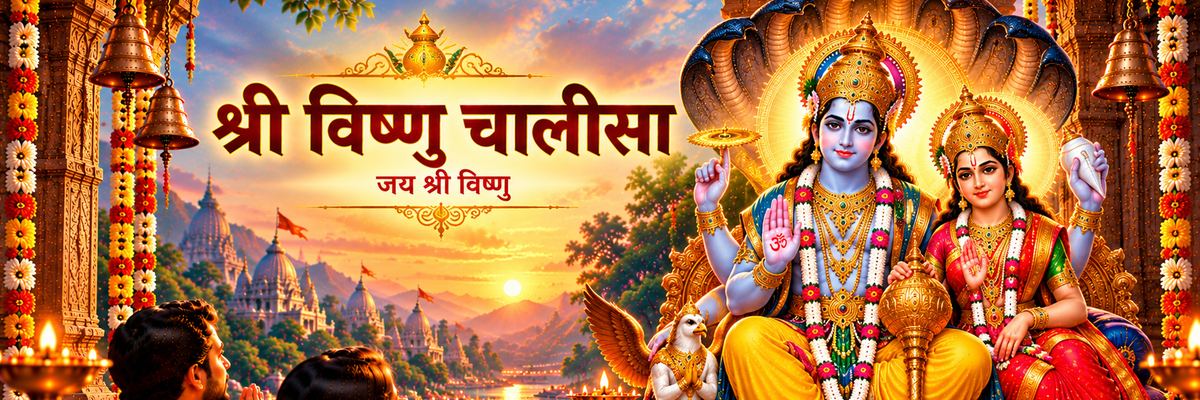
The single opening doha is a request rather than a boast: "Vishnu, listen attentively to your servant's plea — I will describe a little of your glory; grant me the understanding to do it." The first chaupai greets him as Kharari, the enemy of the demon Khara — an epithet from the Ramayana — and the next few paint his form: a yellow pitambar, the vaijayanti garland, and conch, discus and mace at the sight of which demon armies flee.
The avatars, told in quick strokes
Verse 10 gives the key to the whole middle section: he takes many forms "only for the sake of bhakti." The chalisa then moves quickly through them. When the Earth, in the form of a cow, cried out to him, he became Ram and killed Ravana. As Varaha he felled Hiranyaksha. It connects the Matsya form with bringing out the fourteen jewels of the ocean, shows him as Mohini giving the gods amrit while distracting the asuras with her beauty, and as Kurma lifting Mount Mandarachal. It also recalls his recovery of the Vedas and how he freed Shiva from Bhasmasura — dancing as an enchantress until the demon put his own hand on his head and burned to ash.
The Jalandhar and Vrinda episode
Verses 21–26 tell a less familiar story at some length. The mighty asura Jalandhar fought Shiva and then went to deceive Sati (Parvati). She called on Vishnu and told him everything; he took the form of a wise sage and clouded the awareness of Vrinda, Jalandhar's devoted wife, whose fidelity had been his protection. When she embraced him, her vow was held to be broken — and with it gone, Shiva struck Jalandhar down. It's a morally complicated tale, and the chalisa tells it plainly as one of Vishnu's interventions.
Saviour of devotees
Then come the rescues: Dhruva and Prahlad, the destruction of Hiranyakashipu, and the deliverance of the courtesan Ganika and the sinner Ajamil — both classic examples of the idea that sincere remembrance of Hari saves even the fallen. The closing verses turn personal and disarmingly honest: "I don't know proper japa or puja… I don't know how to worship you, how to bow, how to surrender." The final verse is its own phalashruti: whoever reads or hears it finds happiness.
Author, language and form at a glance
- Who wrote it: unknown. Unlike most chalisas, this one carries no poet's signature (chhap). Its last line credits the tradition instead: "nigam sada ye vinay sunavai", "the scriptures ever proclaim this prayer". Any author's name you see attached to it online is a guess.
- Language: devotional Hindi with Awadhi and Braj forms (dhara, bulaya, kinha), and many Sanskrit names of Vishnu: Kharari, Madhusudan, Hari.
- Form: one opening doha and forty chaupais, with no closing doha. The final chaupai serves as the phalashruti. About ten minutes aloud.
- What it covers: Vishnu's form, his avatars (Ram, Varaha, Matsya, Mohini, Kurma), the Bhasmasura and Jalandhar–Vrinda stories, and the devotees he saved: Dhruva, Prahlad, Ganika and Ajamil.
Why read it
Chaupai 10 gives the key to the whole hymn: "karat anek roop prabhu dharan, keval aap bhakti ke karan", the Lord takes many forms, only for the sake of devotion. The chalisa is a reminder that Vishnu's avatars are acts of care, each one coming when the earth, the gods or a single devotee called for help.
The other reason people come back to it is its honesty. In the closing section the reader admits: "I don't know the right japa or puja ... I don't know virtue, compassion, contentment ... how shall I worship you, how bow, how surrender?" (32–35). It is a hymn for people who feel they don't know enough to pray properly, and it tells them that asking sincerely is enough.
When to read it
- Thursday: Guruvar is Vishnu's weekly day. See Thursday Vishnu Bhakti.
- Ekadashi: both Ekadashis of every month, especially Devshayani (Ashadha) and Dev Uthani (Kartik). See Ekadashi Vrat.
- Purnima: with the Satyanarayan katha, which is a Vishnu puja.
- Kartik month: the month most dear to Vishnu, with tulsi worship and the evening lamp.
- Chaturmas: the four months from Devshayani to Dev Uthani Ekadashi, when Vishnu is said to rest and many keep a daily reading.
How to read it (path vidhi)
- Bathe and wear clean clothes. Yellow is Vishnu's colour, and his pitambar is described in chaupai 4.
- Sit before an image of Vishnu (or Lakshmi-Narayan, or a Shaligram), facing east.
- Light a ghee lamp. Offer tulsi leaves (essential in Vishnu worship), yellow flowers, sandal paste, and a simple bhog. On Thursday, chana dal with jaggery or bananas are traditional.
- Chant Om Namo Bhagavate Vasudevaya a few times, then read the chalisa aloud from the doha to the last chaupai.
- Finish with the aarti Om Jai Jagdish Hare.
On Ekadashi, if you are fasting, read it in the morning puja, and again in the evening if you keep a night vigil.
Benefits the chalisa itself names
This chalisa's direct promise is short: "padhai sunai so jan sukh pavai", whoever reads or hears it finds happiness (40). Most of what it hopes for is phrased as the reader's prayer, asking Vishnu for:
- Relief from suffering: "take away all our afflictions" (29).
- His darshan: "let me see your form", "your servant longs for your sight" (30–31).
- Removal of sin, fault and pain, and freedom from the bonds of worldly existence (38).
- Happiness and prosperity, and a place as the servant of his feet (39).
- Help for the poor and suffering: he is always the helper of the poor and sorrowful, and makes his own those he knows as his (37).
The stories carry the rest of the promise. He saved Dhruva, Prahlad, Ganika and Ajamil, and "carried many devotees across the ocean of existence" (27–28).
Frequently asked questions
Who wrote the Vishnu Chalisa?
The text doesn't name its author, which is unusual for a chalisa. It ends by attributing its prayer to the nigam (the Vedas and scriptures).
What is the best day to read it?
Thursday every week, and Ekadashi twice a month. Daily reading in Kartik or Chaturmas is also common.
Can I read it without keeping the Ekadashi fast?
Yes. The chalisa sets no condition of fasting. Reading it on Ekadashi without fasting is still a good observance.
Why is tulsi offered while reading it?
Tulsi is considered dear to Vishnu, and no Vishnu puja is complete without it. Fittingly, the chalisa's own Jalandhar story is about Vrinda, who in tradition became the tulsi plant.
How is it different from the Vishnu Sahasranama?
The Vishnu Sahasranama is a Sanskrit hymn of a thousand names from the Mahabharata, which takes about half an hour. The chalisa is a short Hindi hymn that tells his stories and ends in a personal prayer.
Is there a separate chalisa for Krishna or Ram?
Yes. Both have their own chalisas: see the Krishna Chalisa and Ram Chalisa. The Vishnu Chalisa covers Vishnu himself and all his avatars together.
Spotted a mistake?
If you find any grammatical, Hindi, English, mantra-text or other mistake on this page, tell us — we will correct it within 24 hours.