
Original text
श्री भगवत भगवान की है आरती, पापियों को पाप से है तारती। ये अमर ग्रन्थ ये मुक्ति पन्थ, ये पंचम वेद निराला, नव ज्योति जलाने वाला। हरि नाम यही हरि धाम यही, यही जग मंगल की आरती पापियों को पाप से है तारती॥ ॥ श्री भगवत भगवान की है आरती...॥ ये शान्ति गीत पावन पुनीत, पापों को मिटाने वाला, हरि दरश दिखाने वाला। यह सुख करनी, यह दुःख हरिनी, श्री मधुसूदन की आरती, पापियों को पाप से है तारती॥ ॥ श्री भगवत भगवान की है आरती...॥ ये मधुर बोल, जग फन्द खोल, सन्मार्ग दिखाने वाला, बिगड़ी को बनानेवाला। श्री राम यही, घनश्याम यही, यही प्रभु की महिमा की आरती पापियों को पाप से है तारती॥ ॥ श्री भगवत भगवान की है आरती...॥ श्री भगवत भगवान की है आरती, पापियों को पाप से है तारती।
Transliteration
Shri Bhagwat Bhagwan Ki Hai Aarti, Papiyon Ko Paap Se Hai Tarti. Ye Amar Granth Ye Mukti Panth, Ye Pancham Ved Nirala, Nav Jyoti Jalane Wala. Hari Naam Yahi Hari Dham Yahi, Yahi Jag Mangal Ki Aarti Papiyon Ko Paap Se Hai Tarti. (Shri Bhagwat Bhagwan Ki Hai Aarti...) Ye Shanti Geet Pavan Puneet, Papon Ko Mitane Wala, Hari Darash Dikhane Wala. Yah Sukh Karani, Yah Dukh Harini, Shri Madhusudan Ki Aarti, Papiyon Ko Paap Se Hai Tarti. (Shri Bhagwat Bhagwan Ki Hai Aarti...) Ye Madhur Bol, Jag Phand Khol, Sanmarg Dikhane Wala, Bigadi Ko Banane Wala. Shri Ram Yahi, Ghanshyam Yahi, Yahi Prabhu Ki Mahima Ki Aarti Papiyon Ko Paap Se Hai Tarti. (Shri Bhagwat Bhagwan Ki Hai Aarti...) Shri Bhagwat Bhagwan Ki Hai Aarti, Papiyon Ko Paap Se Hai Tarti.
The Bhagavatam treated as the Lord himself
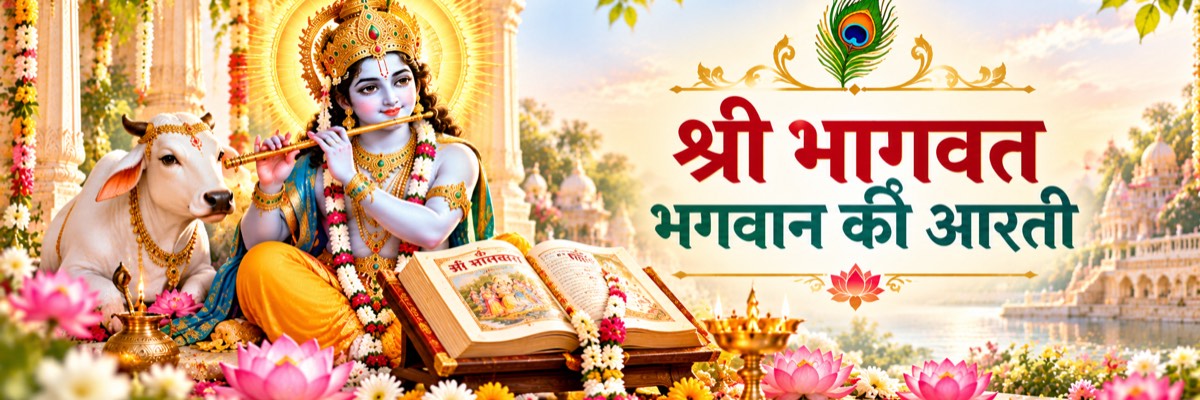
"Bhagwat Bhagwan": the title puts the book and the Lord side by side, and that is the whole idea of this aarti. In the Bhagwat katha tradition the Shrimad Bhagavatam (the Bhagavata Purana, eighteen thousand verses in twelve cantos) is not simply read. It is installed on a decorated seat, carried in procession on the opening day, offered flowers and lamps, and spoken of as the literal form of Krishna. The Bhagavatam supports the idea itself: in its first canto (1.3.43) it says that now Krishna has gone to his own abode, this Purana has risen like the sun for those in the Kali age who have lost their sight. This short Hindi aarti is sung to the book, usually at the close of each day of a Bhagwat saptah (the seven-day recitation) and again at its conclusion. Its author is not recorded. Hindupedia notes a well-known recording by Hemant Kumar.
Not the Bhagavad Gita aarti
The names are close enough to cause confusion, so it is worth being plain. The Bhagavad Gita aarti ("Jai Bhagavad Gite") is sung to the Gita, Krishna's 700-verse teaching to Arjuna on the battlefield, which is part of the Mahabharata. This aarti is sung to the Bhagavatam, the Purana that tells the stories of Vishnu's avatars and, in its tenth canto, Krishna's life in Gokul, Vrindavan and Mathura. People hear it most at Bhagwat katha pandals, not at Gita Jayanti. The closest relative of this aarti on the site is actually the Ramayan ji ki aarti, another aarti sung to a book at the end of its reading.
What the three stanzas claim for the book
- "Ye amar granth, ye mukti panth, ye pancham Ved nirala." An immortal scripture, a path to liberation, a unique fifth Veda. Calling the Itihasa-Puranas the "fifth Veda" goes back to the Chandogya Upanishad (7.1.2), and the Bhagavatam claims the title for itself in its first canto, calling itself the ripened fruit of the wish-fulfilling tree of the Vedas (1.1.3). "Hari's name is here, Hari's abode is here": hearing the book is treated as being in Vaikuntha.
- "Ye shanti geet pavan puneet." A song of peace that wipes out sins and gives darshan of Hari; it brings happiness and takes away grief, and it is called the aarti of Madhusudan, Vishnu as the slayer of the demon Madhu.
- "Ye madhur bol, jag phand khol." Sweet words that untie the noose of the world, show the right path and mend what has gone wrong (bigadi ko banane wala). The stanza ends on its strongest line: Shri Ram yahi, Ghanshyam yahi, "this is Shri Ram, this is Ghanshyam". The Bhagavatam's ninth canto tells Rama's story and its tenth tells Krishna's, so both are literally in the book.
The refrain, papiyon ko paap se hai tarti, "it carries sinners across their sin", echoes a story told in the Bhagavata Mahatmya: Dhundhukari, a man ruined by his own vices who became a ghost, was freed by hearing the Bhagavatam recited for seven days.
How it is sung at a katha
When the day's reading ends, the reader (vyas) closes the book on its seat, the host family stands with a lamp plate, and the whole pandal sings the aarti while the lamp circles the book. After that come the shout of "Shrimad Bhagwat Bhagwan ki jai" and the prasad. At home, people who read a chapter of the Bhagavatam daily often sing it at the end in the same way, with the book on a clean cloth and a ghee lamp. On the last day of a saptah it is usually followed by the general Om Jai Jagdish Hare.
Wording varies
The text above follows Bhakti Bharat, which spells the title word भगवत; many printings spell it भागवत, and both mean the Bhagavatam. The version on Hindupedia differs in several lines: it has "nav jyoti jagane wala" (awakens) for "jalane wala" (lights), "Hari gyan yahi, vardan yahi" for "Hari naam yahi, Hari dham yahi", "shanti deep" (lamp of peace) for "shanti geet" (song of peace), "bhav phand khol" for "jag phand khol", and "sabki mahima ki aarti" for "yahi Prabhu ki mahima ki aarti". The meaning barely changes; sing what your katha group sings.
Frequently asked questions
Is this the same as the Bhagavad Gita aarti?
No. This one is sung to the Shrimad Bhagavatam (the Bhagavata Purana) and opens "Shri Bhagwat Bhagwan ki hai aarti". The Gita aarti is sung to the Bhagavad Gita and opens "Jai Bhagavad Gite".
When is it sung during a Bhagwat saptah?
At the close of each day's katha, after the reader stops for the day, and with special ceremony on the seventh day at the completion (purnahuti). Many groups also sing it at the start, after the book is installed on its seat.
Why is the Bhagavatam called the "fifth Veda"?
The Chandogya Upanishad already lists Itihasa and Purana as the fifth Veda, and the Bhagavatam presents itself as the essence of all the Vedas, so devotees apply the title to it above all.
Can it be sung at home without a full katha?
Yes. If you read even a chapter of the Bhagavatam daily, you can sing this aarti afterwards with the book on a clean cloth and a lamp in front of it.
Which deity is the aarti really addressed to?
To the book as a form of Vishnu. The text names Hari, Madhusudan, Shri Ram and Ghanshyam, and says that all of them are present in the Bhagavatam.
Why does it say Ram and Krishna are both "here"?
Because the Bhagavatam tells both lives: Rama's story in the ninth canto and Krishna's in the tenth and eleventh. In the line Shri Ram yahi, Ghanshyam yahi, yahi means "this very book".
Who wrote this aarti?
The sources do not name an author. It is a popular devotional song that spread through katha gatherings and recordings.
Spotted a mistake?
If you find any grammatical, Hindi, English, mantra-text or other mistake on this page, tell us — we will correct it within 24 hours.