
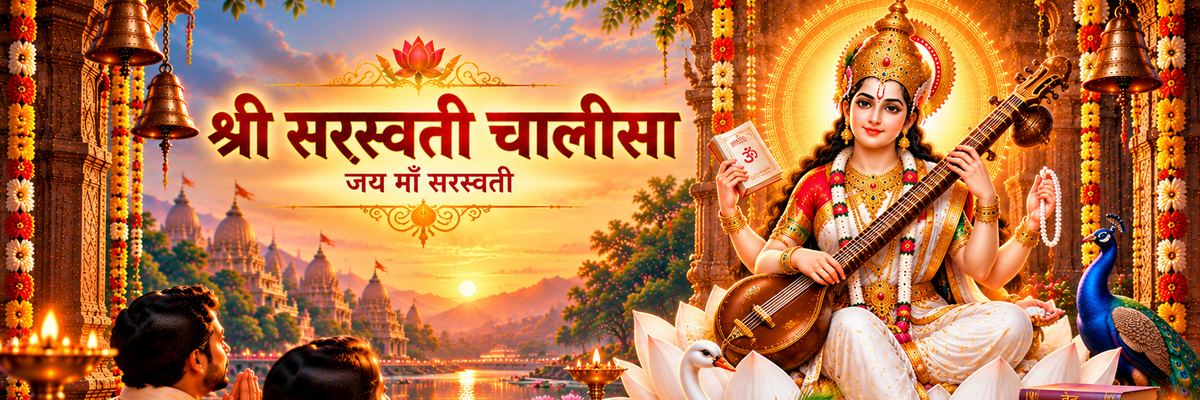
Original text
॥ दोहा ॥ जनक जननि पद्मरज, निज मस्तक पर धरि । बन्दौं मातु सरस्वती, बुद्धि बल दे दातारि ॥ पूर्ण जगत में व्याप्त तव, महिमा अमित अनंतु । दुष्जनों के पाप को, मातु तु ही अब हन्तु ॥ ॥ चौपाई ॥ जय श्री सकल बुद्धि बलरासी । जय सर्वज्ञ अमर अविनाशी॥1॥ जय जय जय वीणाकर धारी । करती सदा सुहंस सवारी॥2॥ रूप चतुर्भुज धारी माता । सकल विश्व अन्दर विख्याता॥3॥ जग में पाप बुद्धि जब होती । तब ही धर्म की फीकी ज्योति॥4॥ तब ही मातु का निज अवतारी । पाप हीन करती महतारी॥5॥ वाल्मीकिजी थे हत्यारा । तव प्रसाद जानै संसारा॥6॥ रामचरित जो रचे बनाई । आदि कवि की पदवी पाई॥7॥ कालिदास जो भये विख्याता । तेरी कृपा दृष्टि से माता॥8॥ तुलसी सूर आदि विद्वाना । भये और जो ज्ञानी नाना॥9॥ तिन्ह न और रहेउ अवलम्बा । केव कृपा आपकी अम्बा॥10॥ करहु कृपा सोइ मातु भवानी । दुखित दीन निज दासहि जानी॥11॥ पुत्र करहिं अपराध बहूता । तेहि न धरई चित माता॥12॥ राखु लाज जननि अब मेरी । विनय करउं भांति बहु तेरी॥13॥ मैं अनाथ तेरी अवलंबा । कृपा करउ जय जय जगदंबा॥14॥ मधुकैटभ जो अति बलवाना । बाहुयुद्ध विष्णु से ठाना॥15॥ समर हजार पाँच में घोरा । फिर भी मुख उनसे नहीं मोरा॥16॥ मातु सहाय कीन्ह तेहि काला । बुद्धि विपरीत भई खलहाला॥17॥ तेहि ते मृत्यु भई खल केरी । पुरवहु मातु मनोरथ मेरी॥18॥ चंड मुण्ड जो थे विख्याता । क्षण महु संहारे उन माता॥19॥ रक्त बीज से समरथ पापी । सुरमुनि हदय धरा सब काँपी॥20॥ काटेउ सिर जिमि कदली खम्बा । बारबार बिन वउं जगदंबा॥21॥ जगप्रसिद्ध जो शुंभनिशुंभा । क्षण में बाँधे ताहि तू अम्बा॥22॥ भरतमातु बुद्धि फेरेऊ जाई । रामचन्द्र बनवास कराई॥23॥ एहिविधि रावण वध तू कीन्हा । सुर नरमुनि सबको सुख दीन्हा॥24॥ को समरथ तव यश गुन गाना । निगम अनादि अनंत बखाना॥25॥ विष्णु रुद्र जस कहिन मारी । जिनकी हो तुम रक्षाकारी॥26॥ रक्त दन्तिका और शताक्षी । नाम अपार है दानव भक्षी॥27॥ दुर्गम काज धरा पर कीन्हा । दुर्गा नाम सकल जग लीन्हा॥28॥ दुर्ग आदि हरनी तू माता । कृपा करहु जब जब सुखदाता॥29॥ नृप कोपित को मारन चाहे । कानन में घेरे मृग नाहे॥30॥ सागर मध्य पोत के भंजे । अति तूफान नहिं कोऊ संगे॥31॥ भूत प्रेत बाधा या दुःख में । हो दरिद्र अथवा संकट में॥32॥ नाम जपे मंगल सब होई । संशय इसमें करई न कोई॥33॥ पुत्रहीन जो आतुर भाई । सबै छांड़ि पूजें एहि भाई॥34॥ करै पाठ नित यह चालीसा । होय पुत्र सुन्दर गुण ईशा॥35॥ धूपादिक नैवेद्य चढ़ावै । संकट रहित अवश्य हो जावै॥36॥ भक्ति मातु की करैं हमेशा । निकट न आवै ताहि कलेशा॥37॥ बंदी पाठ करें सत बारा । बंदी पाश दूर हो सारा॥38॥ रामसागर बाँधि हेतु भवानी । कीजै कृपा दास निज जानी॥39॥ ॥ दोहा ॥ मातु सूर्य कान्ति तव, अन्धकार मम रूप । डूबन से रक्षा करहु, परूँ न मैं भव कूप ॥ बलबुद्धि विद्या देहु मोहि, सुनहु सरस्वती मातु । राम सागर अधम को, आश्रय तू ही देदातु ॥
Transliteration
Doha: Janak Janani Padmaraj, Nij Mastak Par Dhari, Bandaun Matu Sarasvati, Buddhi Bal De Datari. Purna Jagat Mein Vyapta Tav, Mahima Amit Anantu, Dushjanon Ke Pap Ko, Matu Tu Hi Ab Hantu. Chaupai: 1. Jai Shri Sakal Buddhi Balarasi, Jai Sarvagya Amar Avinashi. 2. Jai Jai Jai Vinakar Dhari, Karati Sada Suhans Savari. 3. Rup Chaturbhuj Dhari Mata, Sakal Vishva Andar Vikhyata. 4. Jag Mein Pap Buddhi Jab Hoti, Tab Hi Dharma Ki Phiki Jyoti. 5. Tab Hi Matu Ka Nij Avatari, Pap Hin Karati Mahatari. 6. Valmikiji The Hatyara, Tav Prasad Janai Sansara. 7. Ramacharit Jo Rache Banai, Adi Kavi Ki Padavi Pai. 8. Kalidas Jo Bhaye Vikhyata, Teri Kripa Drishti Se Mata. 9. Tulasi Sur Adi Vidvana, Bhaye Aur Jo Gyani Nana. 10. Tinha Na Aur Raheu Avalamba, Kev Kripa Apaki Amba. 11. Karahu Kripa Soi Matu Bhavani, Dukhit Din Nij Dasahi Jani. 12. Putra Karahin Aparadh Bahuta, Tehi Na Dharai Chit Mata. 13. Rakhu Laj Janani Ab Meri, Vinay Karaun Bhanti Bahu Teri. 14. Main Anath Teri Avalamba, Kripa Karau Jai Jai Jagadamba. 15. Madhukaitabh Jo Ati Balavana, Bahuyuddha Vishnu Se Thana. 16. Samar Hajar Panch Mein Ghora, Phir Bhi Mukh Unase Nahin Mora. 17. Matu Sahay Kinha Tehi Kala, Buddhi Viparit Bhai Khalahala. 18. Tehi Te Mrityu Bhai Khal Keri, Puravahu Matu Manorath Meri. 19. Chand Munda Jo The Vikhyata, Kshan Mahu Sanhare Un Mata. 20. Rakta Bij Se Samarath Papi, Suramuni Haday Dhara Sab Kanpi. 21. Kateu Sir Jimi Kadali Khamba, Barabar Bin Vaun Jagadamba. 22. Jagaprasiddha Jo Shumbhanishumbha, Kshan Mein Bandhe Tahi Tu Amba. 23. Bharatamatu Buddhi Phereu Jai, Ramachandra Banavas Karai. 24. Ehividhi Ravan Vadh Tu Kinha, Sur Naramuni Sabako Sukh Dinha. 25. Ko Samarath Tav Yash Gun Gana, Nigam Anadi Anant Bakhana. 26. Vishnu Rudra Jas Kahin Mari, Jinaki Ho Tum Rakshakari. 27. Rakta Dantika Aur Shatakshi, Nam Apar Hai Danav Bhakshi. 28. Durgam Kaj Dhara Par Kinha, Durga Nam Sakal Jag Linha. 29. Durga Adi Harani Tu Mata, Kripa Karahu Jab Jab Sukhadata. 30. Nrip Kopit Ko Maran Chahe, Kanan Mein Ghere Mrig Nahe. 31. Sagar Madhya Pot Ke Bhanje, Ati Tuphan Nahin Kou Sange. 32. Bhut Pret Badha Ya Duhkh Mein, Ho Daridra Athava Sankat Mein. 33. Nam Jape Mangal Sab Hoi, Sanshay Isamein Karai Na Koi. 34. Putrahin Jo Atur Bhai, Sabai Chhanri Pujein Ehi Bhai. 35. Karai Path Nit Yah Chalisa, Hoy Putra Sundar Gun Isha. 36. Dhupadik Naivedya Charhavai, Sankat Rahit Avashya Ho Javai. 37. Bhakti Matu Ki Karain Hamesha, Nikat Na Avai Tahi Kalesha. 38. Bandi Path Karein Sat Bara, Bandi Pash Dur Ho Sara. 39. Ramasagar Bandhi Hetu Bhavani, Kijai Kripa Das Nij Jani. Doha: Matu Surya Kanti Tav, Andhakar Mam Rup, Duban Se Raksha Karahu, Parun Na Main Bhav Kup. Balabuddhi Vidya Dehu Mohi, Sunahu Sarasvati Matu, Ram Sagar Adham Ko, Ashray Tu Hi Dedatu.
What it asks for
The opening doha sets the request in one line: placing the dust of the lotus feet of father and mother on one's own head, the devotee bows to Mother Saraswati and asks for buddhi and bal — intellect and strength. The closing dohas return to it: "bal buddhi vidya dehu mohi" — give me strength, understanding and learning. In between, the poet (who signs himself Ramsagar) builds the case for why she is the one to ask.
Poets made by her grace
The early chaupais describe her familiar form — four arms, the veena in hand, riding a swan — and say she descends whenever sinful thinking spreads and the light of dharma grows dim. Then come the examples every student of Hindi literature knows: Valmiki, once a killer, who by her grace composed the story of Ram and earned the title Adi Kavi (the first poet); Kalidasa, who became famous under her glance; and Tulsidas, Surdas and other scholars who, the chalisa says, had no support but her grace.
Saraswati as the power behind every victory
What sets this chalisa apart is its middle section, which treats Saraswati as the power of the mind behind the Devi's great battles. Madhu and Kaitabha wrestled Vishnu for five thousand years without turning away — and died only when she turned their intelligence against them. Chanda and Munda, Raktabija and Shumbha-Nishumbha all fall to her here. Most striking of all, it credits her with turning the mind of "Bharat's mother" (Kaikeyi) so that Ram went into exile — which set in motion the killing of Ravana. It also names her Raktadantika and Shatakshi and says she earned the name Durga for her difficult deeds on earth.
Protection and phalashruti
Near the end the chalisa lists situations in which chanting her name brings relief: an angry king, being surrounded by wild beasts in a forest, a ship breaking apart in a storm, trouble from spirits, poverty or crisis. It says a childless devotee who reads it daily will be blessed with a fine son, and that a prisoner who recites it a hundred times will be freed.
Author, language and form at a glance
- Who wrote it: a poet who signs as Ramsagar, twice. In the last chaupai, "Ramsagar bandhi hetu Bhavani", and in the final doha, "Ram Sagar adham ko, ashray tu hi dedatu", "to this lowly Ramsagar, you alone give shelter." No date or place is given.
- Language: devotional Hindi with Awadhi forms (bhaye, kinha, jaanai). It is simple enough for school children, which is why it is so often taught in schools.
- Form: two opening dohas, thirty-nine chaupais, and two closing dohas. About ten minutes aloud.
- An unusual feature: it treats Saraswati as the same power as Durga, crediting her with the Devi's great victories, and naming her Raktadantika and Shatakshi, forms from the Devi Mahatmya.
Why read it
Its request is in the very first doha: "Bandau matu Saraswati, buddhi bal de datari", I bow to Mother Saraswati, the giver: grant me intellect and strength. The final doha repeats it with one more word: "bal buddhi vidya dehu mohi", give me strength, understanding and learning.
Then the chalisa gives its proof: the poets her grace created. Valmiki, once a killer, became the Adi Kavi. Kalidasa became famous "by your glance of grace". Tulsi, Sur and many other learned people "had no other support than your kindness". For a student, a writer, a musician or anyone whose work is thinking and speaking well, it is a prayer from someone who believes learning is a gift as much as an effort.
When to read it
- Vasant Panchami: Magh Shukla Panchami (January–February), Saraswati's main festival, especially in schools and in Bengal, Bihar and Odisha.
- Navratri: on the Saraswati days near the end of Sharad Navratri (Saptami to Navami), when books and instruments are placed before her.
- Vidyarambh: a child's first lesson, often on Vasant Panchami or Vijayadashami.
- Before study and exams: many students read it daily in the morning, or just before an exam, interview or performance.
- Thursday: some families keep Thursday for Saraswati, as the day of Brihaspati, the guru of the gods. Others read it any day before study.
How to read it (path vidhi)
- Bathe and wear clean white or yellow clothes, Saraswati's colours.
- Place her image facing east or north, with your books, pen or instrument before her.
- Light a ghee lamp and incense. Offer white or yellow flowers (white lotus, jasmine or marigold), akshat, and a white sweet, kheer or yellow rice. Chaupai 36 itself speaks of offering "dhoopadik naivedya", incense and food.
- Recite the dohas and chaupais aloud and clearly, since she is the goddess of speech, then chant Om Aim Saraswatyai Namah a few times.
- Close with the Ya Kundendu vandana or the aarti Jai Saraswati Mata.
A common custom on Vasant Panchami: books and pens are left with her for the day and not used until the next morning.
Benefits the chalisa itself names
- Intellect, strength and learning (opening and closing dohas).
- Removal of sinful thinking: she descends whenever sinful thinking spreads and makes people free of sin (4–5).
- Protection in danger: chanting her name brings auspiciousness when a king is angry and wants to kill, when one is surrounded by wild animals in the forest, when a ship breaks up at sea in a storm, and in trouble from spirits, poverty or crisis. "Let no one doubt it" (30–33).
- Children: a childless person who reads this chalisa daily is blessed with a fine, virtuous son (34–35).
- Freedom from trouble: one who offers incense and naivedya is surely freed of difficulty, and affliction doesn't come near one who is always devoted to her (36–37).
- Release from prison: a prisoner who recites it a hundred times is freed from every bond (38).
- Rescue from drowning in worldly life: "save me from drowning, let me not fall into the well of existence" (closing doha).
Frequently asked questions
Who wrote the Saraswati Chalisa?
A poet named Ramsagar, who signs in the last chaupai and final doha. No date or further biography is known.
Is it good to read before exams?
Yes, that is one of its most common uses. The chalisa's own request is for intellect, strength and learning, and many students read it every morning in the exam season.
Why does it talk about Durga's battles?
Because it sees Saraswati as the power of the mind behind every victory. Madhu and Kaitabha were defeated when she turned their minds, and the chalisa says she earned the name Durga by her difficult deeds. In Shakta thought, Mahasaraswati is one of the three forms of the one Devi.
Can small children read it?
Yes. It is often the first chalisa children learn at school. For very young children, the opening doha and the Valmiki and Kalidasa verses are a good start.
Which colour should I wear when worshipping Saraswati?
White, for purity and knowledge, or yellow, the colour of Vasant Panchami and mustard fields in bloom.
What is the difference between the Saraswati Chalisa and the Saraswati Vandana?
The vandana, "Ya kundendu tushara hara dhavala", is two Sanskrit verses describing her form. The chalisa is a forty-verse Hindi hymn with stories and a phalashruti. Many recite the vandana first and then the chalisa.
Spotted a mistake?
If you find any grammatical, Hindi, English, mantra-text or other mistake on this page, tell us — we will correct it within 24 hours.