
Original text
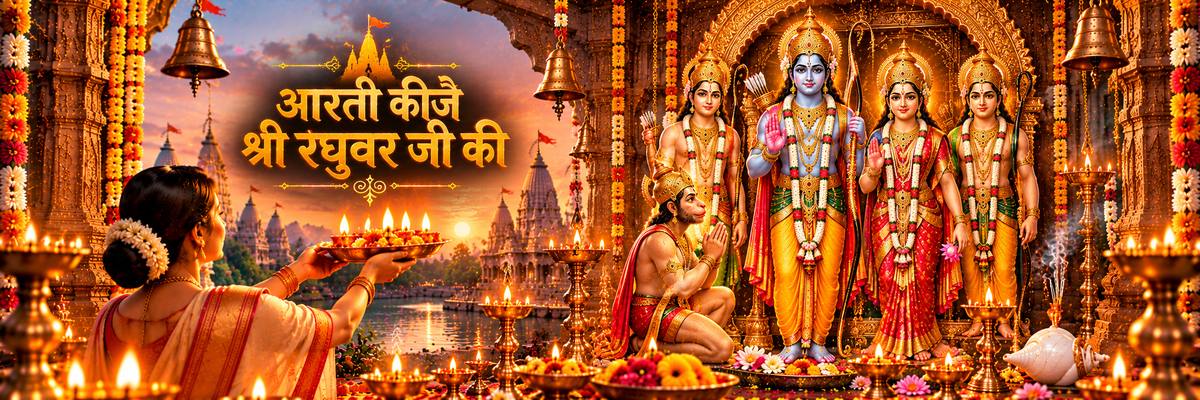
आरती कीजै श्री रघुवर जी की, सत चित आनन्द शिव सुन्दर की ॥ दशरथ तनय कौशल्या नन्दन, सुर मुनि रक्षक दैत्य निकन्दन । अनुगत भक्त भक्त उर चन्दन, मर्यादा पुरुषोत्तम वर की ॥ ॥ आरती कीजै श्री रघुवर जी की… ॥ निर्गुण सगुण अनूप रूप निधि, सकल लोक वन्दित विभिन्न विधि । हरण शोक-भय दायक नव निधि, माया रहित दिव्य नर वर की ॥ ॥ आरती कीजै श्री रघुवर जी की… ॥ जानकी पति सुर अधिपति जगपति, अखिल लोक पालक त्रिलोक गति । विश्व वन्द्य अवन्ह अमित गति, एक मात्र गति सचराचर की ॥ ॥ आरती कीजै श्री रघुवर जी की… ॥ शरणागत वत्सल व्रतधारी, भक्त कल्प तरुवर असुरारी । नाम लेत जग पावनकारी, वानर सखा दीन दुख हर की ॥ ॥ आरती कीजै श्री रघुवर जी की… ॥
Transliteration
Aarti Kijai Shri Raghuvar Ji Ki, Sat Chit Anand Shiv Sundar Ki. Dashrath Tanay Kaushalya Nandan, Sur Muni Rakshak Daitya Nikandan. Anugat Bhakt Bhakt Ur Chandan, Maryada Purushottam Var Ki. (Refrain) Nirgun Sagun Anup Roop Nidhi, Sakal Lok Vandit Vibhinn Vidhi. Haran Shok-Bhay Dayak Nav Nidhi, Maya Rahit Divya Nar Var Ki. (Refrain) Janaki Pati Sur Adhipati Jagpati, Akhil Lok Palak Trilok Gati. Vishva Vandya Avanh Amit Gati, Ek Matra Gati Sacharachar Ki. (Refrain) Sharanagat Vatsal Vratdhari, Bhakt Kalp Taruvar Asurari. Naam Let Jag Pavankari, Vanar Sakha Deen Dukh Har Ki. (Refrain)
What the opening line says
The aarti opens by naming who is being worshipped in the language of philosophy before any story: sat chit anand shiv sundar. Ram is being, consciousness and bliss (sat-chit-ananda, the classic Vedantic description of Brahman), and also what is auspicious (shiv) and beautiful (sundar). Then the four verses come down to earth and describe him as the prince of Ayodhya. They move between these two ideas all the way through: the formless absolute and the man who kept his word.
Verse by verse
- Son of Dashrath and Kaushalya: protector of the gods and sages, destroyer of the daityas. To the devotees who follow him he is ur chandan, sandalwood to the heart, cooling and fragrant. He is the best of the Maryada Purushottam, the ideal man who never stepped past the bounds of dharma.
- Formless and with form: both nirgun and sagun, a treasury of peerless beauty, worshipped by every world in its own way. He takes away grief and fear and grants the nine treasures (nav nidhi). Though he appears as a man, he is a divine man untouched by maya.
- Lord of Janaki and of the worlds: Sita's husband, ruler of the gods, lord of the world, sustainer of every realm, the goal of all three worlds, honoured by the whole universe, the one whose reach has no measure. The line ends with ek matra gati sacharachar ki: he is the only refuge of everything that moves and everything that doesn't.
- Loving to those who take refuge: sharanagat vatsal vratdhari, who has taken a vow to love and protect whoever surrenders to him. This recalls the Ramayana moment when Ram accepts Vibhishana, Ravana's own brother, against his advisers' warnings. He is a wish-fulfilling tree to devotees and the enemy of asuras. Merely taking his name purifies the world, and he is the friend of the vanaras and the one who takes away the sorrow of the helpless.
When it is sung
This aarti is sung on Ram Navami, on Vijayadashami, and above all to close a reading of the Sundarkand, a Ramcharitmanas katha or an akhand Ramayan path. Many Hanuman devotees end their Tuesday Sundarkand with it. It is short enough to sing in full every evening. Before it, a common sequence is the Ram Chalisa or the Shri Ram mantra. After it, many go on to the Hanuman Aarti, because wherever Ram is worshipped Hanuman is thought to be present.
Not to be confused with
This is a different hymn from Tulsidas's "Shri Ramchandra Kripalu Bhajuman", which is a stuti (hymn of praise) often sung at the same point in the worship. Some printings also include a short line that is hard to read: vishva vandya avanh amit gati. We have kept avanh exactly as the published sources print it rather than guess at a correction.
Spotted a mistake?
If you find any grammatical, Hindi, English, mantra-text or other mistake on this page, tell us — we will correct it within 24 hours.