
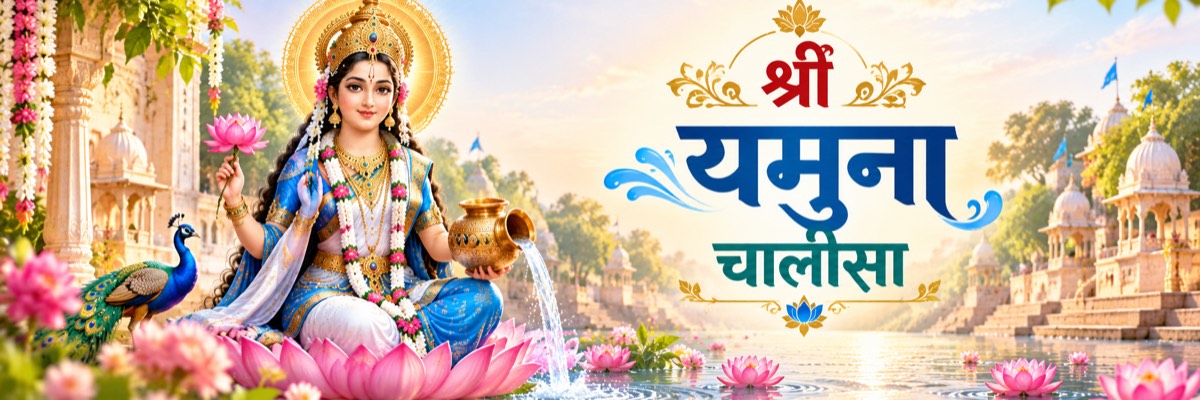
Original text
॥ दोहा ॥ प्रियसंग क्रीड़ा करत नित, सुखनिधि वेद को सार । दरस परस ते पाप मिटे, श्रीकृष्ण प्राण आधार ॥ यमुना पावन विमल सुजस, भक्तिसकल रस खानि । शेष महेश वदंन करत, महिमा न जाय बखानि ॥ पूजित सुरासुर मुकुन्द प्रिया, सेवहि सकल नर-नार । प्रकटी मुक्ति हेतु जग, सेवहि उतरहि पार ॥ बंदि चरण कर जोरी कहो, सुनियों मातु पुकार । भक्ति चरण चित्त देई के, कीजै भव ते पार ॥ ॥ चौपाई ॥ जै जै जै यमुना महारानी । जय कालिन्दि कृष्ण पटरानी ॥१॥ रूप अनूप शोभा छवि न्यारी । माधव-प्रिया ब्रज शोभा भारी ॥२॥ भुवन बसी घोर तप कीन्हा । पूर्ण मनोरथ मुरारी कीन्हा ॥३॥ निज अर्धांगी तुम्ही अपनायों । सावँरो श्याम पति प्रिय पायो ॥४॥ रूप अलौकिक अद्भूत ज्योति । नीर रेणू दमकत ज्यूँ मोती ॥५॥ सूर्यसुता श्यामल सब अंगा । कोटिचन्द्र ध्युति कान्ति अभंगा ॥६॥ आश्रय ब्रजाधिश्वर लीन्हा । गोकुल बसी शुचि भक्तन कीन्हा ॥७॥ कृष्ण नन्द घर गोकुल आयों । चरण वन्दि करि दर्शन पायों ॥८॥ सोलह श्रृंगार भुज कंकण सोहे । कोटि काम लाजहि मन मोहें ॥९॥ कृष्णवेश नथ मोती राजत । नुपूर घुंघरू चरण में बाजत ॥१०॥ मणि माणक मुक्ता छवि नीकी । मोहनी रूप सब उपमा फिकी ॥११॥ मन्द चलहि प्रिय-प्रीतम प्यारी । रीझहि श्याम प्रिय प्रिया निहारी ॥१२॥ मोहन बस करि हृदय विराजत । बिनु प्रीतम क्षण चैन न पावत ॥१३॥ मुरलीधर जब मुरली बजावैं । संग केलि कर आनन्द पावैं ॥१४॥ मोर हंस कोकिल नित खेलत । जलखग कूजत मृदुबानी बोलत ॥१५॥ जा पर कृपा दृष्टि बरसावें । प्रेम को भेद सोई जन पावें ॥१६॥ नाम यमुना जब मुख पे आवें । सबहि अमगंल देखि टरि जावें ॥१७॥ भजे नाम यमुना अमृत रस । रहे साँवरो सदा ताहि बस ॥१८॥ करूणामयी सकल रसखानि । सुर नर मुनि बंदहि सब ज्ञानी ॥१९॥ भूतल प्रकटी अवतार जब लीन्हो । उध्दार सभी भक्तन को किन्हो ॥२०॥ शेष गिरा श्रुति पार न पावत । योगी जति मुनी ध्यान लगावत ॥२१॥ दंड प्रणाम जे आचमन करहि । नासहि अघ भवसिंधु तरहि ॥२२॥ भाव भक्ति से नीर न्हावें । देव सकल तेहि भाग्य सरावें ॥२३॥ करि ब्रज वास निरंतर ध्यावहि । परमानंद परम पद पावहि ॥२४॥ संत मुनिजन मज्जन करहि । नव भक्तिरस निज उर भरहि ॥२५॥ पूजा नेम चरण अनुरागी । होई अनुग्रह दरश बड़भागी ॥२६॥ दीपदान करि आरती करहि । अन्तर सुख मन निर्मल रहहि ॥२७॥ कीरति विशद विनय करी गावत । सिध्दि अलौकिक भक्ति पावत ॥२८॥ बड़े प्रेम श्रीयमुना पद गावें । मोहन सन्मुख सुनन को आवें ॥२९॥ आतुर होय शरणागत आवें । कृपाकरी ताहि बेगि अपनावें ॥३०॥ ममतामयी सब जानहि मन की । भव पीड़ा हरहि निज जन की ॥३१॥ शरण प्रतिपाल प्रिय कुंजेश्वरी । ब्रज उपमा प्रीतम प्राणेश्वरी ॥३२॥ श्रीजी यमुना कृपा जब होई । ब्रह्म सम्बन्ध जीव को होई ॥३३॥ पुष्टिमार्गी नित महिमा गावैं । कृष्ण चरण नित भक्ति दृढावैं ॥३४॥ नमो नमो श्री यमुने महारानी । नमो नमो श्रीपति पटरानी ॥३५॥ नमो नमो यमुने सुख करनी । नमो नमो यमुने दु:ख हरनी ॥३६॥ नमो कृष्णायैं सकल गुणखानी । श्रीहरिप्रिया निकुंज निवासिनी ॥३७॥ करूणामयी अब कृपा कीजैं । फदंकाटी मोहि शरण मे लीजैं ॥३८॥ जो यमुना चालिसा नित गावैं । कृपा प्रसाद ते सब सुख पावैं ॥३९॥ ज्ञान भक्ति धन कीर्ति पावहि । अंत समय श्रीधाम ते जावहि ॥४०॥ ॥ दोहा ॥ भज चरन चित सुख करन, हरन त्रिविध भव त्रास । भक्ति पाई आनंद रमन, कृपा दृष्टि ब्रज वास ॥ यमुना चालिसा नित नेम ते, पाठ करे मन लाय । कृष्ण चरण रति भक्ति दृढ, भव बाधा मिट जाय ॥
Transliteration
Doha Priyasang Kreeda Karat Nit, Sukhnidhi Ved Ko Saar, Daras Paras Te Paap Mite, Shri Krishna Praan Aadhaar. Yamuna Paavan Vimal Sujas, Bhakti Sakal Ras Khaani, Shesh Mahesh Vandan Karat, Mahima Na Jaay Bakhaani. Poojit Suraasur Mukund Priya, Sevahi Sakal Nar-Naar, Prakati Mukti Hetu Jag, Sevahi Utarahi Paar. Bandi Charan Kar Jori Kaho, Suniyon Maatu Pukaar, Bhakti Charan Chitta Dei Ke, Keejai Bhav Te Paar. Chaupai Jai Jai Jai Yamuna Mahaaraani, Jay Kaalindi Krishna Patraani (1) Roop Anoop Shobha Chhavi Nyaari, Maadhav-Priya Braj Shobha Bhaari (2) Bhuvan Basi Ghor Tap Keenha, Poorna Manorath Muraari Keenha (3) Nij Ardhaangi Tumhi Apnaayon, Saavanro Shyaam Pati Priya Paayo (4) Roop Alaukik Adbhut Jyoti, Neer Renu Damkat Jyun Moti (5) Sooryasuta Shyaamal Sab Anga, Koti Chandra Dhyuti Kaanti Abhanga (6) Aashray Brajaadhishvar Leenha, Gokul Basi Shuchi Bhaktan Keenha (7) Krishna Nand Ghar Gokul Aayon, Charan Vandi Kari Darshan Paayon (8) Solah Shringaar Bhuj Kankan Sohe, Koti Kaam Laajahi Man Mohen (9) Krishnavesh Nath Moti Raajat, Nupoor Ghunghru Charan Mein Baajat (10) Mani Maanak Mukta Chhavi Neeki, Mohini Roop Sab Upma Phiki (11) Mand Chalahi Priya-Preetam Pyaari, Reejhahi Shyaam Priya Priya Nihaari (12) Mohan Bas Kari Hriday Viraajat, Binu Preetam Kshan Chain Na Paavat (13) Murleedhar Jab Murli Bajaavain, Sang Keli Kar Aanand Paavain (14) Mor Hans Kokil Nit Khelat, Jalkhag Koojat Mridubaani Bolat (15) Jaa Par Kripa Drishti Barsaaven, Prem Ko Bhed Soi Jan Paaven (16) Naam Yamuna Jab Mukh Pe Aaven, Sabahi Amangal Dekhi Tari Jaaven (17) Bhaje Naam Yamuna Amrit Ras, Rahe Saanvro Sada Taahi Bas (18) Karunamayi Sakal Raskhaani, Sur Nar Muni Bandahi Sab Jnaani (19) Bhootal Prakati Avtaar Jab Leenho, Uddhaar Sabhi Bhaktan Ko Kinho (20) Shesh Gira Shruti Paar Na Paavat, Yogi Jati Muni Dhyaan Lagaavat (21) Dand Pranaam Je Aachman Karahi, Naasahi Agh Bhavsindhu Tarahi (22) Bhaav Bhakti Se Neer Nhaaven, Dev Sakal Tehi Bhaagya Saraaven (23) Kari Braj Vaas Nirantar Dhyaavahi, Parmaanand Param Pad Paavahi (24) Sant Munijan Majjan Karahi, Nav Bhaktiras Nij Ur Bharahi (25) Pooja Nem Charan Anuraagi, Hoi Anugrah Darash Badbhaagi (26) Deepdaan Kari Aarti Karahi, Antar Sukh Man Nirmal Rahahi (27) Keerti Vishad Vinay Kari Gaavat, Siddhi Alaukik Bhakti Paavat (28) Bade Prem Shri Yamuna Pad Gaaven, Mohan Sanmukh Sunan Ko Aaven (29) Aatur Hoy Sharnaagat Aaven, Kripa Kari Taahi Begi Apnaaven (30) Mamtamayi Sab Jaanahi Man Ki, Bhav Peeda Harahi Nij Jan Ki (31) Sharan Pratipaal Priya Kunjeshvari, Braj Upma Preetam Praaneshvari (32) Shriji Yamuna Kripa Jab Hoi, Brahma Sambandh Jeev Ko Hoi (33) Pushtimaargi Nit Mahima Gaavain, Krishna Charan Nit Bhakti Dridhaavain (34) Namo Namo Shri Yamune Mahaaraani, Namo Namo Shripati Patraani (35) Namo Namo Yamune Sukh Karni, Namo Namo Yamune Dukh Harni (36) Namo Krishnaayain Sakal Gunkhaani, Shri Haripriya Nikunj Nivaasini (37) Karunamayi Ab Kripa Keejain, Phand Kaati Mohi Sharan Me Leejain (38) Jo Yamuna Chalisa Nit Gaavain, Kripa Prasaad Te Sab Sukh Paavain (39) Jnaan Bhakti Dhan Keerti Paavahi, Ant Samay Shridhaam Te Jaavahi (40) Doha Bhaj Charan Chit Sukh Karan, Haran Trividh Bhav Traas, Bhakti Paai Aanand Raman, Kripa Drishti Braj Vaas. Yamuna Chalisa Nit Nem Te, Paath Kare Man Laay, Krishna Charan Rati Bhakti Dridh, Bhav Baadha Mit Jaay.
Yamuna, the river who is a goddess
The Yamuna rises at Yamunotri in the Garhwal Himalaya and flows past Delhi, Vrindavan, Mathura and Agra before joining the Ganga at Prayag. In the Puranas she is the daughter of Surya, the Sun, and the sister of Yama, the god of death — which is why a bath in her water is believed to free one from Yama's fear, and why brothers and sisters bathe together at Mathura's Vishram Ghat on Yam Dwitiya (Bhai Dooj). She is also called Kalindi, after the Kalinda mountain where she rises, and the Bhagavata Purana counts Kalindi among the eight principal queens of Krishna: she had been doing penance by her own waters to win him as her husband.
In Braj, and above all in the Pushtimarg (the devotional path founded by Vallabhacharya), she is "Shri Yamunaji" — not just a holy river but Krishna's beloved, who brings souls to him. Vallabhacharya's own Yamunashtakam praises her this way, and this chalisa comes from the same world.
Who wrote it
The chalisa carries no poet's signature, and the published sources give no author or date. Its language is Hindi with a strong Braj colour (karahi, pavahi, sanvaro, nhaven), and verse 34 names its own community outright: "followers of the Pushtimarg sing her glory every day". It is best read as a devotional hymn of the Braj and Pushtimarg tradition.
What the verses say
- Opening dohas: Yamuna "plays every day with her beloved", is the essence of the Vedas and the support of Shri Krishna's life; Shesha and Mahesha praise her; gods and demons worship "Mukunda's beloved", and she has appeared in the world so that people may cross over.
- Chaupais 1–8 — Krishna's queen: Kalindi, Krishna's patrani (chief queen), did fierce penance and Murari fulfilled her wish, taking her as his other half. She is Suryasuta, the Sun's daughter, dark in every limb yet shining like ten million moons; her water and sand glitter like pearls. She took shelter with the Lord of Braj, lived in Gokul, and when Krishna came to Nanda's house she bowed at his feet and had his darshan.
- Chaupais 9–16 — her beauty and her play: the sixteen adornments, bangles, a pearl nose-ring, anklets with bells; her slow, graceful flow; Krishna playing the flute and sporting with her; peacocks, swans, cuckoos and water-birds singing on her banks. Whoever she looks on with grace learns "the secret of love".
- Chaupais 17–28 — what her name and water do: saying "Yamuna" drives away everything inauspicious and keeps Krishna close; those who prostrate and sip her water (achaman) are freed of sin; those who bathe in her with devotion are envied by the gods; those who live in Braj and meditate on her reach the highest state. Offering lamps (deepdaan) and aarti to her keeps the mind pure.
- Chaupais 29–34 — the Pushtimarg verses: when someone sings Yamuna's praise with love, Mohan himself comes to listen; she is Kunjeshvari, queen of the Braj groves; and "when Shriji and Yamuna show grace, the soul gains Brahma-sambandh" — the Pushtimarg term for the soul's initiation into its relationship with Krishna.
- Chaupais 35–40 and closing dohas: salutations — "namo namo" to Yamuna, Shripati's queen, Krishna's beloved who lives in the nikunj — a prayer to cut the bonds and take the singer into her refuge, and the promise that whoever recites it daily gains knowledge, devotion, wealth and fame, firm love for Krishna's feet, and at the end, Krishna's abode.
When to recite it
- On Yamuna Chhath (Yamuna Jayanti, Chaitra Shukla Shashthi), when her appearance on earth is celebrated in Mathura and Vrindavan.
- On Yam Dwitiya / Bhai Dooj, especially before or after a bath in the Yamuna.
- When bathing in the Yamuna or offering lamps at her ghats in the evening — the chalisa itself mentions deepdaan and aarti at her banks.
- Daily, as part of Krishna worship in homes that follow the Pushtimarg or the Braj traditions.
About the text
The text above is as published by Aaj Tak, Sri Mandir and Oneindia Hindi. The three are word-for-word the same apart from a chandrabindu or two, so they probably share one source. That shared text keeps some odd spellings that look like typing slips — अमगंल (for अमंगल, verse 17), फदंकाटी (फंद काटि, "cut the noose", verse 38) and सिध्दि / उध्दार. We have reproduced it exactly as published rather than correct it from guesswork. The transliteration reads these words in their intended form.
Frequently asked questions
Why is Yamuna called Krishna's queen (patrani)?
In the Bhagavata Purana, Kalindi — the river goddess Yamuna — did penance to win Krishna and became one of his eight chief queens. The chalisa opens with this: "Jai Kalindi, Krishna's queen", and verses 3–4 describe her penance and Krishna accepting her.
Who wrote the Yamuna Chalisa?
No author is named in the text or in the published sources. Its language and its references to the Pushtimarg and Brahma-sambandh place it in the Braj devotional tradition.
What is Brahma-sambandh, mentioned in verse 33?
In the Pushtimarg, Brahma-sambandh is the initiation by which a devotee dedicates themselves and everything they have to Krishna. The chalisa says this relationship comes to the soul through the grace of Shriji (Krishna) and Yamuna.
When is Yamuna Jayanti?
Yamuna Chhath, or Yamuna Jayanti, falls on Chaitra Shukla Shashthi — the sixth day of the bright half of Chaitra, usually in March or April. It is celebrated mainly in Mathura and Vrindavan.
Is Yamuna connected with Bhai Dooj?
Yes. Yamuna is the sister of Yama. On Yam Dwitiya she is said to have fed her brother at her home, and brothers and sisters bathe together in the Yamuna at Mathura's Vishram Ghat on that day.
Can the Yamuna Chalisa be read away from the river?
Yes. It is usually read at home before a picture of Yamunaji or with Krishna's worship. Some devotees keep a little Yamuna water to sip (achaman) or sprinkle, as verse 22 mentions.
How is it different from the Yamunashtakam?
The Yamunashtakam is Vallabhacharya's eight-verse Sanskrit hymn. The chalisa is a longer Hindi song in the doha–chaupai form. Both praise Yamuna as Krishna's beloved.
Spotted a mistake?
If you find any grammatical, Hindi, English, mantra-text or other mistake on this page, tell us — we will correct it within 24 hours.