Original text
॥ दोहा ॥ जय जय जय जग पावनी, जयति देवसरि गंग । जय शिव जटा निवासिनी, अनुपम तुंग तरंग ॥ ॥ चौपाई ॥ जय जय जननी हरण अघखानी । आनंद करनी गंगा महारानी ॥1॥ जय भगीरथी सुरसरि माता । कलिमल मूल दलिनी विख्याता ॥2॥ जय जय जहानु सुता अघ हननी । भीष्म की माता जग जननी ॥3॥ धवल कमल दल मम तनु साजे । लखी शत शरद चंद्र छवि लाजै ॥4॥ वाहन मकर विमल शुची सोहें । अमिया कलश कर लखी मन मोहें ॥5॥ जडित रत्न कंचन आभूषण । हिय मणि हार, हरानितम दूषण ॥6॥ जग पावनी त्रय ताप नसावनी । तरल तरंग तुंग मन भावनी ॥7॥ जो गणपति अति पूज्य प्रधान । तिहूँ ते प्रथम गंगा अस्नाना ॥8॥ ब्रम्हा कमंडल वासिनी देवी । श्री प्रभु पद पंकज सुख सेवि ॥9॥ साठी सहस्त्र सागर सुत तारयो । गंगा सागर तीरथ धारयो ॥10॥ अगम तरंग उठ्यो मन भावन । लखी तीरथ हरिद्वार सुहावन ॥11॥ तीरथ राज प्रयाग अक्षयवट । धरयो मातु पुनि काशी करवट ॥12॥ धनी धनी सुरसरि स्वर्ग की सीढ़ी । तारनी अमित पितर पद पीढ़ी ॥13॥ भागीरथ तप कियो उपारा । दियो ब्रह्मा तव सुरसरि धारा ॥14॥ जब जग जननी चल्यो हहराई । शम्भु जटा महं रह्यो समाई ॥15॥ वर्ष पर्यंत गंगा महारानी । रहीं शम्भू के जटा भुलानी ॥16॥ मुनि भागीरथ शम्भुहीं ध्यायो । तब इक बूंद जटा से पायो ॥17॥ ताते मातु भई त्रय धारा । मृत्यु लोक नभ अरु पातारा ॥18॥ गईं पाताल प्रभावती नामा । मन्दाकिनी गई गगन ललामा ॥19॥ मृत्यु लोक जाह्नवी सुहावनी । कलिमल हरनी अगम जग पावनि ॥20॥ धनि मइया तब महिमा भारी । धर्मं धुरी कलि कलुष कुठारी ॥21॥ मातु प्रभवति धनि मन्दाकिनी । धनि सुर सरित सकल भयनासिनी ॥22॥ पान करत निर्मल गंगा जल । पावत मन इच्छित अनंत फल ॥23॥ पुरव जन्म पुण्य जब जागत । तबहीं ध्यान गंगा महँ लागत ॥24॥ जई पगु सुरसरी हेतु उठावही । तई जगि अश्वमेघ फल पावहि ॥25॥ महा पतित जिन कहू न तारे । तिन तारे इक नाम तिहारे ॥26॥ शत योजन हूँ से जो ध्यावहिं । निशचाई विष्णु लोक पद पावहीं ॥27॥ नाम भजत अगणित अघ नाशै । विमल ज्ञान बल बुद्धि प्रकाशे ॥28॥ जिमी धन मूल धर्मं अरु दाना । धर्मं मूल गँगाजल पाना ॥29॥ तब गुन गुणन करत दुःख भाजत । गृह गृह सम्पति सुमति विराजत ॥30॥ गंगहि नेम सहित नित ध्यावत । दुर्जनहूँ सज्जन पद पावत ॥31॥ बुद्धिहीन विद्या बल पावै । रोगी रोग मुक्तझ हो जावै ॥32॥ गंगा गंगा जो नर कहहीं । भूखा नंगा कबँहु न रहहि ॥33॥ निकसत ही मुख गंगा माई । श्रवण दाबी यम चलहिं पराई ॥34॥ महं अघिन अधमन कहं तारे । भए नरका के बंद किवारें ॥35॥ जो नर जपी गंग शत नामा । सकल सिद्धि पूरण ह्वै कामा ॥36॥ सब सुख भोग परम पद पावहीं । आवागमन रहित ह्वै जावहीं ॥37॥ धनि मइया सुरसरि सुख दैनि । धनि धनि तीरथ राज त्रिवेणी ॥38॥ ककरा ग्राम ऋषि दुर्वासा । सुन्दरदास गंगा कर दासा ॥39॥ जो यह पढ़े गंगा चालीसा । मिली भक्ति अविरल वागीसा ॥40॥ ॥ दोहा ॥ नित नए सुख सम्पति लहैं, धरें गंगा का ध्यान । अंत समाई सुर पुर बसल, सदर बैठी विमान ॥ सम्वत भुज नभ दिशि, राम जन्म दिन चैत्र । पुरण चालीसा किया, हरि भक्तन हित नैत्र ॥
Transliteration
Doha: Jai Jai Jai Jag Pavani, Jayati Devsari Gang. Jai Shiv Jata Nivasini, Anupam Tung Tarang. Chaupai: 1. Jai Jai Janani Haran Aghkhani, Anand Karani Ganga Maharani. 2. Jai Bhagirathi Sursari Mata, Kalimal Mool Dalini Vikhyata. 3. Jai Jai Jahanu Suta Agh Hanani, Bhishm Ki Mata Jag Janani. 4. Dhaval Kamal Dal Mam Tanu Saje, Lakhi Shat Sharad Chandra Chhavi Laje. 5. Vahan Makar Vimal Shuchi Sohen, Amiya Kalash Kar Lakhi Man Mohen. 6. Jadit Ratna Kanchan Abhushan, Hiy Mani Haar, Haranitam Dooshan. 7. Jag Pavani Tray Taap Nasavani, Taral Tarang Tung Man Bhavani. 8. Jo Ganapati Ati Pujya Pradhan, Tihun Te Pratham Ganga Asnana. 9. Brahma Kamandal Vasini Devi, Shri Prabhu Pad Pankaj Sukh Sevi. 10. Sathi Sahastra Sagar Sut Taryo, Ganga Sagar Tirath Dharyo. 11. Agam Tarang Uthyo Man Bhavan, Lakhi Tirath Haridwar Suhavan. 12. Tirath Raj Prayag Akshayvat, Dharyo Matu Puni Kashi Karvat. 13. Dhani Dhani Sursari Swarg Ki Seedhi, Tarani Amit Pitar Pad Peedhi. 14. Bhagirath Tap Kiyo Upara, Diyo Brahma Tav Sursari Dhara. 15. Jab Jag Janani Chalyo Hahrai, Shambhu Jata Mahan Rahyo Samai. 16. Varsh Paryant Ganga Maharani, Rahin Shambhu Ke Jata Bhulani. 17. Muni Bhagirath Shambhuhin Dhyayo, Tab Ik Boond Jata Se Payo. 18. Tate Matu Bhai Tray Dhara, Mrityu Lok Nabh Aru Patara. 19. Gayin Patal Prabhavati Nama, Mandakini Gayi Gagan Lalama. 20. Mrityu Lok Jahnavi Suhavani, Kalimal Harani Agam Jag Pavani. 21. Dhani Maiya Tab Mahima Bhari, Dharm Dhuri Kali Kalush Kuthari. 22. Matu Prabhavati Dhani Mandakini, Dhani Sur Sarit Sakal Bhaynasini. 23. Paan Karat Nirmal Ganga Jal, Pavat Man Ichchhit Anant Phal. 24. Purav Janm Punya Jab Jagat, Tabahin Dhyan Ganga Mahan Lagat. 25. Jai Pagu Sursari Hetu Uthavahi, Tai Jagi Ashvamedh Phal Pavahi. 26. Maha Patit Jin Kahu Na Tare, Tin Tare Ik Naam Tihare. 27. Shat Yojan Hun Se Jo Dhyavahin, Nishchai Vishnu Lok Pad Pavahin. 28. Naam Bhajat Aganit Agh Nashai, Vimal Gyan Bal Buddhi Prakashe. 29. Jimi Dhan Mool Dharm Aru Dana, Dharm Mool Gangajal Pana. 30. Tab Gun Gunan Karat Dukh Bhajat, Grih Grih Sampati Sumati Virajat. 31. Gangahi Nem Sahit Nit Dhyavat, Durjanhun Sajjan Pad Pavat. 32. Buddhiheen Vidya Bal Pavai, Rogi Rog Mukt Ho Javai. 33. Ganga Ganga Jo Nar Kahahin, Bhukha Nanga Kabahun Na Rahahi. 34. Nikasat Hi Mukh Ganga Mai, Shravan Dabi Yam Chalahin Parai. 35. Mahan Aghin Adhaman Kahan Tare, Bhaye Narka Ke Band Kivaren. 36. Jo Nar Japi Gang Shat Nama, Sakal Siddhi Puran Hvai Kama. 37. Sab Sukh Bhog Param Pad Pavahin, Avagaman Rahit Hvai Javahin. 38. Dhani Maiya Sursari Sukh Daini, Dhani Dhani Tirath Raj Triveni. 39. Kakra Gram Rishi Durvasa, Sundardas Ganga Kar Dasa. 40. Jo Yah Padhe Ganga Chalisa, Mili Bhakti Aviral Vagisa. Doha: Nit Naye Sukh Sampati Lahain, Dharen Ganga Ka Dhyan. Ant Samai Sur Pur Basal, Sadar Baithi Viman. Samvat Bhuj Nabh Dishi, Ram Janm Din Chaitra. Puran Chalisa Kiya, Hari Bhaktan Hit Naitra.
Who she is, in the first chaupais
The opening doha greets Ganga as the purifier of the world, the divine river (devsari) who lives in Shiva's matted hair, with waves high beyond compare. The first chaupais then give her names, and each name holds a story. She is Bhagirathi because King Bhagiratha brought her down to earth. She is Jahnu suta, the sage Jahnu's daughter, because she was released from his ear after he swallowed her for flooding his hermitage, which is why she is also called Jahnavi. And she is Bhishma ki mata, mother of Bhishma, from her marriage to King Shantanu in the Mahabharata.
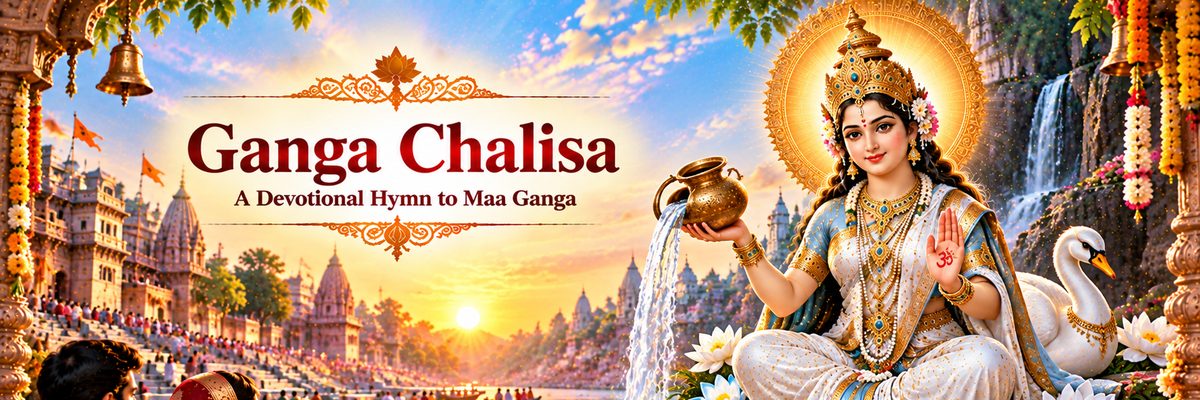
Her image follows: a body white as a lotus petal, outshining a hundred autumn moons; a makara (the crocodile-like river creature) as her mount; a pot of nectar in her hand; gold and jewels. Chaupai 8 makes a striking claim. Ganapati is worshipped before every other god, yet before even that comes the bath in Ganga.
The descent, as the chalisa tells it
Chaupais 9 to 20 follow her from heaven to earth. She lives in Brahma's water pot and serves the Lord's lotus feet. She freed the sixty thousand sons of King Sagar, who had been burnt to ash, and the place where she meets the sea became the tirtha of Gangasagar. When Bhagiratha's penance was complete, Brahma released her stream. She came roaring down (hahrai) and was swallowed up in Shambhu's hair, where she stayed lost for a whole year (varsh paryant) until Bhagiratha prayed to Shiva and received a single drop.
From that drop she became three streams. One went to the underworld as Prabhavati, one to the sky as Mandakini, and one stayed on earth as Jahnavi, "the remover of the dirt of the Kali age". On her way the chalisa names three great tirthas: Haridwar, Prayag (the king of tirthas, with its undying banyan, the Akshayavat), and Kashi.
What the poem promises
The second half of the chalisa praises what she gives, and it is unusually specific:
- Lifting a foot to walk to Ganga brings the fruit of an ashvamedha, the royal horse sacrifice (chaupai 25).
- Remembering her from a hundred yojanas away still wins a place in Vishnu's world (27).
- As wealth is the root of dharma and charity, drinking Ganga water is the root of dharma (29).
- Whoever keeps saying "Ganga, Ganga" will never go hungry or unclothed (33).
- When "Ganga Mai" leaves a dying person's lips, Yama's messengers cover their ears and run (34).
- Reciting her hundred names fulfils every wish (36).
Chaupai 13 sums it up in an image: she is the staircase to heaven (swarg ki seedhi), carrying countless generations of ancestors across. That is why Ganga water, pind daan on her banks, and immersing ashes in her stream are so central to rites for the dead.
The poet and his signature
Chaupai 39 tells us who wrote it: Sundardas, a servant of Ganga, from the village of Kakra, where the sage Durvasa's ashram is. The closing doha adds that he finished it on Rama's birthday in Chaitra (Ram Navami). It gives the year as a chronogram, bhuj nabh dishi, in which words stand for numbers. A poet signing his work like this was common in devotional Hindi poetry of the period, and it shows that the chalisa is a written composition, not an anonymous folk song.
When to read it
The chalisa is read on Ganga Dussehra (Jyeshtha Shukla Dashami, the day she descended), on Ganga Saptami (Vaishakh Shukla Saptami, remembered as her rebirth from Jahnu's ear), and at the great bathing days: Makar Sankranti, Mauni Amavasya and Kartik Purnima. Many people read it at home before or after the evening Ganga aarti, often with a small vessel of Ganga water in front of them. The final doha promises new happiness and wealth every day, and at the end, a seat of honour in a celestial chariot to the city of the gods.
Spotted a mistake?
If you find any grammatical, Hindi, English, mantra-text or other mistake on this page, tell us — we will correct it within 24 hours.