
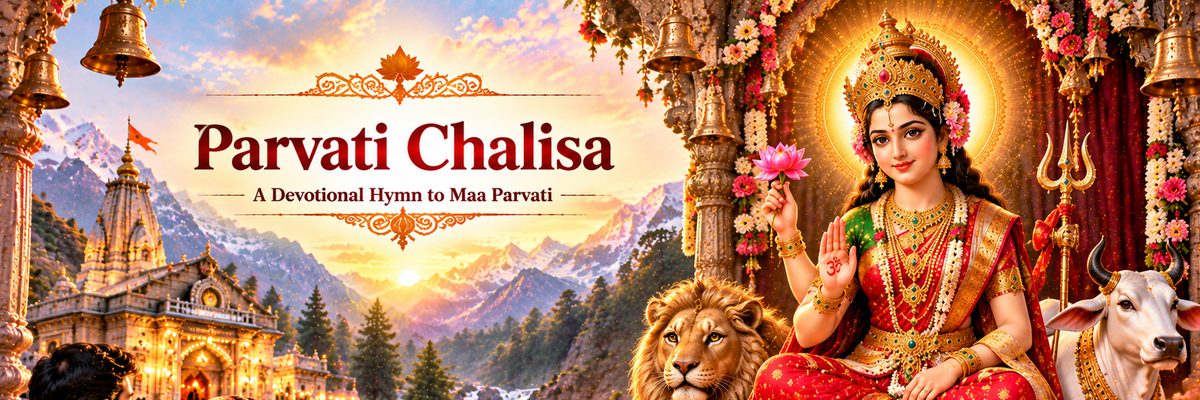
Original text
॥ दोहा ॥ जय गिरी तनये दक्षजे शम्भू प्रिये गुणखानि । गणपति जननी पार्वती अम्बे! शक्ति! भवानि ॥ ॥ चौपाई ॥ ब्रह्मा भेद न तुम्हरो पावे । पंच बदन नित तुमको ध्यावे ॥1॥ षड्मुख कहि न सकत यश तेरो । सहसबदन श्रम करत घनेरो ॥2॥ तेऊ पार न पावत माता । स्थित रक्षा लय हिय सजाता ॥3॥ अधर प्रवाल सदृश अरुणारे । अति कमनीय नयन कजरारे ॥4॥ ललित ललाट विलेपित केशर । कुंकुंम अक्षत शोभा मनहर ॥5॥ कनक बसन कंचुकि सजाए । कटी मेखला दिव्य लहराए ॥6॥ कंठ मदार हार की शोभा । जाहि देखि सहजहि मन लोभा ॥7॥ बालारुण अनंत छबि धारी । आभूषण की शोभा प्यारी ॥8॥ नाना रत्न जड़ित सिंहासन । तापर राजति हरि चतुरानन ॥9॥ इन्द्रादिक परिवार पूजित । जग मृग नाग यक्ष रव कूजित ॥10॥ गिर कैलास निवासिनी जय जय । कोटिक प्रभा विकासिनी जय जय ॥11॥ त्रिभुवन सकल कुटुंब तिहारी । अणु अणु महं तुम्हारी उजियारी ॥12॥ हैं महेश प्राणेश तुम्हारे । त्रिभुवन के जो नित रखवारे ॥13॥ उनसो पति तुम प्राप्त कीन्ह जब । सुकृत पुरातन उदित भए तब ॥14॥ बूढ़ा बैल सवारी जिनकी । महिमा का गावे कोउ तिनकी ॥15॥ सदा श्मशान बिहारी शंकर । आभूषण हैं भुजंग भयंकर ॥16॥ कण्ठ हलाहल को छबि छायी । नीलकण्ठ की पदवी पायी ॥17॥ देव मगन के हित अस किन्हो । विष लै आपु तिनहि अमि दिन्हो ॥18॥ ताकी तुम पत्नी छवि धारिणी । दुरित विदारिणी मंगल कारिणी ॥19॥ देखि परम सौंदर्य तिहारो । त्रिभुवन चकित बनावन हारो ॥20॥ भय भीता सो माता गंगा । लज्जा मय है सलिल तरंगा ॥21॥ सौत समान शम्भू पहआयी । विष्णु पदाब्ज छोड़ि सो धायी ॥22॥ तेहि कों कमल बदन मुरझायो । लखी सत्वर शिव शीश चढ़ायो ॥23॥ नित्यानंद करी बरदायिनी । अभय भक्त कर नित अनपायिनी ॥24॥ अखिल पाप त्रयताप निकन्दिनी । माहेश्वरी हिमालय नन्दिनी ॥25॥ काशी पुरी सदा मन भायी । सिद्ध पीठ तेहि आपु बनायी ॥26॥ भगवती प्रतिदिन भिक्षा दात्री । कृपा प्रमोद सनेह विधात्री ॥27॥ रिपुक्षय कारिणी जय जय अम्बे । वाचा सिद्ध करि अवलम्बे ॥28॥ गौरी उमा शंकरी काली । अन्नपूर्णा जग प्रतिपाली ॥29॥ सब जन की ईश्वरी भगवती । पतिप्राणा परमेश्वरी सती ॥30॥ तुमने कठिन तपस्या कीनी । नारद सों जब शिक्षा लीनी ॥31॥ अन्न न नीर न वायु अहारा । अस्थि मात्रतन भयउ तुम्हारा ॥32॥ पत्र घास को खाद्य न भायउ । उमा नाम तब तुमने पायउ ॥33॥ तप बिलोकी ऋषि सात पधारे । लगे डिगावन डिगी न हारे ॥34॥ तब तब जय जय जय उच्चारेउ । सप्तऋषि निज गेह सिद्धारेउ ॥35॥ सुर विधि विष्णु पास तब आए । वर देने के वचन सुनाए ॥36॥ मांगे उमा वर पति तुम तिनसों । चाहत जग त्रिभुवन निधि जिनसों ॥37॥ एवमस्तु कही ते दोऊ गए । सुफल मनोरथ तुमने लए ॥38॥ करि विवाह शिव सों भामा । पुनः कहाई हर की बामा ॥39॥ जो पढ़िहै जन यह चालीसा । धन जन सुख देइहै तेहि ईसा ॥40॥ ॥ दोहा ॥ कूटि चंद्रिका सुभग शिर, जयति जयति सुख खानि पार्वती निज भक्त हित, रहहु सदा वरदानि । ॥ इति श्री पार्वती चालीसा ॥
Transliteration
Doha: Jai Giri Tanaye Dakshaje, Shambhu Priye Gunkhani. Ganapati Janani Parvati, Ambe! Shakti! Bhavani! Chaupai: 1. Brahma Bhed Na Tumharo Pave, Panch Badan Nit Tumko Dhyave. 2. Shadmukh Kahi Na Sakat Yash Tero, Sahasbadan Shram Karat Ghanero. 3. Teu Paar Na Pavat Mata, Sthit Raksha Lay Hiy Sajata. 4. Adhar Praval Sadrish Arunare, Ati Kamaniya Nayan Kajrare. 5. Lalit Lalat Vilepit Keshar, Kumkum Akshat Shobha Manhar. 6. Kanak Basan Kanchuki Sajaye, Kati Mekhala Divya Lahraye. 7. Kanth Madar Haar Ki Shobha, Jahi Dekhi Sahajahi Man Lobha. 8. Balarun Anant Chhabi Dhari, Abhushan Ki Shobha Pyari. 9. Nana Ratna Jadit Singhasan, Tapar Rajati Hari Chaturanan. 10. Indradik Parivar Pujit, Jag Mrig Naag Yaksh Rav Kujit. 11. Gir Kailas Nivasini Jai Jai, Kotik Prabha Vikasini Jai Jai. 12. Tribhuvan Sakal Kutumb Tihari, Anu Anu Mahan Tumhari Ujiyari. 13. Hain Mahesh Pranesh Tumhare, Tribhuvan Ke Jo Nit Rakhvare. 14. Unso Pati Tum Prapt Keenh Jab, Sukrit Puratan Udit Bhaye Tab. 15. Budha Bail Savari Jinki, Mahima Ka Gave Kou Tinki. 16. Sada Shmashan Bihari Shankar, Abhushan Hain Bhujang Bhayankar. 17. Kanth Halahal Ko Chhabi Chhayi, Neelkanth Ki Padvi Payi. 18. Dev Magan Ke Hit As Kinho, Vish Lai Apu Tinahi Ami Dinho. 19. Taki Tum Patni Chhavi Dharini, Durit Vidarini Mangal Karini. 20. Dekhi Param Saundarya Tiharo, Tribhuvan Chakit Banavan Haro. 21. Bhay Bhita So Mata Ganga, Lajja May Hai Salil Taranga. 22. Saut Saman Shambhu Pah Aayi, Vishnu Padabj Chhodi So Dhayi. 23. Tehi Kon Kamal Badan Murjhayo, Lakhi Satvar Shiv Sheesh Chadhayo. 24. Nityanand Kari Bardayini, Abhay Bhakt Kar Nit Anpayini. 25. Akhil Paap Traytaap Nikandini, Maheshwari Himalay Nandini. 26. Kashi Puri Sada Man Bhayi, Siddh Peeth Tehi Aapu Banayi. 27. Bhagavati Pratidin Bhiksha Datri, Kripa Pramod Saneh Vidhatri. 28. Ripukshay Karini Jai Jai Ambe, Vacha Siddh Kari Avalambe. 29. Gauri Uma Shankari Kali, Annapurna Jag Pratipali. 30. Sab Jan Ki Ishwari Bhagavati, Patiprana Parmeshwari Sati. 31. Tumne Kathin Tapasya Kini, Narad Son Jab Shiksha Lini. 32. Ann Na Neer Na Vayu Ahara, Asthi Matratan Bhayau Tumhara. 33. Patra Ghaas Ko Khadya Na Bhayau, Uma Naam Tab Tumne Payau. 34. Tap Biloki Rishi Saat Padhare, Lage Digavan Digi Na Hare. 35. Tab Tab Jai Jai Jai Uchareu, Saptrishi Nij Geh Sidhareu. 36. Sur Vidhi Vishnu Paas Tab Aaye, Var Dene Ke Vachan Sunaye. 37. Mange Uma Var Pati Tum Tinson, Chahat Jag Tribhuvan Nidhi Jinson. 38. Evamastu Kahi Te Dou Gaye, Suphal Manorath Tumne Laye. 39. Kari Vivah Shiv Son Bhama, Punah Kahayi Har Ki Bama. 40. Jo Padhihai Jan Yah Chalisa, Dhan Jan Sukh Deihai Tehi Isa. Doha: Kuti Chandrika Subhag Shir, Jayati Jayati Sukh Khani. Parvati Nij Bhakt Hit, Rahahu Sada Vardani.
Two births in the first line
The opening doha packs Parvati's whole story into four names. She is Giri tanaye, daughter of the mountain Himavan, and Dakshaje, daughter of Daksha. That second name points to her earlier life as Sati, who gave up her body at her father's sacrifice. She is also Shambhu priye, Shiva's beloved, and Ganapati janani, Ganesha's mother. Then come three plain cries: Ambe, Shakti, Bhavani. The poem ends the same way it begins, with her marriage described as her becoming Hara's wife again (punah kahayi Har ki bama).
The first chaupais make a claim common to Devi hymns: no one can fully describe her. Brahma cannot learn her secret. Five-faced Shiva meditates on her daily. Six-faced Skanda cannot tell her glory, and the thousand-mouthed serpent tires himself trying.
Her beauty, and the husband she chose
Chaupais 4 to 12 are a head-to-toe portrait: lips like coral, kohl-lined eyes, saffron on the forehead with kumkum and rice grains, golden clothes, a shining girdle, a garland of madar flowers (the plant offered to Shiva), the glow of the rising sun. She lives on Kailash, and the three worlds are her family.
Then the poem turns, almost with a smile, to her husband. He rides an old bull, wanders the cremation grounds and wears fearsome snakes as jewellery. His throat is dark with the halahal poison he drank so the gods could have nectar, which is how he became Neelkantha. Getting such a husband, the chalisa says, was the fruit of merit from her past lives. The contrast is deliberate: the most beautiful goddess chose the most unworldly god.
Ganga runs to Shiva's head
Chaupais 20 to 23 tell a story most readers won't expect. Seeing Parvati's beauty, which astonishes the three worlds, Mother Ganga becomes afraid, and her waves turn bashful. Like a co-wife (saut saman) she leaves Vishnu's lotus feet, where she rises, and runs to Shiva. Her lotus face wilts, and Shiva quickly lifts her onto his head.
It is a poet's playful explanation of why Ganga sits in Shiva's matted hair, written from Parvati's side. It is not the Puranic account, in which Shiva catches the falling river to break its force for Bhagiratha. Read it as devotion with a touch of humour, not as a rival version of the myth.
Kashi, alms and the name Uma
The middle verses name her many forms: Maheshwari, daughter of the Himalaya, Gauri, Uma, Shankari, Kali and Annapurna, who sustains the world. One detail points to Kashi. The city is dear to her and she made it a siddha peetha. She is called pratidin bhiksha datri, the one who gives alms every day. That is the Annapurna of Kashi, who feeds even Shiva when he comes as a beggar.
Chaupais 31 to 39 tell how she won Shiva. On Narada's advice she began a harsh penance, giving up food, water and finally even air, until she was little more than bone. When she would not eat even leaves or grass, the chalisa says, she gained the name Uma. (Kalidasa's Kumarasambhava explains the names differently. The leaf fast makes her Aparna, and Uma comes from her mother's cry "u ma", "oh, don't".) The seven sages came to shake her resolve and failed, so they praised her and left. Then the gods, with Brahma and Vishnu, offered her a boon. She asked for Shiva as her husband, and the marriage followed.
When it is read
The chalisa itself names no day. Its last chaupai promises only that whoever reads it will be given wealth, family and happiness by Isha (Shiva). In practice it is read on Mondays together with Shiva puja, on Hartalika Teej and Gangaur, on the Mangala Gauri Tuesdays of Shravan, and during Navratri. Many unmarried women read it hoping for a good husband, because the hymn's main story is about a woman who chose her husband and would not be talked out of it.
The closing doha asks her, crowned with the crescent moon, to stay "always giving boons" for her devotees' sake.
Spotted a mistake?
If you find any grammatical, Hindi, English, mantra-text or other mistake on this page, tell us — we will correct it within 24 hours.