
Original text
॥ माँ अन्नपूर्णा चालीसा ॥ ॥ दोहा ॥ विश्वेश्वर पदपदम की रज निज शीश लगाय । अन्नपूर्णे, तव सुयश बरनौं कवि मतिलाय । ॥ चौपाई ॥ नित्य आनंद करिणी माता । वर अरु अभय भाव प्रख्याता ॥1॥ जय ! सौंदर्य सिंधु जग जननी । अखिल पाप हर भव-भय-हरनी ॥2॥ श्वेत बदन पर श्वेत बसन पुनि । संतन तुव पद सेवत ऋषिमुनि ॥3॥ काशी पुराधीश्वरी माता । माहेश्वरी सकल जग त्राता ॥4॥ वृषभारुढ़ नाम रुद्राणी । विश्व विहारिणि जय ! कल्याणी ॥5॥ पतिदेवता सुतीत शिरोमणि । पदवी प्राप्त कीन्ह गिरी नंदिनि ॥6॥ पति विछोह दुःख सहि नहिं पावा । योग अग्नि तब बदन जरावा ॥7॥ देह तजत शिव चरण सनेहू । राखेहु जात हिमगिरि गेहू ॥8॥ प्रकटी गिरिजा नाम धरायो । अति आनंद भवन मँह छायो ॥9॥ नारद ने तब तोहिं भरमायहु । ब्याह करन हित पाठ पढ़ायहु ॥10॥ ब्रहमा वरुण कुबेर गनाये । देवराज आदिक कहि गाये ॥11॥ सब देवन को सुजस बखानी । मति पलटन की मन मँह ठानी ॥12॥ अचल रहीं तुम प्रण पर धन्या । कीहनी सिद्ध हिमाचल कन्या ॥13॥ निज कौ तब नारद घबराये । तब प्रण पूरण मंत्र पढ़ाये ॥14॥ करन हेतु तप तोहिं उपदेशेउ । संत बचन तुम सत्य परेखेहु ॥15॥ गगनगिरा सुनि टरी न टारे । ब्रहां तब तुव पास पधारे ॥16॥ कहेउ पुत्रि वर माँगु अनूपा । देहुँ आज तुव मति अनुरुपा ॥17॥ तुम तप कीन्ह अलौकिक भारी । कष्ट उठायहु अति सुकुमारी ॥18॥ अब संदेह छाँड़ि कछु मोसों । है सौगंध नहीं छल तोसों ॥19॥ करत वेद विद ब्रहमा जानहु । वचन मोर यह सांचा मानहु ॥20॥ तजि संकोच कहहु निज इच्छा । देहौं मैं मनमानी भिक्षा ॥21॥ सुनि ब्रहमा की मधुरी बानी । मुख सों कछु मुसुकाय भवानी ॥22॥ बोली तुम का कहहु विधाता । तुम तो जगके स्रष्टाधाता ॥23॥ मम कामना गुप्त नहिं तोंसों । कहवावा चाहहु का मोंसों ॥24॥ दक्ष यज्ञ महँ मरती बारा । शंभुनाथ पुनि होहिं हमारा ॥25॥ सो अब मिलहिं मोहिं मनभाये । कहि तथास्तु विधि धाम सिधाये ॥26॥ तब गिरिजा शंकर तव भयऊ । फल कामना संशयो गयऊ ॥27॥ चन्द्रकोटि रवि कोटि प्रकाशा । तब आनन महँ करत निवासा ॥28॥ माला पुस्तक अंकुश सोहै । कर मँह अपर पाश मन मोहै ॥29॥ अन्नपूर्णे ! सदापूर्णे । अज अनवघ अनंत पूर्णे ॥30॥ कृपा सागरी क्षेमंकरि माँ । भव विभूति आनंद भरी माँ ॥31॥ कमल विलोचन विलसित भाले । देवि कालिके चण्डि कराले ॥32॥ तुम कैलास मांहि है गिरिजा । विलसी आनंद साथ सिंधुजा ॥33॥ स्वर्ग महालक्ष्मी कहलायी । मर्त्य लोक लक्ष्मी पदपायी ॥34॥ विलसी सब मँह सर्व सरुपा । सेवत तोहिं अमर पुर भूपा ॥35॥ जो पढ़िहहिं यह तव चालीसा । फल पाइंहहि शुभ साखी ईसा ॥36॥ प्रात समय जो जन मन लायो । पढ़िहहिं भक्ति सुरुचि अघिकायो ॥37॥ स्त्री कलत्र पति मित्र पुत्र युत । परमैश्रवर्य लाभ लहि अद्भुत ॥38॥ राज विमुख को राज दिवावै । जस तेरो जन सुजस बढ़ावै ॥39॥ पाठ महा मुद मंगल दाता । भक्त मनोवांछित निधि पाता ॥40॥ ॥ दोहा ॥ जो यह चालीसा सुभग, पढ़ि नावैंगे माथ । तिनके कारज सिद्ध सब, साखी काशी नाथ ॥
Transliteration
Doha: Vishweshwar Padpadam Ki Raj Nij Sheesh Lagay. Annapurne, Tav Suyash Baranaun Kavi Matilay. Chaupai: 1. Nitya Anand Karini Mata, Var Aru Abhay Bhaav Prakhyata. 2. Jai! Saundarya Sindhu Jag Janani, Akhil Paap Har Bhav-Bhay-Harani. 3. Shwet Badan Par Shwet Basan Puni, Santan Tuv Pad Sevat Rishimuni. 4. Kashi Puradhishwari Mata, Maheshwari Sakal Jag Trata. 5. Vrishbharudh Naam Rudrani, Vishwa Viharini Jai! Kalyani. 6. Patidevata Sutit Shiromani, Padvi Prapt Keenh Giri Nandini. 7. Pati Vichhoh Dukh Sahi Nahin Pava, Yog Agni Tab Badan Jarava. 8. Deh Tajat Shiv Charan Sanehu, Rakhehu Jaat Himgiri Gehu. 9. Prakati Girija Naam Dharayo, Ati Anand Bhavan Manh Chhayo. 10. Narad Ne Tab Tohin Bharmayahu, Byah Karan Hit Paath Padhayahu. 11. Brahma Varun Kuber Ganaye, Devraj Aadik Kahi Gaye. 12. Sab Devan Ko Sujas Bakhani, Mati Paltan Ki Man Manh Thani. 13. Achal Rahin Tum Pran Par Dhanya, Keenhi Siddh Himachal Kanya. 14. Nij Kau Tab Narad Ghabraye, Tab Pran Puran Mantra Padhaye. 15. Karan Hetu Tap Tohin Updesheu, Sant Bachan Tum Satya Parekhehu. 16. Gagangira Suni Tari Na Taare, Brahma Tab Tuv Paas Padhare. 17. Kaheu Putri Var Mangu Anupa, Dehun Aaj Tuv Mati Anurupa. 18. Tum Tap Keenh Alaukik Bhari, Kasht Uthayahu Ati Sukumari. 19. Ab Sandeh Chhandi Kachhu Moson, Hai Saugandh Nahin Chhal Toson. 20. Karat Ved Vid Brahma Janahu, Vachan Mor Yah Sancha Manahu. 21. Taji Sankoch Kahahu Nij Ichchha, Dehaun Main Manmani Bhiksha. 22. Suni Brahma Ki Madhuri Bani, Mukh Son Kachhu Musukay Bhavani. 23. Boli Tum Ka Kahahu Vidhata, Tum To Jag Ke Srashta Dhata. 24. Mam Kamana Gupt Nahin Tonson, Kahvava Chahahu Ka Monson. 25. Daksh Yagya Manh Marti Bara, Shambhunath Puni Hohin Hamara. 26. So Ab Milahin Mohin Manbhaye, Kahi Tathastu Vidhi Dhaam Sidhaye. 27. Tab Girija Shankar Tav Bhayau, Phal Kamana Sanshayo Gayau. 28. Chandrakoti Ravi Koti Prakasha, Tab Aanan Manh Karat Nivasa. 29. Mala Pustak Ankush Sohai, Kar Manh Apar Paash Man Mohai. 30. Annapurne! Sadapurne, Aj Anavagh Anant Purne. 31. Kripa Sagari Kshemankari Maa, Bhav Vibhuti Anand Bhari Maa. 32. Kamal Vilochan Vilasit Bhale, Devi Kalike Chandi Karale. 33. Tum Kailas Manhi Hai Girija, Vilasi Anand Saath Sindhuja. 34. Swarg Mahalakshmi Kahlayi, Martya Lok Lakshmi Padpayi. 35. Vilasi Sab Manh Sarva Sarupa, Sevat Tohin Amar Pur Bhupa. 36. Jo Padhihahin Yah Tav Chalisa, Phal Painhahi Shubh Sakhi Isa. 37. Praat Samay Jo Jan Man Layo, Padhihahin Bhakti Suruchi Adhikayo. 38. Stri Kalatra Pati Mitra Putra Yut, Paramaishvarya Labh Lahi Adbhut. 39. Raj Vimukh Ko Raj Divavai, Jas Tero Jan Sujas Badhavai. 40. Paath Maha Mud Mangal Data, Bhakt Manovanchhit Nidhi Pata. Doha: Jo Yah Chalisa Subhag, Padhi Navainge Maath. Tinke Karaj Siddh Sab, Sakhi Kashi Nath.
A Kashi hymn
The opening doha places this chalisa precisely. The poet begins by touching to his head "the dust of Vishweshwar's lotus feet" (Vishweshwar is Kashi Vishwanath) and only then sings Annapurna's fame. The closing doha ends the same way: whoever reads it will have every task succeed, "with the Lord of Kashi as witness". In between, chaupai 4 calls her Kashi puradhishwari, the ruling goddess of the city. Her temple stands a few steps from Vishwanath's, and in Kashi the two are worshipped as a pair: Shiva as the renunciate and Annapurna as the one who feeds the world, including him.
Her form
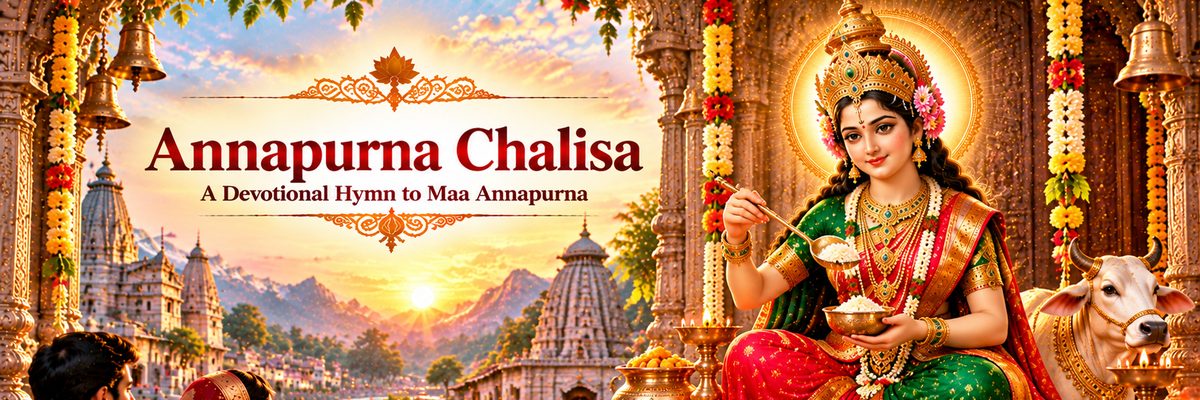
The first five chaupais describe her: always giving joy, famous for the gestures of boon and fearlessness, an ocean of beauty, pale-bodied and dressed in white, served by sages, riding a bull as Rudrani. Later, chaupai 29 gives her four hands a rosary, a book, a goad and a noose. That is worth noticing, because popular pictures of Annapurna usually show a ladle and a bowl of food. The chalisa instead gives her the emblems of the great Devi, and chaupais 32 to 34 say plainly that she is also Kalika and Chandi, Girija on Kailash, Mahalakshmi in heaven and Lakshmi on earth.
Sati's death and Girija's one wish
Most of the chalisa (6–27) tells the story of how she became Shiva's wife a second time. As Sati, she could not bear the pain of being separated from her husband and burned her body in the fire of yoga. With love for Shiva's feet she was reborn in the house of Himavan, and the palace filled with joy when Girija was born.
Here the chalisa gives Narada a part not found in every telling. First he tries to confuse her, praising Brahma, Varuna, Kubera and Indra as husbands, "resolved to change her mind" (10–12). She does not move, and the daughter of the Himalaya succeeds. Narada, now anxious about his own standing, teaches her the mantra and penance that will fulfil her vow. A voice from the sky confirms it, and Brahma comes to offer a boon.
The dialogue that follows (17–26) is the most human passage in the poem. Brahma praises her penance, swears he means no trick, and tells her to name any wish without hesitation. Bhavani smiles: "Why do you ask, Creator? You made the world; my wish is not hidden from you. Why make me say it? When I was dying at Daksha's sacrifice, I wished that Shambhunath would be mine again." Brahma says tathastu, so be it, and leaves, and Girija becomes Shankar's.
An echo of the Annapurna Stotram
Chaupai 30 breaks into Sanskrit-flavoured praise: Annapurne! Sadapurne, "O full of food, O ever-full". The phrase comes from the closing verse of the Annapurna Stotram traditionally attributed to Adi Shankaracharya, which asks her for alms: "Annapurne sadapurne Shankara prana vallabhe… bhiksham dehi", "O beloved of Shankara's life, give me alms". Hearing that line inside a Hindi chalisa is a reminder of how closely the two hymns are linked in Kashi worship.
When to read it, and what it promises
The chalisa is read in the morning, as chaupai 37 recommends; on Annapurna Jayanti (Margashirsha Purnima); during the Annapurna vrat in Margashirsha; and at Annakut, the day after Diwali, when food offerings are piled high. Many households read it before cooking a large meal or on moving into a new home, asking that the kitchen never run empty. The promised fruits (38–40) are wide: a joyful family, great prosperity, a lost position or kingdom restored to whoever has fallen from it, and the treasure each devotee most wants.
Spotted a mistake?
If you find any grammatical, Hindi, English, mantra-text or other mistake on this page, tell us — we will correct it within 24 hours.