
Original text
॥ दोहा ॥ बन्दउ माँ शाकम्भरी चरणगुरू का धरकर ध्यान । शाकम्भरी माँ चालीसा का करे प्रख्यान ॥ आनंदमयी जगदम्बिका अनन्तरूप भण्डार । माँ शाकम्भरी की कृपा बनी रहे हर बार ॥ ॥ चौपाई ॥ शाकम्भरी माँ अति सुखकारी । पूर्ण ब्रह्म सदा दुःखहारी ॥1॥ कारण करण जगत की दाता । आनंद चेतन विश्वविधाता ॥2॥ अमर जोत है मात तुम्हारी । तुम ही सदा भगतन हितकारी ॥3॥ महिमा अमित अथाह अपर्णा । ब्रह्म हरी हर मात अपर्णा ॥4॥ ज्ञान राशि हो दीन दयाली । शरणागत घर भरती खुशहाली ॥5॥ नारायणी तुम ब्रह्म प्रकाशी । जल-थल-नभ हो अविनाशी ॥6॥ कमल कान्तिमय शान्ति अनूपा । जोतमन मर्यादा जोत स्वरूपा ॥7॥ जब जब भक्तों ने है ध्याई । जोत अपनी प्रकट हो आई ॥8॥ प्यारी बहन के संग विराजे । मात शताक्षि संग ही साजे ॥9॥ भीम भयंकर रूप कराली । तीसरी बहन की जोत निराली ॥10॥ चौथी बहन भ्रामरी तेरी । अद्भुत चंचल चित्त चितेरी ॥11॥ सम्मुख भैरव वीर खड़ा है । दानव दल से खूब लड़ा है ॥12॥ शिव शंकर प्रभु भोले भण्डारी । सदा रहे सन्तन हितकारी ॥13॥ हनुमत माता लौकड़ा तेरा । सदा शाकम्भरी माँ का चेरा ॥14॥ हाथ ध्वजा हनुमान विराजे । युद्ध भूमि में माँ संग साजे ॥15॥ कालरात्रि धारे कराली । बहिन मात की अति विकराली ॥16॥ दश विद्या नव दुर्गा आदि । ध्याते तुम्हें परमार्थ वादि ॥17॥ अष्ट सिद्धि गणपति जी दाता । बाल रूप शरणागत माता ॥18॥ माँ भंडारे के रखवारी । प्रथम पूजने की अधिकारी ॥19॥ जग की एक भ्रमण की कारण । शिव शक्ति हो दुष्ट विदारण ॥20॥ भूरा देव लौकडा दूजा । जिसकी होती पहली पूजा ॥21॥ बली बजरंगी तेरा चेरा । चले संग यश गाता तेरा ॥22॥ पांच कोस की खोल तुम्हारी । तेरी लीला अति विस्तारी ॥23॥ रक्त दन्तिका तुम्हीं बनी हो । रक्त पान कर असुर हनी हो ॥24॥ रक्तबीज का नाश किया था । छिन्न मस्तिका रूप लिया था ॥25॥ सिद्ध योगिनी सहस्या राजे । सात कुण्ड में आप विराजे ॥26॥ रूप मराल का तुमने धारा । भोजन दे दे जन जन तारा ॥27॥ शोक पात से मुनि जन तारे । शोक पात जन दुःख निवारे ॥28॥ भद्र काली कमलेश्वर आई । कान्त शिवा भगतन सुखदाई ॥29॥ भोग भण्डार हलवा पूरी । ध्वजा नारियल तिलक सिंदूरी ॥30॥ लाल चुनरी लगती प्यारी । ये ही भेंट ले दुःख निवारी ॥31॥ अंधे को तुम नयन दिखाती । कोढ़ी काया सफल बनाती ॥32॥ बाँझन के घर बाल खिलाती । निर्धन को धन खूब दिलाती ॥33॥ सुख दे दे भगत को तारे । साधु सज्जन काज संवारे ॥34॥ भूमण्डल से जोत प्रकाशी । शाकम्भरी माँ दुःख की नाशी ॥35॥ मधुर मधुर मुस्कान तुम्हारी । जन्म जन्म पहचान हमारी ॥36॥ चरण कमल तेरे बलिहारी । जै जै जै जग जननी तुम्हारी ॥37॥ कांता चालीसा अति सुखकारी । संकट दुःख दुविधा सब टारी ॥38॥ जो कोई जन चालीसा गावे । मात कृपा अति सुख पावे ॥39॥ कान्ता प्रसाद जगाधरी वासी । भाव शाकम्भरी तत्त्व प्रकाशी ॥40॥ बार बार कहें कर जोरी । विनती सुन शाकम्भरी मोरी ॥41॥ मैं सेवक हूँ दास तुम्हारा । जननी करना भव निस्तारा ॥42॥ यह सौ बार पाठ करे कोई । मातु कृपा अधिकारी सोई ॥43॥ संकट कष्ट को मात निवारे । शोक मोह शत्रुन संहारे ॥44॥ निर्धन धन सुख संपत्ति पावे । श्रद्धा भक्ति से चालीसा गावे ॥45॥ नौ रात्रों तक दीप जगावे । सपरिवार मगन हो गावे ॥46॥ प्रेम से पाठ करे मन लाई । कान्त शाकम्भरी अति सुखदाई ॥47॥ ॥ दोहा ॥ दुर्गासुर संहारणी करणि जग के काज । शाकम्भरी जननि शिवे रखना मेरी लाज ॥ युग युग तक व्रत तेरा करे भक्त उद्धार । वो ही तेरा लाड़ला आवे तेरे द्वार ॥
Transliteration
Doha Bandau Maa Shaakambhari Charanguru Ka Dharkar Dhyaan, Shaakambhari Maa Chalisa Ka Kare Prakhyaan. Aanandmayi Jagdambika Anantaroop Bhandaar, Maa Shaakambhari Ki Kripa Bani Rahe Har Baar. Chaupai Shaakambhari Maa Ati Sukhkaari, Poorna Brahm Sada Dukhhaari (1) Kaaran Karan Jagat Ki Daata, Aanand Chetan Vishvavidhaata (2) Amar Jot Hai Maat Tumhaari, Tum Hi Sada Bhagtan Hitkaari (3) Mahima Amit Athaah Aparna, Brahm Hari Har Maat Aparna (4) Jnaan Raashi Ho Deen Dayaali, Sharnaagat Ghar Bharti Khushhaali (5) Naaraayani Tum Brahm Prakaashi, Jal-Thal-Nabh Ho Avinaashi (6) Kamal Kaantimay Shaanti Anoopa, Jotman Maryaada Jot Svaroopa (7) Jab Jab Bhakton Ne Hai Dhyaai, Jot Apni Prakat Ho Aai (8) Pyaari Bahan Ke Sang Viraaje, Maat Shataakshi Sang Hi Saaje (9) Bheem Bhayankar Roop Karaali, Teesri Bahan Ki Jot Niraali (10) Chauthi Bahan Bhraamari Teri, Adbhut Chanchal Chitta Chiteri (11) Sammukh Bhairav Veer Khada Hai, Daanav Dal Se Khoob Lada Hai (12) Shiv Shankar Prabhu Bhole Bhandaari, Sada Rahe Santan Hitkaari (13) Hanumat Maata Laukda Tera, Sada Shaakambhari Maa Ka Chera (14) Haath Dhvaja Hanumaan Viraaje, Yuddh Bhoomi Mein Maa Sang Saaje (15) Kaalraatri Dhaare Karaali, Bahin Maat Ki Ati Vikaraali (16) Dash Vidya Nav Durga Aadi, Dhyaate Tumhen Parmaarth Vaadi (17) Asht Siddhi Ganapati Ji Daata, Baal Roop Sharnaagat Maata (18) Maa Bhandaare Ke Rakhvaari, Pratham Poojne Ki Adhikaari (19) Jag Ki Ek Bhraman Ki Kaaran, Shiv Shakti Ho Dusht Vidaaran (20) Bhoora Dev Laukda Dooja, Jiski Hoti Pahli Pooja (21) Bali Bajrangi Tera Chera, Chale Sang Yash Gaata Tera (22) Paanch Kos Ki Khol Tumhaari, Teri Leela Ati Vistaari (23) Rakt Dantika Tumhi Bani Ho, Rakt Paan Kar Asur Hani Ho (24) Raktbeej Ka Naash Kiya Tha, Chhinn Mastika Roop Liya Tha (25) Siddha Yogini Sahasya Raaje, Saat Kund Mein Aap Viraaje (26) Roop Maraal Ka Tumne Dhaara, Bhojan De De Jan Jan Taara (27) Shok Paat Se Muni Jan Taare, Shok Paat Jan Dukh Nivaare (28) Bhadra Kaali Kamleshvar Aai, Kaant Shiva Bhagtan Sukhdaai (29) Bhog Bhandaar Halva Poori, Dhvaja Naariyal Tilak Sindoori (30) Laal Chunri Lagti Pyaari, Ye Hi Bhent Le Dukh Nivaari (31) Andhe Ko Tum Nayan Dikhaati, Kodhi Kaaya Saphal Banaati (32) Baanjhan Ke Ghar Baal Khilaati, Nirdhan Ko Dhan Khoob Dilaati (33) Sukh De De Bhagat Ko Taare, Saadhu Sajjan Kaaj Sanvaare (34) Bhoomandal Se Jot Prakaashi, Shaakambhari Maa Dukh Ki Naashi (35) Madhur Madhur Muskaan Tumhaari, Janam Janam Pahchaan Hamaari (36) Charan Kamal Tere Balihaari, Jai Jai Jai Jag Janani Tumhaari (37) Kaanta Chalisa Ati Sukhkaari, Sankat Dukh Duvidha Sab Taari (38) Jo Koi Jan Chalisa Gaave, Maat Kripa Ati Sukh Paave (39) Kaanta Prasaad Jagadhari Vaasi, Bhaav Shaakambhari Tattva Prakaashi (40) Baar Baar Kahen Kar Jori, Vinati Sun Shaakambhari Mori (41) Main Sevak Hoon Daas Tumhaara, Janani Karna Bhav Nistaara (42) Yah Sau Baar Paath Kare Koi, Maatu Kripa Adhikaari Soi (43) Sankat Kasht Ko Maat Nivaare, Shok Moh Shatrun Sanhaare (44) Nirdhan Dhan Sukh Sampatti Paave, Shraddha Bhakti Se Chalisa Gaave (45) Nau Raatron Tak Deep Jagaave, Saparivaar Magan Ho Gaave (46) Prem Se Paath Kare Man Laai, Kaant Shaakambhari Ati Sukhdaai (47) Doha Durgaasur Sanhaarini Karani Jag Ke Kaaj, Shaakambhari Janani Shive Rakhna Meri Laaj. Yug Yug Tak Vrat Tera Kare Bhakt Uddhaar, Vo Hi Tera Laadla Aave Tere Dvaar.
Who is Shakambhari?
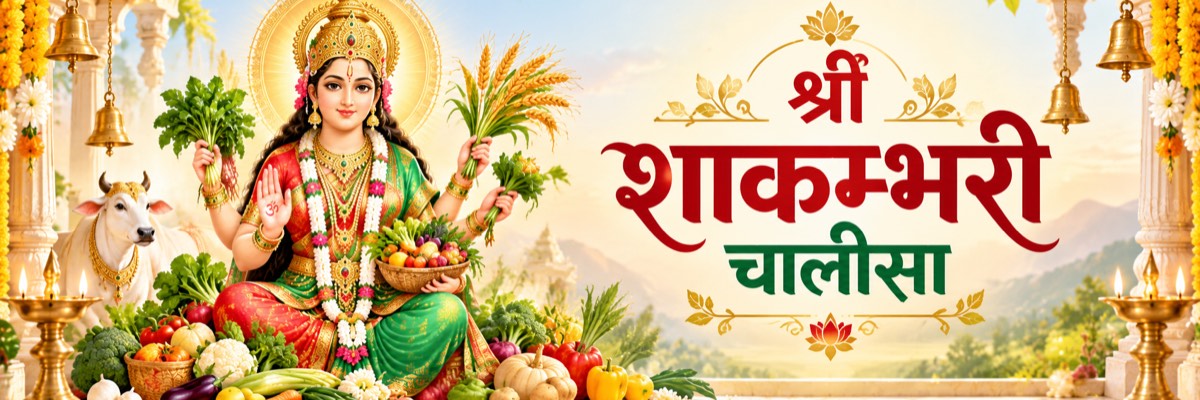
Shakambhari — "she who bears (and feeds the world with) vegetables" — is a form of Durga whose story the Devi herself tells in the eleventh chapter of the Durga Saptashati. When the rains fail for a hundred years and there is no water, she says, she will appear on earth, not born from a womb. She will look on the sages with a hundred eyes and be praised as Shatakshi; she will sustain the whole world with life-giving vegetables grown from her own body until the rains return, and be famed as Shakambhari; and in that form she will slay the great asura Durgama, which is why she is called Durga (Saptashati 11.46–50).
Her best-known shrines are the Shakumbhari Devi temple in the Shivalik hills of Saharanpur district, Uttar Pradesh, and the Shakambhari Mata temple at Sambhar in Rajasthan, long honoured as the family goddess of the Chauhans. Her festival is Shakambhari Navratri, from Paush Shukla Ashtami to Paush Purnima, the full moon that is kept as Shakambhari Jayanti.
Who wrote this chalisa
Unusually, this chalisa names its poet. Chaupai 40 says "Kanta Prasad Jagadhari vasi" — Kanta Prasad, a resident of Jagadhari (Jagadhri, in Haryana, not far from the Saharanpur shrine) — and he signs himself "Kant" or "Kanta" in several other lines ("kant shiva bhagatan sukhdai", "kanta chalisa ati sukhkari"). The sources do not give his dates. The local details — Bhura Dev, the five-kos valley, the sisters — point to the Saharanpur shrine.
What the verses say
- Opening doha and chaupais 1–8: Shakambhari is full Brahman, cause and doer of the world, Aparna, Narayani, present in water, land and sky. Her eternal flame (jot) appears whenever devotees meditate on her.
- Chaupais 9–11 — the four sisters: beside her sits her dear sister Shatakshi; the fearsome Bhima is the third sister, and Bhramari the fourth. These are the same forms the Durga Saptashati names together with Shakambhari in its eleventh chapter.
- Chaupais 12–23 — her court and its guardians: the hero Bhairav stands before her, having fought the demon hosts; Shiva is ever kind to the saints; Hanuman, flag in hand, is her laukda (langur guardian) and servant, at her side in battle; Kalaratri, the ten Mahavidyas and the nine Durgas worship her; Ganapati is there in child form. Bhura Dev, "the second laukda", is the one "whose worship comes first", and her valley (khol) stretches five kos.
- Chaupais 24–29 — her forms and deeds: as Raktadantika she drank the asuras' blood; she destroyed Raktabija and took the form of Chhinnamasta; siddha yoginis attend her and she dwells in seven kunds; she took the form of a swan and saved people by feeding them.
- Chaupais 30–35 — offerings and boons: a bhandara of halwa-puri, a flag, a coconut, a sindoor tilak and a red chunri are the offerings she loves; she gives sight to the blind, heals the leper's body, gives children to the childless and wealth to the poor.
- Chaupais 36–47 and closing dohas: the poet's prayer and the phalashruti: whoever recites it a hundred times earns her grace; whoever keeps a lamp burning for the nine nights and sings it with the family is freed from trouble, grief and enemies. The last doha calls her the slayer of Durgasur (Durgama), and says the devotee who keeps her vrat "age after age" is her beloved child.
When to recite it
- Through Shakambhari Navratri (Paush Shukla Ashtami to Purnima), with a lamp kept burning for the nine nights, as chaupai 46 says.
- On Shakambhari Jayanti (Paush Purnima), when devotees offer fresh vegetables, fruit and greens to the Devi and give food to others.
- In both regular Navratris, on Fridays and Ashtami, and when going to Shakumbhari Devi or Sambhar.
- The chalisa itself recommends a hundred recitations for a special wish (chaupai 43).
Text and variants
The text above follows sanskritdocuments.org ("Shri Shakambhari Chalisa 1"), checked against Shubh Panchang. The two agree almost line for line, but Shubh Panchang leaves out three chaupais — "Hanumat mata laukda tera" (14), "Kanta Prasad Jagadhari vasi" (40) and "yah sau baar paath kare koi" (43) — and in one place joins two half-lines so that the rhyme breaks. We have followed sanskritdocuments.org, and taken four small corrections from Shubh Panchang where the first source has an obvious slip: anupa → anoopa (7), a misplaced anusvara in anand (2), dubidha sab tari (38) and vinati (41). sanskritdocuments.org also has a second, different Shakambhari Chalisa by a poet who signs himself Krishnanand. It is written in a more Sanskritised style and tells the Durgama story in detail. Don't mix the two when reciting.
Frequently asked questions
Is Shakambhari a form of Durga?
Yes. In the Durga Saptashati (chapter 11) the Devi says she will appear as Shatakshi and Shakambhari in a great drought, and that killing the asura Durgama in that form will give her the name Durga.
Who are Shatakshi, Bhima and Bhramari in the chalisa?
The chalisa calls them Shakambhari's sisters. All three are forms the Devi foretells in the eleventh chapter of the Durga Saptashati: Shatakshi, the hundred-eyed; Bhima, the terrible form she takes on the Himalaya; and Bhramari, the form of a swarm of bees.
Who is Bhura Dev?
A guardian deity of the Shakambhari shrine, whom the chalisa calls her second "laukda" (langur guardian) and "the one whose worship comes first". Pilgrims to Shakumbhari Devi in Saharanpur traditionally pay their respects to Bhura Dev before the goddess.
When is Shakambhari Navratri?
From Paush Shukla Ashtami to Paush Purnima, usually in late December or January. The Purnima is Shakambhari Jayanti.
Who wrote the Shakambhari Chalisa?
Kanta Prasad of Jagadhari, who names himself in chaupai 40 and signs "Kant" or "Kanta" in several other lines. A different Shakambhari Chalisa, signed by Krishnanand, also exists.
What should be offered to Shakambhari?
The chalisa names halwa-puri, a flag, a coconut, a sindoor tilak and a red chunri. Because of her name and story, fresh vegetables, fruits and greens are also offered, especially on Shakambhari Jayanti.
How many times should it be recited?
Once daily is the common practice. The chalisa itself says a hundred recitations make one worthy of the Mother's grace, and it asks for the lamp to be kept lit through the nine nights of Navratri.
Spotted a mistake?
If you find any grammatical, Hindi, English, mantra-text or other mistake on this page, tell us — we will correct it within 24 hours.