
Original text
॥ दोहा ॥ जय जय जल देवता, जय ज्योति स्वरूप । अमर उडेरो लाल जय, झुलेलाल अनूप ॥ ॥ चौपाई ॥ रतनलाल रतनाणी नंदन । जयति देवकी सुत जग वंदन ॥ दरियाशाह वरुण अवतारी । जय जय लाल साईं सुखकारी ॥ जय जय होय धर्म की भीरा । जिन्दा पीर हरे जन पीरा ॥ संवत दस सौ सात मंझरा । चैत्र शुक्ल द्वितिया भगऊ वारा ॥4॥ ग्राम नसरपुर सिंध प्रदेशा । प्रभु अवतरे हरे जन कलेशा ॥ सिन्धु वीर ठट्ठा राजधानी । मिरखशाह नऊप अति अभिमानी ॥ कपटी कुटिल क्रूर कूविचारी । यवन मलिन मन अत्याचारी ॥ धर्मान्तरण करे सब केरा । दुखी हुए जन कष्ट घनेरा ॥8॥ पिटवाया हाकिम ढिंढोरा । हो इस्लाम धर्म चाहुँओरा ॥ सिन्धी प्रजा बहुत घबराई । इष्ट देव को टेर लगाई ॥ वरुण देव पूजे बहुंभाती । बिन जल अन्न गए दिन राती ॥ सिन्धी तीर सब दिन चालीसा । घर घर ध्यान लगाये ईशा ॥12॥ गरज उठा नद सिन्धु सहसा । चारो और उठा नव हरषा ॥ वरुणदेव ने सुनी पुकारा । प्रकटे वरुण मीन असवारा ॥ दिव्य पुरुष जल ब्रह्मा स्वरुपा । कर पुष्तक नवरूप अनूपा ॥ हर्षित हुए सकल नर नारी । वरुणदेव की महिमा न्यारी ॥16॥ जय जय कार उठी चाहुँओरा । गई रात आने को भौंरा ॥ मिरखशाह नऊप अत्याचारी । नष्ट करूँगा शक्ति सारी ॥ दूर अधर्म, हरण भू भारा । शीघ्र नसरपुर में अवतारा ॥ रतनराय रातनाणी आँगन । खेलूँगा, आऊँगा शिशु बन ॥20॥ रतनराय घर ख़ुशी आई । झुलेलाल अवतारे सब देय बधाई ॥ घर घर मंगल गीत सुहाए । झुलेलाल हरन दुःख आए ॥ मिरखशाह तक चर्चा आई । भेजा मंत्री क्रोध अधिकाई ॥ मंत्री ने जब बाल निहारा । धीरज गया हृदय का सारा ॥24॥ देखि मंत्री साईं की लीला । अधिक विचित्र विमोहन शीला ॥ बालक धीखा युवा सेनानी । देखा मंत्री बुद्धि चाकरानी ॥ योद्धा रूप दिखे भगवाना । मंत्री हुआ विगत अभिमाना ॥ झुलेलाल दिया आदेशा । जा तव नऊपति कहो संदेशा ॥28॥ मिरखशाह नऊप तजे गुमाना । हिन्दू मुस्लिम एक समाना ॥ बंद करो नित्य अत्याचारा । त्यागो धर्मान्तरण विचारा ॥ लेकिन मिरखशाह अभिमानी । वरुणदेव की बात न मानी ॥ एक दिवस हो अश्व सवारा । झुलेलाल गए दरबारा ॥32॥ मिरखशाह नऊप ने आज्ञा दी । झुलेलाल बनाओ बन्दी ॥ किया स्वरुप वरुण का धारण । चारो और हुआ जल प्लावन ॥ दरबारी डूबे उतराये । नऊप के होश ठिकाने आये ॥ नऊप तब पड़ा चरण में आई । जय जय धन्य जय साईं ॥36॥ वापिस लिया नऊपति आदेशा । दूर दूर सब जन क्लेशा ॥ संवत दस सौ बीस मंझारी । भाद्र शुक्ल चौदस शुभकारी ॥ भक्तो की हर आधी व्याधि । जल में ली जलदेव समाधि ॥ जो जन धरे आज भी ध्याना । उनका वरुण करे कल्याणा ॥40॥ ॥ दोहा ॥ चालीसा चालीस दिन पाठ करे जो कोय । पावे मनवांछित फल अरु जीवन सुखमय होय ॥ ॥ ॐ श्री वरुणाय नमः ॥
Transliteration
Doha: Jai Jai Jal Devata Jai Jyoti Svarup Amar Udero Lal Jai Jhulelal Anup Chaupai: Ratanalal Ratanani Nandan Jayati Devaki Sut Jag Vandan Dariyashah Varun Avatari Jai Jai Lal Sain Sukhakari Jai Jai Hoy Dharma Ki Bhira Jinda Pir Hare Jan Pira Sanvat Das Sau Sat Manjhara Chaitra Shukla Dvitiya Bhagau Vara ||4|| Gram Nasarapur Sindh Pradesha Prabhu Avatare Hare Jan Kalesha Sindhu Vir Thattha Rajadhani Mirakhashah Naup Ati Abhimani Kapati Kutil Krur Kuvichari Yavan Malin Man Atyachari Dharmantaran Kare Sab Kera Dukhi Hue Jan Kashta Ghanera ||8|| Pitavaya Hakim Dhindhora Ho Islam Dharma Chahunora Sindhi Praja Bahut Ghabarai Ishta Dev Ko Ter Lagai Varun Dev Puje Bahumbhati Bin Jal Anna Gae Din Rati Sindhi Tir Sab Din Chalisa Ghar Ghar Dhyan Lagaye Isha ||12|| Garaj Utha Nad Sindhu Sahasa Charo Aur Utha Nav Harasha Varunadev Ne Suni Pukara Prakate Varun Min Asavara Divya Purush Jal Brahma Svarupa Kar Pushtak Navarup Anupa Harshit Hue Sakal Nar Nari Varunadev Ki Mahima Nyari ||16|| Jai Jai Kar Uthi Chahunora Gai Rat Ane Ko Bhaunra Mirakhashah Naup Atyachari Nashta Karunga Shakti Sari Dur Adharma, Haran Bhu Bhara Shighra Nasarapur Men Avatara Ratanaray Ratanani Angan Khelunga, AOmga Shishu Ban ||20|| Ratanaray Ghar Khushi Ai Jhulelal Avatare Sab Dey Badhai Ghar Ghar Mangal Git Suhae Jhulelal Haran Duhkh Ae Mirakhashah Tak Charcha Ai Bheja Mantri Krodh Adhikai Mantri Ne Jab Bal Nihara Dhiraj Gaya Hriday Ka Sara ||24|| Dekhi Mantri Sain Ki Lila Adhik Vichitra Vimohan Shila Balak Dhikha Yuva Senani Dekha Mantri Buddhi Chakarani Yoddha Rup Dikhe Bhagavana Mantri Hua Vigat Abhimana Jhulelal Diya Adesha Ja Tav Naupati Kaho Sandesha ||28|| Mirakhashah Naup Taje Gumana Hindu Muslim Ek Samana Band Karo Nitya Atyachara Tyago Dharmantaran Vichara Lekin Mirakhashah Abhimani Varunadev Ki Bat Na Mani Ek Divas Ho Ashva Savara Jhulelal Gae Darabara ||32|| Mirakhashah Naup Ne Agya Di Jhulelal Banao Bandi Kiya Svarup Varun Ka Dharan Charo Aur Hua Jal Plavan Darabari Dube Utaraye Naup Ke Hosh Thikane Aye Naup Tab Para Charan Men Ai Jai Jai Dhanya Jai Sain ||36|| Vapis Liya Naupati Adesha Dur Dur Sab Jan Klesha Sanvat Das Sau Bis Manjhari Bhadra Shukla Chaudas Shubhakari Bhakto Ki Har Adhi Vyadhi Jal Men Li Jaladev Samadhi Jo Jan Dhare Aj Bhi Dhyana Unaka Varun Kare Kalyana ||40|| Doha: Chalisa Chalis Din Path Kare Jo Koy Pave Manavanchhit Phal Aru Jivan Sukhamay Hoy Om Shri Varunay Namah
Who Jhulelal is
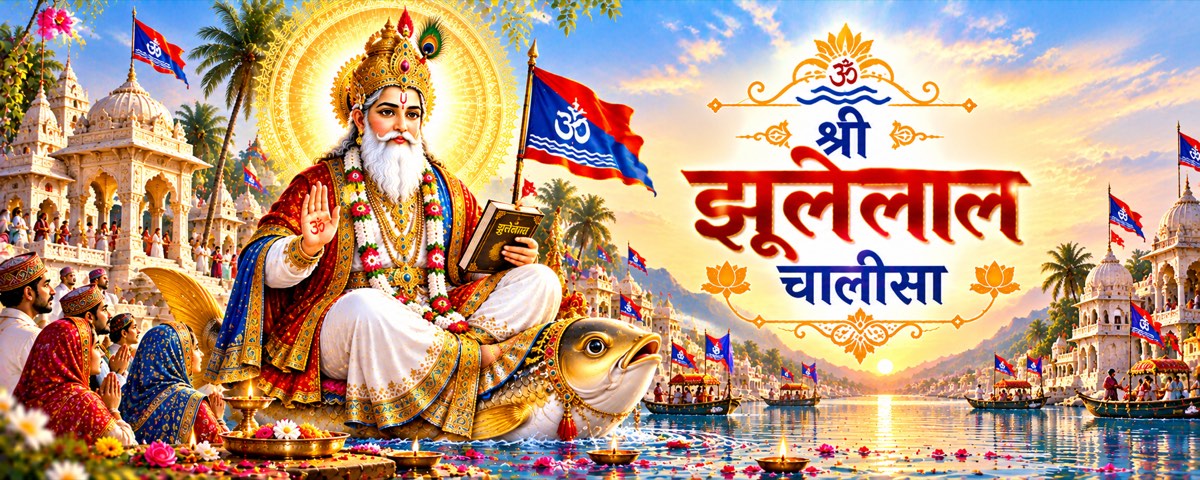
Jhulelal (Uderolal, Amarlal, Zinda Pir, Dariyashah, Lal Sain) is the patron deity of Sindhi Hindus, revered as an incarnation of Varun, the god of water. He is usually shown as an old man with a white beard seated on a palla fish on the river, holding a book, with a lamp and a pot of water before him. Since Partition scattered the Sindhi community across India and the world, Jhulelal has become the centre of Sindhi identity, and his Behrana Sahib (an offering of lamp, flour, sugar and fruit carried to water) is performed wherever Sindhis live.
The story in the chalisa
- The persecution: Mirkhshah, a proud and cruel ruler at Thatta, had it drummed through the land that everyone must convert. The Sindhi people, terrified, turned to their ishta, Varun.
- Forty days: "for forty days the Sindhis sat on the riverbank", fasting from food and water and praying in every home. This is the origin of Chaliho, the forty-day observance still kept every summer.
- Varun's answer: the Indus suddenly roared; Varun appeared riding a fish, a divine figure with a book in hand, and promised to take birth at Nasarpur in the house of Ratanrai.
- The birth: on Chaitra shukla dwitiya, samvat 1007 by the chalisa's count, to Ratanrai and Devaki at Nasarpur in Sindh. That date is why Cheti Chand, the Sindhi new year, falls on Chaitra shukla dwitiya.
- The minister: Mirkhshah's minister came to see the child and watched him become a youth and then a warrior; his pride gone, he carried back the message: "Hindu and Muslim are equal; stop the oppression and give up forced conversion."
- The flood: when Mirkhshah ordered Jhulelal arrested, he took Varun's form and the court was flooded; the king fell at his feet and withdrew his order.
- Samadhi: on Bhadra shukla chaturdashi, samvat 1020, he took jal-samadhi, samadhi in the water.
The closing doha asks for forty days of recitation, matching the forty days of the original prayer.
When to recite it
- Cheti Chand (Chaitra shukla dwitiya, March–April), Jhulelal's birthday and the Sindhi new year, with processions, Behrana Sahib and the immersion of offerings in water.
- Chaliho Sahib, the forty-day observance in July–August, ending with Thanksgiving (Shukrana) at the river.
- On the second day (dooj/beej) of each month and on Fridays, Jhulelal's traditional days.
Frequently asked questions
When is Cheti Chand?
On Chaitra shukla dwitiya, the day after Gudi Padwa and Ugadi, usually in March or April. It is both Jhulelal's birthday and the Sindhi new year.
What is Chaliho?
A forty-day period of prayer and austerity, usually in July–August, remembering the forty days the Sindhis prayed on the Indus before Jhulelal's birth.
Why is Jhulelal shown on a fish?
He is Varun, lord of water. The chalisa says Varun appeared "riding a fish" (meen aswara) when he answered the prayers.
Why is he called Zinda Pir?
The tradition says Hindus and Muslims both revered him after the king's submission; Sindhi Muslims honour him as Zinda Pir (the living saint) or Khwaja Khizr.
How many times should the chalisa be read?
Its closing doha recommends forty days of recitation for one's wishes to be fulfilled.
Spotted a mistake?
If you find any grammatical, Hindi, English, mantra-text or other mistake on this page, tell us — we will correct it within 24 hours.