
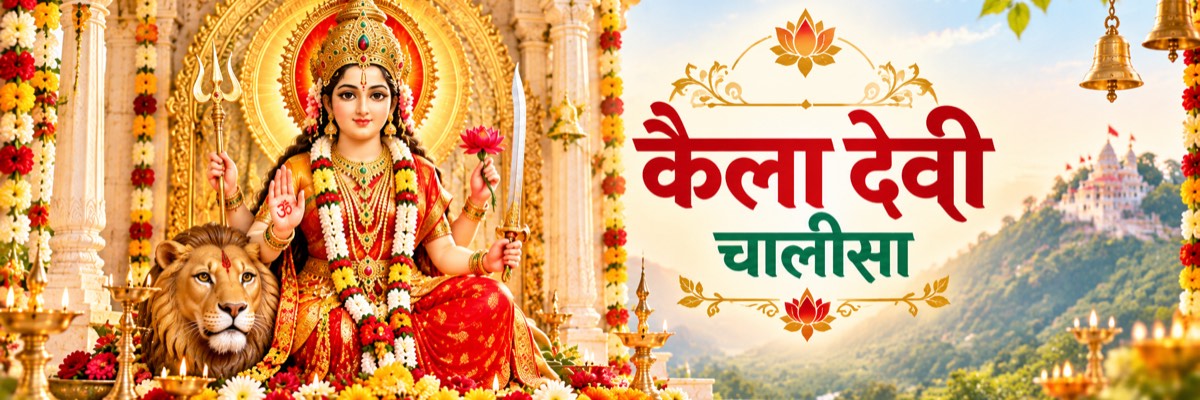
Original text
॥ दोहा ॥ जय जय कैला मात हे, तुम्हे नमाउ माथ । शरण पडूं में चरण में, जोडूं दोनों हाथ ॥ आप जानी जान हो, मैं माता अंजान । क्षमा भूल मेरी करो, करूँ तेरा गुणगान ॥ ॥ चौपाई ॥ जय जय जय कैला महारानी । नमो नमो जगदम्ब भवानी ॥ सब जग की हो भाग्य विधाता । आदि शक्ति तू सबकी माता ॥ दोनों बहिना सबसे न्यारी । महिमा अपरम्पार तुम्हारी ॥ शोभा सदन सकल गुणखानी । वेद पुराणन माँही बखानी ॥४॥ जय हो मात करौली वाली । शत प्रणाम कालीसिल वाली ॥ ज्वालाजी में ज्योति तुम्हारी । हिंगलाज में तू महतारी ॥ तू ही नई सैमरी वाली । तू चामुंडा तू कंकाली ॥ नगर कोट में तू ही विराजे । विंध्यांचल में तू ही राजै ॥८॥ धौलागढ़ बेलौन तू माता । वैष्णवदेवी जग विख्याता ॥ नव दुर्गा तू मात भवानी । चामुंडा मंशा कल्याणी ॥ जय जय सूये चोले वाली । जय काली कलकत्ते वाली ॥ तू ही लक्ष्मी तू ही ब्रम्हाणी । पार्वती तू ही इन्द्राणी ॥१२॥ सरस्वती तू विद्या दाता । तू ही है संतोषी माता ॥ अन्नपुर्णा तू जग पालक । मात पिता तू ही हम बालक ॥ तू राधा तू सावित्री । तारा मातंगी गायत्री ॥ तू ही आदि सुंदरी अम्बा । मात चर्चिका हे जगदम्बा ॥१६॥ एक हाथ में खप्पर राजै । दूजे हाथ त्रिशूल विराजै ॥ कालीसिल पै दानव मारे । राजा नल के कारज सारे ॥ शुम्भ निशुम्भ नसावनि हारी । महिषासुर को मारनवारी ॥ रक्तबीज रण बीच पछारो । शंखासुर तैने संहारो ॥२०॥ ऊँचे नीचे पर्वत वारी । करती माता सिंह सवारी ॥ ध्वजा तेरी ऊपर फहरावे । तीन लोक में यश फैलावे ॥ अष्ट प्रहर माँ नौबत बाजै । चाँदी के चौतरा विराजै ॥ लांगुर घटूअन चलै भवन में । मात राज तेरौ त्रिभुवन में ॥२४॥ घनन घनन घन घंटा बाजत । ब्रह्मा विष्णु देव सब ध्यावत ॥ अगनित दीप जले मंदिर में । ज्योति जले तेरी घर-घर में ॥ चौसठ जोगिन आंगन नाचत । बामन भैरों अस्तुति गावत ॥ देव दनुज गन्धर्व व किन्नर । भूत पिशाच नाग नारी नर ॥२८॥ सब मिल माता तोय मनावे । रात दिन तेरे गुण गावे ॥ जो तेरा बोले जयकारा । होय मात उसका निस्तारा ॥ मना मनौती आकर घर सै । जात लगा जो तोंकू परसै ॥ ध्वजा नारियल भेंट चढ़ावे । गुंगर लौंग सो ज्योति जलावै ॥३२॥ हलुआ पूरी भोग लगावै । रोली मेहंदी फूल चढ़ावे ॥ जो लांगुरिया गोद खिलावै । धन बल विद्या बुद्धि पावै ॥ जो माँ को जागरण करावै । चाँदी को सिर छत्र धरावै ॥ जीवन भर सारे सुख पावै । यश गौरव दुनिया में छावै ॥३६॥ जो भभूत मस्तक पै लगावे । भूत-प्रेत न वाय सतावै ॥ जो कैला चालीसा पढ़ता । नित्य नियम से इसे सुमरता ॥ मन वांछित वह फल को पाता । दुःख दारिद्र नष्ट हो जाता ॥ गोविन्द शिशु है शरण तुम्हारी । रक्षा कर कैला महतारी ॥४०॥ ॥ दोहा ॥ संवत तत्व गुण नभ भुज, सुन्दर रविवार । पौष सुदी दौज शुभ, पूर्ण भयो यह कार ॥
Transliteration
Doha Jai Jai Kaila Maat He, Tumhe Namau Maath. Sharan Padun Mein Charan Mein, Jodun Donon Haath. Aap Jaani Jaan Ho, Main Mata Anjaan. Kshama Bhool Meri Karo, Karun Tera Gungaan. Chaupai Jai Jai Jai Kaila Maharani, Namo Namo Jagdamb Bhavani. Sab Jag Ki Ho Bhagya Vidhata, Aadi Shakti Tu Sabki Mata. Donon Bahina Sabse Nyari, Mahima Aparampar Tumhari. Shobha Sadan Sakal Gunkhani, Ved Puranan Manhi Bakhani. (4) Jai Ho Maat Karauli Vali, Shat Pranam Kalisil Vali. Jvalaji Mein Jyoti Tumhari, Hinglaj Mein Tu Mahtari. Tu Hi Nai Saimari Vali, Tu Chamunda Tu Kankali. Nagar Kot Mein Tu Hi Viraje, Vindhyachal Mein Tu Hi Rajai. (8) Dhaulagadh Belaun Tu Mata, Vaishnavdevi Jag Vikhyata. Nav Durga Tu Maat Bhavani, Chamunda Mansha Kalyani. Jai Jai Suye Chole Vali, Jai Kali Kalkatte Vali. Tu Hi Lakshmi Tu Hi Brahmani, Parvati Tu Hi Indrani. (12) Saraswati Tu Vidya Data, Tu Hi Hai Santoshi Mata. Annapurna Tu Jag Palak, Maat Pita Tu Hi Ham Balak. Tu Radha Tu Savitri, Tara Matangi Gayatri. Tu Hi Aadi Sundari Amba, Maat Charchika He Jagdamba. (16) Ek Haath Mein Khappar Rajai, Dooje Haath Trishool Virajai. Kalisil Pai Daanav Maare, Raja Nal Ke Kaaraj Saare. Shumbh Nishumbh Nasavani Haari, Mahishasur Ko Maaranvari. Raktabeej Ran Beech Pachharo, Shankhasur Taine Sanharo. (20) Oonche Neeche Parvat Vaari, Karti Mata Singh Savari. Dhvaja Teri Oopar Phaharave, Teen Lok Mein Yash Phailave. Ashta Prahar Maa Naubat Baajai, Chandi Ke Chautara Virajai. Langur Ghatuan Chalai Bhavan Mein, Maat Raaj Terau Tribhuvan Mein. (24) Ghanan Ghanan Ghan Ghanta Baajat, Brahma Vishnu Dev Sab Dhyavat. Aganit Deep Jale Mandir Mein, Jyoti Jale Teri Ghar-Ghar Mein. Chausath Jogin Aangan Naachat, Baaman Bhairon Astuti Gaavat. Dev Danuj Gandharva Va Kinnar, Bhoot Pishach Naag Naari Nar. (28) Sab Mil Mata Toy Manave, Raat Din Tere Gun Gaave. Jo Tera Bole Jaikara, Hoy Maat Uska Nistara. Mana Manauti Aakar Ghar Sai, Jaat Laga Jo Tonku Parsai. Dhvaja Nariyal Bhent Chadhave, Gungar Laung So Jyoti Jalavai. (32) Halua Poori Bhog Lagavai, Roli Mehndi Phool Chadhave. Jo Languriya God Khilavai, Dhan Bal Vidya Buddhi Pavai. Jo Maa Ko Jagran Karavai, Chandi Ko Sir Chhatra Dharavai. Jeevan Bhar Saare Sukh Pavai, Yash Gaurav Duniya Mein Chhavai. (36) Jo Bhabhoot Mastak Pai Lagave, Bhoot-Pret Na Vaay Satavai. Jo Kaila Chalisa Padhta, Nitya Niyam Se Ise Sumarta. Man Vanchhit Vah Phal Ko Pata, Dukh Daridra Nasht Ho Jata. Govind Shishu Hai Sharan Tumhari, Raksha Kar Kaila Mahtari. (40) Doha Samvat Tatva Gun Nabh Bhuj, Sundar Ravivar. Paush Sudi Dauj Shubh, Poorna Bhayo Yah Kaar.
Kaila Maiya of Karauli
Kaila Devi is the presiding goddess of Karauli in eastern Rajasthan. Her temple stands on the Trikut hills above the Kalisil river, and the region's Yaduvanshi (Jadon) rulers honoured her as their family goddess. She is worshipped as a form of the Great Mother, and beside her in the sanctum stands Chamunda — which is why her devotees speak, as this chalisa does, of "the two sisters" (donon bahina). Her biggest gathering is the Chaitra fair around Chaitra Navratri, when pilgrims from Rajasthan, Uttar Pradesh and Madhya Pradesh walk to Karauli singing Languriya songs.
What the chalisa says
The chalisa is a local composition in the Braj-Rajasthani speech of the Karauli region, set out in ten groups of four chaupais, each group numbered.
- Verses 1–4: salutation to Kaila Maharani as Jagadamba and Adi Shakti, and to the two incomparable sisters.
- Verses 5–16: Kaila is identified with the goddess of every great shrine — Jwalaji, Hinglaj, Nagarkot, Vindhyachal, Vaishno Devi, Kali of Calcutta — and with every form of the Devi: the nine Durgas, Lakshmi, Brahmani, Parvati, Saraswati, Santoshi Mata, Annapurna, Radha, Savitri, Tara, Matangi and Gayatri.
- Verses 17–20: her battles: skull-bowl in one hand and trident in the other, she slew demons at Kalisil, fulfilled the works of Raja Nal, and destroyed Shumbha–Nishumbha, Mahishasura, Raktabija and Shankhasura.
- Verses 21–28: the temple itself — the lion she rides, her flag over the hills, the naubat drums playing all eight watches of the day, the silver platform, countless lamps, the sixty-four yoginis dancing, and Bhairav singing her praise. The "Langur" who walks in her court is the guardian figure of the Languriya songs.
- Verses 29–40: what devotees do and receive: vows made at home and fulfilled at the temple, offerings of flags, coconuts, guggul, cloves, halwa-puri, roli and mehndi; holding a jagran; wearing her sacred ash for protection. The last chaupai carries the poet's signature: "Govind, your child, is in your refuge."
The date hidden in the last doha
The closing doha says the work was completed on a fine Sunday, Paush Shukla Dwitiya, in the samvat "tattva, guna, nabh, bhuj". This is a chronogram: tattva stands for 5 (the five elements), guna for 3, nabh (sky) for 0 and bhuj (arms) for 2. Read right-to-left, as such number-words traditionally are, they give Vikram Samvat 2035 — about 1978–79 CE. So this chalisa, though sung everywhere in the region today, is a modern devotional work.
When to recite it
- During both Navratris, and especially during the Chaitra fair at Karauli.
- On Fridays and Ashtami, and at a mata ki chowki or jagran.
- When setting out on, or returning from, a pilgrimage to Kaila Devi — many families recite it on fulfilling a manauti (vow).
Frequently asked questions
Where is the Kaila Devi temple?
In Karauli district of Rajasthan, on the Trikut hills by the Kalisil river, roughly 25 km from Karauli town.
Who are the "two sisters" in the chalisa?
Kaila Devi and Chamunda, whose images stand together in the temple. Devotees worship them as sisters.
What are Languriya songs?
Folk songs sung by Kaila Devi's pilgrims, addressed to the Langur — the guardian who serves the goddess. The chalisa mentions both the Langur in her court and the blessing of playing with a "languriya".
When is the Kaila Devi fair held?
The main fair is held in Chaitra, around Chaitra Navratri (March–April), and draws very large crowds over about two weeks.
Who wrote the Kaila Devi Chalisa?
A devotee who signs himself Govind in the last chaupai. The closing doha dates it to Vikram Samvat 2035 (about 1978–79 CE).
Can it be recited at home?
Yes. Light a lamp before an image of the Devi, offer red flowers or a red chunri if you can, and recite with the dohas at both ends.
Spotted a mistake?
If you find any grammatical, Hindi, English, mantra-text or other mistake on this page, tell us — we will correct it within 24 hours.