
Original text
॥ दोहा ॥ श्री विश्वकर्म प्रभु वन्दऊं, चरणकमल धरिध्यान । श्री, शुभ, बल अरु शिल्पगुण, दीजै दया निधान ॥ ॥ चौपाई ॥ जय श्री विश्वकर्म भगवाना । जय विश्वेश्वर कृपा निधाना ॥ शिल्पाचार्य परम उपकारी । भुवना-पुत्र नाम छविकारी ॥ अष्टमबसु प्रभास-सुत नागर । शिल्पज्ञान जग कियउ उजागर ॥ अद्भुत सकल सृष्टि के कर्ता । सत्य ज्ञान श्रुति जग हित धर्ता ॥ अतुल तेज तुम्हतो जग माहीं । कोई विश्व मंह जानत नाही ॥ विश्व सृष्टि-कर्ता विश्वेशा । अद्भुत वरण विराज सुवेशा ॥ एकानन पंचानन राजे । द्विभुज चतुर्भुज दशभुज साजे ॥ चक्र सुदर्शन धारण कीन्हे । वारि कमण्डल वर कर लीन्हे ॥ शिल्पशास्त्र अरु शंख अनूपा । सोहत सूत्र माप अनुरूपा ॥ धनुष बाण अरु त्रिशूल सोहे । नौवें हाथ कमल मन मोहे ॥ दसवां हस्त बरद जग हेतु । अति भव सिंधु मांहि वर सेतु ॥ सूरज तेज हरण तुम कियऊ । अस्त्र शस्त्र जिससे निरमयऊ ॥ चक्र शक्ति अरू त्रिशूल एका । दण्ड पालकी शस्त्र अनेका ॥ विष्णुहिं चक्र शूल शंकरहीं । अजहिं शक्ति दण्ड यमराजहीं ॥ इंद्रहिं वज्र व वरूणहिं पाशा । तुम सबकी पूरण की आशा ॥ भांति-भांति के अस्त्र रचाए । सतपथ को प्रभु सदा बचाए ॥ अमृत घट के तुम निर्माता । साधु संत भक्तन सुर त्राता ॥ लौह काष्ट ताम्र पाषाणा । स्वर्ण शिल्प के परम सजाना ॥ विद्युत अग्नि पवन भू वारी । इनसे अद्भुत काज सवारी ॥ खान-पान हित भाजन नाना । भवन विभिषत विविध विधाना ॥ विविध व्सत हित यत्रं अपारा । विरचेहु तुम समस्त संसारा ॥ द्रव्य सुगंधित सुमन अनेका । विविध महा औषधि सविवेका ॥ शंभु विरंचि विष्णु सुरपाला । वरुण कुबेर अग्नि यमकाला ॥ तुम्हरे ढिग सब मिलकर गयऊ । करि प्रमाण पुनि अस्तुति ठयऊ ॥ भे आतुर प्रभु लखि सुर-शोका । कियउ काज सब भये अशोका ॥ अद्भुत रचे यान मनहारी । जल-थल-गगन मांहि-समचारी ॥ शिव अरु विश्वकर्म प्रभु मांही । विज्ञान कह अंतर नाही ॥ बरनै कौन स्वरूप तुम्हारा । सकल सृष्टि है तव विस्तारा ॥ रचेत विश्व हित त्रिविध शरीरा । तुम बिन हरै कौन भव हारी ॥ मंगल-मूल भगत भय हारी । शोक रहित त्रैलोक विहारी ॥ चारो युग परताप तुम्हारा । अहै प्रसिद्ध विश्व उजियारा ॥ ऋद्धि सिद्धि के तुम वर दाता । वर विज्ञान वेद के ज्ञाता ॥ मनु मय त्वष्टा शिल्पी तक्षा । सबकी नित करतें हैं रक्षा ॥ पंच पुत्र नित जग हित धर्मा । हवै निष्काम करै निज कर्मा ॥ प्रभु तुम सम कृपाल नहिं कोई । विपदा हरै जगत मंह जोई ॥ जै जै जै भौवन विश्वकर्मा । करहु कृपा गुरुदेव सुधर्मा ॥ इक सौ आठ जाप कर जोई । छीजै विपत्ति महासुख होई ॥ पढाहि जो विश्वकर्म-चालीसा । होय सिद्ध साक्षी गौरीशा ॥ विश्व विश्वकर्मा प्रभु मेरे । हो प्रसन्न हम बालक तेरे ॥ मैं हूं सदा उमापति चेरा । सदा करो प्रभु मन मंह डेरा ॥ ॥ दोहा ॥ करहु कृपा शंकर सरिस, विश्वकर्मा शिवरूप । श्री शुभदा रचना सहित, ह्रदय बसहु सूर भूप ॥
Transliteration
Doha: Shri Vishvakarma Prabhu Vandaun Charanakamal Dharidhyan Shri, Shubh, Bal Aru Shilpagun Dijai Daya Nidhan. Chaupai: Jai Shri Vishvakarma Bhagavana Jai Vishveshvar Kripa Nidhana. Shilpacharya Param Upakari Bhuvana-putra Nam Chhavikari. Ashtamabasu Prabhas-sut Nagar Shilpagyan Jag Kiyau Ujagar. Adbhut Sakal Srishti Ke Karta Satya Gyan Shruti Jag Hit Dharta. Atul Tej Tumhato Jag Mahin Koi Vishva Manh Janat Nahi. Vishva Srishti-karta Vishvesha Adbhut Varan Viraj Suvesha. Ekanan Panchanan Raje Dvibhuj Chaturbhuj Dashabhuj Saje. Chakra Sudarshan Dharan Kinhe Vari Kamandal Var Kar Linhe. Shilpashastra Aru Shankh Anupa Sohat Sutra Map Anurupa. Dhanush Ban Aru Trishul Sohe Nauven Hath Kamal Man Mohe. Dasavan Hasta Barad Jag Hetu Ati Bhav Sindhu Manhi Var Setu. Suraj Tej Haran Tum Kiyau Astra Shastra Jisase Niramayau. Chakra Shakti Aru Trishul Eka Danda Palaki Shastra Aneka. Vishnuhin Chakra Shul Shankarahin Ajahin Shakti Danda Yamarajahin. Indrahin Vajra Va Varunahin Pasha Tum Sabaki Puran Ki Asha. Bhanti-bhanti Ke Astra Rachae Satapath Ko Prabhu Sada Bachae. Amrit Ghat Ke Tum Nirmata Sadhu Sant Bhaktan Sur Trata. Lauh Kashta Tamra Pashana Svarna Shilpa Ke Param Sajana. Vidyut Agni Pavan Bhu Vari Inase Adbhut Kaj Savari. Khan-pan Hit Bhajan Nana Bhavan Vibhishat Vividh Vidhana. Vividh Vsat Hit Yatran Apara Virachehu Tum Samasta Sansara. Dravya Sugandhit Suman Aneka Vividh Maha Aushadhi Saviveka. Shambhu Viranchi Vishnu Surapala Varun Kuber Agni Yamakala. Tumhare Dhig Sab Milakar Gayau Kari Praman Puni Astuti Thayau. Bhe Atur Prabhu Lakhi Sur-shoka Kiyau Kaj Sab Bhaye Ashoka. Adbhut Rache Yan Manahari Jal-thal-gagan Manhi-samachari. Shiv Aru Vishvakarma Prabhu Manhi Vigyan Kah Antar Nahi. Baranai Kaun Svarup Tumhara Sakal Srishti Hai Tav Vistara. Rachet Vishva Hit Trividh Sharira Tum Bin Harai Kaun Bhav Hari. Mangal-mul Bhagat Bhay Hari Shok Rahit Trailok Vihari. Charo Yug Paratap Tumhara Ahai Prasiddha Vishva Ujiyara. Riddhi Siddhi Ke Tum Var Data Var Vigyan Ved Ke Gyata. Manu May Tvashta Shilpi Taksha Sabaki Nit Karaten Hain Raksha. Panch Putra Nit Jag Hit Dharma Havai Nishkam Karai Nij Karma. Prabhu Tum Sam Kripal Nahin Koi Vipada Harai Jagat Manh Joi. Jai Jai Jai Bhauvan Vishvakarma Karahu Kripa Gurudev Sudharma. Ik Sau Ath Jap Kar Joi Chhijai Vipatti Mahasukh Hoi. Padhahi Jo Vishvakarma-chalisa Hoy Siddha Sakshi Gaurisha. Vishva Vishvakarma Prabhu Mere Ho Prasanna Ham Balak Tere. Main Hun Sada Umapati Chera Sada Karo Prabhu Man Manh Dera. Doha: Karahu Kripa Shankar Saris Vishvakarma Shivarup Shri Shubhada Rachana Sahit Hraday Basahu Sur Bhup.
The god of craft
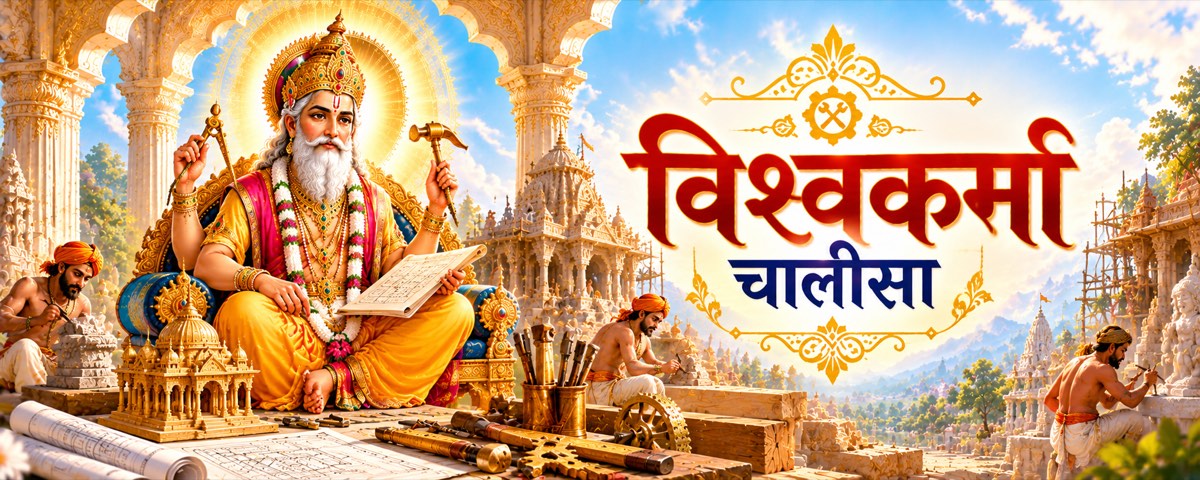
Vishwakarma, "maker of all", is the divine architect of Hindu tradition — the builder of the gods' cities, palaces, weapons and chariots. In the Rigveda the name is an epithet of the creator himself; in the Puranas he becomes the craftsman of the devas. Engineers, carpenters, smiths, mechanics, weavers, factory workers and anyone who works with tools and machines treat him as their patron, which is why tools are cleaned and worshipped on his day.
What the chalisa says
The opening doha asks him for four gifts: shri (prosperity), shubh (auspiciousness), bal (strength) and shilpagun, skill in craft. The chaupais then sketch who he is and what he made.
- Parentage: "Bhuvana-putra", son of Bhuvana, and "Ashtam Basu Prabhas-sut", son of Prabhasa, the eighth of the Vasus.
- His form: one-faced or five-faced, with two, four or ten arms, holding the Sudarshana chakra, a kamandalu, the shilpa-shastra, a conch, the measuring cord, a bow and arrow, a trident and a lotus, with the tenth hand raised in blessing.
- The gods' weapons: he trimmed the sun's blazing radiance and made weapons from it — the chakra for Vishnu, the trident for Shankar, the shakti and staff for others, the danda for Yama, the vajra for Indra and the noose for Varuna.
- Everything else: the pot of amrit; work in iron, wood, copper, stone and gold; machines driven by electricity, fire, wind, earth and water; vessels for food and buildings of every kind; and "vehicles that travel in water, on land and in the sky".
- His sons: Manu, Maya, Tvashta, Shilpi and Taksha — the five lines of craftsmen who "do their work without desire, for the good of the world".
The last section is the phala: recite it with 108 japa and difficulties wane; one who reads the Vishwakarma Chalisa is assured, "with Gaurisha (Shiva) as witness". The closing doha calls him "Shivaroop", Shiva in form, and asks him to dwell in the heart.
When to recite it
- Vishwakarma Puja, usually on 17 September (Kanya Sankranti) in much of eastern and northern India, when workshops, factories and offices worship tools and machines.
- In parts of North India his puja falls on the day after Diwali, alongside Govardhan Puja.
- Before starting construction, a griha pravesh, or the first use of a new vehicle or machine.
The usual way is to clean the tools or machine, apply tilak and a flower, light a lamp before an image of Vishwakarma, and recite the chalisa once, followed by his aarti.
Frequently asked questions
Who are the parents of Vishwakarma according to the chalisa?
It calls him the son of Prabhasa, the eighth Vasu, and of Bhuvana. Different Puranas give other genealogies, which the chalisa does not discuss.
When is Vishwakarma Puja?
Most widely on Kanya Sankranti, usually 17 September. In some North Indian communities it is done on the day after Diwali.
Which weapons did Vishwakarma make, according to the chalisa?
Vishnu's chakra, Shiva's trident, Yama's staff, Indra's vajra and Varuna's noose, among others — forged, it says, from radiance trimmed from the sun.
Who should recite the Vishwakarma Chalisa?
Anyone, but it is especially loved by those who work with their hands, tools or machines — engineers, artisans, builders and factory workers.
Who are the five sons named in the chalisa?
Manu, Maya, Tvashta, Shilpi and Taksha, traditionally the ancestors of the five craft communities: smiths, carpenters, metal-workers, stone-workers and goldsmiths.
Spotted a mistake?
If you find any grammatical, Hindi, English, mantra-text or other mistake on this page, tell us — we will correct it within 24 hours.