
Original text
॥ दोहा ॥ जय ब्रह्मा जय स्वयम्भू, चतुरानन सुखमूल । करहु कृपा निज दास पै, रहहु सदा अनुकूल ॥ तुम सृजक ब्रह्माण्ड के, अज विधि धाता नाम । विश्वविधाता कीजिये, जन पै कृपा ललाम ॥ ॥ चौपाई ॥ जय जय कमलासन जगमूला । रहहु सदा जनपै अनुकूला ॥ रूप चतुर्भुज परम सुहावन । तुम्हें अहैं चतुर्दिक आनन ॥ रक्तवर्ण तव सुभग शरीरा । मस्तक जटाजूट गंभीरा ॥ ताके ऊपर मुकुट बिराजै । दाढ़ी श्वेत महाछवि छाजै ॥ श्वेतवस्त्र धारे तुम सुन्दर । है यज्ञोपवीत अति मनहर ॥ कानन कुण्डल सुभग बिराजहिं । गल मोतिन की माला राजहिं ॥ चारिहु वेद तुम्हीं प्रगटाये । दिव्य ज्ञान त्रिभुवनहिं सिखाये ॥ ब्रह्मलोक शुभ धाम तुम्हारा । अखिल भुवन महँ यश बिस्तारा ॥ अर्द्धांगिनि तव है सावित्री । अपर नाम हिये गायत्री ॥ सरस्वती तब सुता मनोहर । वीणा वादिनि सब विधि सुन्दर ॥ कमलासन पर रहे बिराजे । तुम हरिभक्ति साज सब साजे ॥ क्षीर सिन्धु सोवत सुरभूपा । नाभि कमल भो प्रगट अनूपा ॥ तेहि पर तुम आसीन कृपाला । सदा करहु सन्तन प्रतिपाला ॥ एक बार की कथा प्रचारी । तुम कहँ मोह भयेउ मन भारी ॥ कमलासन लखि कीन्ह बिचारा । और न कोउ अहै संसारा ॥ तब तुम कमलनाल गहि लीन्हा । अन्त बिलोकन कर प्रण कीन्हा ॥ कोटिक वर्ष गये यहि भांती । भ्रमत भ्रमत बीते दिन राती ॥ पै तुम ताकर अन्त न पाये । ह्वै निराश अतिशय दुःखियाये ॥ पुनि बिचार मन महँ यह कीन्हा । महापद्म यह अति प्राचीना ॥ याको जन्म भयो को कारन । तबहीं मोहि करयो यह धारन ॥ अखिल भुवन महँ कहँ कोइ नाहीं । सब कछु अहै निहित मो माहीं ॥ यह निश्चय करि गरब बढ़ायो । निज कहँ ब्रह्म मानि सुखपाये ॥ गगन गिरा तब भई गंभीरा । ब्रह्मा वचन सुनहु धरि धीरा ॥ सकल सृष्टि कर स्वामी जोई । ब्रह्म अनादि अलख है सोई ॥ निज इच्छा इन सब निरमाये । ब्रह्मा विष्णु महेश बनाये ॥ सृष्टि लागि प्रगटे त्रयदेवा । सब जग इनकी करिहै सेवा ॥ महापद्म जो तुम्हरो आसन । ता पै अहै विष्णु को शासन ॥ विष्णु नाभितें प्रगट्यो आई । तुम कहँ सत्य दीन्ह समुझाई ॥ भेटहु जाइ विष्णु हितमानी । यह कहि बन्द भई नभवानी ॥ ताहि श्रवण कहि अचरज माना । पुनि चतुरानन कीन्ह पयाना ॥ कमल नाल धरि नीचे आवा । तहां विष्णु के दर्शन पावा ॥ शयन करत देखे सुरभूपा । श्यामवर्ण तनु परम अनूपा ॥ सोहत चतुर्भुज अतिसुन्दर । क्रीटमुकुट राजत मस्तक पर ॥ गल बैजन्ती माल बिराजै । कोटि सूर्य की शोभा लाजै ॥ शंख चक्र अरु गदा मनोहर । पद्म सहित आयुध सब सुन्दर ॥ पाय पलोटति रमा निरन्तर । शेष नाग शय्या अति मनहर ॥ दिव्यरूप लखि कीन्ह प्रणामू । हर्षित भे श्रीपति सुख धामू ॥ बहु विधि विनय कीन्ह चतुरानन । तब लक्ष्मी पति कहेउ मुदित मन ॥ ब्रह्मा दूरि करहु अभिमाना । ब्रह्मरूप हम दोउ समाना ॥ तीजे श्री शिवशंकर आहीं । ब्रह्मरूप सब त्रिभुवन मांहीं ॥ तुम सों होइ सृष्टि विस्तारा । हम पालन करिहैं संसारा ॥ शिव संहार करहिं सब केरा । हम तीनहुं कहँ काज धनेरा ॥ अगुणरूप श्री ब्रह्म बखानहु । निराकार तिनकहँ तुम जानहु ॥ हम साकार रूप त्रयदेवा । करिहैं सदा ब्रह्म की सेवा ॥ यह सुनि ब्रह्मा परम सिहाये । परब्रह्म के यश अति गाये ॥ सो सब विदित वेद के नामा । मुक्ति रूप सो परम ललामा ॥ यहि विधि प्रभु भो जनम तुम्हारा । पुनि तुम प्रगट कीन्ह संसारा ॥ नाम पितामह सुन्दर पायेउ । जड़ चेतन सब कहँ निरमायेउ ॥ लीन्ह अनेक बार अवतारा । सुन्दर सुयश जगत विस्तारा ॥ देवदनुज सब तुम कहँ ध्यावहिं । मनवांछित तुम सन सब पावहिं ॥ जो कोउ ध्यान धरै नर नारी । ताकी आस पुजावहु सारी ॥ पुष्कर तीर्थ परम सुखदाई । तहँ तुम बसहु सदा सुरराई ॥ कुण्ड नहाइ करहि जो पूजन । ता कर दूर होइ सब दूषण ॥
Transliteration
Doha Jai Brahma Jai Swayambhu, Chaturanan Sukhmool. Karahu Kripa Nij Das Pai, Rahahu Sada Anukool. Tum Srijak Brahmand Ke, Aj Vidhi Dhata Naam. Vishvavidhata Keejiye, Jan Pai Kripa Lalaam. Chaupai Jai Jai Kamalasan Jagmoola, Rahahu Sada Janpai Anukoola. Roop Chaturbhuj Param Suhavan, Tumhen Ahain Chaturdik Aanan. Raktavarn Tav Subhag Shareera, Mastak Jatajoot Gambheera. Take Upar Mukut Biraajai, Dadhi Shvet Mahachhavi Chhajai. Shvetvastra Dhare Tum Sundar, Hai Yagyopaveet Ati Manhar. Kanan Kundal Subhag Birajahin, Gal Motin Ki Mala Rajahin. Charihu Ved Tumhin Pragtaye, Divya Gyan Tribhuvanahin Sikhaye. Brahmalok Shubh Dham Tumhara, Akhil Bhuvan Mahan Yash Bistara. Ardhangini Tav Hai Savitri, Apar Naam Hiye Gayatri. Saraswati Tab Suta Manohar, Veena Vadini Sab Vidhi Sundar. Kamalasan Par Rahe Biraje, Tum Haribhakti Saaj Sab Saje. Ksheer Sindhu Sovat Surbhoopa, Nabhi Kamal Bho Pragat Anoopa. Tehi Par Tum Aaseen Kripala, Sada Karahu Santan Pratipala. Ek Baar Ki Katha Prachari, Tum Kahan Moh Bhayeu Man Bhari. Kamalasan Lakhi Keenh Bichara, Aur Na Kou Ahai Sansara. Tab Tum Kamalnaal Gahi Leenha, Ant Bilokan Kar Pran Keenha. Kotik Varsh Gaye Yahi Bhanti, Bhramat Bhramat Beete Din Raati. Pai Tum Takar Ant Na Paye, Hvai Nirash Atishay Dukhiyaye. Puni Bichar Man Mahan Yah Keenha, Mahapadma Yah Ati Pracheena. Yako Janm Bhayo Ko Karan, Tabahin Mohi Karyo Yah Dharan. Akhil Bhuvan Mahan Kahan Koi Nahin, Sab Kachhu Ahai Nihit Mo Mahin. Yah Nishchay Kari Garab Badhayo, Nij Kahan Brahm Mani Sukhpaye. Gagan Gira Tab Bhai Gambheera, Brahma Vachan Sunahu Dhari Dheera. Sakal Srishti Kar Swami Joi, Brahm Anadi Alakh Hai Soi. Nij Ichchha In Sab Nirmaye, Brahma Vishnu Mahesh Banaye. Srishti Laagi Pragate Trayadeva, Sab Jag Inki Karihai Seva. Mahapadma Jo Tumhro Aasan, Ta Pai Ahai Vishnu Ko Shasan. Vishnu Nabhiten Pragtyo Aai, Tum Kahan Satya Deenh Samujhai. Bhetahu Jai Vishnu Hitmani, Yah Kahi Band Bhai Nabhvani. Tahi Shravan Kahi Acharaj Mana, Puni Chaturanan Keenh Payana. Kamal Naal Dhari Neeche Aava, Tahan Vishnu Ke Darshan Pava. Shayan Karat Dekhe Surbhoopa, Shyamvarn Tanu Param Anoopa. Sohat Chaturbhuj Atisundar, Kreetmukut Rajat Mastak Par. Gal Baijanti Maal Birajai, Koti Soorya Ki Shobha Lajai. Shankh Chakra Aru Gada Manohar, Padma Sahit Aayudh Sab Sundar. Paay Palotati Rama Nirantar, Shesh Naag Shayya Ati Manhar. Divyaroop Lakhi Keenh Pranamu, Harshit Bhe Shripati Sukh Dhamu. Bahu Vidhi Vinay Keenh Chaturanan, Tab Lakshmi Pati Kaheu Mudit Man. Brahma Doori Karahu Abhimana, Brahmaroop Ham Dou Samana. Teeje Shri Shivshankar Aahin, Brahmaroop Sab Tribhuvan Manhin. Tum Son Hoi Srishti Vistara, Ham Palan Karihain Sansara. Shiv Sanhar Karahin Sab Kera, Ham Teenahun Kahan Kaaj Ghanera. Agunroop Shri Brahm Bakhanahu, Nirakar Tinkahan Tum Janahu. Ham Sakar Roop Trayadeva, Karihain Sada Brahm Ki Seva. Yah Suni Brahma Param Sihaye, Parabrahm Ke Yash Ati Gaye. So Sab Vidit Ved Ke Nama, Mukti Roop So Param Lalama. Yahi Vidhi Prabhu Bho Janam Tumhara, Puni Tum Pragat Keenh Sansara. Naam Pitamah Sundar Payeu, Jad Chetan Sab Kahan Nirmayeu. Leenh Anek Baar Avatara, Sundar Suyash Jagat Vistara. Devdanuj Sab Tum Kahan Dhyavahin, Manvanchhit Tum San Sab Pavahin. Jo Kou Dhyan Dharai Nar Nari, Taki Aas Pujavahu Sari. Pushkar Teerth Param Sukhdai, Tahan Tum Basahu Sada Surrai. Kund Nahai Karahi Jo Poojan, Ta Kar Door Hoi Sab Dooshan.
A chalisa that tells a story
Most chalisas are strings of praise. The Brahma Chalisa is unusual: after a short description of Brahma, more than half of it is a single continuous narrative — how the creator was born, how he became proud, and how he was set right. It is written in the Awadhi-flavoured Hindi of popular devotional verse, opening with two dohas that address Brahma as Swayambhu (self-born), Chaturanan (four-faced), Aj, Vidhi and Dhata — all traditional names of the creator.
How the chalisa pictures Brahma
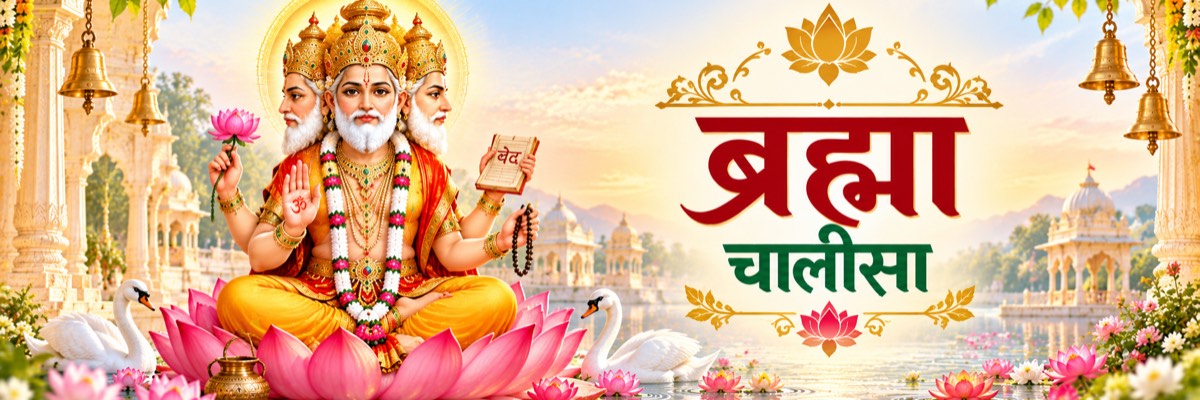
The opening chaupais give a precise icon: four arms and four faces looking in the four directions, a red-complexioned body, matted locks with a crown, a white beard, white garments and the sacred thread, earrings and a pearl necklace. He is seated on a lotus (Kamalasana). The chalisa credits him with revealing the four Vedas, names Brahmaloka as his abode, calls Savitri his consort "also known as Gayatri", and Saraswati, the veena-player, his daughter.
The story in the chaupais
- Birth on the lotus. Vishnu sleeps on the ocean of milk; a lotus rises from his navel, and Brahma appears seated on it.
- Pride. Seeing nothing but his own lotus seat, Brahma concludes there is no one else in existence. Gripping the lotus stalk, he vows to find where it ends — and wanders down it for countless years without reaching the end.
- Doubt turns to arrogance. Disheartened, he reasons that this ancient lotus must exist only to hold him; everything, he decides, is contained within himself, and he takes himself to be Brahman.
- The voice from the sky. A deep voice tells him that the beginningless, unseen Brahman alone is lord of creation; it made Brahma, Vishnu and Mahesh by its own will, and the lotus he sits on is under Vishnu's rule. "Go and meet Vishnu."
- Meeting Vishnu. Brahma climbs down the stalk and sees Vishnu asleep on Shesha — dark-complexioned, four-armed, with crown, Vaijayanti garland, conch, discus, mace and lotus, and Lakshmi pressing his feet. Brahma bows and praises him.
- The lesson. Vishnu tells him to drop his pride: Brahma creates, Vishnu sustains and Shiva dissolves, but all three are forms in service of the one formless Brahman. Hearing this, Brahma sings the glory of the Supreme — and only then begins creation, earning the name Pitamaha, grandfather of all beings.
The closing chaupais promise that whoever meditates on him has their wishes fulfilled, and end at Pushkar, where Brahma is said to dwell: whoever bathes in its kund and worships there is freed of every fault. In the versions we checked the text ends here, without the usual closing doha.
Why Brahma is so rarely worshipped
Brahma is one of the Trimurti, yet temples to him are few — the best known is at Pushkar in Rajasthan. Two Puranic stories are usually given. In the Pushkar tradition of the Padma Purana, Brahma performed a yajna at Pushkar and, when his wife Savitri was late, the rite was completed with Gayatri; Savitri cursed that Brahma would be worshipped almost nowhere else. In the Shiva Purana, Brahma and Vishnu search for the ends of a pillar of fire, and Brahma falsely claims to have found its top. The chalisa's lotus-stalk story is a gentler cousin of these: Brahma's fault is pride, and it is corrected rather than punished.
When and how to recite it
- At Pushkar, especially during the Kartik fair that culminates on Kartik Purnima, when pilgrims bathe in the lake and visit the Brahma temple.
- Before beginning study or creative work — Brahma is the giver of the Vedas and father of Saraswati.
- Sit facing east, light a lamp, offer white flowers if available, and recite with attention to the narrative — it is meant to be understood, not just chanted.
Frequently asked questions
What is the Brahma Chalisa about?
Besides praising Brahma, it tells how he was born on Vishnu's navel-lotus, became proud, searched the lotus stalk for its end, was corrected by a voice from the sky and by Vishnu, and then began creation.
Is Brahma worshipped anywhere today?
Yes, though rarely. The Brahma temple at Pushkar (Ajmer district, Rajasthan) is the most famous; Brahma is also honoured in yajnas, in the Gayatri tradition and as one of the Trimurti in many temples.
Why does the chalisa say Savitri is also called Gayatri?
Popular tradition often treats them as one consort. In the Pushkar legend they are two, and Savitri's anger at Gayatri's place in the yajna is the reason given for Brahma's limited worship. The chalisa follows the simpler, unified view.
Which day is best for the Brahma Chalisa?
No weekday is fixed for Brahma. Kartik Purnima, the day of the Pushkar bath, is the most popular occasion; many also read it on any day they begin new study or work.
Does the chalisa have forty chaupais?
The name "chalisa" signals forty verses, but texts vary — this one runs a little longer because of its narrative, and the copies in circulation end with the Pushkar chaupai rather than a closing doha.
Is the lotus-stalk story in the Puranas?
Brahma's birth from Vishnu's navel-lotus is told across the Puranas, and so is his search for the lotus's source in several of them. The chalisa's specific framing — a voice from the sky sending him to Vishnu — is its own poetic retelling.
Spotted a mistake?
If you find any grammatical, Hindi, English, mantra-text or other mistake on this page, tell us — we will correct it within 24 hours.