
Original text
॥ दोहा ॥ ह्रीं, श्रीं, क्लीं, मेधा, प्रभा, जीवन ज्योति प्रचण्ड । शान्ति, क्रान्ति, जागृति, प्रगति, रचना शक्ति अखण्ड ॥ जगत जननि मंगल करनि, गायत्री सुखधाम । प्रणवों सावित्री स्वधा, स्वाहा पूरन काम ॥ ॥ चौपाई ॥ भूर्भुवः स्वः ॐ युत जननी । गायत्री नित कलिमल दहनी ॥1॥ अक्षर चौबिस परम पुनीता । इनमें बसें शास्त्र श्रुति गीता ॥2॥ शाश्वत सतोगुणी सतरूपा । सत्य सनातन सुधा अनूपा ॥3॥ हंसारूढ़ सिताम्बर धारी । स्वर्ण कांति शुचि गगन बिहारी ॥4॥ पुस्तक पुष्प कमण्डलु माला । शुभ्र वर्ण तनु नयन विशाला ॥5॥ ध्यान धरत पुलकित हिय होई । सुख उपजत दुःख दुरमति खोई ॥6॥ कामधेनु तुम सुर तरु छाया । निराकार की अद्भुत माया ॥7॥ तुम्हरी शरण गहै जो कोई । तरै सकल संकट सों सोई ॥8॥ सरस्वती लक्ष्मी तुम काली । दिपै तुम्हारी ज्योति निराली ॥9॥ तुम्हरी महिमा पार न पावैं । जो शारद शतमुख गुण गावैं ॥10॥ चार वेद की मातु पुनीता । तुम ब्रह्माणी गौरी सीता ॥11॥ महामंत्र जितने जग माहीं । कोऊ गायत्री सम नाहीं ॥12॥ सुमिरत हिय में ज्ञान प्रकासै । आलस पाप अविद्या नासै ॥13॥ सृष्टि बीज जग जननि भवानी । कालरात्रि वरदा कल्याणी ॥14॥ ब्रह्मा विष्णु रुद्र सुर जेते । तुम सों पावें सुरता तेते ॥15॥ तुम भक्तन की भक्त तुम्हारे । जननिहि पुत्र प्राण ते प्यारे ॥16॥ महिमा अपरम्पार तुम्हारी । जय जय जय त्रिपदा भयहारी ॥17॥ पूरित सकल ज्ञान विज्ञाना । तुम सम अधिक न जग में आना ॥18॥ तुमहिं जानि कछु रहै न शेषा । तुमहिं पाय कछु रहै न क्लेशा ॥19॥ जानत तुमहिं तुमहिं ह्वै जाई । पारस परसि कुधातु सुहाई ॥20॥ तुम्हरी शक्ति दिपै सब ठाईं । माता तुम सब ठौर समाईं ॥21॥ ग्रह नक्षत्र ब्रह्माण्ड घनेरे । सब गतिवान तुम्हारे प्रेरे ॥22॥ सकल सृष्टि की प्राण विधाता । पालक, पोषक, नाशक, त्राता ॥23॥ मातेश्वरी दया व्रत धारी । तुम सन तरे पातकी भारी ॥24॥ जापर कृपा तुम्हारी होई । तापर कृपा करें सब कोई ॥25॥ मंद बुद्धि ते बुधि बल पावें । रोगी रोगरहित ह्वै जावें ॥26॥ दारिद मिटै कटै सब पीरा । नाशै दुःख हरै भव भीरा ॥27॥ गृह-कलेश चित चिन्ता भारी । नासै गायत्री भय हारी ॥28॥ संततिहीन सुसंतति पावें । सुख संपति युत मोद मनावें ॥29॥ भूत पिशाच सबै भय खावें । यम के दूत निकट नहिं आवें ॥30॥ जो सधवा सुमिरें चित लाई । अछत सुहाग सदा सुखदाई ॥31॥ घर वर सुखप्रद लहै कुमारी । विधवा रहें सत्यव्रत धारी ॥32॥ जयति जयति जगदम्ब भवानी । तुम सम और दयालु न दानी ॥33॥ जो सद्गुरु सों दीक्षा पावें । सो साधन को सफल बनावें ॥34॥ सुमिरन करें सुरुचि बड़भागी । लहैं मनोरथ गृही विरागी ॥35॥ अष्ट सिद्धि नवनिधि की दाता । सब समर्थ गायत्री माता ॥36॥ ऋषि, मुनि, यती, तपस्वी योगी । आरत, अर्थी, चिंतित भोगी ॥37॥ जो जो शरण तुम्हारी आवैं । सो सो मन वांछित फल पावैं ॥38॥ बल, बुधि, विद्या, शील स्वभाऊ । धन, वैभव, यश, तेज उछाऊ ॥39॥ सकल बढ़ें उपजें सुख नाना । जो यह पाठ करै धरि ध्याना ॥40॥ ॥ दोहा ॥ यह चालीसा भक्ति युत, पाठ करे जो कोय । तापर कृपा प्रसन्नता, गायत्री की होय ॥
Transliteration
Doha: Hreem, Shreem, Kleem, Medha, Prabha, Jeevan Jyoti Prachand. Shanti, Kranti, Jagriti, Pragati, Rachna Shakti Akhand. Jagat Janani Mangal Karani, Gayatri Sukhdham. Pranavon Savitri Svadha, Svaha Pooran Kaam. Chaupai: 1. Bhurbhuvah Svah Om Yut Janani, Gayatri Nit Kalimal Dahani. 2. Akshar Chaubis Param Punita, Inmein Basen Shastra Shruti Gita. 3. Shashvat Satoguni Satroopa, Satya Sanatan Sudha Anupa. 4. Hansaroodh Sitambar Dhari, Svarn Kanti Shuchi Gagan Bihari. 5. Pustak Pushp Kamandalu Mala, Shubhra Varn Tanu Nayan Vishala. 6. Dhyan Dharat Pulkit Hiy Hoi, Sukh Upjat Dukh Durmati Khoi. 7. Kamdhenu Tum Sur Taru Chhaya, Nirakar Ki Adbhut Maya. 8. Tumhri Sharan Gahai Jo Koi, Tarai Sakal Sankat Son Soi. 9. Saraswati Lakshmi Tum Kali, Dipai Tumhari Jyoti Nirali. 10. Tumhri Mahima Paar Na Pavain, Jo Sharad Shatmukh Gun Gavain. 11. Char Ved Ki Matu Punita, Tum Brahmani Gauri Sita. 12. Mahamantra Jitne Jag Mahin, Kou Gayatri Sam Nahin. 13. Sumirat Hiy Mein Gyan Prakasai, Aalas Paap Avidya Nasai. 14. Srishti Beej Jag Janani Bhavani, Kalratri Varada Kalyani. 15. Brahma Vishnu Rudra Sur Jete, Tum Son Paven Surta Tete. 16. Tum Bhaktan Ki Bhakt Tumhare, Jananihi Putra Pran Te Pyare. 17. Mahima Aparampar Tumhari, Jai Jai Jai Tripada Bhayhari. 18. Poorit Sakal Gyan Vigyana, Tum Sam Adhik Na Jag Mein Aana. 19. Tumhin Jani Kachhu Rahai Na Shesha, Tumhin Paay Kachhu Rahai Na Klesha. 20. Janat Tumhin Tumhin Hvai Jai, Paras Parasi Kudhatu Suhai. 21. Tumhri Shakti Dipai Sab Thain, Mata Tum Sab Thaur Samain. 22. Grah Nakshatra Brahmand Ghanere, Sab Gativan Tumhare Prere. 23. Sakal Srishti Ki Pran Vidhata, Palak, Poshak, Nashak, Trata. 24. Mateshvari Daya Vrat Dhari, Tum San Tare Pataki Bhari. 25. Japar Kripa Tumhari Hoi, Tapar Kripa Karen Sab Koi. 26. Mand Buddhi Te Budhi Bal Paven, Rogi Rograhit Hvai Javen. 27. Darid Mitai Katai Sab Peera, Nashai Dukh Harai Bhav Bheera. 28. Grih-Kalesh Chit Chinta Bhari, Nasai Gayatri Bhay Hari. 29. Santatiheen Susantati Paven, Sukh Sampati Yut Mod Manaven. 30. Bhoot Pishach Sabai Bhay Khaven, Yam Ke Doot Nikat Nahin Aaven. 31. Jo Sadhva Sumiren Chit Laai, Achhat Suhag Sada Sukhdai. 32. Ghar Var Sukhprad Lahai Kumari, Vidhva Rahen Satyavrat Dhari. 33. Jayati Jayati Jagdamb Bhavani, Tum Sam Aur Dayalu Na Dani. 34. Jo Sadguru Son Diksha Paven, So Sadhan Ko Saphal Banaven. 35. Sumiran Karen Suruchi Badbhagi, Lahain Manorath Grihi Viragi. 36. Asht Siddhi Navnidhi Ki Data, Sab Samarth Gayatri Mata. 37. Rishi, Muni, Yati, Tapasvi Yogi, Aarat, Arthi, Chintit Bhogi. 38. Jo Jo Sharan Tumhari Aavain, So So Man Vanchhit Phal Pavain. 39. Bal, Budhi, Vidya, Sheel Svabhau, Dhan, Vaibhav, Yash, Tej Uchhau. 40. Sakal Badhen Upjen Sukh Nana, Jo Yah Paath Karai Dhari Dhyana. Doha: Yah Chalisa Bhakti Yut, Paath Kare Jo Koy. Tapar Kripa Prasannata, Gayatri Ki Hoy.
A chalisa to a mantra
Gayatri Mata is not a goddess with a separate mythology of battles and births. She is the Gayatri Mantra itself, seen as a mother. The chalisa says so in its first chaupai: she is the mother "joined with bhur bhuvah svah and Om", the syllables that begin the mantra, and she burns away the impurities of the Kali age every day. The second chaupai counts the mantra's twenty-four syllables and says all the shastras, the shruti and the Gita live within them. In chaupai 17 she is tripada, "three-footed", because the Gayatri verse has three lines of eight syllables. So the whole hymn is about a mantra you can actually chant.
The opening doha
The opening doha is unusual. It begins with three bija syllables, hreem, shreem, kleem, and then a list of powers: intelligence (medha), radiance, the blazing light of life, and then shanti, kranti, jagriti, pragati, peace, revolution, awakening and progress, and unbroken creative power. That vocabulary of personal and social change, rather than only blessings, matches the Gayatri Pariwar movement (All World Gayatri Pariwar, Shantikunj, Haridwar), in whose published edition we checked this text. The second doha bows to her as Savitri, Svadha and Svaha, the names of the Gayatri, of the offering to the ancestors and of the offering into the fire.
How she is pictured and what she is
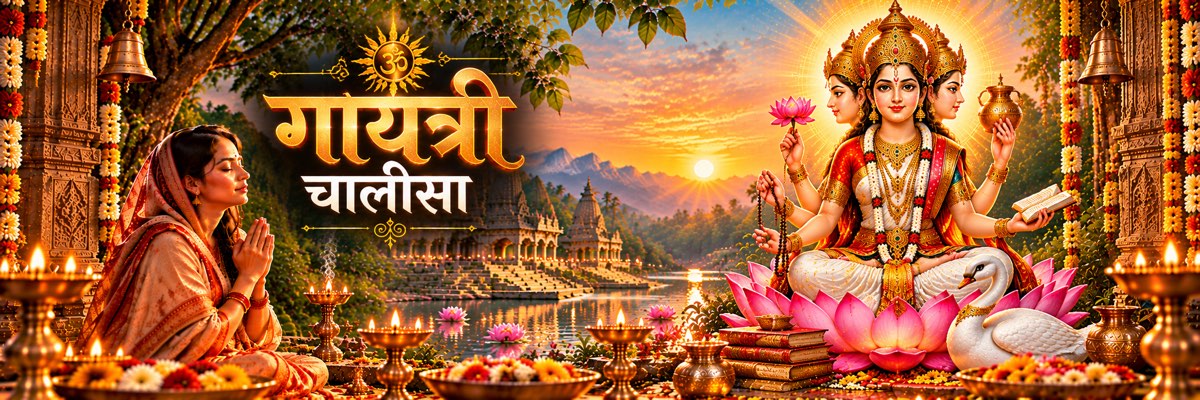
- Her form (chaupais 4 to 5): she rides a swan, wears white, has a golden radiance and moves through the pure sky. She holds a book, a flower, a kamandalu (water-pot) and a mala.
- All goddesses in one (9 to 11): she is Saraswati, Lakshmi and Kali. She is the pure "mother of the four Vedas" (Vedamata), and also Brahmani, Gauri and Sita.
- The highest mantra (12): "of all the great mantras in the world, none equals Gayatri."
- Becoming what you know (20): "knowing you, one becomes you, as base metal touched by the philosopher's stone turns to gold." This is the chalisa's most philosophical line. In it, knowing the mantra is not information but transformation.
- The cosmic power (22 to 23): the planets, stars and countless universes all move by her impulse, and she creates, sustains, destroys and protects.
What it promises
Chaupais 25 to 40 list the fruits of her grace in very practical terms. The dull-witted gain intelligence and the sick recover. Poverty and household strife end, the childless have children, and fear of ghosts and of Yama's messengers goes. Married women keep their suhag, unmarried girls find good homes, and widows stay firm in their vows. One line stands out: "whoever receives diksha from a sadguru makes their sadhana fruitful" (34). The hymn values initiation and guidance, not just recitation. Chaupai 37 lists who comes to her: rishis, munis, ascetics, yogis, and also the distressed (aarat), the seekers of wealth (arthi), the worried and the pleasure-seeking. This echoes the Bhagavad Gita's list of kinds of people who turn to God (Gita 7.16).
When and how to recite it
It is most often recited after Gayatri japa in the morning, as a close to the practice, and in Gayatri Pariwar havans and gatherings. Gayatri Jayanti is also a natural day for it. It takes about ten minutes. The chalisa itself stresses dhyana, holding her image in mind while reading, more than any elaborate ritual. Alongside it, see the Gayatri Mantra page for the mantra's meaning and how to do its japa.
Spotted a mistake?
If you find any grammatical, Hindi, English, mantra-text or other mistake on this page, tell us — we will correct it within 24 hours.