
Original text
॥ दोहा ॥ श्री गुरु पद नमन करि, गिरा गनेश मनाय । कथूं रामदेव विमल यश, सुने पाप विनशाय ॥ द्वार केश से आय कर, लिया मनुज अवतार । अजमल गेह बधावणा, जग में जय जयकार ॥ ॥ चौपाई ॥ जय जय रामदेव सुर राया। अजमल पुत्र अनोखी माया॥ विष्णु रूप सुर नर के स्वामी। परम प्रतापी अन्तर्यामी॥ ले अवतार अवनि पर आये। तंवर वंश अवतंश कहाये॥ संत जनों के कारज सारे। दानव दैत्य दुष्ट संहारे॥ परच्या प्रथम पिता को दीन्हा। दूध परीण्डा मांही कीन्हा॥ कुमकुम पद पोली दर्शाये। ज्योंही प्रभु पलने प्रगटाये॥ परचा दूजा जननी पाया। दूध उफणता चरा उठाया॥ परचा तीजा पुरजन पाया। चिथड़ों का घोड़ा ही साया॥ परच्या चौथा भैरव मारा। भक्त जनों का कष्ट निवारा॥ पंचम परच्या रतना पाया। पुंगल जा प्रभु फंद छुड़ाया॥ परच्या छठा विजयसिंह पाया। जला नगर शरणागत आया॥ परच्या सप्तम् सुगना पाया। मुवा पुत्र हंसता भग आया॥ परच्या अष्टम् बौहित पाया। जा परदेश द्रव्य बहु लाया॥ भंवर डूबती नाव उबारी। प्रगत टेर पहुँचे अवतारी॥ नवमां परच्या वीरम पाया। बनियां आ जब हाल सुनाया॥ दसवां परच्या पा बिनजारा। मिश्री बनी नमक सब खारा॥ परच्या ग्यारह किरपा थारी। नमक हुआ मिश्री फिर सारी॥ परच्या द्वादश ठोकर मारी। निकलंग नाड़ी सिरजी प्यारी॥ परच्या तेरहवां पीर परी पधारया। ल्याय कटोरा कारज सारा॥ चौदहवां परच्या जाभो पाया। निजसर जल खारा करवाया॥ परच्या पन्द्रह फिर बतलाया। राम सरोवर प्रभु खुदवाया॥ परच्या सोलह हरबू पाया। दर्श पाय अतिशय हरषाया॥ परच्या सत्रह हर जी पाया। दूध थणा बकरया के आया॥ सुखी नाडी पानी कीन्हों। आत्म ज्ञान हरजी ने दीन्हों॥ परच्या अठारहवां हाकिम पाया। सूते को धरती लुढ़काया॥ परच्या उन्नीसवां दल जी पाया। पुत्र पाय मन में हरषाया॥ परच्या बीसवां पाया सेठाणी। आये प्रभु सुन गदगद वाणी॥ तुरंत सेठ सरजीवण कीन्हा। उक्त उजागर अभय वर दीन्हा॥ परच्या इक्कीसवां चोर जो पाया। हो अन्धा करनी फल पाया॥ परच्या बाईसवां मिर्जो चीहां। सातो तवा बेध प्रभु दीन्हां॥ परच्या तेईसवां बादशाह पाया। फेर भक्त को नहीं सताया॥ परच्या चैबीसवां बख्शी पाया। मुवा पुत्र पल में उठ धाया॥ जब-जब जिसने सुमरण कीन्हां। तब-तब आ तुम दर्शन दीन्हां॥ भक्त टेर सुन आतुर धाते। चढ़ लीले पर जल्दी आते॥ जो जन प्रभु की लीला गावें। मनवांछित कारज फल पावें॥ यह चालीसा सुने सुनावे। ताके कष्ट सकल कट जावे॥ जय जय जय प्रभु लीला धारी। तेरी महिमा अपरम्पारी॥ मैं मूरख क्या गुण तब गाऊँ। कहाँ बुद्धि शारद सी लाऊँ॥ नहीं बुद्धि बल घट लव लेशा। मती अनुसार रची चालीसा॥ दास सभी शरण में तेरी। रखियों प्रभु लज्जा मेरी॥
Transliteration
Doha: Shri Guru Pad Naman Kari, Gira Ganesh Manay Kathun Ramadev Vimal Yash, Sune Pap Vinashay Dvar Kesh Se Ay Kar, Liya Manuj Avatar Ajamal Geh Badhavana, Jag Men Jai Jayakar Chaupai: Jai Jai Ramadev Sur Raya, Ajamal Putra Anokhi Maya Vishnu Rup Sur Nar Ke Svami, Param Pratapi Antaryami Le Avatar Avani Par Aye, Tanvar Vansh Avatansh Kahaye Sant Janon Ke Karaj Sare, Danav Daitya Dushta Sanhare Parachya Pratham Pita Ko Dinha, Dudh Parinda Manhi Kinha Kumakum Pad Poli Darshaye, Jyonhi Prabhu Palane Pragataye Paracha Duja Janani Paya, Dudh Uphanata Chara Uthaya Paracha Tija Purajan Paya, Chitharon Ka Ghora Hi Saya Parachya Chautha Bhairav Mara, Bhakta Janon Ka Kashta Nivara Pancham Parachya Ratana Paya, Pungal Ja Prabhu Phand Chhuraya Parachya Chhatha Vijayasinh Paya, Jala Nagar Sharanagat Aya Parachya Saptam Sugana Paya, Muva Putra Hansata Bhag Aya Parachya Ashtam Bauhit Paya, Ja Paradesh Dravya Bahu Laya Bhanvar Dubati Nav Ubari, Pragat Ter Pahunche Avatari Navaman Parachya Viram Paya, Baniyan A Jab Hal Sunaya Dasavan Parachya Pa Binajara, Mishri Bani Namak Sab Khara Parachya Gyarah Kirapa Thari, Namak Hua Mishri Phir Sari Parachya Dvadash Thokar Mari, Nikalang Nari Siraji Pyari Parachya Terahavan Pir Pari Padharaya, Lyay Katora Karaj Sara Chaudahavan Parachya Jabho Paya, Nijasar Jal Khara Karavaya Parachya Pandrah Phir Batalaya, Ram Sarovar Prabhu Khudavaya Parachya Solah Harabu Paya, Darsha Pay Atishay Harashaya Parachya Satrah Har Ji Paya, Dudh Thana Bakaraya Ke Aya Sukhi Nadi Pani Kinhon, Atma Gyan Haraji Ne Dinhon Parachya Atharahavan Hakim Paya, Sute Ko Dharati Lurhakaya Parachya Unnisavan Dal Ji Paya, Putra Pay Man Men Harashaya Parachya Bisavan Paya Sethani, Aye Prabhu Sun Gadagad Vani Turant Seth Sarajivan Kinha, Ukta Ujagar Abhay Var Dinha Parachya Ikkisavan Chor Jo Paya, Ho Andha Karani Phal Paya Parachya Baisavan Mirjo Chihan, Sato Tava Bedh Prabhu Dinhan Parachya Teisavan Badashah Paya, Pher Bhakta Ko Nahin Sataya Parachya Chaibisavan Bakhshi Paya, Muva Putra Pal Men Uth Dhaya Jab-jab Jisane Sumaran Kinhan, Tab-tab A Tum Darshan Dinhan Bhakta Ter Sun Atur Dhate, Charh Lile Par Jaldi Ate Jo Jan Prabhu Ki Lila Gaven, Manavanchhit Karaj Phal Paven Yah Chalisa Sune Sunave, Take Kashta Sakal Kat Jave Jai Jai Jai Prabhu Lila Dhari, Teri Mahima Aparampari Main Murakh Kya Gun Tab GaOm, Kahan Buddhi Sharad Si LaOm Nahin Buddhi Bal Ghat Lav Lesha, Mati Anusar Rachi Chalisa Das Sabhi Sharan Men Teri, Rakhiyon Prabhu Lajja Meri
Who Baba Ramdev is
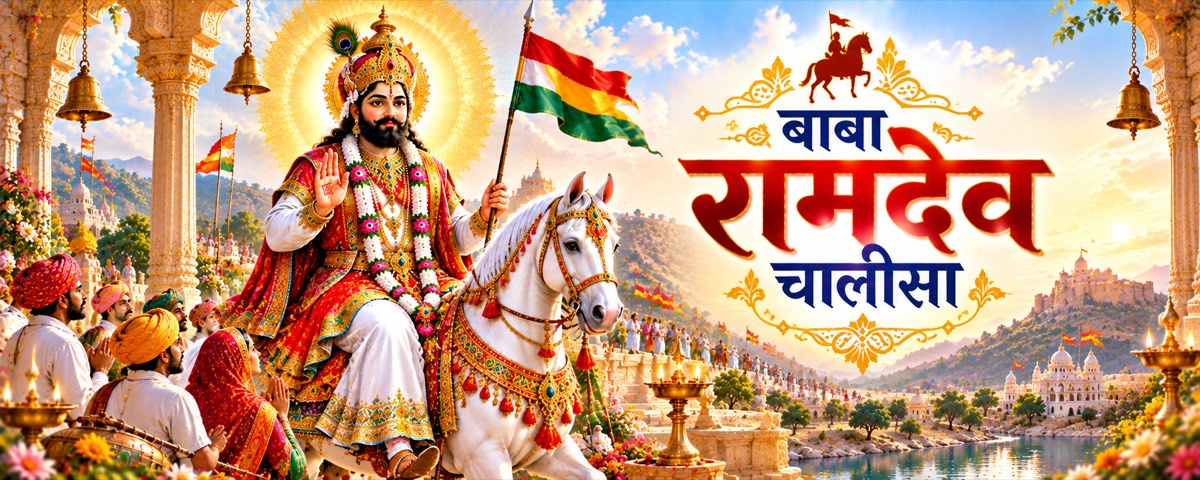
Baba Ramdev (Ramdevji, Ramsa Pir) was a fourteenth-century Tanwar Rajput of Pokaran region in western Rajasthan, son of Ajmal and Mainade. He is remembered as a protector of the poor and of communities then kept at the margins, and he is worshipped by Hindus as an avatar of Krishna and by many Muslims as Ramsa Pir. His samadhi at Ramdevra (Runicha), near Pokaran in Jaisalmer district, draws huge crowds; devotees walk there carrying white flags, and the deity is often shown riding a blue (lila) horse.
What the chalisa says
The opening dohas say he came "from Dwarkesh" (Krishna of Dwarka) and took human birth in Ajmal's house. The chaupais then do what the folk ballads do: count the parchas, the proofs or miracles, one by one.
- Infancy: the first parcha was to his father: milk appeared in the vessel and kumkum footprints on the floor as the baby appeared in the cradle. The second was to his mother: he lifted the boiling-over milk off the fire. The third was to the townsfolk: a horse made of rags carried him.
- Protection: he killed the demon Bhairav; freed Ratna from captivity at Pungal; saved a sinking boat when the merchant Bohita called out; revived Sugna's dead son and, later, the son of a bakshi (official).
- Salt and sugar: a banjara who claimed his sacks of mishri held only salt found the sugar really had turned to salt, and Ramdev's grace turned it back into mishri.
- The pirs: the thirteenth parcha is the visit of the pirs, the story told across Rajasthan of five pirs from Mecca who found their own bowls produced in Ramdev's tent, and who then called him Pir.
- Water and land: he had Ram Sarovar dug, filled a dry nadi with water, and sent milk from a goat's teats for Harji, who received self-knowledge.
The chalisa closes not with a doha but with the poet's humility: "I am a fool; where could I find Sharada's wisdom? I wrote this chalisa as my mind allowed."
When to recite it
- Ramdev Jayanti / Baba Ri Beej, Bhadrapad shukla dwitiya, which opens the great Ramdevra mela that runs to ekadashi.
- The dooj (dwitiya) of each month, Baba's day for many families, with a lamp, a white or saffron flag and churma bhog.
- Before a long journey or when someone in the family is ill, recalling the parchas of rescue.
Frequently asked questions
When is the Ramdevra mela?
From Bhadrapad shukla dwitiya to ekadashi, usually in August or September.
Why is Baba Ramdev called Ramsa Pir?
Folk tradition says pirs from Mecca who tested him became his admirers; the chalisa's thirteenth parcha alludes to this. Muslims who revere him use the name Ramsa Pir.
What is a parcha?
A Rajasthani word for a proof or miracle. The chalisa numbers twenty-four of them.
What should be offered to Baba Ramdev?
Churma, coconut, a lamp and a flag (dhaja). Cloth horses (kapde ke ghode) are offered at Ramdevra, recalling the third parcha.
Who was Dalibai?
A devotee of Ramdev from a Meghwal family, venerated beside his samadhi at Ramdevra. She is not named in this chalisa but is central to the shrine's tradition.
Spotted a mistake?
If you find any grammatical, Hindi, English, mantra-text or other mistake on this page, tell us — we will correct it within 24 hours.