
Original text
॥ दोहा ॥ श्री गुरु पदरज शीशधर प्रथम सुमिरू गणेश ॥ ध्यान शारदा ह्रदयधर भजुँ भवानी महेश ॥ चरण शरण विप्लव पड़े हनुमत हरे कलेश । श्याम चालीसा भजत हुँ जयति खाटू नरेश ॥ ॥ चौपाई ॥ वन्दहुँ श्याम प्रभु दुःख भंजन । विपत विमोचन कष्ट निकंदन ॥1॥ सांवल रूप मदन छविहारी । केशर तिलक भाल दुतिकारी ॥2॥ मौर मुकुट केसरिया बागा । गल वैजयंति चित अनुरागा ॥3॥ नील अश्व मौरछडी प्यारी । करतल त्रय बाण दुःख हारी ॥4॥ सूर्यवर्च वैष्णव अवतारे । सुर मुनि नर जन जयति पुकारे ॥5॥ पिता घटोत्कच मोर्वी माता । पाण्डव वंशदीप सुखदाता ॥6॥ बर्बर केश स्वरूप अनूपा । बर्बरीक अतुलित बल भूपा ॥7॥ कृष्ण तुम्हे सुह्रदय पुकारे । नारद मुनि मुदित हो निहारे ॥8॥ मौर्वे पूछत कर अभिवन्दन । जीवन लक्ष्य कहो यदुनन्दन ॥9॥ गुप्त क्षेत्र देवी अराधना । दुष्ट दमन कर साधु साधना ॥10॥ बर्बरीक बाल ब्रह्मचारी । कृष्ण वचन हर्ष शिरोधारी ॥11॥ तप कर सिद्ध देवियाँ कीन्हा । प्रबल तेज अथाह बल लीन्हा ॥12॥ यज्ञ करे विजय विप्र सुजाना । रक्षा बर्बरीक करे प्राना ॥13॥ नव कोटि दैत्य पलाशि मारे । नागलोक वासुकि भय हारे ॥14॥ सिद्ध हुआ चँडी अनुष्ठाना । बर्बरीक बलनिधि जग जाना ॥15॥ वीर मोर्वेय निजबल परखन । चले महाभारत रण देखन ॥16॥ माँगत वचन माँ मोर्वि अम्बा । पराजित प्रति पाद अवलम्बा ॥17॥ आगे मिले माधव मुरारे । पूछे वीर क्युँ समर पधारे ॥18॥ रण देखन अभिलाषा भारी । हारे का सदैव हितकारी ॥19॥ तीर एक तीहुँ लोक हिलाये । बल परख श्री कृष्ण सँकुचाये ॥20॥ यदुपति ने माया से जाना । पार अपार वीर को पाना ॥21॥ धर्म युद्ध की देत दुहाई । माँगत शीश दान यदुराई ॥22॥ मनसा होगी पूर्ण तिहारी । रण देखोगे कहे मुरारी ॥23॥ शीश दान बर्बरीक दीन्हा । अमृत बर्षा सुरग मुनि कीन्हा ॥24॥ देवी शीश अमृत से सींचत । केशव धरे शिखर जहँ पर्वत ॥25॥ जब तक नभ मण्डल मे तारे । सुर मुनि जन पूजेंगे सारे ॥26॥ दिव्य शीश मुद मंगल मूला । भक्तन हेतु सदा अनुकूला ॥27॥ रण विजयी पाण्डव गर्वाये । बर्बरीक तब न्याय सुनाये ॥28॥ सर काटे था चक्र सुदर्शन । रणचण्डी करती लहू भक्षन ॥29॥ न्याय सुनत हर्षित जन सारे । जग में गूँजे जय जयकारे ॥30॥ श्याम नाम घनश्याम दीन्हा । अजर अमर अविनाशी कीन्हा ॥31॥ जन हित प्रकटे खाटू धामा । लख दाता दानी प्रभु श्यामा ॥32॥ खाटू धाम मौक्ष का द्वारा । श्याम कुण्ड बहे अमृत धारा ॥33॥ शुदी द्वादशी फाल्गुण मेला । खाटू धाम सजे अलबेला ॥34॥ एकादशी व्रत ज्योत द्वादशी । सबल काय परलोक सुधरशी ॥35॥ खीर चूरमा भोग लगत हैं । दुःख दरिद्र कलेश कटत हैं ॥36॥ श्याम बहादुर सांवल ध्याये । आलु सिँह ह्रदय श्याम बसाये ॥37॥ मोहन मनोज विप्लव भाँखे । श्याम धणी म्हारी पत राखे ॥38॥ नित प्रति जो चालीसा गावे । सकल साध सुख वैभव पावे ॥39॥ श्याम नाम सम सुख जग नाहीं । भव भय बन्ध कटत पल माहीं ॥40॥ ॥ दोहा ॥ त्रिबाण दे त्रिदोष मुक्ति दर्श दे आत्म ज्ञान । चालीसा दे प्रभु भुक्ति सुमिरण दे कल्यान ॥ खाटू नगरी धन्य हैं श्याम नाम जयगान । अगम अगोचर श्याम हैं विरदहिं स्कन्द पुरान ॥
Transliteration
Doha: Shri Guru Padraj Sheeshdhar Pratham Sumiru Ganesh. Dhyan Sharada Hridaydhar Bhajun Bhavani Mahesh. Charan Sharan Viplav Pade Hanumat Hare Kalesh. Shyam Chalisa Bhajat Hun Jayati Khatu Naresh. Chaupai: 1. Vandahun Shyam Prabhu Dukh Bhanjan, Vipat Vimochan Kasht Nikandan. 2. Sanwal Roop Madan Chhavihari, Keshar Tilak Bhaal Dutikari. 3. Maur Mukut Kesariya Baga, Gal Vaijayanti Chit Anuraga. 4. Neel Ashv Maurchhadi Pyari, Kartal Tray Baan Dukh Hari. 5. Suryavarch Vaishnav Avatare, Sur Muni Nar Jan Jayati Pukare. 6. Pita Ghatotkach Morvi Mata, Pandav Vanshdeep Sukhdata. 7. Barbar Kesh Swaroop Anupa, Barbarik Atulit Bal Bhupa. 8. Krishna Tumhe Suhriday Pukare, Narad Muni Mudit Ho Nihare. 9. Maurve Poochhat Kar Abhivandan, Jeevan Lakshya Kaho Yadunandan. 10. Gupt Kshetra Devi Aradhana, Dusht Daman Kar Sadhu Sadhana. 11. Barbarik Baal Brahmachari, Krishna Vachan Harsh Shirodhari. 12. Tap Kar Siddh Deviyan Kinha, Prabal Tej Athah Bal Linha. 13. Yagya Kare Vijay Vipra Sujana, Raksha Barbarik Kare Prana. 14. Nav Koti Daitya Palashi Mare, Naaglok Vasuki Bhay Hare. 15. Siddh Hua Chandi Anushthana, Barbarik Balnidhi Jag Jana. 16. Veer Morvey Nijbal Parkhan, Chale Mahabharat Ran Dekhan. 17. Mangat Vachan Maa Morvi Amba, Parajit Prati Paad Avalamba. 18. Aage Mile Madhav Murare, Poochhe Veer Kyun Samar Padhare. 19. Ran Dekhan Abhilasha Bhari, Haare Ka Sadaiv Hitkari. 20. Teer Ek Teehun Lok Hilaye, Bal Parakh Shri Krishna Sankuchaye. 21. Yadupati Ne Maya Se Jana, Paar Apaar Veer Ko Pana. 22. Dharm Yuddh Ki Det Duhai, Mangat Sheesh Daan Yadurai. 23. Mansa Hogi Poorn Tihari, Ran Dekhoge Kahe Murari. 24. Sheesh Daan Barbarik Dinha, Amrit Barsha Surag Muni Kinha. 25. Devi Sheesh Amrit Se Seenchat, Keshav Dhare Shikhar Jahan Parvat. 26. Jab Tak Nabh Mandal Me Tare, Sur Muni Jan Pujenge Sare. 27. Divya Sheesh Mud Mangal Moola, Bhaktan Hetu Sada Anukoola. 28. Ran Vijayi Pandav Garvaye, Barbarik Tab Nyay Sunaye. 29. Sar Kaate Tha Chakra Sudarshan, Ranchandi Karti Lahu Bhakshan. 30. Nyay Sunat Harshit Jan Sare, Jag Mein Goonje Jai Jaikare. 31. Shyam Naam Ghanshyam Dinha, Ajar Amar Avinashi Kinha. 32. Jan Hit Prakate Khatu Dhama, Lakh Data Dani Prabhu Shyama. 33. Khatu Dham Moksh Ka Dwara, Shyam Kund Bahe Amrit Dhara. 34. Shudi Dwadashi Phalgun Mela, Khatu Dham Saje Albela. 35. Ekadashi Vrat Jyot Dwadashi, Sabal Kaay Parlok Sudharshi. 36. Kheer Churma Bhog Lagat Hain, Dukh Daridra Kalesh Katat Hain. 37. Shyam Bahadur Sanwal Dhyaye, Aalu Singh Hriday Shyam Basaye. 38. Mohan Manoj Viplav Bhankhe, Shyam Dhani Mhari Pat Rakhe. 39. Nit Prati Jo Chalisa Gave, Sakal Sadh Sukh Vaibhav Pave. 40. Shyam Naam Sam Sukh Jag Nahin, Bhav Bhay Bandh Katat Pal Mahin. Doha: Tribaan De Tridosh Mukti Darsh De Aatm Gyan. Chalisa De Prabhu Bhukti Sumiran De Kalyan. Khatu Nagari Dhanya Hain Shyam Naam Jaygaan. Agam Agochar Shyam Hain Viradahin Skand Puran.
Who Khatu Shyam is
Khatu Shyam ji is worshipped at Khatu, a small town in Sikar district, Rajasthan, as Barbarik, the grandson of Bhima. The chalisa sets out his family in chaupai 6: his father is Ghatotkacha, Bhima's son by the rakshasi Hidimba, and his mother is Morvi. That makes him the "lamp of the Pandava line". Chaupai 7 explains his name: he was called Barbarik because of his curly hair (barbar kesh). Chaupai 5 adds that he had been the yaksha Suryavarcha in an earlier life.
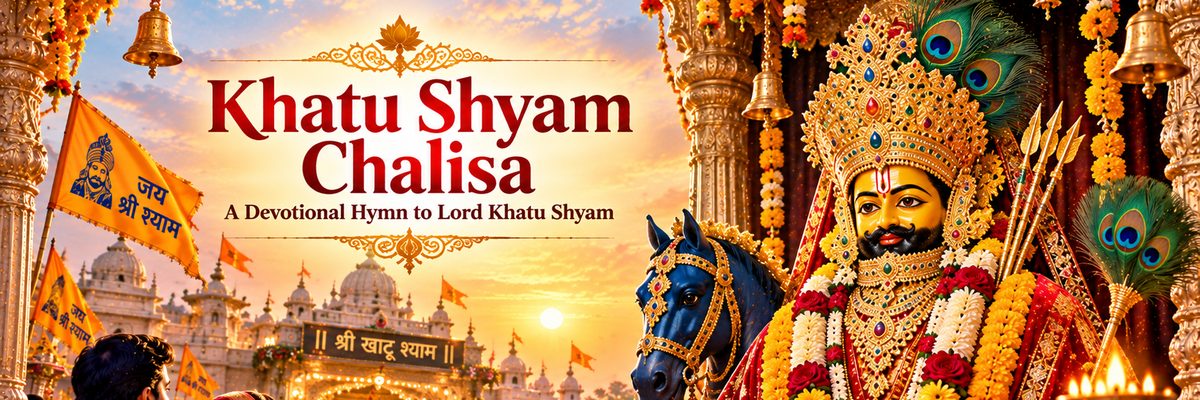
The figure on the altar matches the first chaupais closely. He is dark-skinned, with saffron tilak, a peacock crown, a saffron robe and a Vaijayanti garland. He rides a blue horse, carries a peacock-feather wand (morchhadi), and holds three arrows. Those three arrows are the key to his story.
The vow and the head
Chaupais 8 to 15 tell of his training. When his mother asked Krishna what her son's purpose in life should be, Krishna sent the boy to worship the Devi at Gupta Kshetra. There he stayed a celibate disciple, did penance, and gained great strength and power from the goddesses. He guarded the sacrifice of a Brahmin named Vijay, killed nine crore Palashi demons, and freed the serpent king Vasuki from fear.
The heart of the chalisa is chaupais 16 to 25. Barbarik set out to watch the Mahabharata war. Before he left, his mother made him promise to support whichever side was losing (parajit prati), which is why chaupai 19 calls him haare ka sadaiv hitkari, always the friend of the defeated. On the way he met Krishna. To show his power, one arrow shook the three worlds. Krishna saw that such a warrior, always switching to the losing side, could never let the war end. Invoking the duty of a righteous war, Krishna asked him for his head as a gift. Barbarik gave it. The gods rained nectar, the Devi sprinkled the head with nectar, and Krishna placed it on a hilltop so that Barbarik could watch the whole war, as he had wished.
The judgement after the war
Chaupais 28 to 30 hold the story's sting. After the victory, the Pandavas argued proudly over who had won it. They asked the head, which had seen everything. Barbarik's verdict: Krishna's Sudarshana chakra had been cutting off heads, and the goddess Ranchandi had been drinking the blood. Nobody's pride survived that answer, and the world rang with praise. Krishna then gave him his own name, Shyam, and made him ageless and immortal.
This story is not in Vyasa's Mahabharata. It comes from later tradition, and the chalisa's last line credits the Skanda Purana for Shyam's fame.
Khatu Dham, the mela and the bhog
Chaupais 32 to 36 move from myth to the temple. Shyam appeared at Khatu for the good of the people, as Lakhdatar, the giver to lakhs. Khatu Dham is called the gate of moksha, and nectar flows in the Shyam Kund, the tank where his head is said to have been found. The great Phalgun mela, on the Shukla Dwadashi of Phalgun, fills Khatu with pilgrims, many walking from Ringas with the nishan flag. Devotees keep the Ekadashi fast, light the jyot on Dwadashi, and offer kheer and churma.
Chaupai 37 names two devotees honoured in the Khatu tradition, Shyam Bahadur and Aalu Singh. The poet signs his name as "Viplav", both in the opening doha and in chaupai 38, in Rajasthani: Shyam Dhani mhari pat rakhe, "Lord Shyam keeps my honour".
How it is read
Devotees read the chalisa on Ekadashi and Dwadashi, the days the chalisa itself ties to Shyam's worship, and at jagrans and kirtans through the night. Many read it before travelling to Khatu, or as a vow when they feel they are "losing", since Shyam's whole promise is to be the support of those who have lost (haare ka sahara). The closing doha sums up the gifts in threes: his three arrows free you from the three doshas, his darshan gives self-knowledge, the chalisa gives worldly comfort, and remembering him brings ultimate good.
Spotted a mistake?
If you find any grammatical, Hindi, English, mantra-text or other mistake on this page, tell us — we will correct it within 24 hours.