
Khatu Shyam Ji
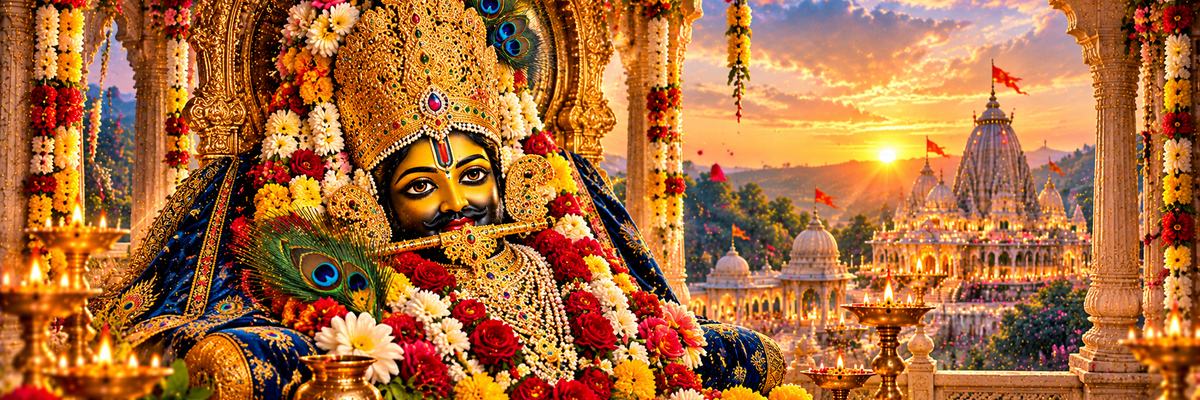
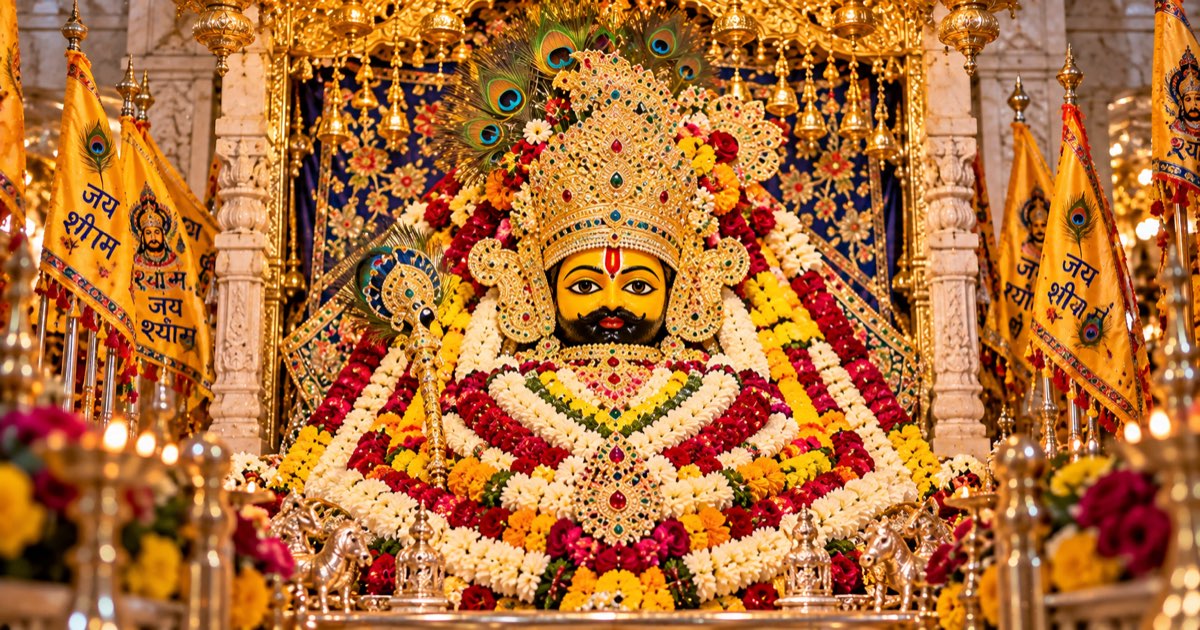
Barbarik, Bhima's grandson, who gave his head to Krishna before the Mahabharata war and is worshipped at Khatu as Shyam, the support of the defeated.
Who Khatu Shyam is
Khatu Shyam ji is Barbarik, a warrior of the Pandava line, worshipped in the small town of Khatu in Sikar district, Rajasthan, as a form of Krishna himself. His father was Ghatotkacha, Bhima's son by the rakshasi Hidimba, and his mother was Morvi, which is why devotees call him Morvi Nandan. The name Barbarik is said to come from his curly hair. He is not a Vedic or Puranic god in the usual sense: his story belongs to later tradition, and the Khatu Shyam Chalisa itself credits the Skanda Purana for his fame. Yet today he draws some of the largest crowds of any shrine in north India.
The three arrows and the gift of a head
Barbarik did penance to the Devi and won three arrows, which is why he is called Teen Baan Dhari. When the Mahabharata war was about to begin, he set out to watch it, having promised his mother that he would always fight for whichever side was losing. On the way he met Krishna. Krishna saw the problem at once: a warrior that powerful, always switching to the weaker side, would keep the war from ever ending. So he asked Barbarik for his head as a gift, and Barbarik gave it without hesitation. That is the source of his best-known title, Sheesh ke Daani, the one who gave his head. At Barbarik's request the head was placed on a hilltop so he could see the whole war. When it was over and the Pandavas argued about who deserved credit for the victory, they asked the head. Its answer humbled all of them: only Krishna's Sudarshana chakra had been at work. Krishna then gave him his own name, Shyam, and the promise that he would be worshipped in the Kali age.
How the head came to Khatu
Temple tradition says the head was buried and forgotten until a cow began releasing her milk on her own at one spot in Khatu. When the ground was dug, the head was found. The tank at that place is the Shyam Kund, where pilgrims bathe before darshan. The shrine's present building dates to the early eighteenth century and has been expanded many times since. What devotees see on the altar is the head alone, adorned with a peacock-feather crown, saffron cloth and fresh flowers each day.
Haare ka Sahara
The title that explains his popularity is Haare ka Sahara, the support of the defeated. Because he vowed to stand with the losing side, people come to him when something has gone wrong: a failing business, a court case, an illness, a family crisis. Other names you will hear are Lakhdatar (the giver to lakhs), Shyam Baba, and Shyam Dhani (Lord Shyam). Devotees speak of him with unusual intimacy, often simply as Baba.
The Phalgun mela, Ekadashi and the nishan
The great Khatu fair falls in Phalgun, peaking on Shukla Ekadashi and Dwadashi, roughly February or March. Lakhs of pilgrims walk there, many from Ringas, about 17 km away, carrying the nishan, a saffron or coloured flag offered at the temple. Through the year, every Shukla Ekadashi is his special day, and many keep the Ekadashi fast and come for darshan on Dwadashi. Night-long Shyam jagrans with bhajans are held in homes and halls across north India, and the offering he is known for is churma along with kheer.
Worshipping him at home
A simple home puja is enough: a picture of Shyam Baba, a ghee lamp, incense, a sweet such as churma or kheer, and a few minutes of the Khatu Shyam Chalisa followed by the aarti "Om Jai Shri Shyam Hare". Many devotees chant "Jai Shri Shyam" as a greeting and a mantra. The spirit of the worship is surrender: the head he gave is a reminder that the devotee, too, offers their pride at his feet.
Mantra
Stotra
Chalisa
Aarti
Temple
Puja Vidhi
Spotted a mistake?
If you find any grammatical, Hindi, English, mantra-text or other mistake on this page, tell us — we will correct it within 24 hours.