
Chalisa
Forty-verse hymns to a deity, among the most widely recited devotional texts in Hindu homes.
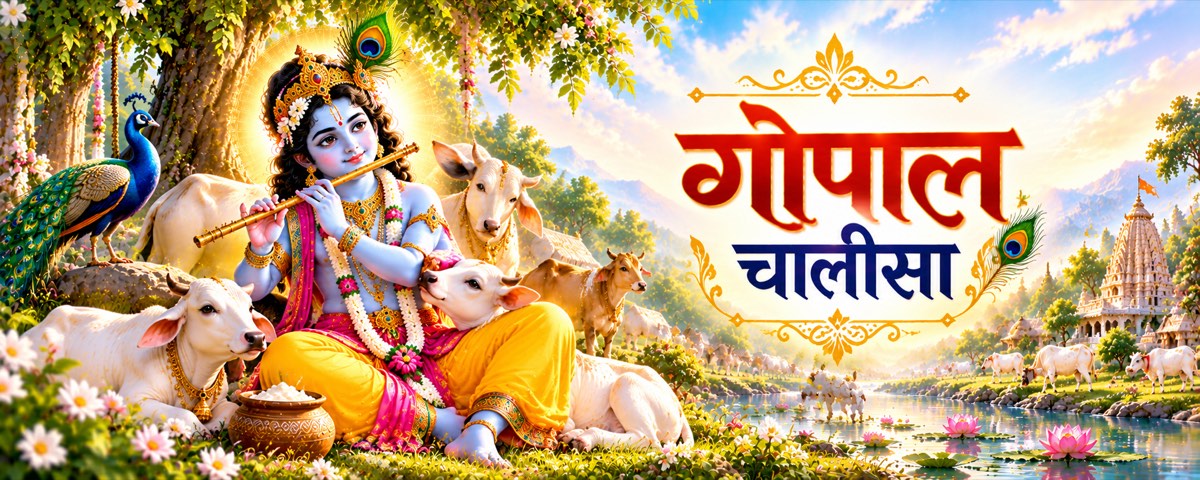
Gopal Chalisa
The Gopal Chalisa tells Krishna's whole life in forty chaupais — from Putana and the Govardhan to the Gita and Draupadi's sari — and ends with a prayer for Vrindavan. What its episodes are, the poet Jayramdev, and when it is recited.
Read more →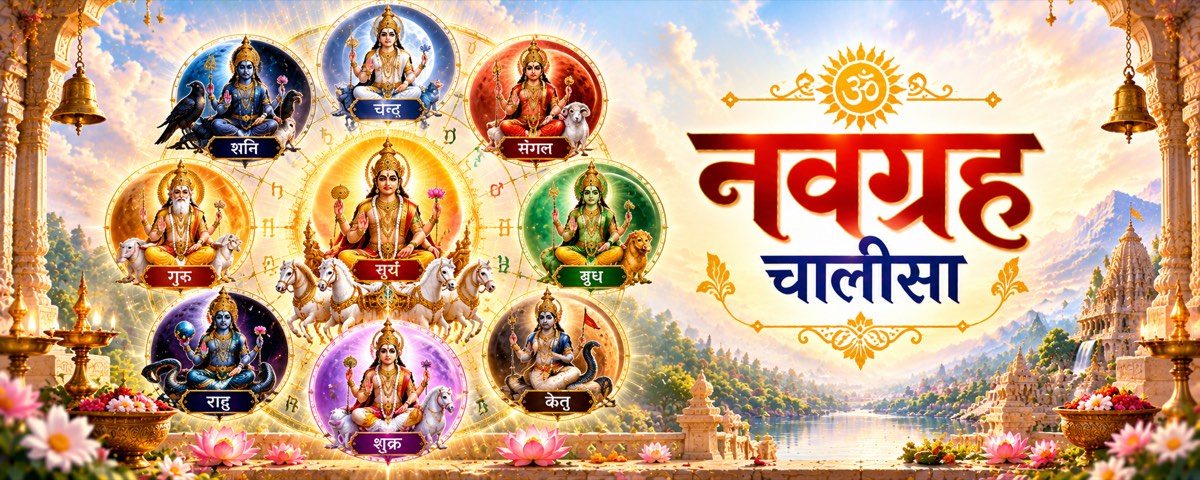
Navgrah Chalisa
One chalisa for all nine grahas — Surya, Chandra, Mangal, Budh, Brihaspati, Shukra, Shani, Rahu and Ketu — with a short stuti for each. The names it gives every planet, the poet Sundardas of Prayag, and when it is recited.
Read more →
Vindhyeshwari Chalisa
The chalisa of Maa Vindhyavasini, the goddess of the Vindhya hills at Vindhyachal near Mirzapur. Its long litany of her names, what it promises for debt, illness and childlessness, and how it is recited in Navratri.
Read more →Why forty verses
A chalisa (from "chalis," forty) is a devotional composition of roughly forty verses praising a specific deity's qualities, deeds and power, typically ending with a phalashruti — a closing statement describing the benefit of reciting it. The most recited example by far is the Hanuman Chalisa, composed by Tulsidas, but chalisas exist for most major deities, including Shiva, Ganesh, Lakshmi, Durga, Saraswati, Vishnu, Krishna, Ram and Surya.
Verified, complete text
Every chalisa on this site is checked against established published sources and given here in full — not summarised or trimmed to the opening lines — because a chalisa is typically recited start to finish as a single unbroken practice, not read in excerpts.
How it's typically recited
Most devotees recite a chalisa once daily, often paired with a fast or a particular day of the week associated with that deity — Hanuman's chalisa on Tuesdays and Saturdays, for instance, as explained in our Tuesday Hanuman Bhakti guide.