
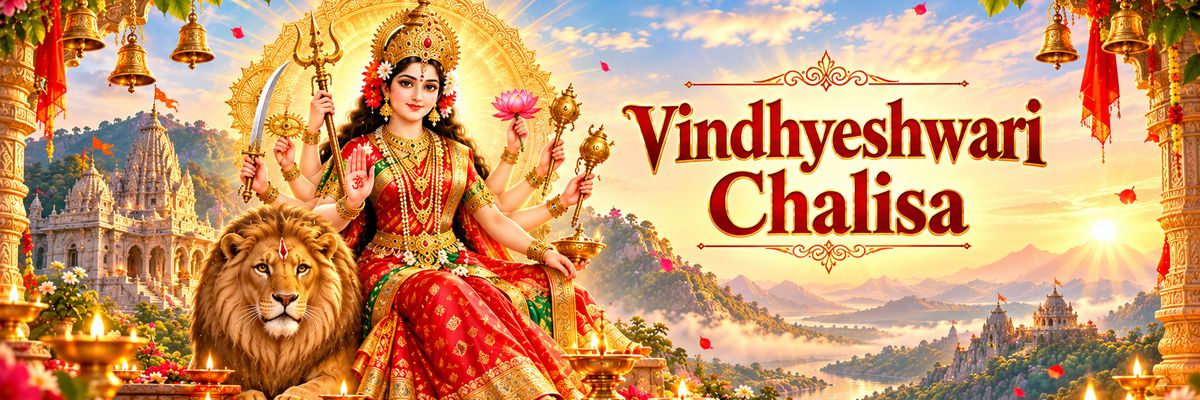
Original text
॥ दोहा ॥ नमो नमो विन्ध्येश्वरी, नमो नमो जगदम्ब । सन्तजनों के काज में, करती नहीं विलम्ब ॥ जय जय जय विन्ध्याचल रानी। आदिशक्ति जगविदित भवानी ॥ सिंहवाहिनी जै जगमाता । जै जै जै त्रिभुवन सुखदाता ॥ कष्ट निवारण जै जगदेवी । जै जै सन्त असुर सुर सेवी ॥ महिमा अमित अपार तुम्हारी । शेष सहस मुख वर्णत हारी ॥ दीनन को दु:ख हरत भवानी । नहिं देखो तुम सम कोउ दानी ॥ सब कर मनसा पुरवत माता । महिमा अमित जगत विख्याता ॥ जो जन ध्यान तुम्हारो लावै । सो तुरतहि वांछित फल पावै ॥ तुम्हीं वैष्णवी तुम्हीं रुद्रानी । तुम्हीं शारदा अरु ब्रह्मानी ॥ रमा राधिका श्यामा काली । तुम्हीं मातु सन्तन प्रतिपाली ॥ उमा माध्वी चण्डी ज्वाला । वेगि मोहि पर होहु दयाला ॥ तुम्हीं हिंगलाज महारानी । तुम्हीं शीतला अरु विज्ञानी ॥ दुर्गा दुर्ग विनाशिनी माता । तुम्हीं लक्ष्मी जग सुख दाता ॥ तुम्हीं जाह्नवी अरु रुद्रानी । हे मावती अम्ब निर्वानी ॥ अष्टभुजी वाराहिनि देवा । करत विष्णु शिव जाकर सेवा ॥ चौंसट्ठी देवी कल्यानी । गौरि मंगला सब गुनखानी ॥ पाटन मुम्बादन्त कुमारी । भाद्रिकालि सुनि विनय हमारी ॥ बज्रधारिणी शोक नाशिनी । आयु रक्षिनी विन्ध्यवासिनी ॥ जया और विजया वैताली । मातु सुगन्धा अरु विकराली ॥ नाम अनन्त तुम्हारि भवानी । वरनै किमि मानुष अज्ञानी ॥ जापर कृपा मातु तब होई । जो वह करै चाहे मन जोई ॥ कृपा करहु मोपर महारानी । सिद्ध करहु अम्बे मम बानी ॥ जो नर धरै मातु कर ध्याना । ताकर सदा होय कल्याना ॥ विपति ताहि सपनेहु नाहिं आवै । जो देवीकर जाप करावै ॥ जो नर कहँ ऋण होय अपारा । सो नर पाठ करै शत बारा ॥ निश्चय ऋण मोचन होई जाई । जो नर पाठ करै चित लाई ॥ अस्तुति जो नर पढ़े पढ़अवे । या जग में सो बहु सुख पावे ॥ जाको व्याधि सतावे भाई । जाप करत सब दूर पराई ॥ जो नर अति बन्दी महँ होई । बार हजार पाठ करि सोई ॥ निश्चय बन्दी ते छुट जाई । सत्य वचन मम मानहु भाई ॥ जापर जो कछु संकट होई । निश्चय देविहिं सुमिरै सोई ॥ जा कहँ पुत्र होय नहिं भाई । सो नर या विधि करे उपाई ॥ पाँच वर्ष जो पाठ करावै । नौरातन महँ विप्र जिमावै ॥ निश्चय होहिं प्रसन्न भवानी । पुत्र देहिं ता कहँ गुणखानी ॥ ध्वजा नारियल आन चढ़ावै । विधि समेत पूजन करवावै ॥ नित प्रति पाठ करै मन लाई । प्रेम सहित नहिं आन उपाई ॥ यह श्री विन्ध्याचल चालीसा । रंक पढ़त होवे अवनीसा ॥ यह जन अचरज मानहु भाई । कृपा दृश्टि जापर होइ जाई ॥ जै जै जै जग मातु भवानी । कृपा करहु मोहि निज जन जानी ॥
Transliteration
Doha: Namo Namo Vindhyeshvari Namo Namo Jagadamba Santajanon Ke Kaj Mein Karati Nahin Vilamba. Jai Jai Jai Vindhyachal Rani Adishakti Jagavidit Bhavani. Sinhavahini Jai Jagamata Jai Jai Jai Tribhuvan Sukhadata. Kashta Nivaran Jai Jagadevi Jai Jai Santa Asur Sur Sevi. Mahima Amit Apar Tumhari Shesh Sahas Mukh Varnat Hari. Dinan Ko Du:kha Harat Bhavani Nahin Dekho Tum Sam Kou Dani. Sab Kar Manasa Puravat Mata Mahima Amit Jagat Vikhyata. Jo Jan Dhyan Tumharo Lavai So Turatahi Vanchhit Phal Pavai. Tumhin Vaishnavi Tumhin Rudrani Tumhin Sharada Aru Brahmani. Rama Radhika Shyama Kali Tumhin Matu Santan Pratipali. Uma Madhvi Chandi Jvala Vegi Mohi Par Hohu Dayala. Tumhin Hingalaj Maharani Tumhin Shitala Aru Vigyani. Durga Durga Vinashini Mata Tumhin Lakshmi Jag Sukh Data. Tumhin Jahnavi Aru Rudrani He Mavati Amba Nirvani. Ashtabhuji Varahini Deva Karat Vishnu Shiv Jakar Seva. Chaunsatthi Devi Kalyani Gauri Mangala Sab Gunakhani. Patan Mumbadanta Kumari Bhadrikali Suni Vinay Hamari. Bajradharini Shok Nashini Ayu Rakshini Vindhyavasini. Jaya Aur Vijaya Vaitali Matu Sugandha Aru Vikarali. Nam Ananta Tumhari Bhavani Varanai Kimi Manush Agyani. Japar Kripa Matu Tab Hoi Jo Vah Karai Chahe Man Joi. Kripa Karahu Mopar Maharani Siddha Karahu Ambe Mam Bani. Jo Nar Dharai Matu Kar Dhyana Takar Sada Hoy Kalyana. Vipati Tahi Sapanehu Nahin Avai Jo Devikar Jap Karavai. Jo Nar Kahan Rin Hoy Apara So Nar Path Karai Shat Bara. Nishchay Rin Mochan Hoi Jai Jo Nar Path Karai Chit Lai. Astuti Jo Nar Parhe Parhaave Ya Jag Mein So Bahu Sukh Pave. Jako Vyadhi Satave Bhai Jap Karat Sab Dur Parai. Jo Nar Ati Bandi Mahan Hoi Bar Hajar Path Kari Soi. Nishchay Bandi Te Chhut Jai Satya Vachan Mam Manahu Bhai. Japar Jo Kachhu Sankat Hoi Nishchay Devihin Sumirai Soi. Ja Kahan Putra Hoy Nahin Bhai So Nar Ya Vidhi Kare Upai. Panch Varsha Jo Path Karavai Nauratan Mahan Vipra Jimavai. Nishchay Hohin Prasanna Bhavani Putra Dehin Ta Kahan Gunakhani. Dhvaja Nariyal An Charhavai Vidhi Samet Pujan Karavavai. Nit Prati Path Karai Man Lai Prem Sahit Nahin An Upai. Yah Shri Vindhyachal Chalisa Rank Parhat Hove Avanisa. Yah Jan Acharaj Manahu Bhai Kripa Drishti Japar Hoi Jai. Jai Jai Jai Jag Matu Bhavani Kripa Karahu Mohi Nij Jan Jani.
Who Vindhyeshwari is
Vindhyeshwari, "the queen of the Vindhyas", is the goddess better known as Vindhyavasini, she who lives in the Vindhya hills. Her main temple stands at Vindhyachal, on the bank of the Ganga a few kilometres from Mirzapur in Uttar Pradesh. The Durga Saptashati (11.41–42) explains her name: the Devi says that in the twenty-eighth yuga of the Vaivasvata manvantara she will be born in Nandagopa's house from Yashoda's womb and, living on the Vindhya mountain as Vindhyachalanivasini, will destroy the demons Shumbha and Nishumbha. This is the girl-child whom Kamsa tried to dash against a rock and who slipped from his hands into the sky.
Pilgrims at Vindhyachal traditionally do the trikona parikrama, the triangle of three shrines: Vindhyavasini herself, Ashtabhuja on the hill above, and Kali in the cave of Kalikhoh. The chalisa reflects this, calling her both ashtabhuji (eight-armed) and Kali in the same breath.
What the chalisa says
The opening doha sets the tone: "Namo namo Vindhyeshwari... in the work of saints she never delays." The chaupais then do something unusual for a chalisa. Instead of telling one story, they name her as every goddess at once. She is Vaishnavi, Rudrani, Sharada and Brahmani; Rama, Radhika, Shyama and Kali; Uma, Madhavi, Chandi and Jwala; Hinglaj, Sheetala, Durga and Lakshmi; Jahnavi, the Ganga. She is Varahi, Gauri, Mangala and Bhadrakali, the "sixty-four devis", Jaya and Vijaya, Vaitali, Sugandha and Vikrali. The point the poet makes outright is that her names are endless: "how can an ignorant human describe them?"
The second half turns to what the recitation is believed to do. These promises are specific:
- Debt: one who is in great debt should recite it a hundred times, and "the debt will surely be released".
- Illness: "whoever is troubled by disease, chanting drives it all away".
- Imprisonment: one held in confinement should recite it a thousand times.
- Childlessness: recite it for five years, feed brahmins in Navratri, offer a flag and a coconut, and do the puja properly.
It closes not with a doha but with a plea: "Jai jai jai jag maatu bhavani, kripa karahu mohi nij jan jaani" — have mercy, knowing me as your own.
When and how to recite it
- Navratri, both Chaitra and Shardiya, is its season. Many households recite it once each morning through the nine days, often alongside the Durga Chalisa.
- Tuesdays and Fridays are the usual weekly days for Devi recitations.
- Light a lamp before the goddess, offer red flowers and a little sindoor, and recite with attention. For a vow such as the hundred recitations for debt, decide the count and number of days in advance and keep to it.
A note on the text
This is a folk-devotional chalisa in Awadhi-flavoured Hindi, not a Sanskrit scripture, and printed versions differ slightly in spelling (Vindhyeshvari, Vindhyeshwari) and in a few names in the litany. Our text has no closing doha, which matches the common printed version. The phalashruti promises are statements of faith, best read as the poet's encouragement to persevere rather than as guarantees.
Frequently asked questions
Who is Maa Vindhyavasini?
A form of the Devi who lives on the Vindhya hills. The Durga Saptashati says she was born to Yashoda, the infant Kamsa could not kill, and made the Vindhyas her home. Her temple is at Vindhyachal near Mirzapur.
Is Vindhyeshwari the same as Durga?
Yes, in the sense the chalisa itself takes: it names her as Durga, Kali, Lakshmi, Sharada and many more, all forms of the one Devi.
How many times should the Vindhyeshwari Chalisa be recited for debt?
The chalisa itself says a hundred times. Many people spread this over a fixed number of days, for example eleven a day for nine days and one more.
When is the best time to recite it?
During Navratri, and on Tuesdays and Fridays. Morning, after bathing, in front of a lamp is the most common practice.
What is the trikona parikrama at Vindhyachal?
The circuit of three shrines: Vindhyavasini, Ashtabhuja and Kalikhoh (Kali). Pilgrims believe the visit is complete only after all three.
Can I recite it without visiting Vindhyachal?
Yes. It is meant for recitation at home before any image of the Devi.
Spotted a mistake?
If you find any grammatical, Hindi, English, mantra-text or other mistake on this page, tell us — we will correct it within 24 hours.