
Original text
॥ दोहा ॥ गणपति गिरिजा पुत्र को, सिमरूँ बारम्बार । हाथ जोड़ विनती करूँ, शारद नाम अधार ॥ ॥ चौपाई ॥ जय जय जय गोरख अविनाशी, कृपा करो गुरुदेव प्रकाशी । जय जय जय गोरख गुणज्ञानी, इच्छा रूप योगी वरदानी ॥ अलख निरंजन तुम्हरो नामा, सदा करो भक्तन हित कामा । नाम तुम्हारा जो कोई गावे, जन्म जन्म के दुःख नशावे । जो कोई गोरक्ष नाम सुनावे, भूत पिशाच निकट नहीं आवे । ज्ञान तुम्हारा योग से पावे, रूप तुम्हार लख्या ना जावे । निराकार तुम हो निर्वाणी, महिमा तुम्हरी वेद बखानी । घट घट के तुम अन्तर्यामी, सिद्ध चौरासी करें प्रणामी । भस्म अङ्ग गले नाद विराजे, जटा सीस अति सुन्दर साजे । तुम बिन देव और नहीं दूजा, देव मुनी जन करते पूजा । चिदानन्द सन्तन हितकारी, मङ़्गल करे अमङ़्गल हारी । पूरण ब्रह्म सकल घट वासी, गोरक्षनाथ सकल प्रकासी । गोरक्ष गोरक्ष जो कोई ध्यावे, ब्रह्म रूप के दर्शन पावे । शङ़्कर रूप धर डमरू बाजे, कानन कुण्डल सुन्दर साजे । नित्यानन्द है नाम तुम्हारा, असुर मार भक्तन रखवारा । अति विशाल है रूप तुम्हारा, सुर नर मुनि जन पावं न पारा । दीन बन्धु दीनन हितकारी, हरो पाप हम शरण तुम्हारी । योग युक्ति में हो प्रकाशा, सदा करो सन्तन तन वासा । प्रातःकाल ले नाम तुम्हारा, सिद्धि बढ़े अरु योग प्रचारा । हठ हठ हठ गोरक्ष हठीले, मार मार वैरी के कीले । चल चल चल गोरक्ष विकराला, दुश्मन मान करो बेहाला । जय जय जय गोरक्ष अविनासी, अपने जन की हरो चौरासी । अचल अगम हैं गोरक्ष योगी, सिद्धि देवो हरो रस भोगी । काटो मार्ग यम की तुम आई, तुम बिन मेरा कौन सहाई । अजर अमर है तुम्हरो देहा, सनकादिक सब जोहहिं नेहा । कोटि न रवि सम तेज तुम्हारा, है प्रसिद्ध जगत उजियारा । योगी लखें तुम्हारी माया, पार ब्रह्म से ध्यान लगाया । ध्यान तुम्हारा जो कोई लावे, अष्ट सिद्धि नव निधि घर पावे । शिव गोरक्ष है नाम तुम्हारा, पापी दुष्ट अधम को तारा । अगम अगोचर निर्भय नाथा, सदा रहो सन्तन के साथा । शङ़्कर रूप अवतार तुम्हारा, गोपीचन्द भर्तृहरि को तारा । सुन लीजो गुरु अरज हमारी, कृपा सिन्धु योगी ब्रह्मचारी । पूर्ण आस दास की कीजे, सेवक जान ज्ञान को दीजे । पतित पावन अधम अधारा, तिनके हेतु तुम लेत अवतारा । अलख निरंजन नाम तुम्हारा, अगम पंथ जिन योग प्रचारा । जय जय जय गोरक्ष भगवाना, सदा करो भक्तन कल्याना । जय जय जय गोरक्ष अविनाशी, सेवा करें सिद्ध चौरासी । जो पढ़ही गोरक्ष चालीसा, होय सिद्ध साक्षी जगदीशा । बारह पाठ पढ़े नित्य जोई, मनोकामना पूरण होई । और श्रद्धा से रोट चढ़ावे, हाथ जोड़कर ध्यान लगावे । ॥ दोहा ॥ सुने सुनावे प्रेमवश, पूजे अपने हाथ मन इच्छा सब कामना, पूरे गोरक्षनाथ । अगम अगोचर नाथ तुम, पारब्रह्म अवतार । कानन कुण्डल सिर जटा, अंग विभूति अपार । सिद्ध पुरुष योगेश्वरों, दो मुझको उपदेश । हर समय सेवा करूँ, सुबह शाम आदेश ।
Transliteration
Doha: Ganapati Girija Putra Ko Simarun Barambar Hath Jor Vinati Karun Sharad Nam Adhar. Chaupai: Jai Jai Jai Gorakh Avinashi Kripa Karo Gurudev Prakashi Jai Jai Jai Gorakh Gunagyani Ichchha Rup Yogi Varadani. Alakh Niranjan Tumharo Nama Sada Karo Bhaktan Hit Kama Nam Tumhara Jo Koi Gave Janma Janma Ke Duhkh Nashave Jo Koi Goraksha Nam Sunave Bhut Pishach Nikat Nahin Ave Gyan Tumhara Yog Se Pave Rup Tumhar Lakhya Na Jave Nirakar Tum Ho Nirvani Mahima Tumhari Ved Bakhani Ghat Ghat Ke Tum Antaryami Siddha Chaurasi Karen Pranami Bhasma Anga Gale Nad Viraje Jata Sis Ati Sundar Saje Tum Bin Dev Aur Nahin Duja Dev Muni Jan Karate Puja Chidananda Santan Hitakari Mangal Kare Amangal Hari Puran Brahma Sakal Ghat Vasi Gorakshanath Sakal Prakasi Goraksha Goraksha Jo Koi Dhyave Brahma Rup Ke Darshan Pave Shankar Rup Dhar Damaru Baje Kanan Kundal Sundar Saje Nityananda Hai Nam Tumhara Asur Mar Bhaktan Rakhavara Ati Vishal Hai Rup Tumhara Sur Nar Muni Jan Pavan Na Para Din Bandhu Dinan Hitakari Haro Pap Ham Sharan Tumhari Yog Yukti Mein Ho Prakasha Sada Karo Santan Tan Vasa Pratahkal Le Nam Tumhara Siddhi Barhe Aru Yog Prachara Hath Hath Hath Goraksha Hathile Mar Mar Vairi Ke Kile Chal Chal Chal Goraksha Vikarala Dushman Man Karo Behala Jai Jai Jai Goraksha Avinasi Apane Jan Ki Haro Chaurasi Achal Agam Hain Goraksha Yogi Siddhi Devo Haro Ras Bhogi Kato Marga Yam Ki Tum Ai Tum Bin Mera Kaun Sahai Ajar Amar Hai Tumharo Deha Sanakadik Sab Johahin Neha Koti Na Ravi Sam Tej Tumhara Hai Prasiddha Jagat Ujiyara Yogi Lakhen Tumhari Maya Par Brahma Se Dhyan Lagaya Dhyan Tumhara Jo Koi Lave Ashta Siddhi Nav Nidhi Ghar Pave Shiv Goraksha Hai Nam Tumhara Papi Dushta Adham Ko Tara Agam Agochar Nirbhay Natha Sada Raho Santan Ke Satha Shankar Rup Avatar Tumhara Gopichanda Bhartrihari Ko Tara Sun Lijo Guru Araj Hamari Kripa Sindhu Yogi Brahmachari Purna As Das Ki Kije Sevak Jan Gyan Ko Dije Patit Pavan Adham Adhara Tinake Hetu Tum Let Avatara Alakh Niranjan Nam Tumhara Agam Panth Jin Yog Prachara Jai Jai Jai Goraksha Bhagavana Sada Karo Bhaktan Kalyana Jai Jai Jai Goraksha Avinashi Seva Karen Siddha Chaurasi Jo Parhahi Goraksha Chalisa Hoy Siddha Sakshi Jagadisha Barah Path Parhe Nitya Joi Manokamana Puran Hoi Aur Shraddha Se Rot Charhave Hath Jorakar Dhyan Lagave Doha: Sune Sunave Premavash Puje Apane Hath Man Ichchha Sab Kamana Pure Gorakshanath Agam Agochar Nath Tum Parabrahma Avatar Kanan Kundal Sir Jata Ang Vibhuti Apar Siddha Purush Yogeshvaron Do Mujhako Upadesh Har Samay Seva Karun Subah Sham Adesh
Guru Gorakhnath
Gorakhnath (Goraksha-natha) is the great yogi of the Nath tradition, disciple of Matsyendranath and the teacher from whom the Kanphata ("split-ear") yogis trace their line. Medieval texts on hatha yoga, such as the Goraksha Shataka, are attributed to him, and his name runs through the folk literature of North India and Nepal — Gorakhpur is named after him, and so, by tradition, are the Gorkhas. In the Nath sampradaya he is regarded as a form of Shiva himself, and the chalisa says this outright: "Shiva Goraksh hai naam tumhara" and "Shankar roop avatar tumhara".
This text is the chalisa associated with the Gorakhnath Math at Gorakhpur, the principal seat of the order.
What the chalisa says
The chalisa is less a story than a portrait of the yogi and a statement of Nath teaching:
- Beyond form: he is Alakh Niranjan — the unseen, the stainless — formless and liberated, praised by the Vedas, the inner witness in every body. "Your form cannot be perceived; your knowledge is reached through yoga."
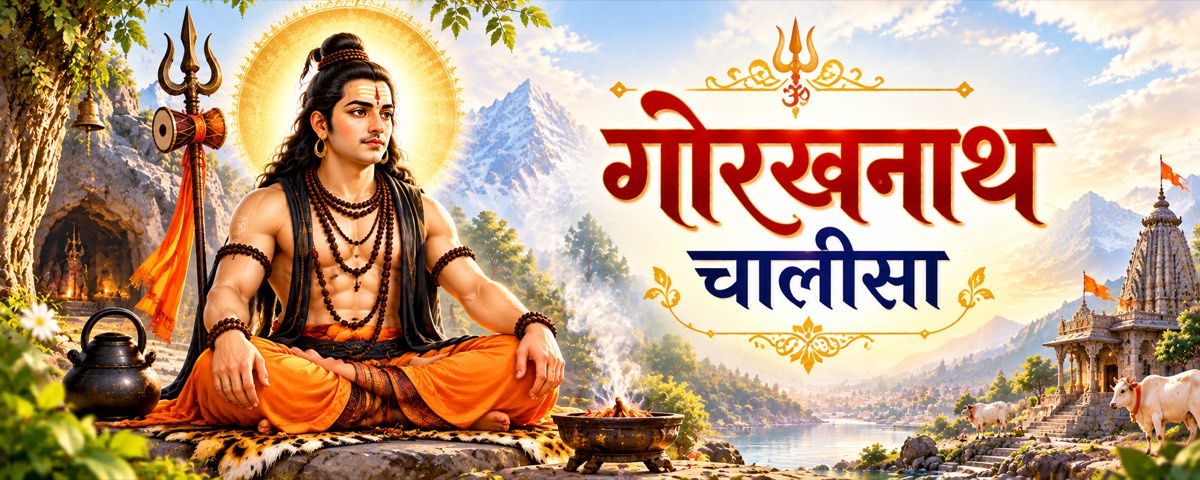
- The yogi's image: ash on the body, the naad (the horn whistle Naths wear on a black thread) at the throat, matted hair, earrings in the ears, a damaru sounding.
- The siddhas: "the eighty-four siddhas bow to you" and "serve you" — the Nath lineage of perfected yogis.
- Those he saved: King Gopichand and King Bhartrihari, both of whom, in Nath legend, renounced their thrones to become his disciples.
- Protection: one who recites his name is free from bhoot and pishach; one who meditates on him gains the eight siddhis and nine nidhis.
There is also a fierce stanza — "Hath hath hath Goraksh hatheele, maar maar vairi ke keele" — invoking him as the unyielding yogi who breaks the bonds of enemies, before the chalisa turns back to surrender: "Without you who is my helper?"
How it is recited
The chalisa gives its own instruction: read it twelve times daily and wishes are fulfilled, and offer rot — the thick, sweet bread that is Gorakhnath's traditional prasad — with folded hands. The closing dohas end with the Nath greeting: "Har samay seva karun, subah shaam Adesh." "Adesh" is how Nath yogis greet each other and their guru, an acknowledgement of the one Self in the other.
- Makar Sankranti is Gorakhnath's great day at Gorakhpur, when devotees offer khichdi at the temple and a month-long fair begins.
- Guru Purnima and Mondays are also common days for the chalisa.
Frequently asked questions
Who was Guru Gorakhnath?
A great yogi of the Nath tradition, disciple of Matsyendranath, regarded by Naths as a form of Shiva and credited with spreading hatha yoga. Gorakhpur's Gorakhnath Math is the main seat of his order.
How many times should the Goraksh Chalisa be recited?
The chalisa itself says twelve times daily for fulfilment of wishes. Many people recite it once a day as regular devotion.
What is the "rot" offered to Gorakhnath?
A thick sweet flatbread, usually of wheat flour, jaggery and ghee, which is the traditional bhog for Gorakhnath and other Nath siddhas.
What does "Adesh" mean?
It is the greeting of Nath yogis. The closing doha uses it — "subah shaam Adesh" — as the devotee's daily salutation to the guru.
Why is khichdi offered at Gorakhnath temple on Makar Sankranti?
By local tradition, Gorakhnath accepted khichdi as alms, and on Makar Sankranti devotees offer it at the Gorakhpur temple, where a large mela is held.
Spotted a mistake?
If you find any grammatical, Hindi, English, mantra-text or other mistake on this page, tell us — we will correct it within 24 hours.