Original text
ब्रह्ममुरारिसुरार्चितलिङ्गं निर्मलभासितशोभितलिङ्गम् । जन्मजदुःखविनाशकलिङ्गं तत् प्रणमामि सदाशिवलिङ्गम् ॥ १ ॥ देवमुनिप्रवरार्चितलिङ्गं कामदहं करुणाकरलिङ्गम् । रावणदर्पविनाशनलिङ्गं तत् प्रणमामि सदाशिवलिङ्गम् ॥ २ ॥ सर्वसुगन्धिसुलेपितलिङ्गं बुद्धिविवर्धनकारणलिङ्गम् । सिद्धसुरासुरवन्दितलिङ्गं तत् प्रणमामि सदाशिवलिङ्गम् ॥ ३ ॥ कनकमहामणिभूषितलिङ्गं फणिपतिवेष्टितशोभितलिङ्गम् । दक्षसुयज्ञविनाशनलिङ्गं तत् प्रणमामि सदाशिवलिङ्गम् ॥ ४ ॥ कुङ्कुमचन्दनलेपितलिङ्गं पङ्कजहारसुशोभितलिङ्गम् । सञ्चितपापविनाशनलिङ्गं तत् प्रणमामि सदाशिवलिङ्गम् ॥ ५ ॥ देवगणार्चितसेवितलिङ्गं भावैर्भक्तिभिरेव च लिङ्गम् । दिनकरकोटिप्रभाकरलिङ्गं तत् प्रणमामि सदाशिवलिङ्गम् ॥ ६ ॥ अष्टदलोपरिवेष्टितलिङ्गं सर्वसमुद्भवकारणलिङ्गम् । अष्टदरिद्रविनाशनलिङ्गं तत् प्रणमामि सदाशिवलिङ्गम् ॥ ७ ॥ सुरगुरुसुरवरपूजितलिङ्गं सुरवनपुष्पसदार्चितलिङ्गम् । परात्परं परमात्मकलिङ्गं तत् प्रणमामि सदाशिवलिङ्गम् ॥ ८ ॥ लिङ्गाष्टकमिदं पुण्यं यः पठेत् शिवसन्निधौ । शिवलोकमवाप्नोति शिवेन सह मोदते ॥
Transliteration
Brahmamurarisurarchitalingam nirmalabhasitashobhitalingam Janmajaduhkhavinashakalingam tat pranamami sadashivalingam ||1|| Devamunipravararchitalingam kamadaham karunakaralingam Ravanadarpavinashanalingam tat pranamami sadashivalingam ||2|| Sarvasugandhisulepitalingam buddhivivardhanakaranalingam Siddhasurasuravanditalingam tat pranamami sadashivalingam ||3|| Kanakamahamanibhushitalingam phanipativeshtitashobhitalingam Dakshasuyajnavinashanalingam tat pranamami sadashivalingam ||4|| Kunkumachandanalepitalingam pankajaharasushobhitalingam Sanchitapapavinashanalingam tat pranamami sadashivalingam ||5|| Devaganarchitasevitalingam bhavairbhaktibhireva cha lingam Dinakarakotiprabhakaralingam tat pranamami sadashivalingam ||6|| Ashtadalopariveshtitalingam sarvasamudbhavakaranalingam Ashtadaridravinashanalingam tat pranamami sadashivalingam ||7|| Suragurusuravarapujitalingam suravanapushpasadarchitalingam Paratparam paramatmakalingam tat pranamami sadashivalingam ||8|| Lingashtakamidam punyam yah pathet shivasannidhau Shivalokamavapnoti shivena saha modate ||
A hymn to the sign
Linga means "mark" or "sign": the form through which the formless Shiva is worshipped in almost every Shiva temple. Lingashtakam praises that form directly, and its sound is unmistakable. Each of the eight verses has four quarters ending in lingam, and each closes with the same refrain: tat pranamami Sadashiva lingam, "to that linga of Sadashiva I bow". It is popularly ascribed to Adi Shankaracharya, though the text itself carries no author's name and the attribution is traditional rather than established.
Stories folded into single phrases
Several verses compress a whole Puranic episode into a compound word:
- "Worshipped by Brahma, Murari and the gods" (verse 1): this recalls the Lingodbhava story of the Shiva Purana. Brahma and Vishnu (Murari) quarrelled over who was greater, until a pillar of fire with no top or bottom appeared between them. Brahma flew up as a swan and Vishnu dug down as a boar, and neither found its end. Humbled, both worshipped the linga, and that night is remembered as Mahashivratri.
- "Destroyer of Ravana's pride" (verse 2): when Ravana tried to lift Mount Kailash, Shiva pressed it down with his toe and pinned him beneath it, until Ravana sang Shiva's praise, the origin of the Shiva Tandava Stotram tradition.
- "Burner of Kama" (verse 2): Shiva reduced the god of desire to ash with his third eye when Kama disturbed his meditation.
- "Destroyer of Daksha's great sacrifice" (verse 4): after Sati gave up her body at her father's sacrifice, Shiva's fury, through Virabhadra, destroyed it.
The worship in the verses
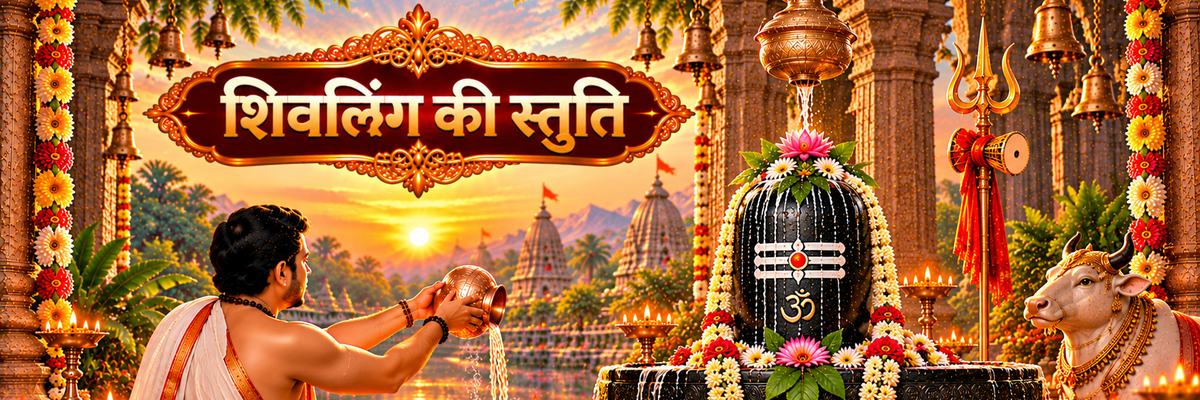
The other verses describe the linga as it is actually worshipped, so the stotra doubles as a guide to abhishek. The linga is smeared with every fragrance and with kumkum and sandal, garlanded with lotuses, adorned with gold and gems, and encircled by the king of serpents. It is honoured with flowers from the gardens of heaven and served by the gods and by Brihaspati. Verse 6 says it is reached "by feelings and devotion alone" (bhavair bhaktibhir eva cha), and verse 7 places it on an eight-petalled lotus as the cause of all creation and the remover of the "eight kinds of poverty". Verse 8 ends on the highest note: paratparam paramatmaka lingam, beyond the highest, the Supreme Self itself.
When to chant it
Lingashtakam is most often chanted during abhishek and jalabhishek, pouring water, milk, honey or Gangajal over the linga, one verse at a time, and while offering bilva leaves and flowers. It is a staple of Monday worship, the Shravan month, Pradosh and Mahashivratri, and it is widely sung at the twelve Jyotirlinga shrines. The phala verse is the same one used for the Shiva Panchakshara Stotram: whoever recites this holy octet in Shiva's presence reaches Shiva's world and rejoices with him.
Spotted a mistake?
If you find any grammatical, Hindi, English, mantra-text or other mistake on this page, tell us — we will correct it within 24 hours.