
Original text
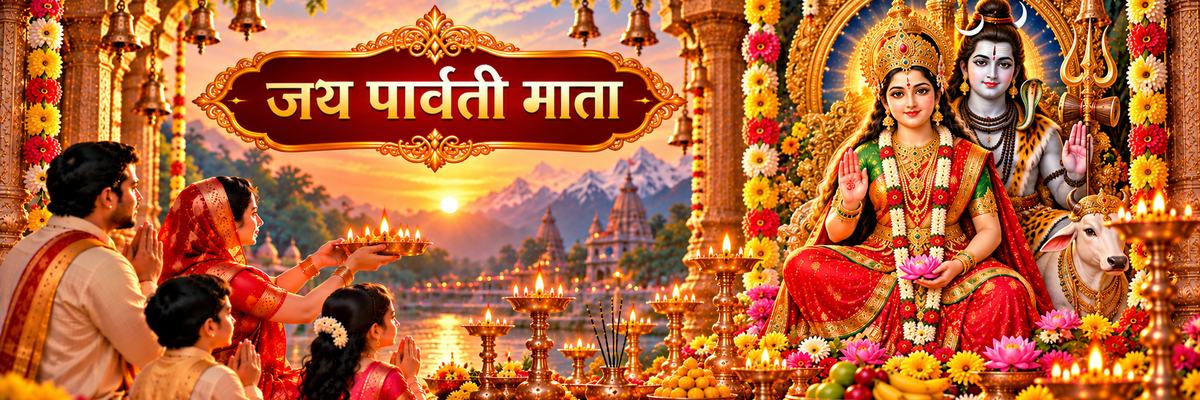
जय पार्वती माता, जय पार्वती माता ब्रह्मा सनातन देवी, शुभ फल की दाता । ॥ जय पार्वती माता... ॥ अरिकुल कंटक नासनि, निज सेवक त्राता, जगजननी जगदम्बा, हरिहर गुण गाता । ॥ जय पार्वती माता... ॥ सिंह को वहान साजे, कुंडल है साथा, देव वधू जस गावत, नृत्य करत ता था । ॥ जय पार्वती माता... ॥ सतयुग रूप शील अतिसुंदर, नाम सती कहलाता, हेमाचंल घर जन्मी, सखियाँ संगराता । ॥ जय पार्वती माता... ॥ शुम्भ निशुम्भ विदारे, हेमाचंल स्थाता, सहस्त्र भुजा तनु धरिके, चक्र लियो हाथा । ॥ जय पार्वती माता... ॥ सृष्टि रूप तुही है जननी, शिव संग रंगराता, नन्दी भृंगी बीन लही, सारा जग मदमाता । ॥ जय पार्वती माता... ॥ देवन अरज करत हम, चरण ध्यान लाता, तेरी कृपा रहे तो, मन नहीं भरमाता । ॥ जय पार्वती माता... ॥ मैया जी की आरती, भक्ति भाव से जो नर गाता, नित्य सुखी रह करके, सुख संपत्ति पाता । ॥ जय पार्वती माता... ॥ जय पार्वती माता, जय पार्वती माता, ब्रह्मा सनातन देवी, शुभ फल की दाता । जय पार्वती माता, जय पार्वती माता ब्रह्मा सनातन देवी, शुभ फल की दाता ।
Transliteration
Jai Parvati Mata, Jai Parvati Mata. Brahma Sanatan Devi, Shubh Phal Ki Data. (Refrain) Arikul Kantak Nasani, Nij Sevak Trata. Jagjanani Jagdamba, Harihar Gun Gata. (Refrain) Singh Ko Vahan Saje, Kundal Hai Satha. Dev Vadhu Jas Gavat, Nritya Karat Ta Tha. (Refrain) Satyug Roop Sheel Atisundar, Naam Sati Kahlata. Hemachal Ghar Janmi, Sakhiyan Sangrata. (Refrain) Shumbh Nishumbh Vidare, Hemachal Sthata. Sahastra Bhuja Tanu Dharike, Chakra Liyo Hatha. (Refrain) Srishti Roop Tuhi Hai Janani, Shiv Sang Rangrata. Nandi Bhringi Been Lahi, Sara Jag Madmata. (Refrain) Devan Araj Karat Ham, Charan Dhyan Lata. Teri Kripa Rahe To, Man Nahin Bharmata. (Refrain) Maiya Ji Ki Aarti, Bhakti Bhaav Se Jo Nar Gata. Nitya Sukhi Rah Karke, Sukh Sampatti Pata. (Refrain) Jai Parvati Mata, Jai Parvati Mata, Brahma Sanatan Devi, Shubh Phal Ki Data.
Her whole story in eight stanzas
The Parvati aarti is short, but it covers more ground than most. Its refrain calls her Brahma sanatan devi, the eternal goddess who is Brahman itself, "the giver of auspicious fruit". Each stanza then takes up a different side of her:
- Protector: she destroys the thorn of the enemy clans and shelters her own servants. She is Jagjanani and Jagadamba, and Hari and Hara both sing her virtues.
- Riding the lion: a lion is her vehicle and earrings shine at her ears, while the wives of the gods sing her fame and dance to the rhythm ta tha.
- Sati, then Parvati: in the Satya age, beautiful in form and character, she was called Sati. Then she was born in the house of Himachal (Himavan) and played with her friends there.
- The warrior: she tore apart Shumbha and Nishumbha, took a body with a thousand arms, and held the discus in her hand.
- Shiva's consort: she is creation itself, absorbed in Shiva's company, and when Nandi and Bhringi take up the been (veena), the whole world is drunk with joy.
Why Parvati kills Shumbha and Nishumbha
It can surprise readers to find the gentle Gauri of Kailash killing demons. The aarti is following the Devi Mahatmya. In its fifth chapter, when the gods, driven out by Shumbha and Nishumbha, pray in the Himalaya, a radiant goddess emerges from Parvati's own body. She is called Kaushiki because she came from Parvati's kosha, her bodily sheath, and she goes on to destroy the two brothers and their armies. For the aarti, as for the Devi Mahatmya, the warrior goddess and Shiva's wife are one Devi.
A plain closing prayer
The seventh stanza is the singer's own request: "we, like the gods, make our petition, fixing our mind on your feet; while your grace remains, the mind does not wander." The last stanza promises that whoever sings it with devotion stays happy and gains wealth and comfort. It is a modest prayer to end a modest aarti.
When it is sung
Many households sing it straight after Om Jai Shiv Omkara on Mondays and Mahashivratri, so the couple is worshipped together. It is central on women's festivals devoted to Gauri: Hartalika Teej, when women fast for their husbands' well-being or for a good husband; Gangaur in Rajasthan and Madhya Pradesh; and the Mangala Gauri Tuesdays of Shravan. It is also sung during Navratri, with the Parvati Chalisa, which tells at length the story of her penance and marriage that the aarti mentions only in passing.
Spotted a mistake?
If you find any grammatical, Hindi, English, mantra-text or other mistake on this page, tell us — we will correct it within 24 hours.