
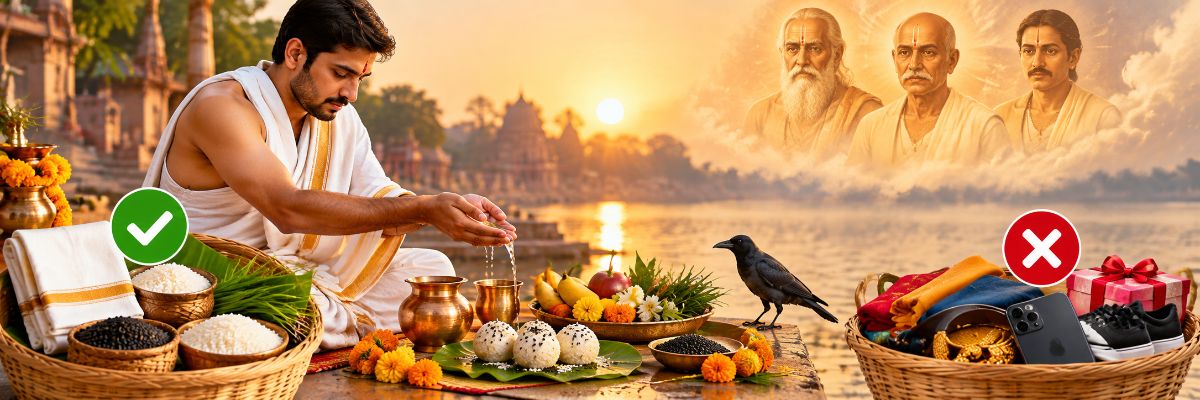
Pitru Paksha 2026 at a glance
- Begins: Saturday, 26 September 2026 (Purnima Shraddha); the first shraddha of the dark fortnight, Pratipada, is on Sunday 27 September.
- Ends: Saturday, 10 October 2026, Sarva Pitru Amavasya (Mahalaya Amavasya).
- Next day: Shardiya Navratri begins on Sunday, 11 October 2026, and with it the festive buying season.
Dates as per Drik Panchang. For which day to perform a particular person's shraddha, see Pitru Paksha: meaning, rituals and shraddha.
Is buying really forbidden? What the tradition actually says
It helps to be clear about this first. The scriptures that describe shraddha, such as the Mahabharata's account of the first shraddha in the Anushasana Parva, lay down how the rite is performed and what may be offered. They do not contain a list of things you may not buy. The custom of avoiding new purchases comes from family and regional tradition, and it rests on a simple idea: these fifteen days belong to the ancestors. They are a time of remembrance and restraint, so new beginnings and celebrations, which are counted as shubh karya (auspicious undertakings), are traditionally put off until the fortnight is over.
That is why the custom is best understood as "don't start new things, don't celebrate, don't indulge", rather than "buying is a sin". How strictly it is followed varies a great deal from family to family and region to region. If your family has its own practice, follow that.
What families traditionally avoid buying
- Gold, silver and jewellery, which are bought for prosperity and celebration. Many people wait for Navratri, Dhanteras or Diwali instead.
- New clothes and shoes for yourself, especially festive or wedding clothes.
- Vehicles: a new car or two-wheeler.
- Property: buying land, a flat or a house, and signing a property registration.
- A new house move: griha pravesh (housewarming) is not done in Pitru Paksha.
- Large items for the home, such as new furniture or big electronics, when they are for celebration rather than need.
- Things for auspicious ceremonies: since weddings, engagements, mundan and other sanskars are not held in this period, shopping for them usually waits as well.
Starting a new business, a new job or a new shop is also commonly postponed until after Sarva Pitru Amavasya.
What you can, and should, buy
None of the customs above covers the things the shraddha itself needs, or the ordinary needs of life.
- Everything for shraddha and tarpan: black sesame seeds (kala til), kusha grass, barley (jau), rice, ghee, milk, curd, honey, jaggery or sugar, and seasonal vegetables and fruit for the shraddha meal. Leaf plates (pattal) and clean or new vessels used for the rite are also fine.
- Things to give in daan: food grains, clothes, blankets, footwear, umbrellas, utensils or money given to the needy or to Brahmins in the ancestors' names. Buying these is part of the observance, not a break from it.
- Daily essentials: groceries, medicines, household supplies, school books and anything needed for work or health. No custom asks you to go without these.
- Genuine needs that can't wait: a replacement for something broken, or a vehicle or tool you need for your livelihood. Many priests advise that necessity comes first; if you are unsure, ask your family priest.
Foods not used in shraddha
Here the tradition does have a textual source. In the Mahabharata (Anushasana Parva, section 91), the sage Atri lists what should not be offered at a shraddha. In Ganguli's translation it names, among others:
- the grains kodrava (kodo) and pulaka;
- asafoetida (hing), onion and garlic;
- drumstick (moringa) and kachnar;
- pumpkin and bottle gourd;
- black salt and vid salt, and in fact salt in general in the offerings;
- kalonji (nigella seeds), water chestnut (singhara) and jamun;
- pork, and meat not from a sacrifice;
- any food that has been spat on or on which tears have fallen.
Regional practice differs: some families cook dishes for the shraddha meal that this list excludes, following their own tradition, and many simply keep the whole fortnight sattvic and free of onion, garlic and meat. The first shraddha in the Mahabharata was itself a meal of syamaka rice cooked without salt (see the story of Nimi's first shraddha).
Common questions
Can I buy things online during Pitru Paksha? The custom is about the purchase, not the shop, so families that avoid buying new things usually apply the same rule online. Essentials are fine either way.
I have already booked a car or jewellery. What should I do? Many people simply take delivery after Sarva Pitru Amavasya, on or after the first day of Navratri. If that is not possible, ask your family priest.
Is it wrong to buy something for my ancestors, like clothes to donate? No. Buying for daan in their names is one of the most meaningful things you can do in this fortnight.
Does the rule apply to children's or elderly people's needs? No. Clothes, medicines or anything else a child, an elderly person or a sick person needs is not something the custom asks you to delay.
The spirit behind it
Pitru Paksha asks for a pause: fifteen days in which the attention of the household turns from getting new things to remembering the people who came before. The point of the custom is not the list but that pause. Whatever you buy or do not buy, the heart of the fortnight is the offering, the charity and the remembrance. The shopping can wait for Navratri, which begins the very next day.