
Original text
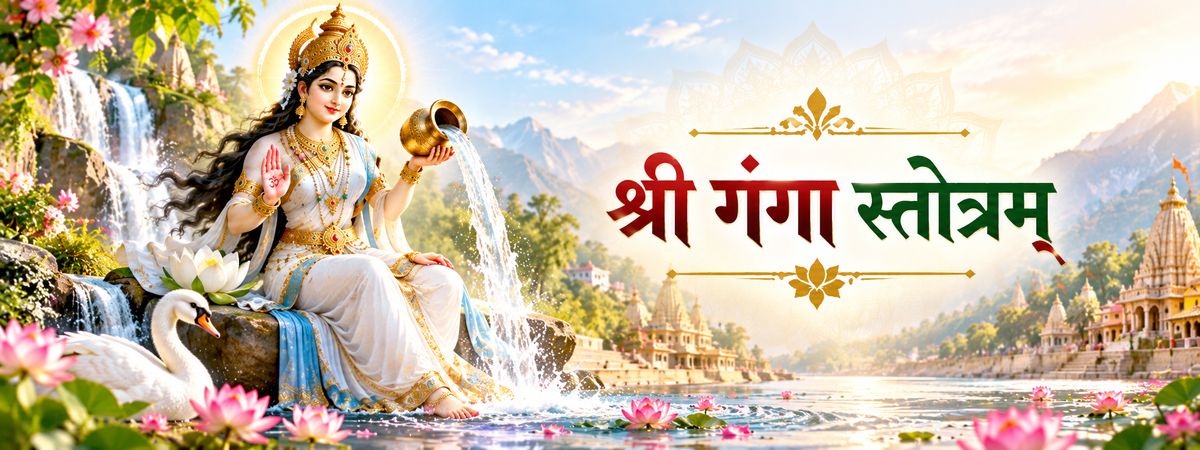
॥ श्री गंगा जी की स्तुति ॥ गांगं वारि मनोहारि मुरारिचरणच्युतम् । त्रिपुरारिशिरश्चारि पापहारि पुनातु माम् ॥ ॥ गंगा स्तोत्रम् ॥ देवि सुरेश्वरि भगवति गङ्गे त्रिभुवनतारिणि तरलतरङ्गे । शङ्करमौलिविहारिणि विमले मम मतिरास्तां तव पदकमले ॥१॥ भागीरथि सुखदायिनि मातस्तव जलमहिमा निगमे ख्यातः । नाहं जाने तव महिमानं पाहि कृपामयि मामज्ञानम् ॥२॥ हरिपदपाद्यतरङ्गिणि गङ्गे हिमविधुमुक्ताधवलतरङ्गे । दूरीकुरु मम दुष्कृतिभारं कुरु कृपया भवसागरपारम् ॥३॥ तव जलममलं येन निपीतं परमपदं खलु तेन गृहीतम् । मातर्गङ्गे त्वयि यो भक्तः किल तं द्रष्टुं न यमः शक्तः ॥४॥ पतितोद्धारिणि जाह्नवि गङ्गे खण्डितगिरिवरमण्डितभङ्गे । भीष्मजननि हे मुनिवरकन्ये पतितनिवारिणि त्रिभुवनधन्ये ॥५॥ कल्पलतामिव फलदां लोके प्रणमति यस्त्वां न पतति शोके । पारावारविहारिणि गङ्गे विमुखयुवतिकृततरलापाङ्गे ॥६॥ तव चेन्मातः स्रोतःस्नातः पुनरपि जठरे सोऽपि न जातः । नरकनिवारिणि जाह्नवि गङ्गे कलुषविनाशिनि महिमोत्तुङ्गे ॥७॥ पुनरसदङ्गे पुण्यतरङ्गे जय जय जाह्नवि करुणापाङ्गे । इन्द्रमुकुटमणिराजितचरणे सुखदे शुभदे भृत्यशरण्ये ॥८॥ रोगं शोकं तापं पापं हर मे भगवति कुमतिकलापम् । त्रिभुवनसारे वसुधाहारे त्वमसि गतिर्मम खलु संसारे ॥९॥ अलकानन्दे परमानन्दे कुरु करुणामयि कातरवन्द्ये । तव तटनिकटे यस्य निवासः खलु वैकुण्ठे तस्य निवासः ॥१०॥ वरमिह नीरे कमठो मीनः किं वा तीरे शरटः क्षीणः । अथवा श्वपचो मलिनो दीनस् तव न हि दूरे नृपतिकुलीनः ॥११॥ भो भुवनेश्वरि पुण्ये धन्ये देवि द्रवमयि मुनिवरकन्ये । गङ्गास्तवमिमममलं नित्यं पठति नरो यः स जयति सत्यम् ॥१२॥ येषां हृदये गङ्गाभक्तिस् तेषां भवति सदा सुखमुक्तिः । मधुराकान्तापज्झटिकाभिः परमानन्दकलितललिताभिः ॥१३॥ गङ्गास्तोत्रमिदं भवसारं वाञ्छितफलदं विमलं सारम् । शङ्करसेवकशङ्कररचितं पठति सुखी स्तव इति च समाप्तः ॥१४॥
Transliteration
Gangam vari manohari muraricharanachyutam tripurarishirashchari papahari punatu mam Devi sureshvari bhagavati gange tribhuvanatarini taralatarange shankaramauliviharini vimale mama matirastam tava padakamale (1) Bhagirathi sukhadayini matastava jalamahima nigame khyatah naham jane tava mahimanam pahi kripamayi mamajnanam (2) Haripadapadyatarangini gange himavidhumuktadhavalatarange durikuru mama dushkritibharam kuru kripaya bhavasagaraparam (3) Tava jalamamalam yena nipitam paramapadam khalu tena grihitam matargange tvayi yo bhaktah kila tam drashtum na yamah shaktah (4) Patitoddharini jahnavi gange khanditagirivaramanditabhange bhishmajanani he munivarakanye patitanivarini tribhuvanadhanye (5) Kalpalatamiva phaladam loke pranamati yastvam na patati shoke paravaraviharini gange vimukhayuvatikritataralapange (6) Tava chenmatah srotahsnatah punarapi jathare so'pi na jatah narakanivarini jahnavi gange kalushavinashini mahimottunge (7) Punarasadange punyatarange jaya jaya jahnavi karunapange indramukutamanirajitacharane sukhade shubhade bhrityasharanye (8) Rogam shokam tapam papam hara me bhagavati kumatikalapam tribhuvanasare vasudhahare tvamasi gatirmama khalu samsare (9) Alakanande paramanande kuru karunamayi kataravandye tava tatanikate yasya nivasah khalu vaikunthe tasya nivasah (10) Varamiha nire kamatho minah kim va tire sharatah kshinah athava shvapacho malino dinas tava na hi dure nripatikulinah (11) Bho bhuvaneshvari punye dhanye devi dravamayi munivarakanye gangastavamimamamalam nityam pathati naro yah sa jayati satyam (12) Yesham hridaye gangabhaktis tesham bhavati sada sukhamuktih madhurakantapajjhatikabhih paramanandakalitalalitabhih (13) Gangastotramidam bhavasaram vanchhitaphaladam vimalam saram shankarasevakashankararachitam pathati sukhi stava iti cha samaptah (14)
A hymn you can sing
Most Sanskrit stotras are recited; this one is sung. Adi Shankaracharya wrote it in a light, rhyming metre, the same pajjhatika rhythm used in his Bhaja Govindam, and verse 13 names it: madhura-kanta-pajjhatikabhih, "in sweet and lovely pajjhatika verses". Every line ends in a chiming rhyme (gange, tarange, vimale, kamale), which is why it carries so well over water and why it is so often heard at the evening aarti on the ghats. The last verse signs it: shankara-sevaka-shankara-rachitam, "composed by Shankara, the servant of Shankara (Shiva)".
The opening prayer
Before the stotra, the source gives a single shloka of praise often recited on its own: Gangam vari manohari, murari-charana-chyutam. It calls Ganga's water heart-stealing, fallen from the feet of Murari (Vishnu), flowing on the head of Tripurari (Shiva), and asks that this sin-removing water purify me. In two lines it tells her whole story: from Vishnu's foot, through Shiva's hair, to the devotee. We have it on its own page as the Gangam Vari Manohari mantra.
What the verses ask for
- A steady mind (1). The refrain the hymn opens and closes with asks for nothing material: mama matirastam tava padakamale, "may my mind rest at your lotus feet".
- Humility (2). "Your glory is told in the Vedas; I do not know it. Protect me, ignorant as I am."
- Release from sin and rebirth (3, 4, 7). Whoever drinks her pure water reaches the highest state; Yama cannot even look at her devotee; one who bathes in her stream is not born again from a womb.
- Her names. Bhagirathi, Jahnavi, Bhishma's mother, daughter of the great sage (Jahnu), and Alakananda, all the stories of her descent compressed into address.
- Relief from ordinary suffering (9). Rogam shokam tapam papam, "illness, grief, distress and sin", and the bundle of bad thoughts.
The verse about the turtle and the outcaste
Verse 11 is the one people remember. Shankara says it is better to be a turtle or a fish in her water, or a thin lizard on her bank, or even a poor and unclean outcaste (shvapacha) living near her, than a high-born king far away from her. Verse 10 makes the same point the other way: whoever lives near her banks, it says, lives in Vaikuntha. It is a striking statement of where real wealth lies, coming from a teacher who himself lived as a wandering sannyasi.
When and how to recite it
It is recited on Ganga Dussehra and Ganga Saptami, at the evening Ganga Aarti, while bathing in the Ganga or any river, and at home with a little Gangajal in a copper vessel in front of you. Verse 12 gives the phalashruti: whoever reads this pure hymn every day is truly victorious. Follow it with the aarti Om Jai Gange Mata or the Ganga Chalisa. Versions differ very slightly in a few words; the text here follows the source it was checked against.
Frequently asked questions
Who wrote the Ganga Stotram?
It is attributed to Adi Shankaracharya, and the last verse signs it as composed by "Shankara, the servant of Shankara".
Is it the same hymn sung at the Ganga Aarti in Haridwar and Varanasi?
The evening aarti mostly uses the Hindi aarti "Om Jai Gange Mata", but "Devi Sureshwari Bhagavati Gange" is very often sung alongside it, especially in Varanasi.
Can it be recited away from the river?
Yes. At home, keep a little Gangajal in front of you, or simply recite it facing a lamp. Verse 12 promises its fruit to whoever reads it daily, not only to those at the river.
Which day is best to start reciting it?
Ganga Dussehra (Jyeshtha Shukla Dashami) or Ganga Saptami (Vaishakha Shukla Saptami) are traditional, but any morning bath is a fine time to begin.
Can I recite only the first verse?
Yes. The first verse is the refrain and is often sung alone as a short prayer. Many people sing it before and after the full hymn.
Why does verse 11 praise an outcaste near the Ganga over a king?
It is a deliberate reversal: closeness to the sacred matters more than birth or wealth. Shankara uses it to say that living near her is itself the highest fortune.
Spotted a mistake?
If you find any grammatical, Hindi, English, mantra-text or other mistake on this page, tell us — we will correct it within 24 hours.