
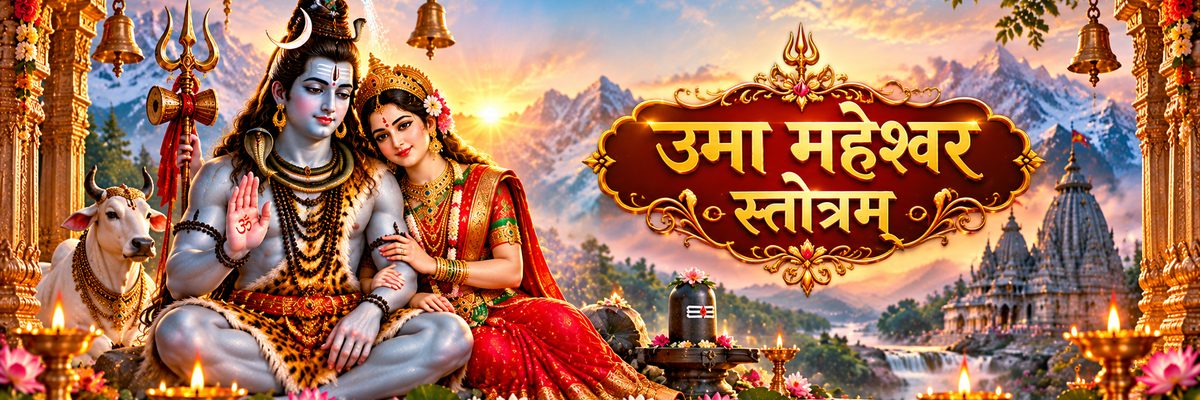
Original text
॥ श्रीगणेशाय नमः ॥ नमः शिवाभ्यां नवयौवनाभ्यां परस्पराश्लिष्टवपुर्धराभ्याम् । नगेन्द्रकन्यावृषकेतनाभ्यां नमो नमः शङ्करपार्वतीभ्याम् ॥ १ ॥ नमः शिवाभ्यां सरसोत्सवाभ्यां नमस्कृताभीष्टवरप्रदाभ्याम् । नारायणेनार्चितपादुकाभ्यां नमो नमः शङ्करपार्वतीभ्याम् ॥ २ ॥ नमः शिवाभ्यां वृषवाहनाभ्यां विरिञ्चिविष्ण्विन्द्रसुपूजिताभ्याम् । विभूतिपाटीरविलेपनाभ्यां नमो नमः शङ्करपार्वतीभ्याम् ॥ ३ ॥ नमः शिवाभ्यां जगदीश्वराभ्यां जगत्पतिभ्यां जयविग्रहाभ्याम् । जम्भारिमुख्यैरभिवन्दिताभ्यां नमो नमः शङ्करपार्वतीभ्याम् ॥ ४ ॥ नमः शिवाभ्यां परमौषधाभ्यां पञ्चाक्षरीपञ्जररञ्जिताभ्याम् । प्रपञ्चसृष्टिस्थितिसंहृताभ्यां नमो नमः शङ्करपार्वतीभ्याम् ॥ ५ ॥ नमः शिवाभ्यामतिसुन्दराभ्यां अत्यन्तमासक्तहृदम्बुजाभ्याम् । अशेषलोकैकहितङ्कराभ्यां नमो नमः शङ्करपार्वतीभ्याम् ॥ ६ ॥ नमः शिवाभ्यां कलिनाशनाभ्यां कङ्कालकल्याणवपुर्धराभ्याम् । कैलासशैलस्थितदेवताभ्यां नमो नमः शङ्करपार्वतीभ्याम् ॥ ७ ॥ नमः शिवाभ्यामशुभापहाभ्यां अशेषलोकैकविशेषिताभ्याम् । अकुण्ठिताभ्यां स्मृतिसम्भृताभ्यां नमो नमः शङ्करपार्वतीभ्याम् ॥ ८ ॥ नमः शिवाभ्यां रथवाहनाभ्यां रवीन्दुवैश्वानरलोचनाभ्याम् । राकाशशाङ्काभमुखाम्बुजाभ्यां नमो नमः शङ्करपार्वतीभ्याम् ॥ ९ ॥ नमः शिवाभ्यां जटिलन्धराभ्यां जरामृतिभ्यां च विवर्जिताभ्याम् । जनार्दनाब्जोद्भवपूजिताभ्यां नमो नमः शङ्करपार्वतीभ्याम् ॥ १० ॥ नमः शिवाभ्यां विषमेक्षणाभ्यां बिल्वच्छदामल्लिकदामभृद्भ्याम् । शोभावतीशान्तवतीश्वराभ्यां नमो नमः शङ्करपार्वतीभ्याम् ॥ ११ ॥ नमः शिवाभ्यां पशुपालकाभ्यां जगत्रयीरक्षणबद्धहृद्भ्याम् । समस्तदेवासुरपूजिताभ्यां नमो नमः शङ्करपार्वतीभ्याम् ॥ १२ ॥ स्तोत्रं त्रिसन्ध्यं शिवपार्वतीभ्यां भक्त्या पठेद्द्वादशकं नरो यः । स सर्वसौभाग्यफलानि भुङ्क्ते शतायुरान्ते शिवलोकमेति ॥ १३ ॥ ॥ इति श्री शङ्कराचार्य कृत उमामहेश्वर स्तोत्रम् ॥
Transliteration
Namah shivabhyam navayauvanabhyam parasparashlishtavapurdharabhyam nagendrakanyavrishaketanabhyam namo namah shankaraparvatibhyam (1) Namah shivabhyam sarasotsavabhyam namaskritabhishtavarapradabhyam narayanenarchitapadukabhyam namo namah shankaraparvatibhyam (2) Namah shivabhyam vrishavahanabhyam viranchivishnvindrasupujitabhyam vibhutipatiravilepanabhyam namo namah shankaraparvatibhyam (3) Namah shivabhyam jagadishvarabhyam jagatpatibhyam jayavigrahabhyam jambharimukhyairabhivanditabhyam namo namah shankaraparvatibhyam (4) Namah shivabhyam paramaushadhabhyam panchaksharipanjararanjitabhyam prapanchasrishtisthitisamhritabhyam namo namah shankaraparvatibhyam (5) Namah shivabhyamatisundarabhyam atyantamasaktahridambujabhyam asheshalokaikahitankarabhyam namo namah shankaraparvatibhyam (6) Namah shivabhyam kalinashanabhyam kankalakalyanavapurdharabhyam kailasashailasthitadevatabhyam namo namah shankaraparvatibhyam (7) Namah shivabhyamashubhapahabhyam asheshalokaikavisheshitabhyam akunthitabhyam smritisambhritabhyam namo namah shankaraparvatibhyam (8) Namah shivabhyam rathavahanabhyam ravinduvaishvanaralochanabhyam rakashashankabhamukhambujabhyam namo namah shankaraparvatibhyam (9) Namah shivabhyam jatilandharabhyam jaramritibhyam cha vivarjitabhyam janardanabjodbhavapujitabhyam namo namah shankaraparvatibhyam (10) Namah shivabhyam vishamekshanabhyam bilvachchhadamallikadamabhridbhyam shobhavatishantavatishvarabhyam namo namah shankaraparvatibhyam (11) Namah shivabhyam pashupalakabhyam jagatrayirakshanabaddhahridbhyam samastadevasurapujitabhyam namo namah shankaraparvatibhyam (12) Stotram trisandhyam shivaparvatibhyam bhaktya pathed dvadashakam naro yah sa sarvasaubhagyaphalani bhunkte shatayurante shivalokameti (13)
A hymn in the dual
Sanskrit has a grammatical form most languages lack: the dual, used for exactly two. Every line of this hymn is in it. Shivabhyam does not mean "to Shiva" but "to the two Shivas", that is, to Shiva and Shiva's power, Parvati, together. The refrain makes it explicit: namo namah Shankara-Parvatibhyam, "salutations, salutations to Shankar and Parvati". From the first verse to the last, the couple is never separated. The opening image says it at once: "the ever-young pair, whose bodies are joined in each other's embrace, the daughter of the mountain king and the god whose banner bears the bull".
What the twelve verses praise
- Their love: eternally young (1), delighting in each other (2), extraordinarily beautiful, their hearts wholly given to each other (6).
- Their worship: Narayana himself worships their sandals (2); Brahma, Vishnu and Indra honour them (3, 10); gods and asuras alike bow to them (12).
- Their power: the creation, preservation and dissolution of the world are their work (5); they are the "supreme medicine" for the sickness of existence, guarded by the five-syllable mantra Namah Shivaya (5); they destroy the evils of the Kali age (7).
- Their form: riding the bull (3), smeared with sacred ash and sandal (3), with the sun, moon and fire for eyes (9), faces like the full moon (9), garlanded with bilva leaves and jasmine (11), dwelling on Kailash (7).
The thirteenth verse is the phala-shruti, the stated fruit: whoever recites these twelve verses with devotion at the three sandhyas enjoys every kind of good fortune, lives a full hundred years and at the end reaches Shiva's world.
When to recite it
The hymn is attributed to Adi Shankaracharya, and its simple, ringing refrain makes it easy to learn. It is especially loved by married couples, who recite it together for a harmonious marriage. It suits Mondays, the Shravan month, Mahashivratri, Hartalika Teej and the Mangala Gauri Tuesdays, and is often recited at weddings and anniversaries. Pair it with the Parvati Chalisa, the Om Jai Shiv Omkara and Jai Parvati Mata aartis, and the mantra Om Umamaheshvarabhyam Namah.
The promise in the last verse
The thirteenth verse is the phalashruti, the statement of what the hymn gives: whoever recites these verses to Shiva and Parvati "enjoys all the fruits of good fortune (sarva-saubhagya), lives a hundred years, and at the end goes to Shiva's world". The word saubhagya is chosen with care. In everyday Hindi it means the blessed state of a married woman whose husband is living, which is exactly what is prayed for on Teej and in the Mangala Gauri vrat. So the stotram, while being a philosophical hymn to Shiva and Shakti as inseparable, also speaks directly to one of the most common prayers in a Hindu home.
Frequently asked questions
Who composed the Uma Maheshwara Stotram?
Its closing line credits Shankaracharya, and it is printed among the hymns attributed to Adi Shankara.
Why is it said to be good for married couples?
Every verse salutes Shiva and Parvati together in the grammatical dual ('namah Shivabhyam' — salutations to the two), so it is a hymn to the divine couple as one. Couples recite it for harmony and a lasting marriage.
When should it be recited?
On Mondays, Pradosh, Mahashivratri, Hartalika Teej and through Shravan, and by couples on their anniversary or before a wedding.
What does the thirteenth verse promise?
That whoever recites these verses enjoys all the fruits of good fortune, lives a full hundred years and finally reaches Shiva's world.
Can unmarried people recite it?
Yes. It is a hymn of devotion to Shiva and Parvati, and many young people recite it praying for a good marriage.
How long does it take?
About five minutes at a steady pace; the verses share one rhythm and refrain, which makes them easy to learn.
Spotted a mistake?
If you find any grammatical, Hindi, English, mantra-text or other mistake on this page, tell us — we will correct it within 24 hours.