
Original text
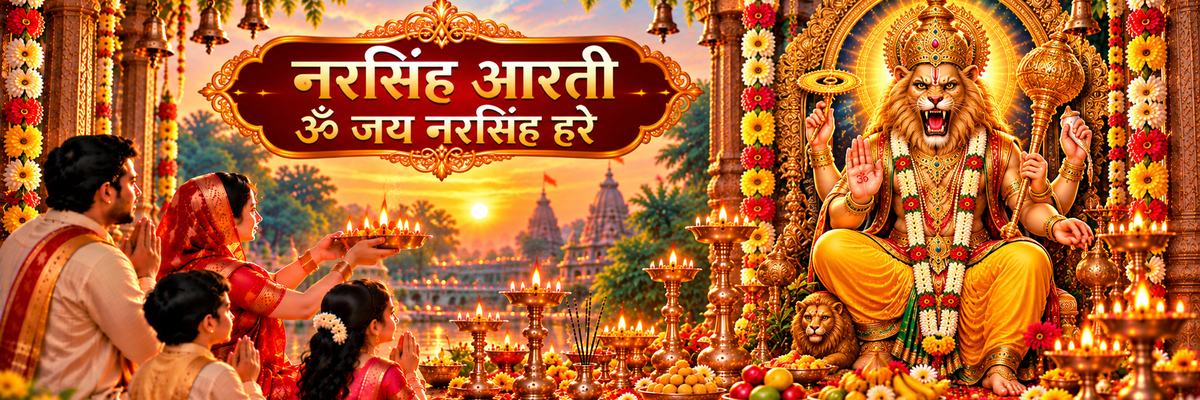
ॐ जय नरसिंह हरे, प्रभु जय नरसिंह हरे । स्तंभ फाड़ प्रभु प्रकटे, स्तंभ फाड़ प्रभु प्रकटे, जनका ताप हरे ॥ ॐ जय नरसिंह हरे ॥ तुम हो दिन दयाला, भक्तन हितकारी, प्रभु भक्तन हितकारी । अद्भुत रूप बनाकर, अद्भुत रूप बनाकर, प्रकटे भय हारी ॥ ॐ जय नरसिंह हरे ॥ सबके ह्रदय विदारण, दुस्यु जियो मारी, प्रभु दुस्यु जियो मारी । दास जान आपनायो, दास जान आपनायो, जनपर कृपा करी ॥ ॐ जय नरसिंह हरे ॥ ब्रह्मा करत आरती, माला पहिनावे, प्रभु माला पहिनावे । शिवजी जय जय कहकर, पुष्पन बरसावे ॥
Transliteration
Om Jai Narsingh Hare, Prabhu Jai Narsingh Hare. Stambh Phaad Prabhu Prakate, Stambh Phaad Prabhu Prakate, Janka Taap Hare. (Refrain: Om Jai Narsingh Hare) Tum Ho Deen Dayala, Bhaktan Hitkari, Prabhu Bhaktan Hitkari. Adbhut Roop Banakar, Adbhut Roop Banakar, Prakate Bhay Hari. (Refrain) Sabke Hriday Vidaran, Dusyu Jiyo Maari, Prabhu Dusyu Jiyo Maari. Daas Jaan Apnayo, Daas Jaan Apnayo, Janpar Kripa Kari. (Refrain) Brahma Karat Aarti, Mala Pahinave, Prabhu Mala Pahinave. Shivji Jai Jai Kahkar, Pushpan Barsave.
Four stanzas, one night
This aarti follows the familiar pattern of Om Jai Jagdish Hare, with each line repeated so a group can sing along, and it compresses the story of Narasimha into four scenes:
- The pillar: "tearing open the pillar, the Lord appeared and took away his devotee's suffering." The refrain begins with the most famous moment in the Narasimha story. Hiranyakashipu, mocking his son Prahlada, demanded to know whether his Vishnu was in the pillar too, struck it, and the Lord burst out of it.
- The form: "You are kind to the humble, the friend of devotees; taking a wondrous form, you appeared as the remover of fear." That wondrous form, neither man nor beast, appearing at dusk, neither day nor night, is how the Lord got around the boon that made the demon king seemingly unkillable.
- The slaying and the embrace: the third stanza speaks of tearing open a heart and killing the wicked one (dasyu), then of accepting the devotee "knowing him to be your servant" and showing grace. It holds the two sides of Narasimha together: terrible to the oppressor, tender to Prahlada.
- The gods' worship: Brahma performs the aarti and garlands him, and Shiva, crying "jai jai", showers flowers. In the Bhagavata Purana the gods, afraid to approach the still-raging Lord, send Prahlada forward to calm him with his prayer. The aarti shows the moment afterwards, when worship can begin.
Why sing an aarti to a fierce form
Narasimha is Vishnu at his most frightening, yet he is one of the most loved forms in South Indian and Odia Vaishnavism, at Ahobilam, Simhachalam, Yadagirigutta and Mangalagiri, and in the ISKCON movement. The aarti's emphasis explains why: every stanza turns his terror into protection. He is bhay hari, the remover of fear. Devotees sing to him when they feel threatened, when a child has nightmares, or when they face an enemy they cannot face alone.
ISKCON temples sing a different, Sanskrit prayer to Narasimha after their daily aartis, beginning namas te narasimhaya, along with a verse from Jayadeva's Dashavatara Stotra. This Hindi aarti is the one used in most North Indian homes and temples.
When to sing it
Its great day is Narasimha Jayanti, Vaishakh Shukla Chaturdashi. Because the Lord appeared at twilight, the main puja and this aarti are usually done at sunset. Devotees fast through the day, offer panakam (a cooling jaggery-and-pepper drink) or fruit and sweets, read the Narasimha Chalisa or the Prahlada story, and finish with this aarti. It can also be sung on any Chaturdashi, and as a short protective prayer at the end of daily Vishnu worship.
Spotted a mistake?
If you find any grammatical, Hindi, English, mantra-text or other mistake on this page, tell us — we will correct it within 24 hours.