
Original text
॥ दोहा ॥ मास वैशाख कृतिका युत,हरण मही को भार । शुक्ल चतुर्दशी सोम दिन,लियो नरसिंह अवतार ॥ धन्य तुम्हारो सिंह तनु,धन्य तुम्हारो नाम । तुमरे सुमरन से प्रभु,पूरन हो सब काम ॥ ॥ चौपाई ॥ नरसिंह देव मैं सुमरों तोहि । धन बल विद्या दान दे मोहि ॥1॥ जय जय नरसिंह कृपाला । करो सदा भक्तन प्रतिपाला ॥2॥ विष्णु के अवतार दयाला । महाकाल कालन को काला ॥3॥ नाम अनेक तुम्हारो बखानो । अल्प बुद्धि मैं ना कछु जानों ॥4॥ हिरणाकुश नृप अति अभिमानी । तेहि के भार मही अकुलानी ॥5॥ हिरणाकुश कयाधू के जाये । नाम भक्त प्रहलाद कहाये ॥6॥ भक्त बना बिष्णु को दासा । पिता कियो मारन परसाया ॥7॥ अस्त्र-शस्त्र मारे भुज दण्डा । अग्निदाह कियो प्रचण्डा ॥8॥ भक्त हेतु तुम लियो अवतारा । दुष्ट-दलन हरण महिभारा ॥9॥ तुम भक्तन के भक्त तुम्हारे । प्रह्लाद के प्राण पियारे ॥10॥ प्रगट भये फाड़कर तुम खम्भा । देख दुष्ट-दल भये अचम्भा ॥11॥ खड्ग जिह्व तनु सुन्दर साजा । ऊर्ध्व केश महादष्ट्र विराजा ॥12॥ तप्त स्वर्ण सम बदन तुम्हारा । को वरने तुम्हरों विस्तारा ॥13॥ रूप चतुर्भुज बदन विशाला । नख जिह्वा है अति विकराला ॥14॥ स्वर्ण मुकुट बदन अति भारी । कानन कुण्डल की छवि न्यारी ॥15॥ भक्त प्रहलाद को तुमने उबारा । हिरणा कुश खल क्षण मह मारा ॥16॥ ब्रह्मा, बिष्णु तुम्हे नित ध्यावे । इन्द्र महेश सदा मन लावे ॥17॥ वेद पुराण तुम्हरो यश गावे । शेष शारदा पारन पावे ॥18॥ जो नर धरो तुम्हरो ध्याना । ताको होय सदा कल्याना ॥19॥ त्राहि-त्राहि प्रभु दुःख निवारो । भव बन्धन प्रभु आप ही टारो ॥20॥ नित्य जपे जो नाम तिहारा । दुःख व्याधि हो निस्तारा ॥21॥ सन्तान-हीन जो जाप कराये । मन इच्छित सो नर सुत पावे ॥22॥ बन्ध्या नारी सुसन्तान को पावे । नर दरिद्र धनी होई जावे ॥23॥ जो नरसिंह का जाप करावे । ताहि विपत्ति सपनें नही आवे ॥24॥ जो कामना करे मन माही । सब निश्चय सो सिद्ध हुयी जाही ॥25॥ जीवन मैं जो कछु सङ्कट होयी । निश्चय नरसिंह सुमरे सोयी ॥26॥ रोग ग्रसित जो ध्यावे कोई । ताकि काया कञ्चन होई ॥27॥ डाकिनी-शाकिनी प्रेत बेताला । ग्रह-व्याधि अरु यम विकराला ॥28॥ प्रेत पिशाच सबे भय खाये । यम के दूत निकट नहीं आवे ॥29॥ सुमर नाम व्याधि सब भागे । रोग-शोक कबहूँ नही लागे ॥30॥ जाको नजर दोष हो भाई । सो नरसिंह चालीसा गाई ॥31॥ हटे नजर होवे कल्याना । बचन सत्य साखी भगवाना ॥32॥ जो नर ध्यान तुम्हारो लावे । सो नर मन वाञ्छित फल पावे ॥33॥ बनवाये जो मन्दिर ज्ञानी । हो जावे वह नर जग मानी ॥34॥ नित-प्रति पाठ करे इक बारा । सो नर रहे तुम्हारा प्यारा ॥35॥ नरसिंह चालीसा जो जन गावे । दुःख दरिद्र ताके निकट न आवे ॥36॥ चालीसा जो नर पढ़े-पढ़ावे । सो नर जग में सब कुछ पावे ॥37॥ यह श्री नरसिंह चालीसा । पढ़े रङ्क होवे अवनीसा ॥38॥ जो ध्यावे सो नर सुख पावे । तोही विमुख बहु दुःख उठावे ॥39॥ शिव स्वरूप है शरण तुम्हारी । हरो नाथ सब विपत्ति हमारी ॥40॥ ॥ दोहा ॥ चारों युग गायें तेरी,महिमा अपरम्पार । निज भक्तनु के प्राण हित,लियो जगत अवतार ॥ नरसिंह चालीसा जो पढ़े,प्रेम मगन शत बार । उस घर आनन्द रहे,वैभव बढ़े अपार ॥
Transliteration
Doha: Maas Vaishakh Kritika Yut, Haran Mahi Ko Bhaar. Shukla Chaturdashi Som Din, Liyo Narsingh Avatar. Dhanya Tumharo Singh Tanu, Dhanya Tumharo Naam. Tumre Sumaran Se Prabhu, Puran Ho Sab Kaam. Chaupai: 1. Narsingh Dev Main Sumaron Tohi, Dhan Bal Vidya Daan De Mohi. 2. Jai Jai Narsingh Kripala, Karo Sada Bhaktan Pratipala. 3. Vishnu Ke Avatar Dayala, Mahakal Kalan Ko Kala. 4. Naam Anek Tumharo Bakhano, Alp Buddhi Main Na Kachhu Jano. 5. Hiranakush Nrip Ati Abhimani, Tehi Ke Bhaar Mahi Akulani. 6. Hiranakush Kayadhu Ke Jaye, Naam Bhakt Prahlad Kahaye. 7. Bhakt Bana Bishnu Ko Dasa, Pita Kiyo Maran Parsaya. 8. Astra-Shastra Maare Bhuj Danda, Agnidaah Kiyo Prachanda. 9. Bhakt Hetu Tum Liyo Avatara, Dusht-Dalan Haran Mahibhara. 10. Tum Bhaktan Ke Bhakt Tumhare, Prahlad Ke Pran Piyare. 11. Pragat Bhaye Phadkar Tum Khambha, Dekh Dusht-Dal Bhaye Achambha. 12. Khadg Jihv Tanu Sundar Saja, Urdhva Kesh Mahadashtra Viraja. 13. Tapt Swarn Sam Badan Tumhara, Ko Varne Tumhron Vistara. 14. Roop Chaturbhuj Badan Vishala, Nakh Jihva Hai Ati Vikrala. 15. Swarn Mukut Badan Ati Bhari, Kanan Kundal Ki Chhavi Nyari. 16. Bhakt Prahlad Ko Tumne Ubara, Hirana Kush Khal Kshan Mah Mara. 17. Brahma, Bishnu Tumhe Nit Dhyave, Indra Mahesh Sada Man Lave. 18. Ved Puran Tumharo Yash Gave, Shesh Sharada Paaran Pave. 19. Jo Nar Dharo Tumharo Dhyana, Tako Hoy Sada Kalyana. 20. Trahi-Trahi Prabhu Dukh Nivaro, Bhav Bandhan Prabhu Aap Hi Taro. 21. Nitya Jape Jo Naam Tihara, Dukh Vyadhi Ho Nistara. 22. Santan-Heen Jo Jaap Karaye, Man Ichchhit So Nar Sut Pave. 23. Bandhya Nari Susantan Ko Pave, Nar Daridra Dhani Hoi Jave. 24. Jo Narsingh Ka Jaap Karave, Tahi Vipatti Sapne Nahi Aave. 25. Jo Kamana Kare Man Mahi, Sab Nishchay So Siddh Huyi Jahi. 26. Jeevan Main Jo Kachhu Sankat Hoyi, Nishchay Narsingh Sumre Soyi. 27. Rog Grasit Jo Dhyave Koi, Taki Kaya Kanchan Hoi. 28. Dakini-Shakini Pret Betala, Grah-Vyadhi Aru Yam Vikrala. 29. Pret Pishach Sabe Bhay Khaye, Yam Ke Doot Nikat Nahin Aave. 30. Sumar Naam Vyadhi Sab Bhage, Rog-Shok Kabahun Nahi Lage. 31. Jako Najar Dosh Ho Bhai, So Narsingh Chalisa Gai. 32. Hate Najar Hove Kalyana, Bachan Satya Sakhi Bhagvana. 33. Jo Nar Dhyan Tumharo Lave, So Nar Man Vanchhit Phal Pave. 34. Banvaye Jo Mandir Gyani, Ho Jave Vah Nar Jag Mani. 35. Nit-Prati Paath Kare Ik Bara, So Nar Rahe Tumhara Pyara. 36. Narsingh Chalisa Jo Jan Gave, Dukh Daridra Take Nikat Na Aave. 37. Chalisa Jo Nar Padhe-Padhave, So Nar Jag Mein Sab Kuchh Pave. 38. Yah Shri Narsingh Chalisa, Padhe Rank Hove Avanisa. 39. Jo Dhyave So Nar Sukh Pave, Tohi Vimukh Bahu Dukh Uthave. 40. Shiv Swaroop Hai Sharan Tumhari, Haro Naath Sab Vipatti Hamari. Doha: Charon Yug Gayen Teri, Mahima Aprampar. Nij Bhaktanu Ke Pran Hit, Liyo Jagat Avatar. Narsingh Chalisa Jo Padhe, Prem Magan Shat Baar. Us Ghar Anand Rahe, Vaibhav Badhe Apaar.
It starts with a date
Most chalisas open with an invocation. This one opens with a calendar entry. The first doha says the Lord took the Narasimha avatar in the month of Vaishakh, on Shukla Chaturdashi, to lift the burden from the earth. That date is still kept as Narasimha Jayanti, the fourteenth day of the bright fortnight of Vaishakh. The second doha gives the reason to remember him: "blessed is your lion body, blessed is your name; by remembering you, Lord, every task is fulfilled." The first chaupai asks for three things plainly: wealth, strength and learning.
The story in a dozen lines
Chaupais 5 to 16 compress the whole Prahlada episode. Hiranyakashipu was so proud that the earth groaned under his weight. His son by Kayadhu, Prahlada, became Vishnu's servant, and his own father set out to kill him with weapons, beatings and a great fire. For his devotee's sake the Lord took the avatar, tore open a pillar and stood there while the demon's men stared in shock.
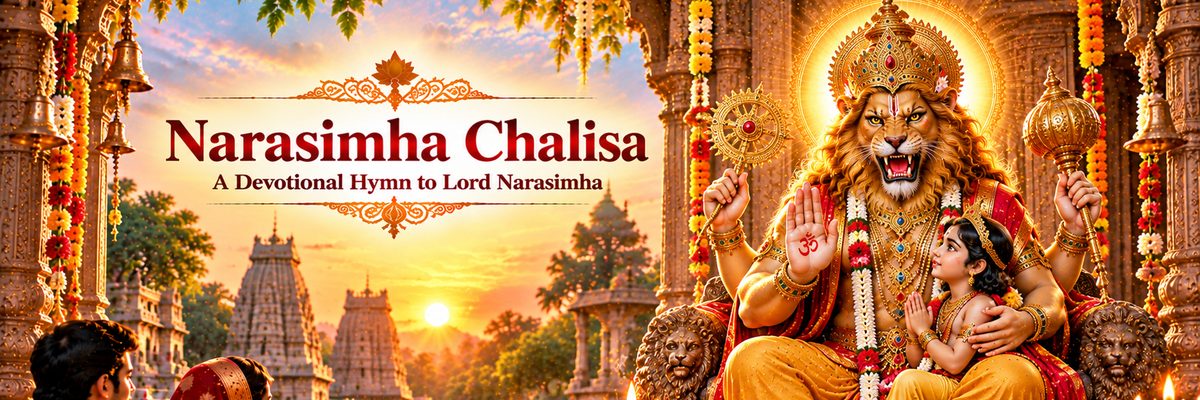
The chalisa lingers on how he looked, and the details follow the classical image of Ugra Narasimha closely. His tongue is like a sword and his hair stands on end. He has huge fangs and a face the colour of molten gold. He has four arms, and his claws and tongue are "extremely terrifying". A golden crown and earrings complete the picture (12–15). Then, in a single line, he saves Prahlada and kills Hiranyakashipu "in a moment". For the full story behind these verses, including why he appeared at dusk on a threshold, neither man nor beast, see the Prahlada story on this site.
A chalisa of protection
From chaupai 19 the poem becomes almost entirely about what remembering Narasimha guards against. It is one of the most protection-focused chalisas in common use:
- Illness: whoever is in the grip of disease and meditates on him gets a body "like gold" (27), and sickness and grief never touch those who remember his name (30).
- Spirits and fear: dakini, shakini, ghosts, betal, planetary afflictions and dreadful Yama himself are all named (28); ghosts and goblins fear him, and Yama's messengers do not come near (29).
- The evil eye: "Brother, whoever suffers from nazar dosh should sing the Narasimha Chalisa. The eye will lift and good will follow; this is a true promise, with God as witness" (31–32).
- Calamity: trouble does not come to his devotee even in dreams (24), and in any crisis, "remember Narasimha" (26).
- Family and fortune: the childless gain a child, the poor become rich (22–23), and the pauper who reads it becomes a ruler (38).
This is why many families keep Narasimha's picture or read his chalisa when a child is unwell, after a frightening experience, or when someone feels "watched". Narasimha is the form of Vishnu who protects his own fiercely.
An unexpected last line
The final chaupai calls the Lord Shiv swaroop, "of the nature of Shiva", before asking him to remove every difficulty. In Vaishnava texts Narasimha is purely Vishnu. But in popular devotion, and in some temple traditions, the fierce man-lion and the destroyer are felt to share a nature, and chaupai 3 has already called him "the Mahakala, death to death itself". The chalisa sees no conflict in that.
When and how to read it
The main day is Narasimha Jayanti, Vaishakh Shukla Chaturdashi. Because he appeared at twilight, many people do the puja and read the chalisa at sunset. Some also read it on Chaturdashi each month, or every day for a set period when facing fear, illness or long trouble. The closing doha suggests reading it a hundred times "absorbed in love", and promises lasting joy and ever-growing prosperity in that home. Chaupai 35 sets a simpler minimum: read it once every day, and you remain dear to him.
Spotted a mistake?
If you find any grammatical, Hindi, English, mantra-text or other mistake on this page, tell us — we will correct it within 24 hours.