At a glance
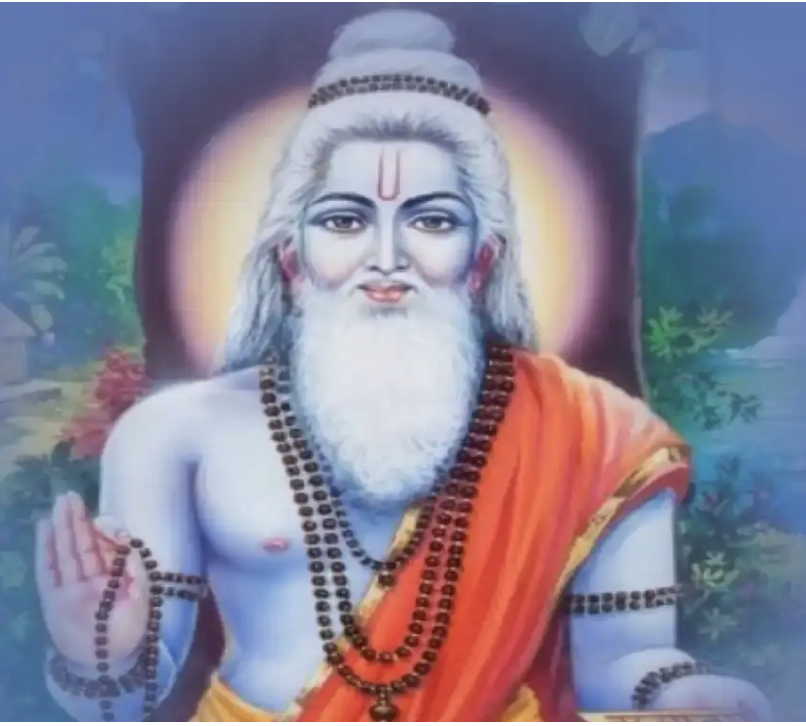
- Name & meaning: Vasishtha (वसिष्ठ) — “the most excellent” or “the richest”; often spelled Vashishtha or Vashisht in Hindi usage.
- Other names: Maitravaruni (son of Mitra-Varuna), Arundhati-natha (husband of Arundhati), Brahmarshi Vasishtha.
- Category: One of the Saptarshi (seven great seers); a Brahmarshi.
- Father: Mitra and Varuna in the Rigveda; a mind-born son (manasaputra) of Brahma in the Puranas.
- Mother: The apsara Urvashi is connected with his birth in the Rigveda (7.33).
- Spouse: Arundhati, the model of marital fidelity.
- Children / disciples: A hundred sons, the eldest being Shakti; grandson Parashara; great-grandson Veda Vyasa. Disciples include the Ikshvaku kings and Ram and his brothers.
- Lineage / gotra: Founder of the Vasishtha gotra.
- Era: Tradition places him across the yugas as the permanent guru of the Solar dynasty. Historically, the Vasishtha of the Rigveda was the priest of King Sudas of the Bharatas, in the Rigvedic period (scholars commonly date the core family books to the later second millennium BCE; exact dates are uncertain).
- Ashram / places: Ayodhya (as royal guru); Vashisht village near Manali; Vasishtha Ashram, Guwahati; Vasishtha Gufa near Rishikesh.
- Major works: Seer of Rigveda Mandala 7 (104 hymns), including the Mahamrityunjaya verse (7.59.12); the Vasishtha Dharmasutra and the Yoga Vasishtha bear his name.
- Best known for: Guru of Ram, owner of the wish-granting cow Nandini/Shabala, his feud with Vishvamitra, and his forgiveness.
Birth and family background
Vasishtha has one of the strangest birth stories in the Veda. In Rigveda 7.33 — a hymn from his own family's book — he is said to have been born of the gods Mitra and Varuna when they saw the apsara Urvashi; that is why he is called Maitravaruni. The Puranas give a layered account. First he is one of Brahma's mind-born sons. Later, as royal priest of King Nimi of Videha, he and Nimi curse each other to lose their bodies after Nimi begins a sacrifice without waiting for him; Vasishtha then takes a new birth through Mitra-Varuna, which is how the Puranas reconcile their story with the Rigvedic one.
His wife Arundhati is honoured as the ideal of devoted companionship. In the night sky Vasishtha is identified with one of the seven stars of the Saptarshi (the Big Dipper), with Arundhati as the faint star beside him. That is why, in many Hindu weddings, the newly married couple is shown the Arundhati star.
His family line runs straight into the Mahabharata: his eldest son Shakti was the father of Parashara, and Parashara was the father of Krishna Dvaipayana Vyasa.
Life and key episodes
Priest of Sudas and the Battle of the Ten Kings
The historical Vasishtha appears in the Rigveda itself as the purohita of Sudas, king of the Bharata-Tritsus, a post held earlier by Vishvamitra. His hymns celebrate Sudas's victory in the Battle of the Ten Kings (Dasharajna, RV 7.18), which the poet credits to Indra's favour won by his own prayers.
Nandini (Shabala) and the rivalry with Vishvamitra
The best-known story is told in the Bala Kanda of the Valmiki Ramayana (sargas 51–65), narrated to Ram by the sage Shatananda. King Vishvamitra visits Vasishtha's hermitage with his army. Vasishtha feeds everyone through his wish-fulfilling cow Shabala (Kamadhenu; called Nandini in other texts). The king demands the cow and offers vast wealth; Vasishtha refuses. When Vishvamitra tries to take her by force, the cow herself produces armies — Pahlavas, Shakas, Yavanas and others — that destroy his forces, and his hundred sons are burnt to ash. Vishvamitra wins celestial weapons from Shiva and returns, but Vasishtha absorbs every one of them, even the Brahmastra, with nothing but his Brahma-danda (staff). Vishvamitra concludes: a Kshatriya's power is nothing beside a Brahmarshi's, and turns to tapas.
The feud continues through the story of Trishanku, whom Vasishtha and his sons refuse to send to heaven in his mortal body. Yet the Ramayana ends it gracefully: when the gods declare Vishvamitra a Brahmarshi, he asks that Vasishtha himself acknowledge it, and Vasishtha does so and makes friendship with him.
Grief and forgiveness
The Adi Parva of the Mahabharata tells a darker chapter. King Kalmashapada, cursed by Shakti to become a man-eater and possessed by a rakshasa sent (in this telling) at Vishvamitra's instigation, devours Shakti and Vasishtha's other sons. Crushed, Vasishtha tries to end his life: he binds himself and jumps into a river, but it loosens his bonds and sets him ashore — giving the river its name Vipasha (“bond-loosener”, the Beas); he throws himself into another, which splits into a hundred streams — the Shatadru (Sutlej). Only when he hears Vedic recitation from the womb of Shakti's widow Adrishyanti — the unborn Parashara — does he choose to live. He later frees Kalmashapada from the curse rather than taking revenge.
Guru of the Raghu dynasty
In the Ramayana, Vasishtha is kulaguru to King Dasharatha. It is he who persuades a reluctant Dasharatha to send young Ram and Lakshman with Vishvamitra (Bala Kanda, sarga 21), recites the Ikshvaku genealogy at Ram's wedding, and guides Ayodhya through Dasharatha's death and Bharata's return. See Shri Ram and the Ayodhya Ram Mandir.
Achievements and contributions
- A whole book of the Rigveda: the Anukramani (Vedic index) credits Mandala 7 to Vasishtha and his family. Its hymns to Varuna are among the most personal in the Veda — a poet asking what fault has cost him the god's friendship.
- A model of reconciliation: scholars such as R. N. Dandekar point to his Indra-Varuna hymns, which present the two gods as equal and complementary. It is a thread of harmonising opposites that runs through later stories about him.
- The ideal royal guru: for the Solar dynasty he is the conscience of the throne, advising, restraining and consoling kings.
- Teacher of Vedanta: Adi Shankara names Vasishtha at the head of the guru lineage of Advaita Vedanta, followed by Shakti, Parashara and Vyasa.
Writings attributed to him
- Rigveda Mandala 7 — 104 hymns, the core of his legacy. It includes the Tryambakam or Mahamrityunjaya Mantra (7.59.12), though scholars note the last verses of that hymn are a later addition connected with the Sakamedha rite.
- Vasishtha Dharmasutra — one of the few surviving Dharmasutras, dated by Patrick Olivelle to roughly 300–100 BCE; named after him rather than written by the Rigvedic seer.
- Yoga Vasishtha — a long philosophical dialogue in which Vasishtha teaches a disillusioned young Ram about mind, effort and liberation. Tradition attributes it to Valmiki; scholars date it to the medieval period. Its message, as Christopher Chapple summarises it, is that human effort, not an externally imposed fate, shapes one's life.
- Vasishtha Samhita — a medieval yoga text, and other works reverently named after him.
Why he is revered today
- Gotra: Millions of families belong to the Vasishtha gotra and name him in their pravara at every sanskara.
- Rishi Panchami: on Bhadrapada Shukla Panchami, the Saptarshi — Kashyapa, Atri, Bharadvaja, Vishvamitra, Gautama, Jamadagni and Vasishtha — are worshipped together with Arundhati.
- Weddings: the Arundhati-Vasishtha star pair is invoked as the model of lifelong partnership.
- Temples and places: Vashisht village near Manali, Vasishtha Ashram in Guwahati, Vasishtha Gufa on the Ganga near Rishikesh, and the Arattupuzha temple in Kerala, whose Pooram festival includes Ram of Thriprayar coming to honour his guru.
- Daily practice: anyone who chants the Mahamrityunjaya Mantra is chanting a verse from Vasishtha's book of the Veda.
Variant traditions and a historical note
Accounts of Vasishtha differ sharply. The Valmiki Ramayana has Vishvamitra curse Vasishtha's sons over the Trishanku affair; the Mahabharata has them devoured by Kalmashapada. The cow is Shabala in the Ramayana and Nandini in the Mahabharata. Because the “same” Vasishtha appears with kings separated by many generations, many readers understand the name as a title held by a line of teachers in the Vasishtha family.
Historians see the Vasishtha–Vishvamitra rivalry as possibly rooted in the Rigvedic contest for the post of Sudas's priest, though others caution that this reads later stories back into the Veda. The texts carrying his name also span well over a thousand years, which is why the attributions above are best read as “in the Vasishtha tradition”.
Frequently asked questions
Who was the guru of Lord Ram — Vasishtha or Vishvamitra?
Both. Vasishtha was the family guru of the Ikshvaku dynasty and taught Ram in Ayodhya; Vishvamitra took the young princes to protect his sacrifice and gave them celestial weapons.
Why is the Arundhati star shown at weddings?
Arundhati, Vasishtha's wife, is the ideal of faithful partnership. The faint star beside Vasishtha in the Saptarshi is identified with her, and seeing it is a blessing for a lasting marriage.
Did Vasishtha write the Yoga Vasishtha?
He is its teacher, not its author. The text is framed as his teaching to Ram and traditionally attributed to Valmiki; scholars place its composition in the medieval period.