
Original text
॥ दोहा ॥ जय जय माता शीतला , तुमहिं धरै जो ध्यान । होय विमल शीतल हृदय, विकसै बुद्धी बल ज्ञान ॥ घट-घट वासी शीतला, शीतल प्रभा तुम्हार । शीतल छइयां में झुलई, मइयां पलना डार ॥ ॥ चौपाई ॥ जय-जय-जय श्री शीतला भवानी । जय जग जननि सकल गुणधानी ॥1॥ गृह-गृह शक्ति तुम्हारी राजित । पूरण शरदचंद्र समसाजित ॥2॥ विस्फोटक से जलत शरीरा । शीतल करत हरत सब पीड़ा ॥3॥ मात शीतला तव शुभनामा । सबके गाढे आवहिं कामा ॥4॥ शोक हरी शंकरी भवानी । बाल-प्राणक्षरी सुख दानी ॥5॥ शुचि मार्जनी कलश करराजै । मस्तक तेज सूर्य सम साजै ॥6॥ चौसठ योगिन संग में गावैं । वीणा ताल मृदंग बजावै ॥7॥ नृत्य नाथ भैरौं दिखलावैं । सहज शेष शिव पार ना पावैं ॥8॥ धन्य धन्य धात्री महारानी । सुरनर मुनि तब सुयश बखानी ॥9॥ ज्वाला रूप महा बलकारी । दैत्य एक विस्फोटक भारी ॥10॥ घर घर प्रविशत कोई न रक्षत । रोग रूप धरी बालक भक्षत ॥11॥ हाहाकार मच्यो जगभारी । सक्यो न जब संकट टारी ॥12॥ तब मैंय्या धरि अद्भुत रूपा । कर में लिये मार्जनी सूपा ॥13॥ विस्फोटकहिं पकड़ि कर लीन्हो । मूसल प्रमाण बहुविधि कीन्हो ॥14॥ बहुत प्रकार वह विनती कीन्हा । मैय्या नहीं भल मैं कछु कीन्हा ॥15॥ अबनहिं मातु काहुगृह जइहौं । जहँ अपवित्र वही घर रहि हो ॥16॥ अब भगतन शीतल भय जइहौं । विस्फोटक भय घोर नसइहौं ॥17॥ श्री शीतलहिं भजे कल्याना । वचन सत्य भाषे भगवाना ॥18॥ पूजन पाठ मातु जब करी है । भय आनंद सकल दुःख हरी है ॥19॥ विस्फोटक भय जिहि गृह भाई । भजै देवि कहँ यही उपाई ॥20॥ कलश शीतलाका सजवावै । द्विज से विधीवत पाठ करावै ॥21॥ तुम्हीं शीतला, जगकी माता । तुम्हीं पिता जग की सुखदाता ॥22॥ तुम्हीं जगद्धात्री सुखसेवी । नमो नमामी शीतले देवी ॥23॥ नमो सुखकरनी दु:खहरणी । नमो- नमो जगतारणि धरणी ॥24॥ नमो नमो त्रलोक्य वंदिनी । दुखदारिद्रक निकंदिनी ॥25॥ श्री शीतला , शेढ़ला, महला । रुणलीहृणनी मातृ मंदला ॥26॥ हो तुम दिगम्बर तनुधारी । शोभित पंचनाम असवारी ॥27॥ रासभ, खर , बैसाख सुनंदन । गर्दभ दुर्वाकंद निकंदन ॥28॥ सुमिरत संग शीतला माई । जाही सकल सुख दूर पराई ॥29॥ गलका, गलगन्डादि जुहोई । ताकर मंत्र न औषधि कोई ॥30॥ एक मातु जी का आराधन । और नहिं कोई है साधन ॥31॥ निश्चय मातु शरण जो आवै । निर्भय मन इच्छित फल पावै ॥32॥ कोढी, निर्मल काया धारै । अंधा, दृग निज दृष्टि निहारै ॥33॥ बंध्या नारी पुत्र को पावै । जन्म दरिद्र धनी होइ जावै ॥34॥ मातु शीतला के गुण गावत । लखा मूक को छंद बनावत ॥35॥ यामे कोई करै जनि शंका । जग मे मैया का ही डंका ॥36॥ भगत ‘कमल’ प्रभुदासा । तट प्रयाग से पूरब पासा ॥37॥ ग्राम तिवारी पूर मम बासा । ककरा गंगा तट दुर्वासा ॥38॥ अब विलंब मैं तोहि पुकारत । मातृ कृपा कौ बाट निहारत ॥39॥ पड़ा द्वार सब आस लगाई । अब सुधि लेत शीतला माई ॥40॥ ॥ दोहा ॥ यह चालीसा शीतला, पाठ करे जो कोय । सपनें दुख व्यापे नही, नित सब मंगल होय ॥ बुझे सहस्र विक्रमी शुक्ल, भाल भल किंतू । जग जननी का ये चरित, रचित भक्ति रस बिंतू ॥ ॥ इति श्री शीतला चालीसा ॥
Transliteration
Doha: Jai Jai Mata Sheetala, Tumahin Dharai Jo Dhyan. Hoy Vimal Sheetal Hriday, Vikasai Buddhi Bal Gyan. Ghat-Ghat Vasi Sheetala, Sheetal Prabha Tumhar. Sheetal Chhaiyan Mein Jhulai, Maiyan Palna Daar. Chaupai: 1. Jai-Jai-Jai Shri Sheetala Bhavani, Jai Jag Janani Sakal Gundhani. 2. Grih-Grih Shakti Tumhari Rajit, Puran Sharadchandra Samsajit. 3. Visphotak Se Jalat Sharira, Sheetal Karat Harat Sab Peeda. 4. Maat Sheetala Tav Shubhnama, Sabke Gaadhe Aavahin Kama. 5. Shok Hari Shankari Bhavani, Bal-Pranakshari Sukh Dani. 6. Shuchi Marjani Kalash Karrajai, Mastak Tej Surya Sam Sajai. 7. Chausath Yogin Sang Mein Gavain, Veena Taal Mridang Bajavai. 8. Nritya Naath Bhairau Dikhlavain, Sahaj Shesh Shiv Paar Na Pavain. 9. Dhanya Dhanya Dhatri Maharani, Surnar Muni Tab Suyash Bakhani. 10. Jvala Roop Maha Balkari, Daitya Ek Visphotak Bhari. 11. Ghar Ghar Pravishat Koi Na Rakshat, Rog Roop Dhari Balak Bhakshat. 12. Hahakar Machyo Jagbhari, Sakyo Na Jab Sankat Tari. 13. Tab Maiyya Dhari Adbhut Roopa, Kar Mein Liye Marjani Soopa. 14. Visphotakahin Pakadi Kar Linho, Moosal Pramaan Bahuvidhi Kinho. 15. Bahut Prakar Vah Vinti Kinha, Maiyya Nahin Bhal Main Kachhu Kinha. 16. Abnahin Maatu Kahugrih Jaihaun, Jahan Apavitra Vahi Ghar Rahi Ho. 17. Ab Bhagtan Sheetal Bhay Jaihaun, Visphotak Bhay Ghor Nasaihaun. 18. Shri Sheetalahin Bhaje Kalyana, Vachan Satya Bhashe Bhagvana. 19. Poojan Paath Maatu Jab Kari Hai, Bhay Anand Sakal Dukh Hari Hai. 20. Visphotak Bhay Jihi Grih Bhai, Bhajai Devi Kahan Yahi Upai. 21. Kalash Sheetala Ka Sajvavai, Dvij Se Vidhivat Paath Karavai. 22. Tumhin Sheetala, Jag Ki Mata, Tumhin Pita Jag Ki Sukhdata. 23. Tumhin Jagaddhatri Sukhsevi, Namo Namami Sheetale Devi. 24. Namo Sukhkarni Dukhharni, Namo-Namo Jagtarini Dharni. 25. Namo Namo Trailokya Vandini, Dukhdaridrak Nikandini. 26. Shri Sheetala, Shedhala, Mahala, Runlihrinani Matri Mandala. 27. Ho Tum Digambar Tanudhari, Shobhit Panchnaam Asvari. 28. Rasabh, Khar, Baisakh Sunandan, Gardabh Durvakand Nikandan. 29. Sumirat Sang Sheetala Mai, Jahi Sakal Sukh Door Parai. 30. Galka, Galgandadi Ju Hoi, Takar Mantra Na Aushadhi Koi. 31. Ek Maatu Ji Ka Aradhan, Aur Nahin Koi Hai Sadhan. 32. Nishchay Maatu Sharan Jo Aavai, Nirbhay Man Ichchhit Phal Pavai. 33. Kodhi, Nirmal Kaya Dharai, Andha, Drig Nij Drishti Niharai. 34. Bandhya Nari Putra Ko Pavai, Janm Daridra Dhani Hoi Javai. 35. Maatu Sheetala Ke Gun Gavat, Lakha Mook Ko Chhand Banavat. 36. Yame Koi Karai Jani Shanka, Jag Me Maiya Ka Hi Danka. 37. Bhagat 'Kamal' Prabhudasa, Tat Prayag Se Poorab Pasa. 38. Gram Tiwari Poor Mam Basa, Kakra Ganga Tat Durvasa. 39. Ab Vilamb Main Tohi Pukarat, Matri Kripa Kau Baat Niharat. 40. Pada Dwar Sab Aas Lagai, Ab Sudhi Let Sheetala Mai. Doha: Yah Chalisa Sheetala, Paath Kare Jo Koy. Sapnen Dukh Vyape Nahi, Nit Sab Mangal Hoy. Bujhe Sahasra Vikrami Shukl, Bhaal Bhal Kintu. Jag Janani Ka Ye Charit, Rachit Bhakti Ras Bintu.
The goddess who cools
Sheetala means "the cool one", and the whole chalisa plays on that word. The opening doha promises that whoever meditates on her will have a heart that is "pure and cool", with intelligence, strength and knowledge blossoming. She lives in every body (ghat-ghat vasi), and she swings a cradle in her cool shade. That last image tells you who she protects most: children. For centuries she has been worshipped across north India, Bengal and Gujarat as the goddess who brings, and takes away, the burning fevers and pox of childhood.
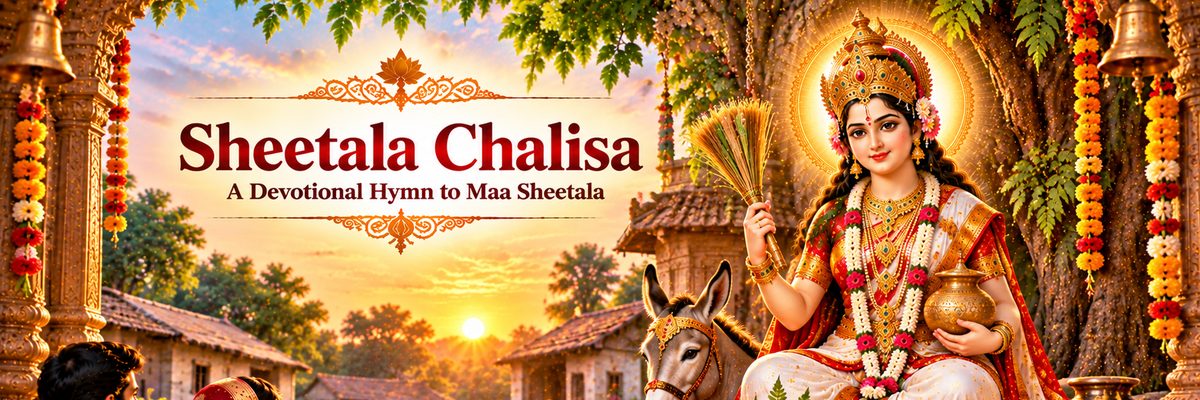
Chaupai 6 gives her iconography, which matches the images in her shrines: in her hands a clean broom (marjani) and a water-pot (kalash), and on her forehead a glow like the sun. Chaupai 13 adds the winnowing basket (soop). Chaupais 27 and 28 describe her riding a donkey and, playfully, name the animal five ways: rasabh, khar, Vaishakh-nandan, gardabh, and "destroyer of durva roots". She is also called digambar, sky-clad.
The story of Visphotak
The narrative core (10–17) is about a mighty demon named Visphotak, literally "the eruption", the word used for smallpox pustules. He entered house after house, and no one could protect against him. Taking the form of disease, he devoured children. The world cried out, and no one could avert the crisis. Then the Mother took a wondrous form, broom and winnowing basket in hand, seized Visphotak and beat him with a pestle. He begged her for mercy: "Mother, I did nothing good. I will not go to anyone's house any more. Only where there is impurity, in that house I will stay." She agreed, and promised her devotees: "Now I will make my devotees cool and destroy the terrible fear of Visphotak."
The story carries a practical lesson. The broom, the winnowing basket and the water-pot are tools of cleaning, and the disease is bound to stay only where there is impurity. Sheetala worship has always been tied to cleanliness, cool water and keeping the sick child calm.
What the chalisa promises, and a caution
The second half praises her as mother and father of the world and lists her mercies: lepers gain clean bodies, the blind see, the barren bear sons, the poor become rich, and the mute compose verses (33–35). Chaupais 30 and 31 say that for galka and galganda, diseases of the throat and neck, "there is no mantra and no medicine", only worship of the Mother.
Those lines come from an age before vaccines and antibiotics, when smallpox killed huge numbers of children and families had little else to turn to. Smallpox was declared eradicated in 1980, by vaccination. Devotees today read the chalisa for a sick child's comfort and recovery alongside medical treatment, not instead of it, and that is the spirit in which it is best read.
The poet
Chaupais 37 and 38 sign the work: the devotee "Kamal", servant of the Lord, living just east of Prayag, in the village of Tiwaripur, near Kakra on the bank of the Ganga where the sage Durvasa's ashram is. The same Durvasa ashram at Kakra appears in the Ganga Chalisa's signature, which suggests a small local school of devotional poets near Prayagraj. The closing doha gives the year of composition as a word chronogram.
Sheetala Ashtami and Basoda
The chalisa is read above all on Sheetala Ashtami, the eighth day of the dark fortnight of Chaitra, about a week after Holi; in some regions the day before, Saptami, is kept instead. The festival is called Basoda because the offering is basi, food cooked the day before. No fire is lit in the kitchen that day, in keeping with the goddess who cools. Families worship her with cool water, curd, soaked gram and the previous day's sweets and puris, then eat the same cold food as prasad. Many also read the chalisa during the spring and summer months when fevers are common, and whenever a child has a rash or high temperature.
Spotted a mistake?
If you find any grammatical, Hindi, English, mantra-text or other mistake on this page, tell us — we will correct it within 24 hours.