
Aarti
Devotional lamp-waving songs sung at the close of worship, with full lyrics in Hindi and English.
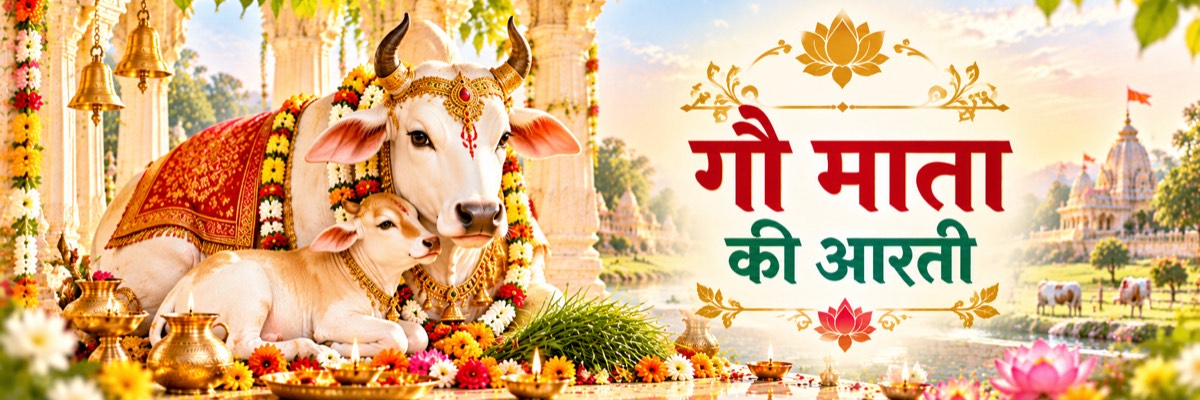
Aarti Shri Gaiya Maiya Ki – Gau Mata Aarti
The aarti of the cow as mother — 'beloved of Nanda's son', giver of nectar-like milk, guardian against disease and want, and a firm boat across the ocean of worldly life. Full text, meaning, and its place on Gopashtami and Govatsa Dwadashi.
Read more →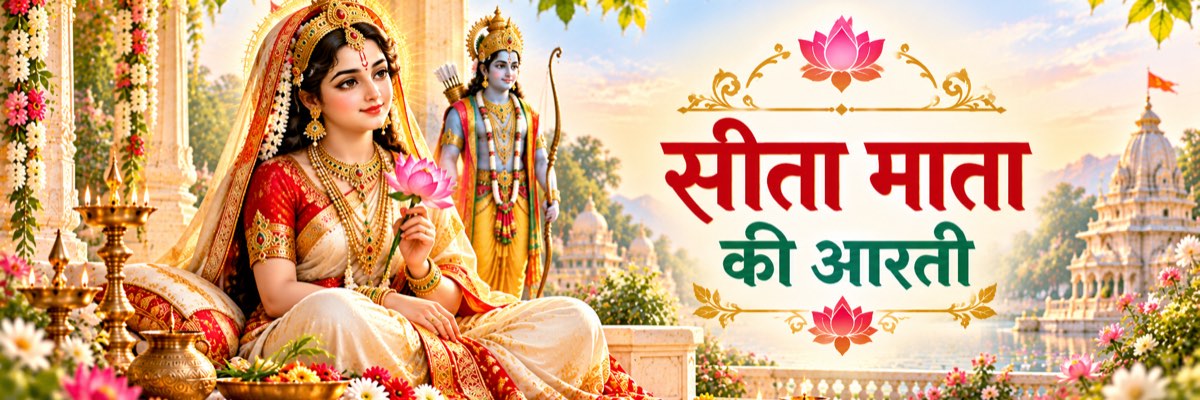
Aarti Shri Janak Dulari Ki – Sita Mata Aarti
The best-known aarti of Sita — 'the darling of King Janaka, beloved of Raghuvar' — praising her as mother of the world who dwells eternally in Saket, the wife who chose the forest and bore separation, and the refuge of all who call her name. Full text, meaning, and when it is sung.
Read more →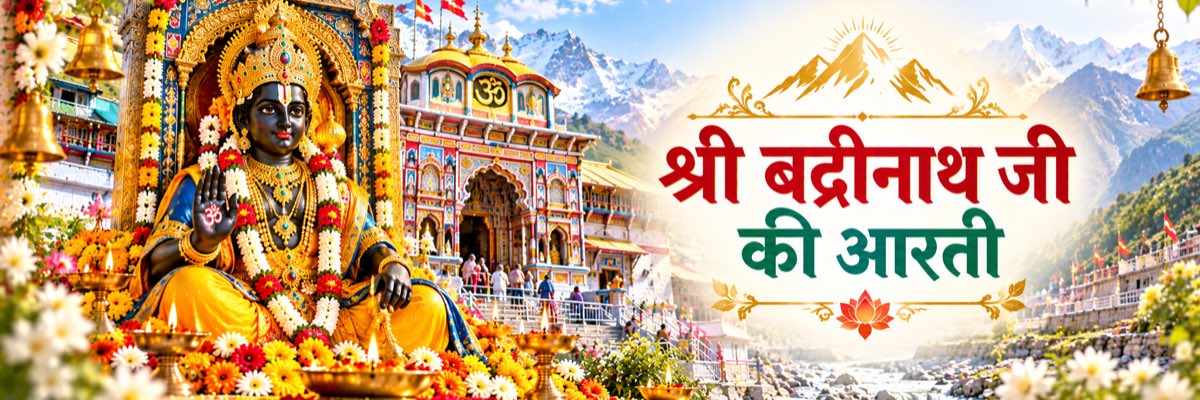
Pavan Mand Sugandh Sheetal – Shri Badrinath Aarti
The aarti of Badrinath Dham in the Himalayas — gentle, fragrant, cool breeze, a golden temple, the clear river flowing close by. Full text, what each stanza pictures, how it is sung at the shrine, and the debate over who wrote it.
Read more →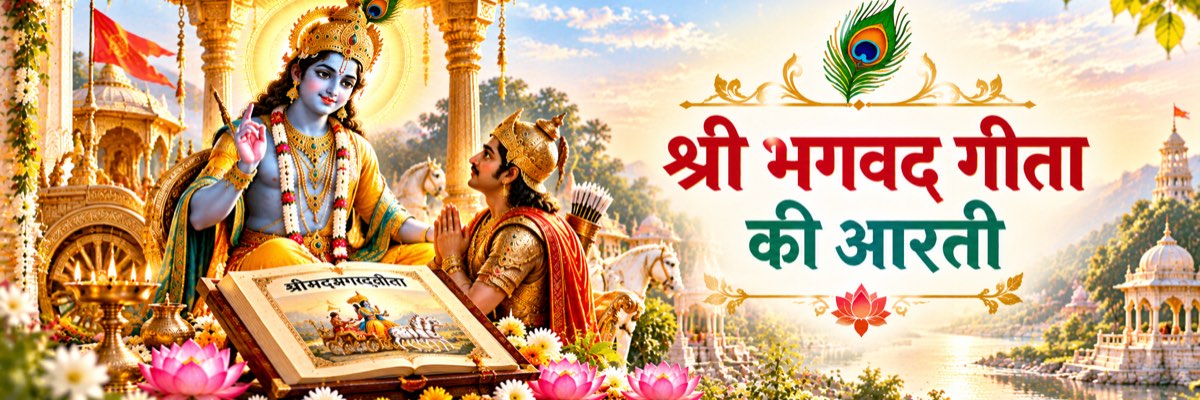
Jai Bhagavad Gite – Shri Bhagavad Gita Aarti
The aarti that worships the Bhagavad Gita itself as a mother — 'she who dwells in the lotus of Hari's heart'. Each line names something the Gita does: reveals the secret of action, removes attachment, grants the secret of surrender. Full text, meaning, and when to sing it, especially on Gita Jayanti.
Read more →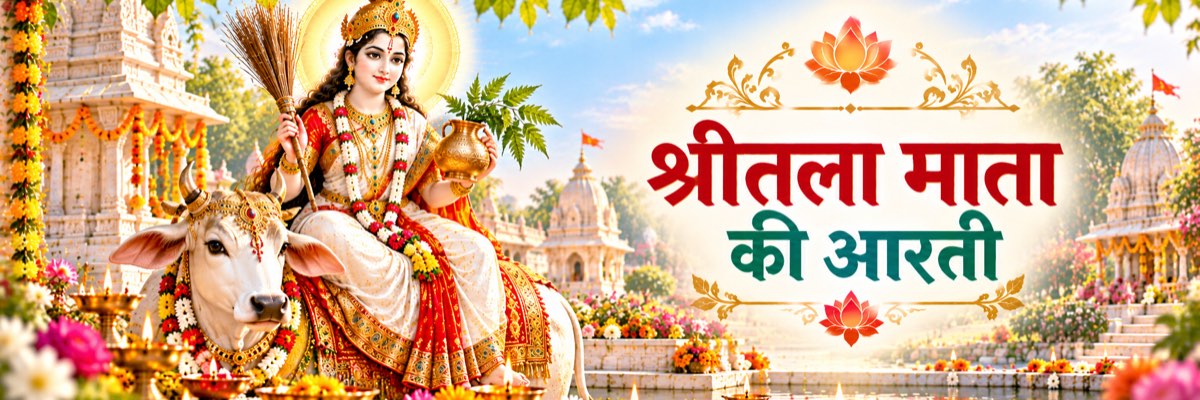
Jai Sheetala Mata – Sheetala Mata Ki Aarti
The aarti sung on Sheetala Ashtami (Basoda) to the goddess who cools fevers — a heavenly court where Vishnu and Shiva serve her, Indra plays the mridang and Narada sings, and a frank prayer for healing from disease. Full text, meaning, and how it fits the Basoda rituals.
Read more →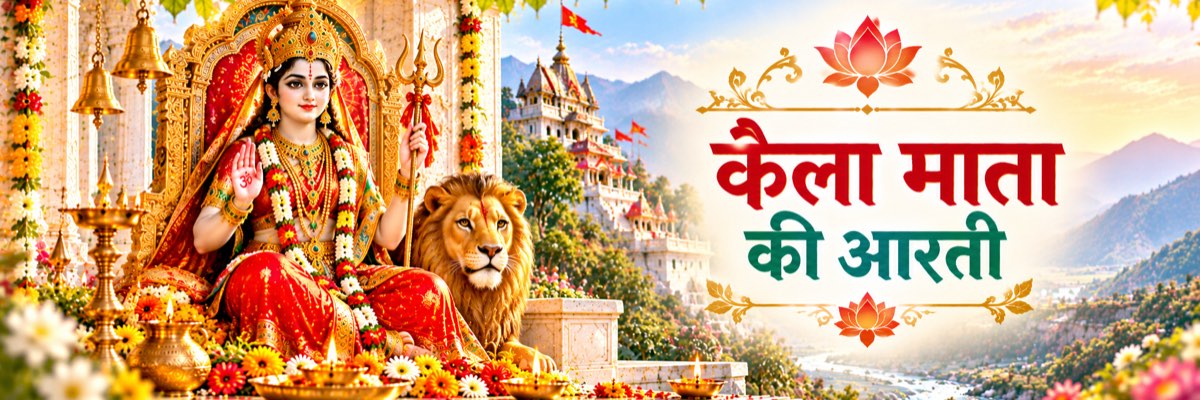
Om Jai Kaila Rani – Kaila Mata Aarti
The aarti of Kaila Devi of Karauli, sung to the familiar 'Om Jai' tune — it pictures the goddess on Trikut hill with Chamunda, the devotee Bahora at her door, naubat drums in the temple and yoginis clapping as they dance. Full text, meaning and how it is sung.
Read more →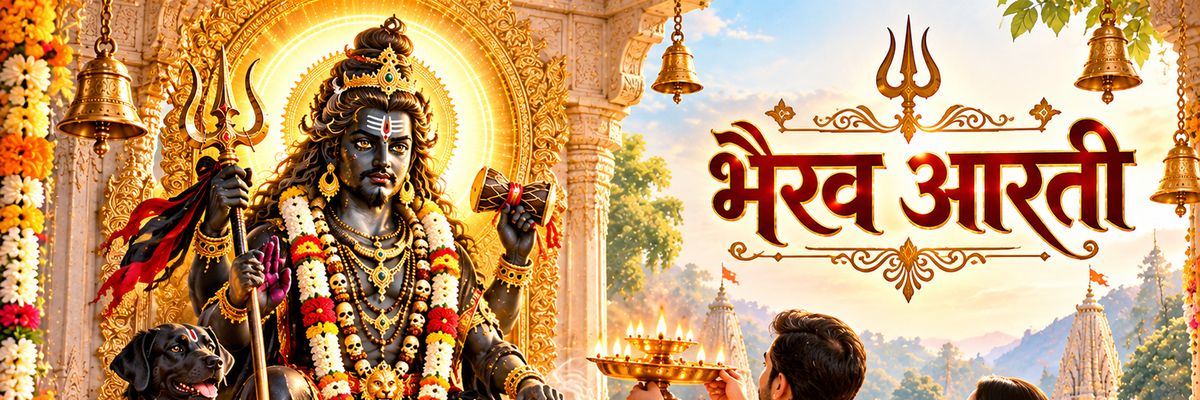
Jai Bhairav Deva (Bhairav Aarti)
The Hindi aarti sung to Bhairav Baba at temples and on Kalashtami: the dog-riding guardian with the trident, served by Kali and Gauri, who is pleased by a four-wicked lamp and oil, and who is also sweet Batuk Nath, the child.
Read more →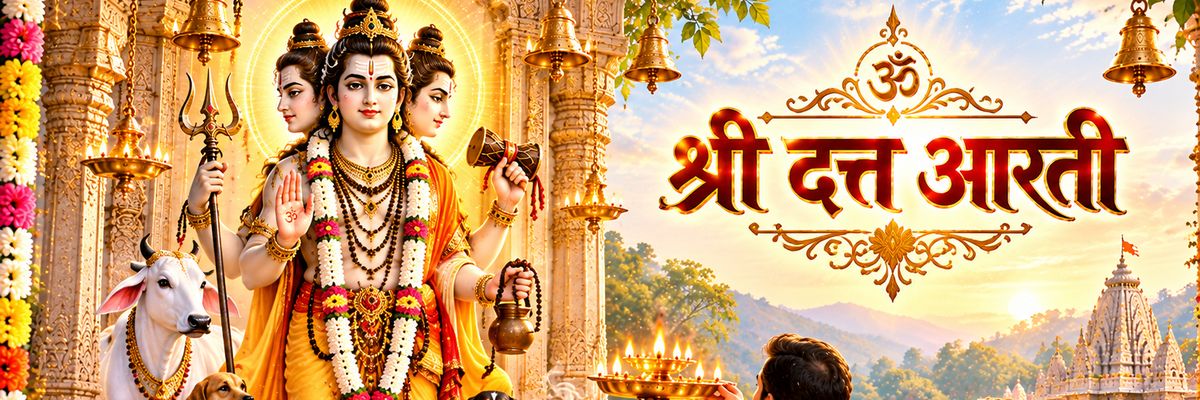
Trigunatmak Traimurti (Shri Datta Aarti)
Sant Eknath's Marathi aarti to Shri Gurudev Datta, sung in homes and Datta temples across Maharashtra and Karnataka. It praises Dattatreya as the three gods in one, beyond "neti neti", and ends in the devotee's own mind dissolving in Datta.
Read more →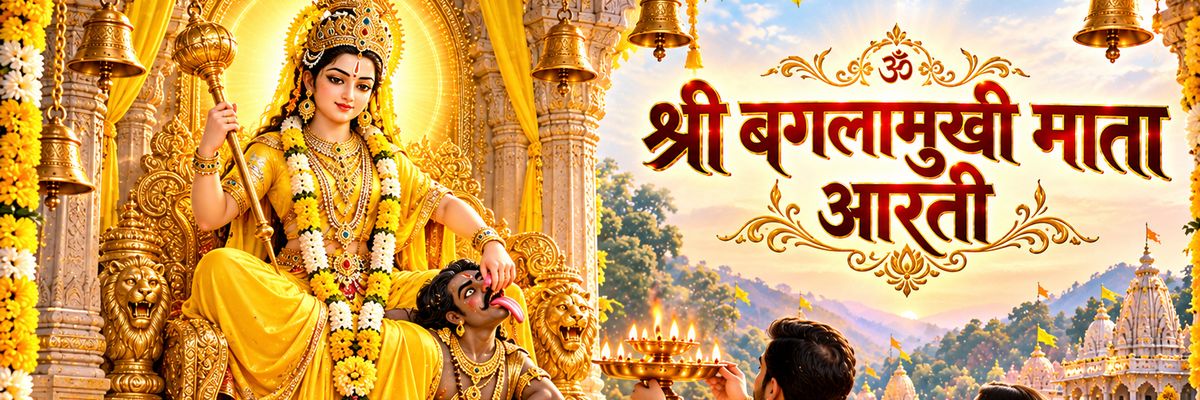
Jai Jai Shri Bagalamukhi Mata (Baglamukhi Aarti)
The aarti of Maa Baglamukhi, the yellow-clad Mahavidya, written by Kulpati Mishra, the same poet as the Baglamukhi Chalisa. It describes her yellow garments, champa garland and club, and asks her to light the heart lost in the night of delusion.
Read more →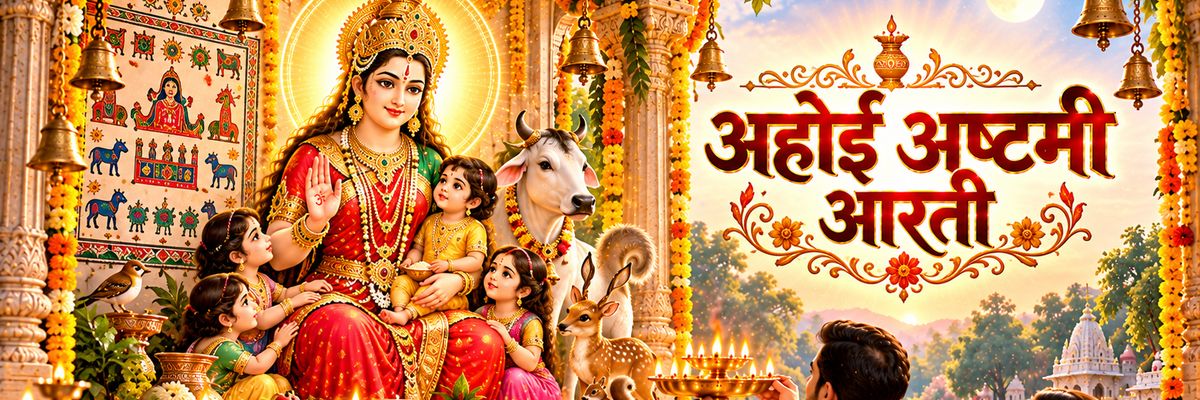
Jai Ahoi Mata (Ahoi Ashtami Aarti)
The aarti of Ahoi Mata, sung by mothers at the end of the Ahoi Ashtami fast for their children's long life. It praises Ahoi as Brahmani, Rudrani and Kamala, the mother of the world, without whom there is no happiness, no son and no plenty.
Read more →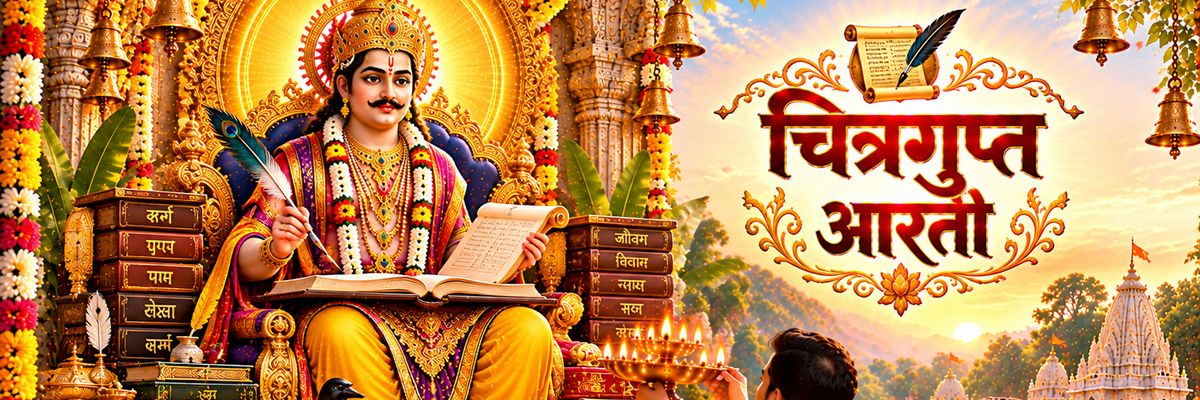
Om Jai Chitragupt Hare (Chitragupt Aarti)
The aarti of Bhagwan Chitragupta, keeper of the record of deeds, sung at the kalam-dawat puja on Yama Dwitiya. It describes his four-armed form with pen, inkpot, conch and scroll, his consorts Iravati and Dakshina, and the kings Sudas and Bhishma whom he favoured.
Read more →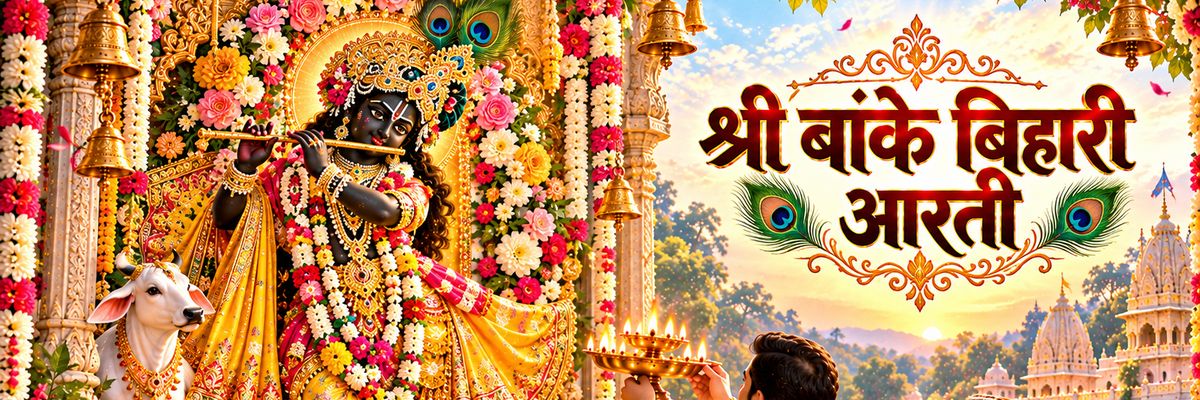
Shri Banke Bihari Teri Aarti Gaun
A tender aarti to Banke Bihari, the Krishna of Vrindavan's most beloved temple. It dwells on his peacock crown and flute, the Ganga that flows from his feet, and ends at the sight of the divine couple, "Shri Haridas ke pyare", beloved of Swami Haridas.
Read more →
Om Jai Ekadashi Mata (Ekadashi Aarti)
The aarti of Ekadashi Mata, sung at the close of an Ekadashi fast. Unusually, it is also a calendar: its stanzas name all twenty-four Ekadashis month by month, from Utpanna in Margashirsha to Padmini in the extra month.
Read more →
Jai Shri Vishwakarma Prabhu (Vishwakarma Aarti)
The aarti of Bhagwan Vishwakarma, the divine architect, sung in workshops and factories on Vishwakarma Puja and the day after Diwali. It praises him as creator who taught the Vedas to Brahma, and recalls devotees he rescued: Rishi Angira, a sick king, and a chariot-maker couple.
Read more →
Jai Vaishnavi Mata (Vaishno Devi Aarti)
The aarti of Maa Vaishno Devi of Trikuta, sung by pilgrims on the way to her cave shrine and at home in Navratri. It describes her cave, the Ganga at her feet, the flags at the Bhawan and the offerings pilgrims carry, and is signed by the devotee Dhyanu.
Read more →
Om Jai Yaksha Kuber Hare (Kuber Aarti)
The aarti of Kuber, lord of treasure, sung on Dhanteras and Diwali night. It praises him as the greatest of Shiva's devotees and a warrior king on a golden throne, and asks him to fill the storerooms of all who take refuge in him.
Read more →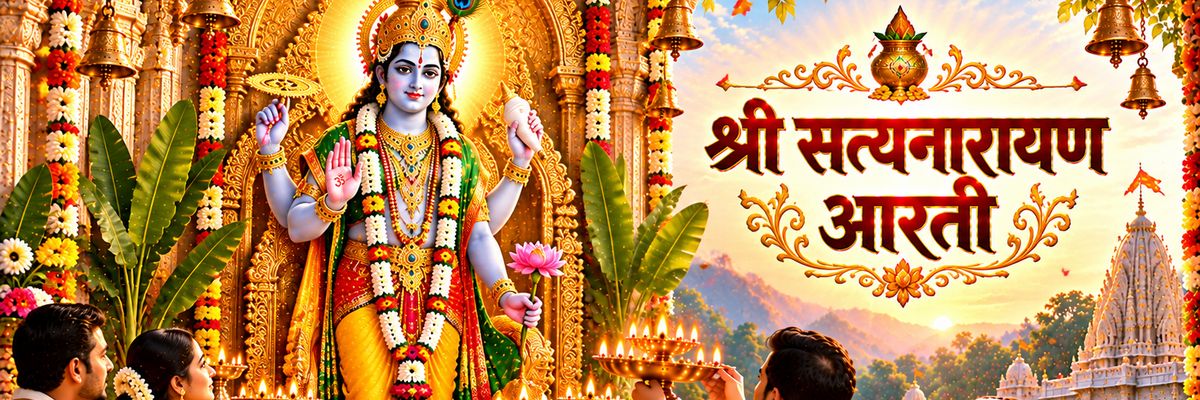
Jai Lakshmi Ramana (Satyanarayan Aarti)
The aarti sung at the end of every Satyanarayan katha, to the refrain "Jai Lakshmi Ramana", victory to Lakshmi's beloved. Its stanzas retell the katha in miniature: the poor brahmin, the woodcutter, the merchant who forgot his vow and the king in the forest.
Read more →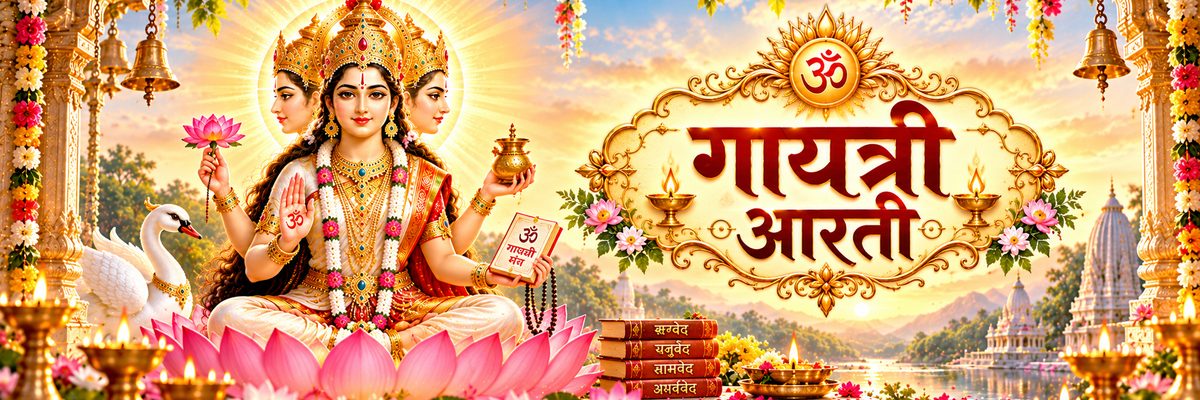
Jayati Jai Gayatri Mata (Gayatri Aarti)
The aarti of Gayatri Mata sung in homes and at Gayatri Pariwar centres: "lead us on the true path". It praises her as the source of all four Vedas and every goddess, and ends by asking her to purify the mind.
Read more →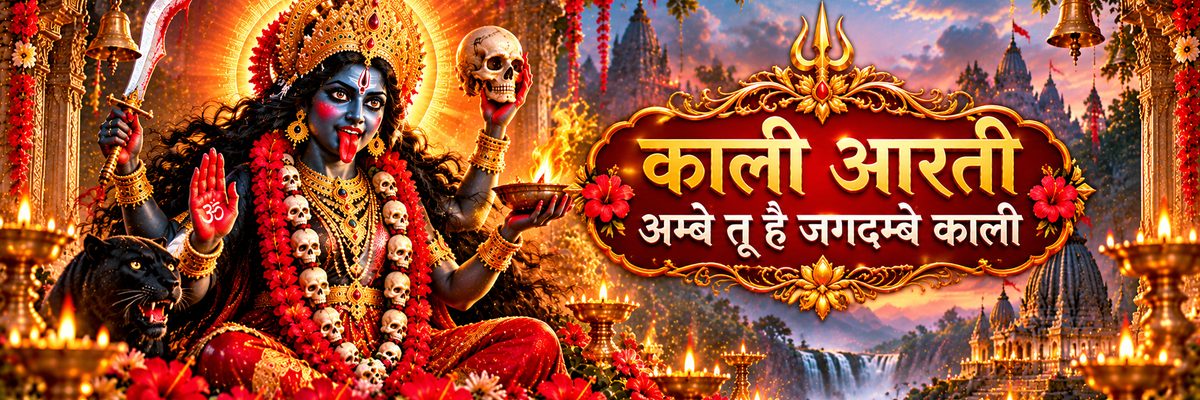
Ambe Tu Hai Jagdambe Kali (Kali Aarti)
The aarti that calls the Mother both Ambe and Kali, Durga "with the skull-bowl": sung at mata ki chowkis, jagrans and Navratri across north India. It asks for no wealth, only "a small corner in your heart".
Read more →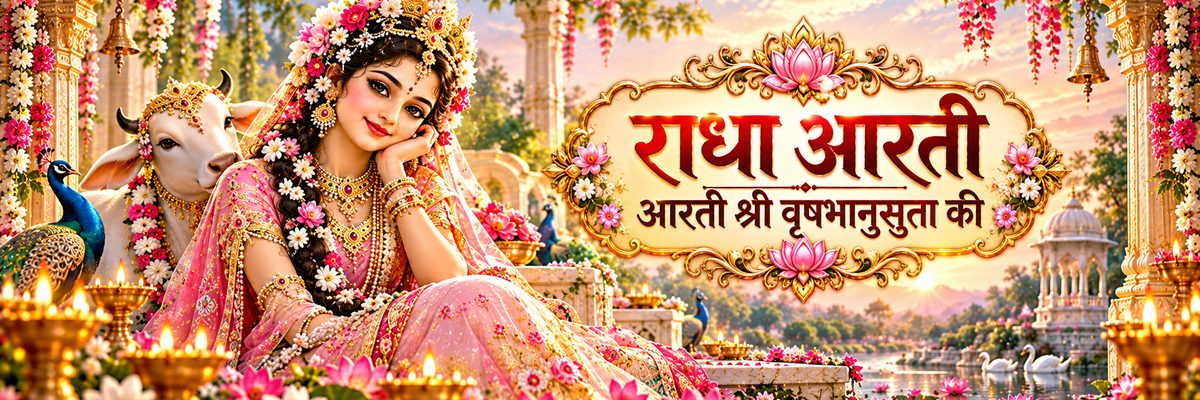
Aarti Shri Vrishbhanusuta Ki (Radha Aarti)
The aarti of Shri Radha, daughter of Vrishabhanu: "the lovely image of Mohan's own love". In four short stanzas it moves from her beauty to her place as Krishna's own self and the primordial power, and it is sung on Radhashtami and every evening in Braj.
Read more →What an aarti is
Aarti is the ritual of circling a lit lamp before a deity's image while singing a devotional song composed in that deity's honour — usually the closing act of a puja, and often performed on its own at sunset. For the full explanation of the ritual itself, see our article on the significance of aarti in Hindu worship.
What you'll find on each aarti page
Every aarti here is given in full — not just the opening lines — in both Devanagari and a clear transliteration, so you can sing along whether or not you read Hindi script. Popular examples include the Hanuman Aarti and the universally sung Om Jai Jagdish Hare.
When to sing one
Most households sing a short aarti in the evening even without a full puja, and every aarti's own page notes any specific day or occasion it's traditionally associated with.