
Original text
जय जय श्री बगलामुखी माता, आरति करहुँ तुम्हारी । पीत वसन तन पर तव सोहै, कुण्डल की छबि न्यारी ॥ कर-कमलों में मुद्गर धारै, अस्तुति करहिं सकल नर-नारी ॥ जय जय श्री बगलामुखी माता.. चम्पक माल गले लहरावे, सुर नर मुनि जय जयति उचारी ॥ त्रिविध ताप मिटि जात सकल सब, भक्ति सदा तव है सुखकारी॥ जय जय श्री बगलामुखी माता.. पालत हरत सृजत तुम जग को, सब जीवन की हो रखवारी ॥ मोह निशा में भ्रमत सकल जन, करहु हृदय महँ, तुम उजियारी ॥ जय जय श्री बगलामुखी माता.. तिमिर नशावहु ज्ञान बढ़ावहु, अम्बे तुमही हो असुरारी ॥ सन्तन को सुख देत सदा ही, सब जन की तुम प्राण पियारी॥ जय जय श्री बगलामुखी माता.. तव चरणन जो ध्यान लगावै, ताको हो सब भव-भयहारी ॥ प्रेम सहित जो करहिं आरती, ते नर मोक्षधाम अधिकारी ॥ जय जय श्री बगलामुखी माता.. ॥ दोहा ॥ बगलामुखी की आरती, पढ़ै सुनै जो कोय । विनती कुलपति मिश्र की, सुख-सम्पति सब होय ॥
Transliteration
Jai Jai Shri Bagalamukhi Mata Arati Karahun Tumhari Pit Vasan Tan Par Tav Sohai Kundal Ki Chhabi Nyari Kar-kamalon Men Mudgar Dharai Astuti Karahin Sakal Nar-nari Jai Jai Shri Bagalamukhi Mata.. Champak Mal Gale Laharave Sur Nar Muni Jai Jayati Uchari Trividh Tap Miti Jat Sakal Sab Bhakti Sada Tav Hai Sukhakari Jai Jai Shri Bagalamukhi Mata.. Palat Harat Srijat Tum Jag Ko Sab Jivan Ki Ho Rakhavari Moh Nisha Men Bhramat Sakal Jan Karahu Hriday Mahan, Tum Ujiyari Jai Jai Shri Bagalamukhi Mata.. Timir Nashavahu Gyan Barhavahu Ambe Tumahi Ho Asurari Santan Ko Sukh Det Sada Hi Sab Jan Ki Tum Pran Piyari Jai Jai Shri Bagalamukhi Mata.. Tav Charanan Jo Dhyan Lagavai Tako Ho Sab Bhav-bhayahari Prem Sahit Jo Karahin Arati Te Nar Mokshadham Adhikari Jai Jai Shri Bagalamukhi Mata.. Doha: Bagalamukhi Ki Arati Parhai Sunai Jo Koy Vinati Kulapati Mishra Ki Sukh-sampati Sab Hoy
The aarti of Pitambara
Maa Baglamukhi is the eighth of the ten Mahavidyas, worshipped in yellow for the power of stambhana: stopping enemies, slander and harmful speech. This aarti is the companion to the Baglamukhi Chalisa; its closing doha is signed by the same poet, Kulpati Mishra, and the two are usually recited together.
What the aarti says
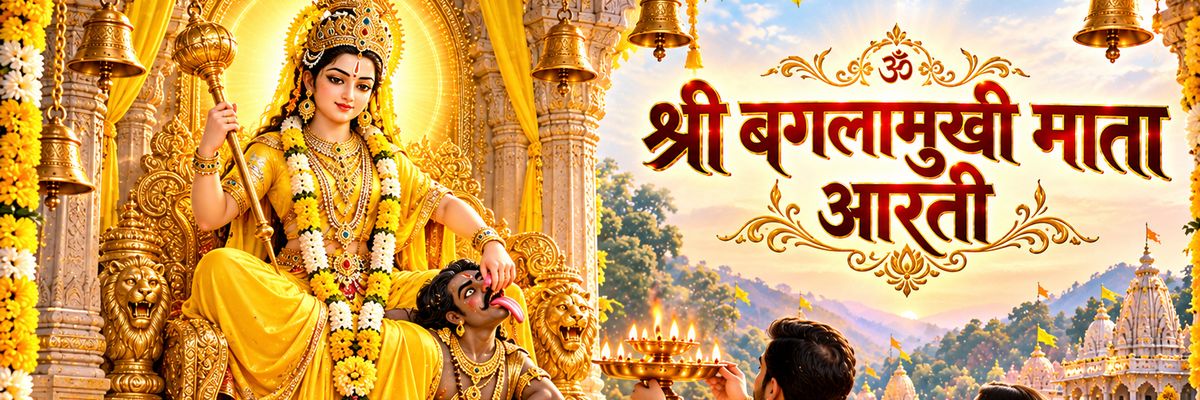
- Her appearance: yellow clothes shine on her body, earrings of rare beauty, a mudgar (club) in her lotus hands, and a garland of champa flowers swaying at her neck.
- Relief: "the threefold suffering is wiped out entirely; devotion to you always brings happiness", the three being of body, of nature and of fate.
- All three functions: "you nourish, destroy and create the world; you are the guardian of all life."
- Light in the dark: "all people wander in the night of delusion; make light in their hearts". The aarti asks her to destroy darkness and increase knowledge; she is Amba, the slayer of demons.
- The fruit: whoever meditates on her feet loses the fear of worldly existence, and whoever performs this aarti with love becomes worthy of moksha.
Noticeably, the aarti asks for knowledge and liberation rather than victory over enemies, a balance to the chalisa's more practical prayers.
When to sing it
- After the Baglamukhi Chalisa, on Baglamukhi Jayanti (Vaishakh shukla ashtami) and on Thursdays.
- With a ghee lamp, yellow flowers and turmeric, dressed in yellow if possible.
- During Gupt Navratri, when the Mahavidyas are especially worshipped.
Frequently asked questions
Who wrote the Baglamukhi aarti?
Its closing doha names Kulpati Mishra, who also wrote the Baglamukhi Chalisa.
What is the "threefold suffering"?
Traditionally the three tapas: adhyatmik (of body and mind), adhibhautik (from other beings) and adhidaivik (from fate and nature).
Why does she hold a mudgar?
The club is the weapon of stambhana with which she strikes down the demon whose tongue she holds, an image of stopping harmful speech.
Which day is best for Baglamukhi aarti?
Thursday, her colour being yellow, and Baglamukhi Jayanti.
Should the chalisa be read before the aarti?
Yes, that is the usual order: chalisa first, then aarti as the closing act of the puja.
Spotted a mistake?
If you find any grammatical, Hindi, English, mantra-text or other mistake on this page, tell us — we will correct it within 24 hours.